- Category
- Herbs and spices
- State
- Powdered
- Usual unit
- tablespoon
What it is
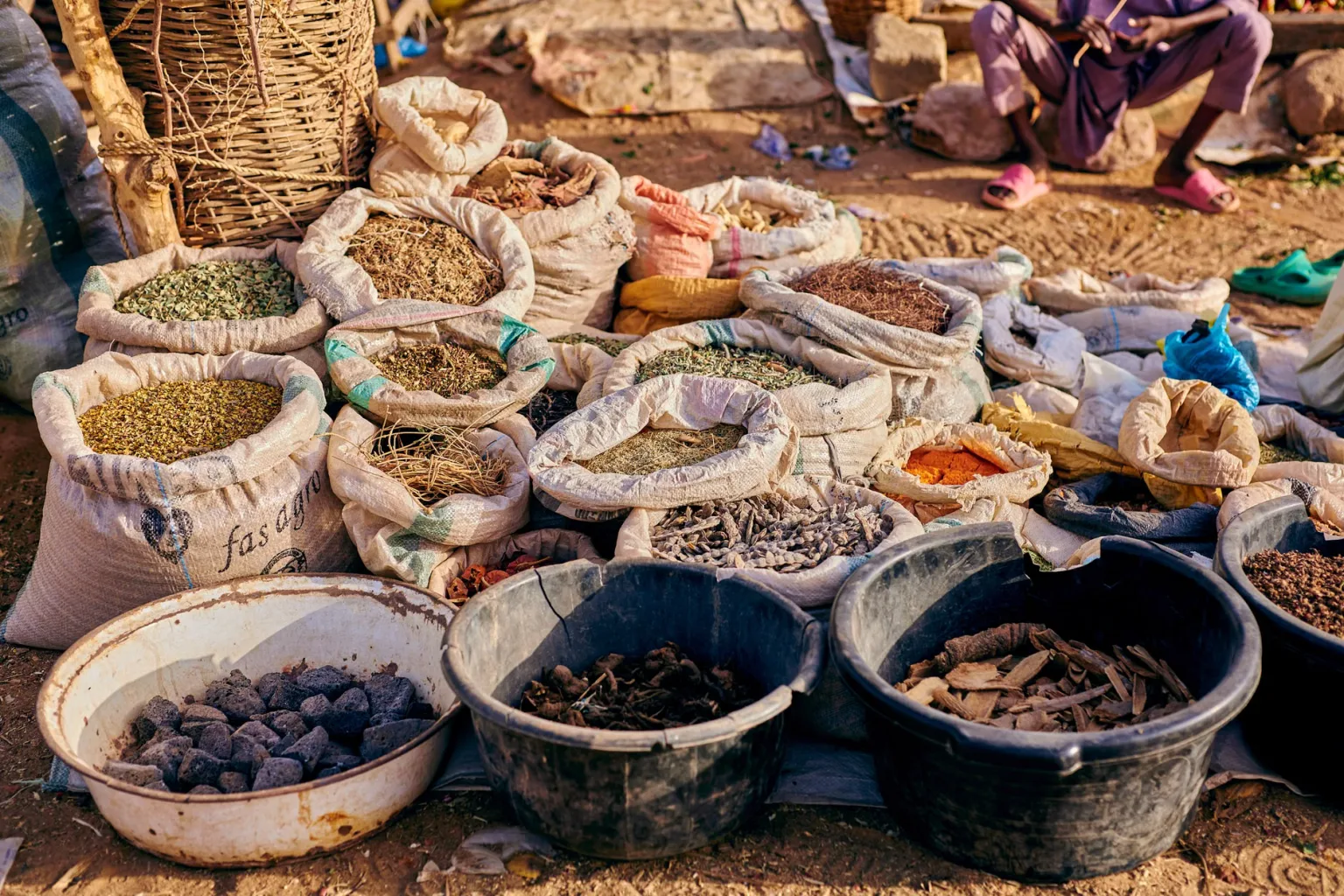
Mekelesha is a spice blend associated with Ethiopian cooking and used as a finishing seasoning. One described version combines cardamom, cinnamon, black pepper, nutmeg, cumin, Ethiopian long pepper—called timin—and cloves. Other formulas use different ingredients, including korerima, Ethiopian black cardamom. The name therefore does not guarantee a single fixed recipe: blends can differ from cook to cook. It is commonly used in powdered form and added during the later stages of cooking to bring a warm, complex aroma rather than strong heat.
When to use it
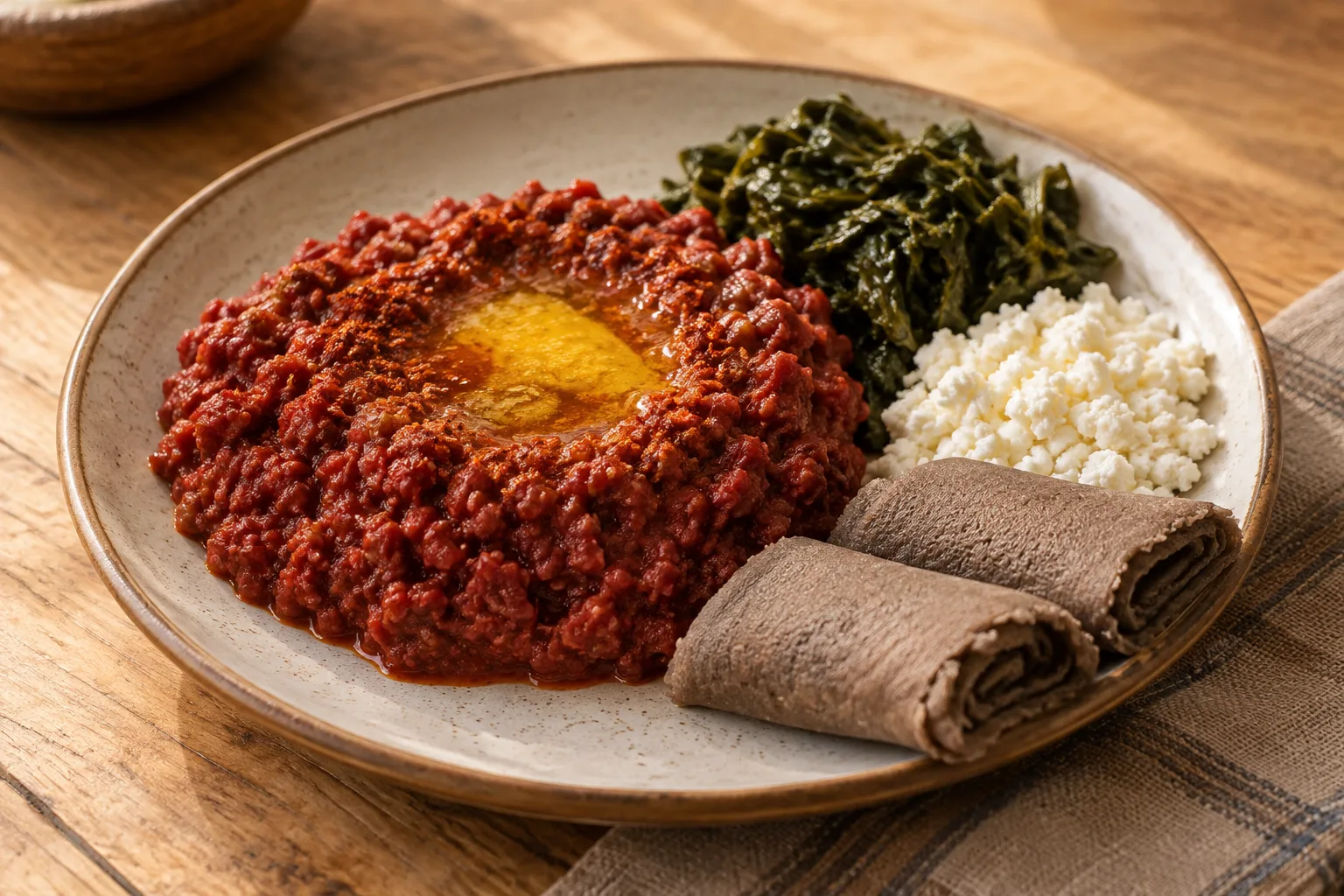
Use Mekelesha when you want to finish an Ethiopian wot, a spiced stew, or a lentil dish with an additional aromatic note. It is commonly added toward the end of cooking rather than simmered throughout, making it a finishing spice. Since recipes and intensity can vary, start with a small amount and taste before adding more. It is also useful when a recipe calls for Mekelesha and you have a packaged or homemade blend whose ingredient list you can check. Do not assume that every version has the same composition.
How to use it
Stir a small amount of Mekelesha into a stew when it is nearly done, mix it through, and taste before adding more. It is especially suited to Ethiopian wots and stews; a lentil stew is one example. The blend is aromatic and can be potent, so add it gradually rather than tipping in a large amount at once. For a homemade version using whole spices, one described method is to toast the spices briefly over low heat, let them cool, and grind them to a powder; ingredients already ground, such as nutmeg, can be added afterward. Take care not to burn the spices.
Flavour and texture
Its profile is warm, fragrant, and spiced, with notes that may suggest cinnamon, cardamom, cloves, cumin, and nutmeg. The precise character depends on the formula: a blend with korerima will not taste exactly like one made with Ethiopian long pepper. Ground Mekelesha has a fine, powdery texture. Its culinary purpose is to add aroma and round out a dish, not necessarily to make it strongly hot.
How to choose it
Look for Mekelesha in powdered form and read the ingredient list: there is no single fixed formula, and some versions include korerima while others may use Ethiopian long pepper. Check which blend suits your recipe, and do not assume that two products with the same name will taste alike. If the label does not list the ingredients, the product name alone may not tell you what aromatic profile to expect.
Storage
Transfer the blend to a clean container with a lid and follow the storage directions on the product label. If you make a homemade blend, keep it in a spice container after grinding. No validated storage duration is available here, so do not assign it a specific shelf life; use the package directions instead.
Substitutions
Garam masala can serve a similar finishing-spice role, but it is not Mekelesha and will not taste exactly the same. A homemade Mekelesha-style mix can also replace a purchased blend, bearing in mind that recipes vary and the ingredients should suit the dish. Check in particular whether the recipe calls for korerima or Ethiopian long pepper.
Common mistakes
Adding too much at once can overwhelm a stew: start small, add it near the end, and taste before adjusting. Another mistake is assuming that all Mekelesha blends contain exactly the same spices. If a recipe depends on a particular ingredient, such as korerima or Ethiopian long pepper, check the product’s ingredient list rather than relying on the name alone.
Safety and allergens
Check the label for the ingredients in the specific blend and follow its storage directions. Formulas can vary between products. No specific food-safety warning for Mekelesha is included in the available information.
Culinary uses
- Finishing spice for Ethiopian wot and stews
- Aromatic seasoning added near the end of cooking
Recommended techniques
- Stir into a dish near the end of cooking
- Toast whole spices briefly, cool, then grind into a powder
Pairs well with
- Ethiopian lentil stews such as misir wot
- Other wot-style curries and stews
Frequently asked questions
What is in Mekelesha?
One version includes cardamom, cinnamon, black pepper, nutmeg, cumin, Ethiopian long pepper, and cloves; other formulas may differ.
When should I add it to a stew?
It is commonly stirred in near the end of cooking as a finishing spice. Start with a small amount and taste.
Is Mekelesha the same as garam masala?
No. It can play a similar finishing role, but it is a different blend and does not have exactly the same flavor.
Ingredient allergens
Allergen listThere are no verified associations for these ingredients yet.
Sources and review
Automatically researched, cross-checked and validated content. Sources consulted:
- ¿Por qué la muerte es origen de miedos y tabúes? doi.org/10.64628/aao.fccyk3qj3
- Client Challenge doi.org/10.2307/jj.27939689.16
- - YouTube www.youtube.com/watch?v=hfLvsnOpIzc
- - YouTube www.youtube.com/watch?v=KcW-Dip4O4I
- 20 mezclas de especias de todo el mundo y cómo usarlas es.qz.com/mezclas-de-especias-del-mundo-cmo-usarlas
- Cómo combinar especias para potenciar el sabor de tus platos | Hida hida.es/como-combinar-especias-para-potenciar-tus-platos/
- Los básicos de la cocina etíope – SAWCER www.sawcer.com/es/los-basicos-de-la-cocina-etiope/
- Hierbas y especias de la cocina norteafricana - La Garbancita Ecológica lagarbancitaecologica.org/hierbas-y-especias-de-la-cocina-norteafricana/
- Inspiración Gourmet | Historía de las especias e ingredientes – Aromata Condiments aromatacondiments.com/pages/inspiracion?srsltid=AYCX9vIHBSioOX2hFKv1956qBPz55EPTLLi-5R-vcbcq…
- Mekelesha Spice Blend - The Gourmet Gourmand thegourmetgourmand.com/mekelesha-spice-blend/
- Especias exóticas imprescindibles en tu cocina munozypujante.com/descubre-las-5-especias-exoticas-que-deberias-usar-en-tus-recetas/