- Category
- Dairy and eggs
- State
- Liquid
- Usual unit
- g
What it is
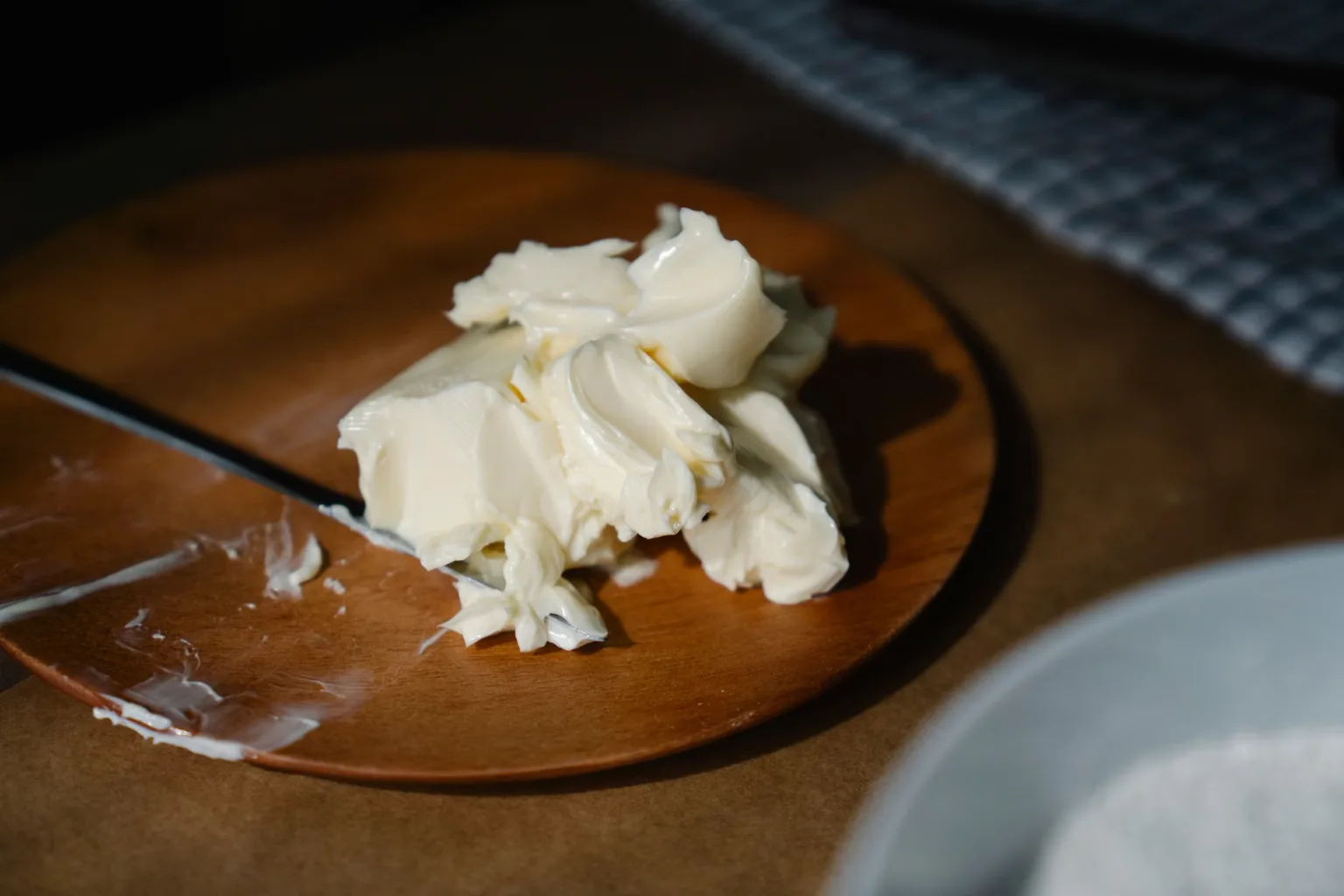
Melted butter is butter heated until it changes from solid to liquid. It is a form of butter, not necessarily a separate preparation. If it is heated further until the milk solids brown, it becomes browned butter, a distinct preparation with a more toasted flavor. Recipes may call for melted butter in sauces, sautés, vegetable purées, batters, and desserts. The wording does not always make clear whether the amount means butter measured while solid or butter measured after melting, so pay attention to the recipe’s wording and units.
When to use it
Use melted butter when a recipe calls for a fluid fat to blend into a sauce, enrich a vegetable purée, cook ingredients in a pan, or make batters and desserts. It can also be served over bread or vegetables as a finishing touch. If you want a deeper toasted flavor, browned butter is a separate preparation: it requires heating the butter further until its milk solids brown. Do not assume that a recipe asking for melted butter also calls for that additional cooking step.
How to use it
Warm butter until fluid, then take it off the heat if the recipe calls for simply melted butter; do not keep cooking until the solids brown unless you want browned butter. Add it according to the recipe: it can be stirred into sauces or purées, used to cook vegetables in a pan, or mixed into batters and desserts. Check how the recipe defines the amount before measuring. Wording can be ambiguous, especially when cups or spoons are used: some instructions mean butter melted before measuring, while others mean butter measured first and melted afterward. Follow the particular recipe rather than assuming every measurement uses the same state.
Flavour and texture
When melted, butter becomes fluid and retains its rich, savory character. If it is heated further and its milk solids brown, its flavor becomes more toasted; that is browned butter, not simply melted butter. The liquid texture of melted butter makes it easy to mix into sauces, purées, and batters.
How to choose it
Choose butter in its usual packaged form and check the label for product details and storage directions. Read a recipe carefully to see whether it calls for melted butter, butter measured and then melted, or browned butter: those instructions can produce different results. If a recipe uses cups or spoons, check how it defines the amount before you begin.
Storage
The fact that butter has been melted does not establish how long it can be stored. If you have leftovers, keep them covered in a clean container and follow the storage directions on the butter package. Avoid using dirty utensils in the container, and handle the butter carefully while hot.
Substitutions
Margarine may work in some recipes that allow a cooking fat, but it is not identical to butter and the result may differ. In some savory dishes, olive oil or another cooking oil may be an option. These are not interchangeable choices for every preparation, particularly when a batter or dessert depends on butter’s particular qualities.
Common mistakes
Do not assume that “melted butter” always means measuring it in liquid form: recipe wording varies, and weight measurements differ from volume instructions. Also, do not confuse melted butter with browned butter; the latter is cooked further until its milk solids toast.
Safety and allergens
Handle hot butter carefully and use clean utensils. Follow the original package directions for storing any leftovers.
Culinary uses
- Fat and flavoring for cooking
- Ingredient for baking and desserts
- Finishing ingredient for vegetables, bread, and sauces
Recommended techniques
- Melt gently until fluid, without taking it into the browned-butter stage
- Stir into sauces, vegetable purées, or other preparations
- Use in sautés or baking, following the recipe’s instructions
Pairs well with
- Vegetables, including mushrooms and leeks
- Bread and toast
- Pasta and savory sauces
- Cakes, biscuits, and other baked desserts
Frequently asked questions
Is melted butter the same as browned butter?
No. Melted butter is fluid; browned butter is heated further until its milk solids toast and its flavor changes.
Should I measure butter before or after melting it?
Recipe wording varies. Check whether the amount refers to melted butter or to butter that is measured first and melted afterward. A scale is useful when the recipe gives a weight.
What can I use melted butter for?
It can be added to sauces, vegetable purées, sautés, batters, and desserts, or used as a finishing touch for bread and vegetables.
Ingredient allergens
Allergen listThere are no verified associations for these ingredients yet.
Sources and review
Automatically researched, cross-checked and validated content. Sources consulted:
- Client Challenge doi.org/10.2307/jj.27939689.16
- The Essential Glossary of Cooking Terms for the Culinary Arts - Escoffier www.escoffier.edu/blog/culinary-arts/the-essential-glossary-of-cooking-terms-for-the-culinar…
- La importancia de la mantequilla en la cocina friolisa.es/es/blog/la-importancia-de-la-mantequilla-en-la-cocina.html
- Vamos a Conservar Alimentos: Papas y Batatas (Camote o Papa Dulce) extension.psu.edu/vamos-a-conservar-alimentos-papas-y-batatas-camote-o-papa-dulce/
- Conoce todos los usos de la mantequilla | Naturarla | Arla www.arlafoods.es/alimentacion/conoces-todos-los-usos-que-tiene-la-mantequilla/
- A case study of the impact and usefulness of synchronous ... dr.lib.iastate.edu/bitstreams/d9babbb1-3dd1-4fe9-9edf-63bea7aceb4c/download
- Origen, producción y consumo de mantequilla – Botanical-online www.botanical-online.com/alimentos/mantequilla-historia
- Cómo se mide la mantequilla derretida | Gastronomía & Cía www.gastronomiaycia.com/como-se-mide-la-mantequilla-derretida/
- Mantequilla avellanada: el ingrediente de moda que transforma cualquier receta | Canarias7 www.canarias7.es/gastronomia-c7/mantequilla-avellanada-ingrediente-moda-transforma-receta-20…
- Food allergen labelling and information requirements technical guidance - GOV.UK www.gov.uk/government/publications/food-allergen-labelling-and-information-requirements-tech…