- Category
- Meat
- State
- Preserved
- Usual unit
- unit
What it is
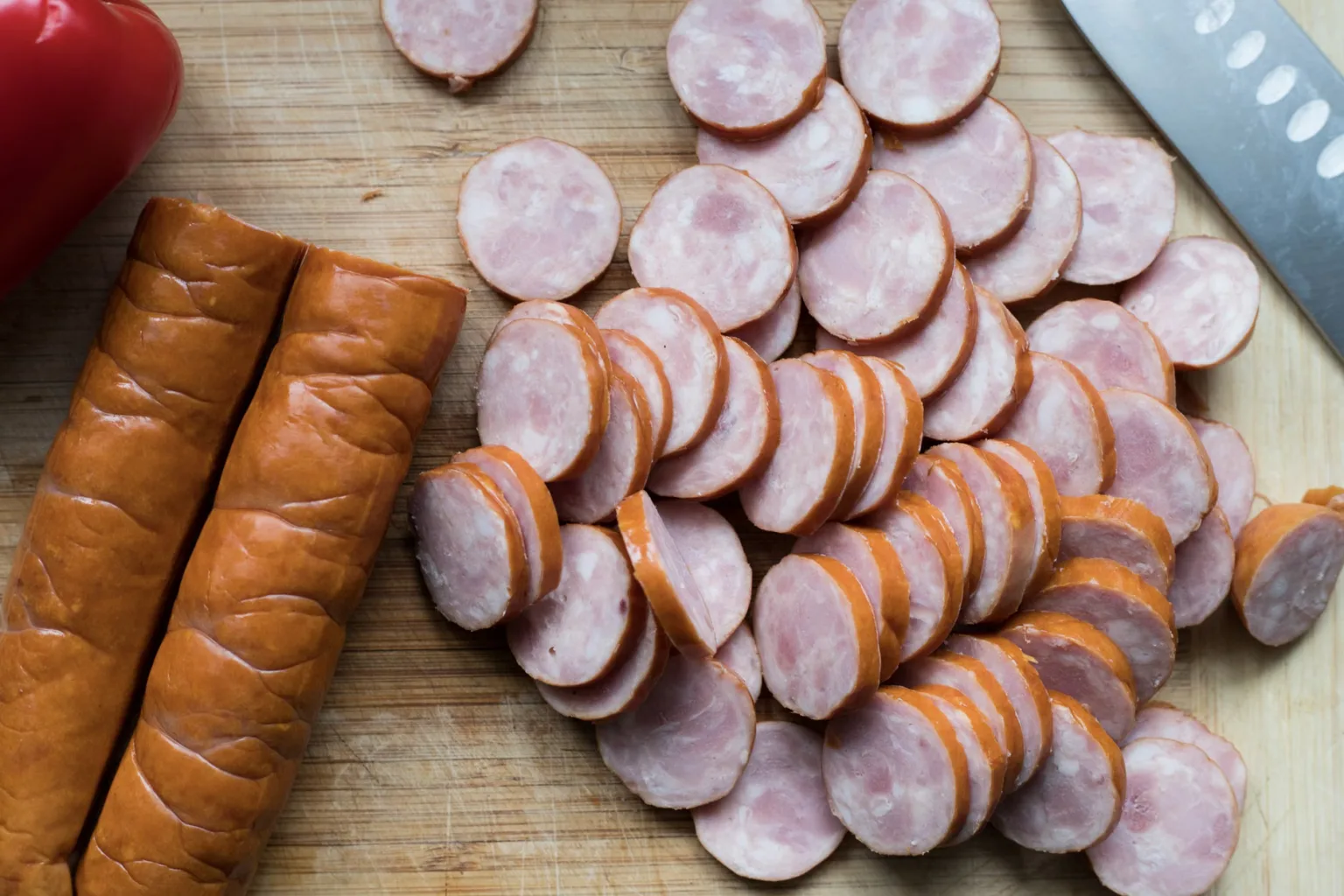
Mettwurst is the name of a family of German sausages rather than a single fixed recipe. Descriptions include sausages made from minced meat, often pork, that may be smoked and cured. Some have a firm texture and are sliced; others are softer and spreadable. Ingredients, seasoning, smoking intensity, and processing vary by style and maker. The name alone therefore does not establish whether a particular sausage is ready to eat or needs cooking. Use the product description and label to identify the style you have.
When to use it
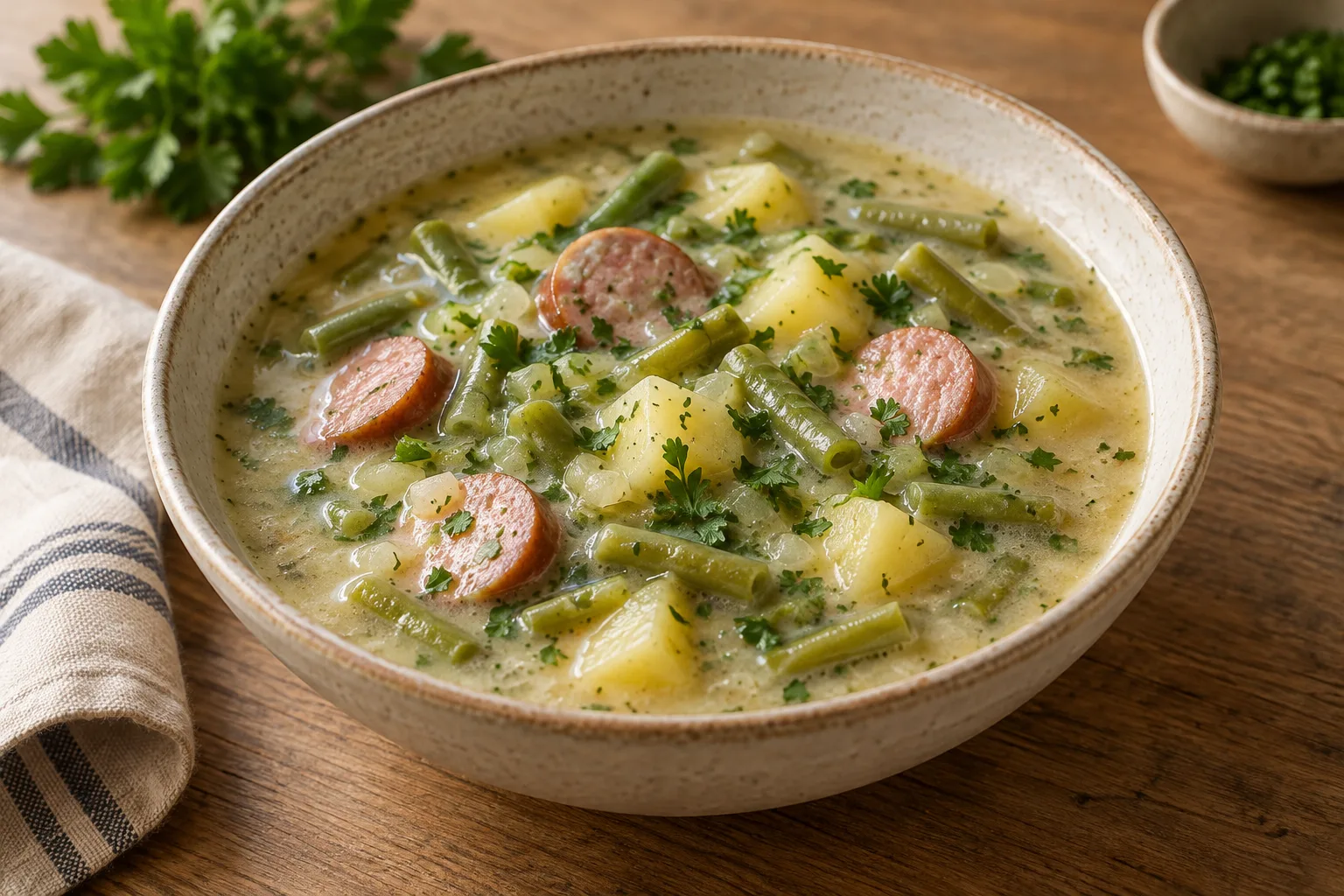
Choose Mettwurst when you want a strongly savory sausage for a cold platter, snack, or German-inspired meal. Firm styles can be sliced, while soft styles may be spread if the package says they are ready to eat. Some varieties are also used hot in soups, stews, and vegetable dishes. Check the label before deciding how to serve it: Mettwurst products do not necessarily share the same processing or eating instructions. Match the particular texture and preparation to the dish.
How to use it
Read the label first and follow its directions on whether the sausage needs cooking or can be served as is. If it is identified as ready to eat, slice a firm style or spread a soft one on bread. For hot dishes, add slices or pieces to soups, stews, or vegetables and heat as directed on the package. Gentle warming in hot water or in a pan may also suit some products when their instructions allow it. Do not treat every Mettwurst as interchangeable: a fresh or raw sausage that requires cooking must not be served as a ready-to-eat cured sausage.
Flavour and texture
The flavor is generally savory and pronounced, with meaty notes and a smoky aroma in smoked styles. The exact profile depends on the recipe and processing. Texture ranges from firm and sliceable to soft and spreadable; some northern styles described as Mettenden are firmer, while other products are soft. Read the package description to choose a style suitable for slicing, spreading, or cooking.
How to choose it
Check the package for the specific style, ingredient list, and serving instructions. Look for whether it is described as ready to eat or requires cooking, and whether its texture is firm for slicing or soft for spreading. Mettwurst covers different products, so do not infer the exact meat, processing, or level of smokiness from the name alone. Choose a format suited to the dish you plan to make.
Storage
Follow the package storage directions because Mettwurst includes products with different processing and formats. Observe the stated date and any instructions for the product after opening. If the label calls for refrigeration, keep it refrigerated; do not assume smoking or curing means every style can be stored at room temperature. When storage or serving directions are unclear, follow the manufacturer's instructions rather than guessing.
Substitutions
In a hot recipe, another smoked sausage may work if its firmness and seasoning suit the dish. For cold slices, a cured pork sausage can serve a similar role, although its flavor and texture will differ. Check the substitute's eating instructions too: a sausage that requires cooking is not a direct replacement for one intended to be eaten ready to serve.
Common mistakes
The main mistake is assuming all Mettwurst is ready to eat because some styles are served cold. Always check the label. Another is expecting one uniform texture: products can be firm, soft, or spreadable. Do not automatically use a sliceable style in place of one intended for cooking, and do not overlook the product's storage directions.
Safety and allergens
Follow the package instructions for storage and cooking. Eat the sausage cold only when it is identified as ready to eat; if cooking is required, cook it as directed. Do not infer that it is safe to eat uncooked from its name, appearance, or smoky aroma.
Culinary uses
- Cold sliced or spreadable sausage for snacks and appetizer boards
- Smoked or cured sausage for soups, stews, and vegetable dishes
Recommended techniques
- Serve cold only when the product label identifies it as ready to eat
- Warm gently in hot water or in a pan, following package directions
- Slice or crumble into soups and stews; add according to the recipe
Pairs well with
- Bread and mustard
- Cabbage, including sauerkraut, and hearty vegetable dishes
Frequently asked questions
Can all Mettwurst be eaten without cooking?
No. Styles and processing differ. Serve it cold only when the label identifies it as ready to eat; cook other products as directed.
Can Mettwurst always be sliced?
No. Some styles are firm and sliceable, while others are soft and spreadable. Check the product description.
How can I use Mettwurst in a hot dish?
When the product is suitable for cooking, add slices or pieces to soups, stews, or vegetable dishes and follow the package directions.
Ingredient allergens
Allergen listThere are no verified associations for these ingredients yet.
Sources and review
Automatically researched, cross-checked and validated content. Sources consulted:
- ¿Por qué la muerte es origen de miedos y tabúes? doi.org/10.64628/aao.fccyk3qj3
- Client Challenge doi.org/10.2307/jj.27939689.16
- Tipos de salchichas: variedades y características www.campofrio.es/tipos-de-salchichas
- Historia de las Salchichas Alemanas: Un Símbolo de la Gastronomía Germana • Kurz & Gut www.kurz-gut.com/historia-de-las-salchichas-alemanas-un-simbolo-de-la-gastronomia-germana/
- Gastronomía alemana y sus tipos de salchichas – Gastronoming www.gastronoming.com/gastronomia-alemana-tipos-de-salchichas-alemanas/
- Comité Científico www.aesan.gob.es/dam/jcr%3A37c06c87-ec8b-4abb-b7ea-16b9f9c582b8/comite_cientifico_1.pdf
- Salchichas alemanas: un alimento milenario con más de 1500 variedades - Picken picken.es/salchichas-alemanas-un-alimento-milenario-con-mas-de-1500-variedades/
- Mettenden: la deliciosa salchicha alemana para picar o guisar - Kommen Blog kommen.es/blog/como-preparar-salchichas-mettenden/
- Gastronomia.com | La referencia gastronómica de Iberoamérica gastronomia.com/espana/guias/tipos-de-salchichas-alemanas-guia-completa
- Salchichas Frankfurt: elaboracion, ingredientes e historia www.eladerezo.com/salud-y-bienestar/salchichas-frankfurt-elaboracion-ingredientes-historia.h…
- 8 tipos de salchichas de todo el mundo: sabores, orígenes y maridajes corkframes.com/es/blogs/noticias/8-tipos-de-salchichas-de-todo-el-mundo-sabores-origenes-y-m…
- **Salchicha Cocktail: Comparativa de las Mejores Opciones y Maridajes con Quesos** laovejaquebala.es/salchicha-cocktail/
- Salchichas bockwurst: sabor tradicional listo para triunfar en cocina profesional - Garpa Alimentación - Almacenamiento y Distribución para las Islas Canarias garpa-alimentacion.com/salchichas-bockwurst-sabor-tradicional-listo-para-triunfar-en-cocina-…
- Desmontamos mitos sobre salchichas: cómo cocinarlas sin errores comunes picken.es/mitos-salchichas-como-cocinarlas-correctamente/