- Category
- Oils and fats
- State
- Liquid
- Usual unit
- ml
What it is
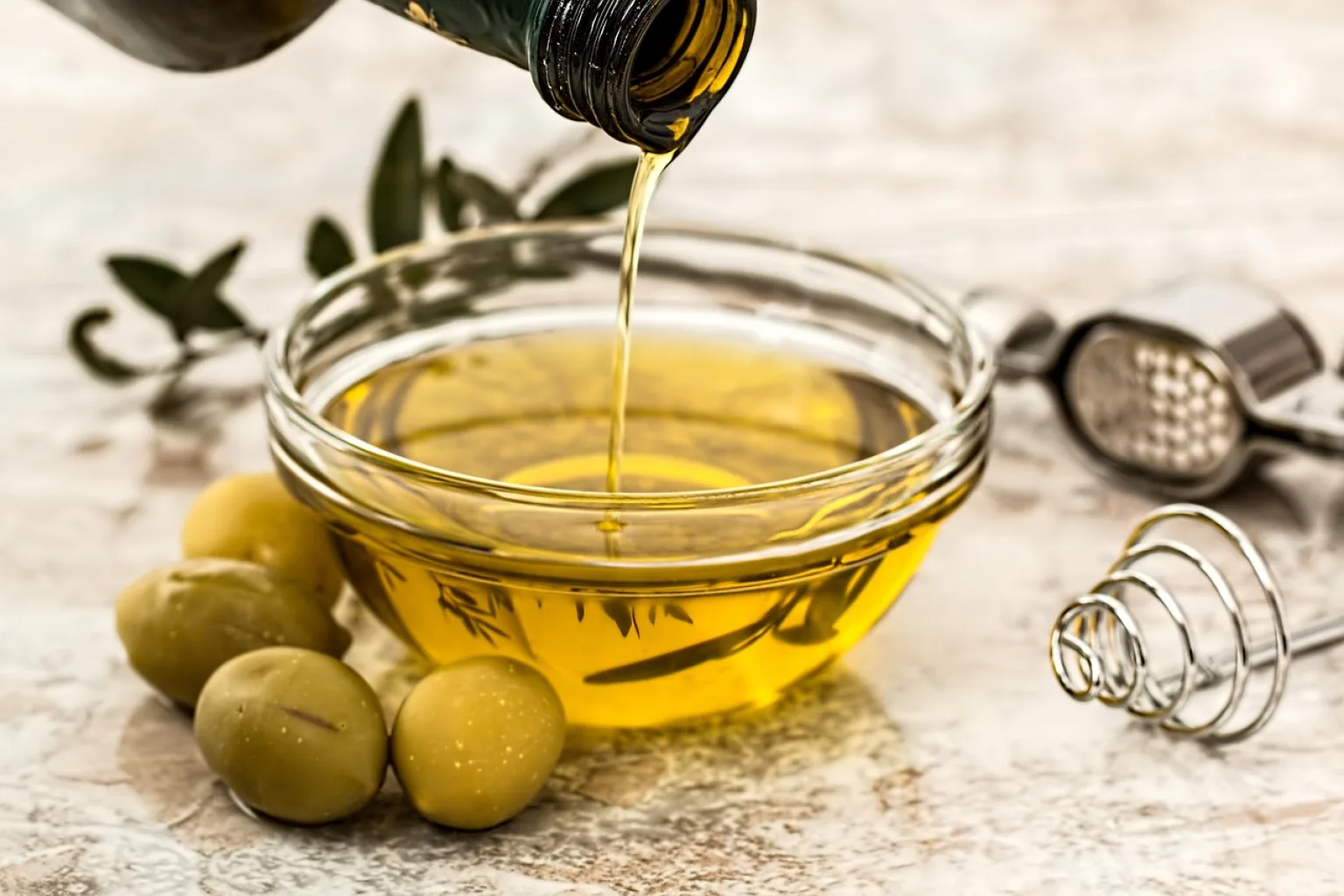
Olive oil is made from the fruit of the olive tree and is used primarily in cooking. “Mild” describes a less pronounced flavor; the word alone does not establish the oil’s quality or a single production method. Products described as mild can vary, so check the label and choose one suited to the recipe. For pan preparation, spread a thin coating over the inner surface to help the baked food release after cooking. The goal is an even film rather than excess oil. The right preparation can depend on the recipe and the shape and material of the pan, so follow any additional directions, such as dusting with flour.
When to use it
Use it to grease a baking pan when you want a restrained olive-oil flavor, or in batters, dressings, mayonnaise, and light sautéing when the recipe calls for oil. It can suit delicate-flavored dishes where a more assertive oil might stand out. If the oil is prominent in the finished food, its aroma and taste will still affect the result. “Mild” is not automatically a quality grade, and the flavor can vary from one product to another; choose by the label and the flavor you prefer.
How to use it
To grease a pan, pour or brush on a small amount and spread it across the base, sides, and corners until you have a thin, even coating. A pastry brush or paper towel can help distribute it without leaving pools. Follow the recipe if it also calls for flour or another pan treatment. To use the oil in a batter, vinaigrette, or emulsion, measure it according to the recipe rather than estimating. When heating oil, do not let it smoke. If its flavor will be noticeable, begin with the quantity specified and consider how it will work with the other ingredients.
Flavour and texture
Its flavor is less pronounced than that of more assertive olive oils, though the degree of mildness varies by product. It may contribute a gentle olive aroma without overwhelming some dishes. The oil is fluid and spreads readily over a pan; a thin coating forms an even, slick film. “Mild” is mainly a sensory description, not a stand-alone measure of quality.
How to choose it
Check that the label identifies the product as olive oil suitable for food use, and read its product designation and other label information. “Mild” can describe flavor but does not, on its own, identify an official quality category or guarantee that different products will taste alike. For greasing pans or baking, choose a flavor that will not overshadow the other ingredients. Packaging that shields the oil from light can help protect its qualities.
Storage
Keep the oil in its closed container, protected from light and air. Follow the storage directions on the product label. Avoid leaving the container open while cooking, and close it again after pouring what you need. These steps help preserve the oil’s flavor and quality. Follow the manufacturer’s directions if they specify particular storage conditions.
Substitutions
Another olive oil can replace it if you are comfortable with a potentially stronger flavor. A neutral-tasting vegetable oil may also work when the recipe allows the change. Butter can be an option for some batters or for greasing a pan, but it changes the flavor and how the preparation behaves; follow the recipe rather than assuming the quantities are interchangeable without adjustment.
Common mistakes
Do not treat “mild” as a quality grade or as a promise that every product will taste the same. When greasing a pan, avoid both bare patches and pools of oil; aim for a thin, even film. Do not assume the oil will be unnoticeable in a recipe, especially when used generously or in a delicate-flavored dish.
Safety and allergens
Use oil labeled for food use and avoid letting it smoke when heating. Follow the recipe and the product label.
Culinary uses
- pan and baking-tin greasing
- mild-flavored cooking fat
- ingredient in baking and emulsified sauces
Recommended techniques
- greasing a baking tin
- light sautéing
- mixing into batter
- emulsifying into mayonnaise or vinaigrette
Pairs well with
- cake and biscuit batters
- mayonnaise and vinaigrettes
- delicate-tasting dishes
- bread and vegetables
Frequently asked questions
What does “mild” mean on olive oil?
It describes a less pronounced flavor. It does not by itself define a quality grade, and the flavor can vary between products.
Can I use it to grease a baking pan?
Yes. Spread a thin, even coating over the base and sides, and follow the recipe if it also calls for flour or another treatment.
Can I bake with mild olive oil?
It can be used in baking recipes that call for oil. Its flavor may still come through, so choose a product that suits the other ingredients.
Ingredient allergens
Allergen listThere are no verified associations for these ingredients yet.
Sources and review
Automatically researched, cross-checked and validated content. Sources consulted:
- Aceite de oliva - Wikipedia, la enciclopedia libre es.wikipedia.org/wiki/Aceite_de_oliva
- Aceite de Oliva: Tipos, Elaboración y Variedades de Aceitunas | Guía Completa www.elpaladar.es/es/blog/los-diferentes-tipos-de-aceite-de-oliva-y-su-proceso-de-elaboracion
- ¿Qué tipo de aceite de oliva es el más suave? www.olivarte.es/blogs/noticias-aceite-oliva/que-tipo-de-aceite-de-oliva-es-el-mas-suave
- Qué aceite de oliva usar para cocinar: tipos, cómo usarlos y cuándo usar girasol www.directoalpaladar.com/cultura-gastronomica/aceite-de-oliva-la-guia-definitiva-que-varieda…
- Usos del aceite de oliva en la cocina aceitesabril.com/usos-del-aceite-de-oliva-en-la-cocina/
- Leer revista ITEA – Asociación Interprofesional para el Desarrollo Agrario doi.org/10.12706/itea.2019.018
- Quédate en casa y cocina: Masterclases de nuestros chefs www.cordonbleu.edu/madrid/quedate-en-casa-y-cocina-masterclases/es
- lemmas.txt downloads.cs.stanford.edu/nlp/data/CoNLL17_Parser_Models/Spanish/Spanish-Parser/lemmas.txt
- Tipos de Aceite de Oliva y Usos reces.es/tipos-de-aceite-de-oliva-y-usos/?srsltid=AYCX9vKMTGtJOYsZMJRy7p5YM3BGc3d8OH4uQRtotV…
- Aceite de oliva suave e intenso – Aceite Córdoba aceitecordoba.com/blogs/news/aceite-de-oliva-suave-e-intenso?srsltid=AYCX9vJlmrAVydzR5J_hYOW…
- ¿Qué aceite de oliva utilizar para repostería? | Aceites Lis www.aceiteslis.com/aceite-oliva-reposteria/
- Aceite de Oliva ¿suave o intenso? – Origen Oliva www.origenoliva.com/blogs/noticias-aceite-de-oliva/aceite-de-oliva-suave-o-intenso?srsltid=A…