- Category
- Meat
- State
- Fresh
- Usual unit
- g
What it is
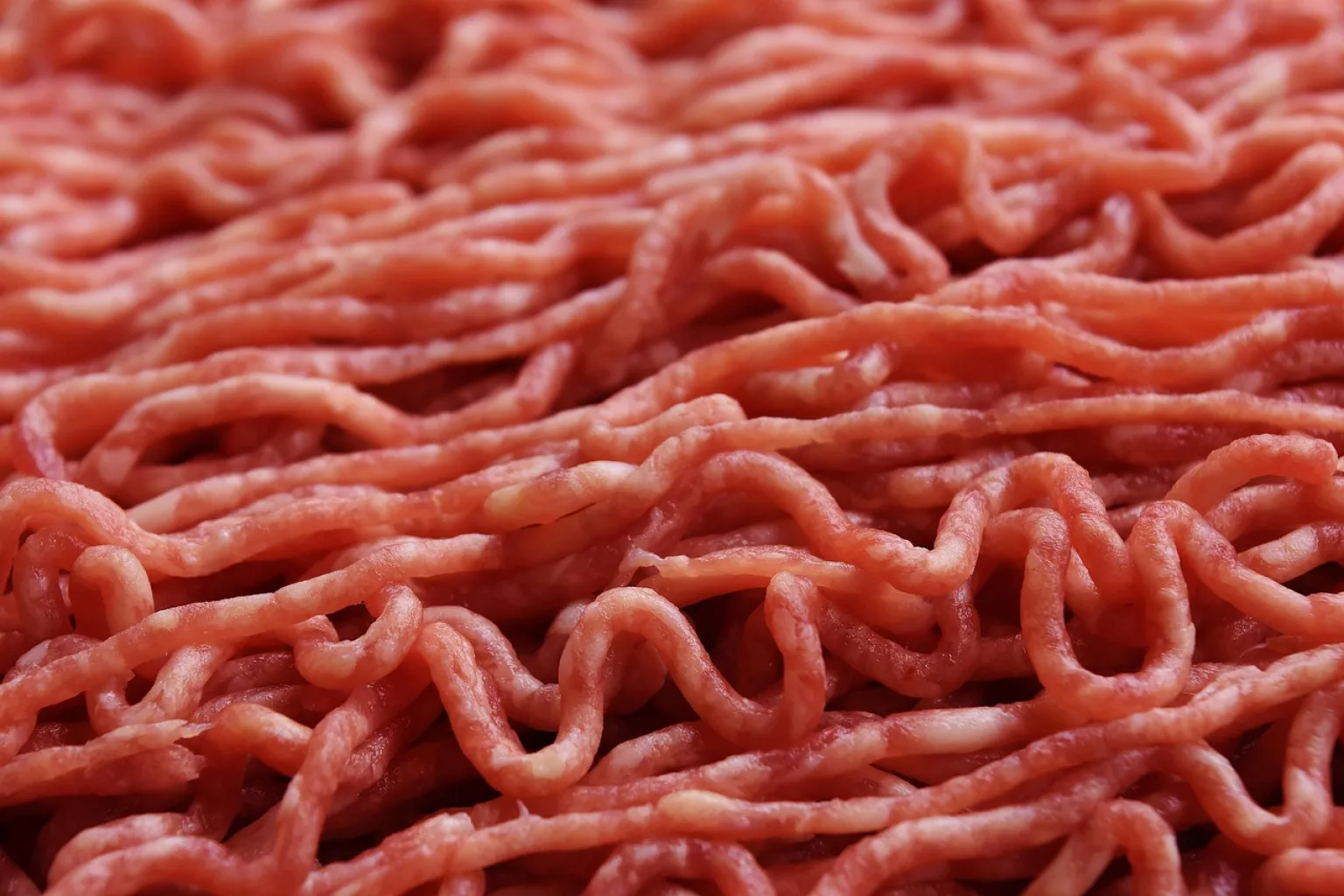
Minced beef is raw beef that has been finely chopped or passed through a mincer. Its small pieces are easy to shape into burgers or meatballs and to mix into sauces, stews and fillings. Plain minced beef is not necessarily the same as a formed burger or another prepared meat product: the product name and ingredient list help show the difference. Its fat content can vary with the meat used, which affects how juicy it may be and how it behaves during cooking. Minced beef is sold fresh and is perishable. For the specific product in your hand, follow its date and the storage directions on the label rather than assuming that every pack has the same keeping time.
When to use it
Choose minced beef when you want meat that blends readily with other ingredients or can be shaped before cooking. It works in burgers and meatballs, as well as pasta sauces, stews and fillings for pastries or other stuffed dishes. For a sauce or stew, it can be combined with vegetables and liquid; for a burger, shape it into a patty first. The fat content affects juiciness and the way the meat changes as it cooks, so consider the recipe rather than expecting every mince to behave alike. If a recipe calls for plain minced beef, check the product name and ingredients instead of relying only on its appearance or a front-of-pack product name.
How to use it
Keep the mince according to the storage instructions on its packaging and use it within the stated date. Prepare other ingredients before taking it out to work with, and avoid leaving it unrefrigerated longer than necessary. Shape it into patties or meatballs, break it up in a pan for a sauce, or use it as a filling. For a stew or sauce, combine it with the other ingredients and continue cooking until the recipe is ready; it can also be cooked in oven dishes such as stuffed pasta or a savoury pie. Season to suit the dish. If you want mince without added ingredients, read the product name and ingredient list: some prepared products contain more than minced meat. Follow the product's directions for use and storage.
Flavour and texture
It has a beef flavor, which can vary with the cut and fat content. The fine texture makes it easy to season, combine with other ingredients or press into burgers and meatballs. A fattier mince may give a juicier result and release more fat during cooking; a leaner one may be less juicy if cooked for too long. Appearance alone does not tell you everything about a product, so check its label, date and storage conditions as well.
How to choose it
Read the product name and ingredient list to distinguish plain minced beef from burgers or prepared products that may contain additional ingredients. Check the use-by date, storage directions and that the packaging is intact. Fat content affects juiciness and can help guide your choice for a sauce, filling or burger. Color is not a complete test of whether a product is in good condition; consider the date, packaging and storage information too.
Storage
Minced beef is perishable. Once home, store it as directed on the package and respect its use-by date. For meat sold unpackaged, ask the retailer about storage and the date by which it should be used. There is no single keeping time that applies to every product, since presentation and label instructions can differ. If you are unsure how to store it, check the label or ask the retailer before storing or using it.
Substitutions
Minced pork, lamb or poultry can replace minced beef, but each will change the dish's flavor and texture. Choose an alternative that suits the recipe, and check that it is mince rather than a product with added ingredients if that matters. Fat and moisture can vary between meats, so you may need to adjust the seasoning or cooking approach. Do not assume that the cooking time or final result will be identical.
Common mistakes
A common mistake is treating plain minced beef as interchangeable with burgers or prepared meat products, which may have different ingredients. Check the product name and ingredient list. Do not judge it by color alone; also check the date, packaging and storage directions. Finally, do not ignore the label when storing or using it: minced beef is perishable, and its keeping time depends on the product and how it has been stored.
Safety and allergens
Follow the use-by date and the product's storage and use instructions. If it is sold unpackaged, ask the retailer for storage and safe-use information. Do not use it if you cannot confirm that it has been kept according to those directions.
Culinary uses
- Base for burgers, meatballs and meat sauces
- Filling for pastries, pasta and other stuffed dishes
Recommended techniques
- Shape into patties or meatballs before cooking
- Cook in a pan or simmer in a sauce
Pairs well with
- Onion, garlic and seasoning
- Tomato-based sauces, pasta and potatoes
Frequently asked questions
Is minced beef the same as a prepared burger?
Not necessarily. Plain mince and a burger or prepared meat product can have different ingredients. Check the product name and ingredient list.
What can I make with minced beef?
It is used for burgers, meatballs, sauces, stews and fillings. Its fine texture makes it easy to mix with other ingredients or shape.
How should I store minced beef?
Follow the product's storage directions and use-by date. If it is sold unpackaged, ask the retailer for its storage guidance.
Ingredient allergens
Allergen listThere are no verified associations for these ingredients yet.
Sources and review
Automatically researched, cross-checked and validated content. Sources consulted:
- En el etiquetado alimentario hay algunas menciones que son obligatorias eletiquetadocuentamucho.aesan.gob.es/obligatoria.html
- Sabores de nuestras tierras/recetas - 2024 | Agricultura y Recursos Naturales ucanr.edu/site/agricultura-y-recursos-naturales/sabores-de-nuestras-tierras-recetas-2024
- Carne picada - Wikipedia, la enciclopedia libre es.wikipedia.org/wiki/Carne_picada
- Vamos a Conservar Alimentos: Tomates extension.psu.edu/vamos-a-conservar-alimentos-tomates/
- estandarización de la formulación de hamburguesas de carne ... scholar.uprm.edu/bitstreams/33166108-8a2a-4fde-b253-0af70905c852/download
- ALIMENTOS. Denominaciones sobre carne picada o ... servicio.mapa.gob.es/ricalwebwai/Fichero.aspx?id=ES&idConsulta=156
- Carne picada de ternera: cómo elegirla, cuánta grasa debe tener, conservarla y cocinarla - El Mercado de Origen www.elmercadodeorigen.com/carne-picada-ternera-que-es-como-elegir-cocinar/
- Propiedades de la carne picada – Botanical-online www.botanical-online.com/alimentos/carne-picada-propiedades
- Para la ciudadanía www.aesan.gob.es/para-la-ciudadania
- Características de la demanda por carne bovina de la ... ageconsearch.umn.edu/record/121667/files/Lanfranco%20_2003_%20INIA%20ST%20136%20-%20demanda%…
- Preserving fruits: Mangoes | Servicio de Extensión de OSU extension.oregonstate.edu/es/food/preservation/preserving-fruits-mangoes
- Salmonelosis www.cfsph.iastate.edu/Factsheets/es/salmonelosis.pdf
- Archivo General de la Nación Provincias Internas library.unm.edu/cswr/docs/nmarchives/FindingAids/mss867Provincias%20Internas.pdf
- Estudio de la actividad antioxidante de diversas plantas ... upcommons.upc.edu/bitstreams/2ba9295d-50ba-4beb-8513-47ed2974095a/download