- Category
- Pulses
- State
- Other
- Usual unit
- Variable
What it is
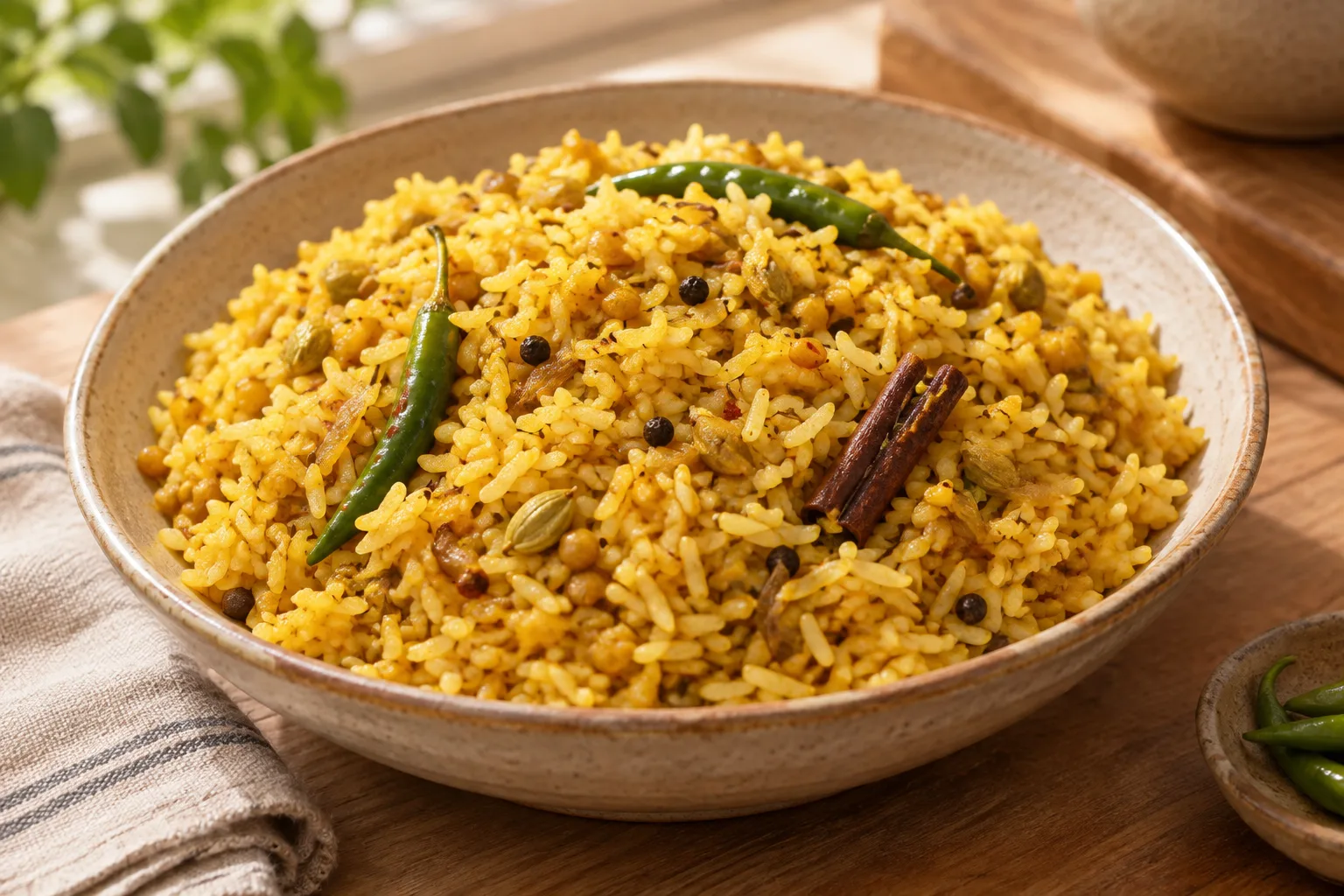
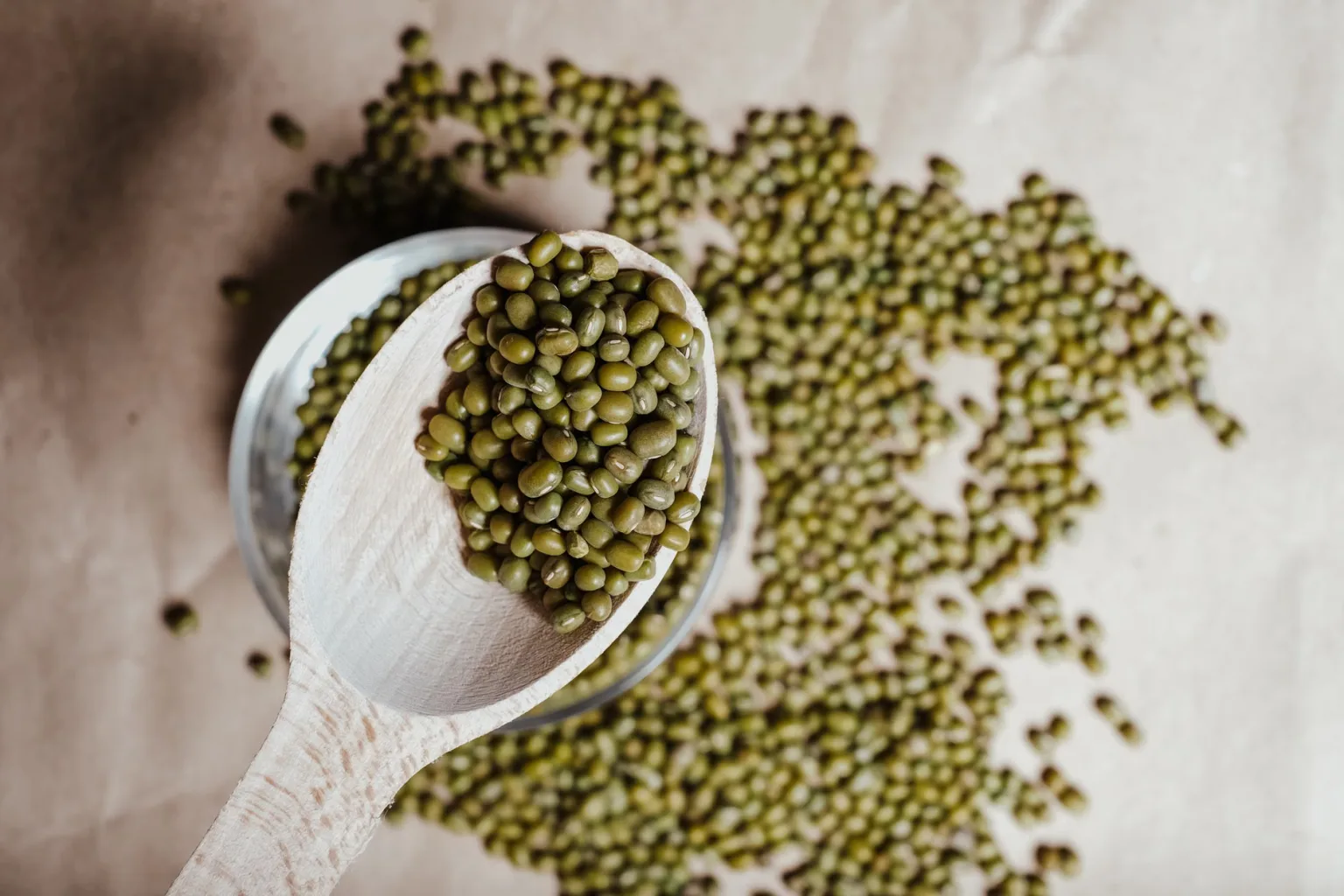
Mung is a pulse also referred to as green soybean in the context of Indian cuisine. The name “mung lentils” can suggest that it is an ordinary lentil, but mung is identified as a distinct pulse in the culinary context described here. It is used in dal-style pulse dishes and also appears in preparations combining pulses and rice, such as khichri. It may be sold dehulled, although not all products necessarily come in the same form. The name alone does not tell you whether your product is whole, dehulled, fresh, or dried, so check the label before choosing how to cook it. Do not assume that instructions for another pulse apply without changes.
When to use it
Choose mung when you want a dal-style pulse dish or a recipe combining pulses and rice, such as a khichri-style preparation. It can also suit a dish seasoned with spices used in Indian cooking, including cumin, turmeric, ginger, or coriander. Before cooking, check the form stated on the package: directions may depend on whether the product is whole or dehulled and on its state as sold. Do not automatically transfer cooking times or steps from ordinary lentils. If a recipe calls for a particular form and the package does not identify it, choose a product clearly labeled for that preparation.
How to use it
Start by reading the label to identify the product and confirm its form; follow the package directions if provided. Mung is used in dal-style pulse dishes and can be combined with rice in khichri-style preparations. To season the dish, you can use spices associated with Indian cooking, such as cumin, turmeric, ginger, and coriander, adjusting them to the recipe and your taste. Do not infer cooking time or soaking requirements from a different pulse: the product may be in a different form. If the package gives no clear directions, look for a recipe specifically suited to the form stated on the label rather than improvising with timings for another ingredient. To substitute it, choose another pulse and follow that pulse’s own directions.
Flavour and texture
Do not assume that every form of mung will give the same result in a dish. Its culinary uses include dal-style preparations and dishes with rice, which can be seasoned with cumin, turmeric, ginger, or coriander. First identify whether the product is whole or dehulled and use a recipe suited to that form; this helps you choose a preparation without automatically treating it like an ordinary lentil.
How to choose it
Check that the label clearly identifies the product as mung and, if possible, states whether it is whole or dehulled and how it is sold. The name “mung lentils” can be confused with other pulses, so do not rely on the word “lentil” alone. Choose a package with a readable label and preparation and storage directions that apply to the specific product. If its form is unclear, do not assume it cooks like another pulse.
Storage
How to store mung depends on the specific product and cannot be determined from the name alone. Follow the storage directions on the package and keep it under the conditions specified for that form. If the label does not explain how to store it, ask the seller or manufacturer before storing or using it. If a food alert applies to the product, do not consume it and follow the relevant official instructions.
Substitutions
In dal-style dishes, you can replace mung with another pulse, such as lentils, chickpeas, or urad dal, but the swap is not exact. Each alternative may need different directions and can change the result. Choose a substitute suited to the recipe, check its form, and follow its own preparation instructions rather than copying the mung directions unchanged.
Common mistakes
A common mistake is treating mung as an ordinary lentil or assuming every form is prepared in the same way. Check whether the product is whole or dehulled and read its label before cooking. Do not automatically copy soaking or cooking times from another pulse; use directions that match the specific product and recipe.
Safety and allergens
Follow the package directions for handling, preparation, and storage. If the mung product is covered by a food alert, do not consume it and follow the official instructions for that product.
Culinary uses
- Base for dal-style pulse dishes
- Pulse ingredient in rice-and-legume dishes
Recommended techniques
- Prepare in a dal-style dish, following the product's own directions
- Combine with rice in a khichri-style preparation
Pairs well with
- Rice
- Cumin, turmeric, ginger, and coriander
Frequently asked questions
Are mung beans ordinary lentils?
Do not assume so from the name “mung lentils.” Mung is identified as green soybean and used as a pulse in dal-style dishes; check the identification on the specific product.
What can mung be paired with?
It is used in dal-style pulse dishes and in preparations combining pulses with rice. You can season these dishes with spices such as cumin, turmeric, ginger, or coriander.
Do I need to soak mung before cooking it?
There is no single direction for every form. Check the product’s form and state on the label, then follow the preparation directions that apply to it.
Ingredient allergens
Allergen listThere are no verified associations for these ingredients yet.
Sources and review
Automatically researched, cross-checked and validated content. Sources consulted:
- Client Challenge doi.org/10.2307/jj.27939689.16
- Gastronomía de la India - Wikipedia, la enciclopedia libre es.wikipedia.org/wiki/Gastronom%C3%ADa_de_la_India
- Agencia Española de Seguridad Alimentaria y Nutrición www.aesan.gob.es/
- Sevin RTU Gallon Label v14 picol.cahnrs.wsu.edu/DownloadLabel/67239/WA
- Nutritional and Health Benefits Enhancement of Wheat-Based ... openprairie.sdstate.edu/cgi/viewcontent.cgi?article=3505&context=etd
- FRIJOL NEGRO (GRAMO NEGRO, LENTEJA NEGRA, MUNGO) api.echocommunity.org/pdf/es/34c26750-26ac-4b2e-8df4-67d120eb5d58/vigna-mungo.pdf
- Lentejas agua fría o caliente: análisis y comparativa de maridajes con quesos y embutidos laovejaquebala.es/lentejas-agua-fria-o-caliente/
- Claves para hacer lentejas como las de mamá www.hola.com/cocina/tecnicas-de-cocina/20191016151342/consejos-para-hacer-lentejas/
- - YouTube www.youtube.com/watch?v=iy_MmHXjrxs
- Tipos de lentejas y cómo cocinarlas: remojo, tiempos y trucos para que queden perfectas www.abc.es/recetasderechupete/tipos-de-lentejas-y-como-cocinarlas-remojo-tiempos-y-trucos-pa…
- Especias para lentejas irresistibles | Guía completa munozypujante.com/especias-para-cocinar-lentejas-sabrosas/