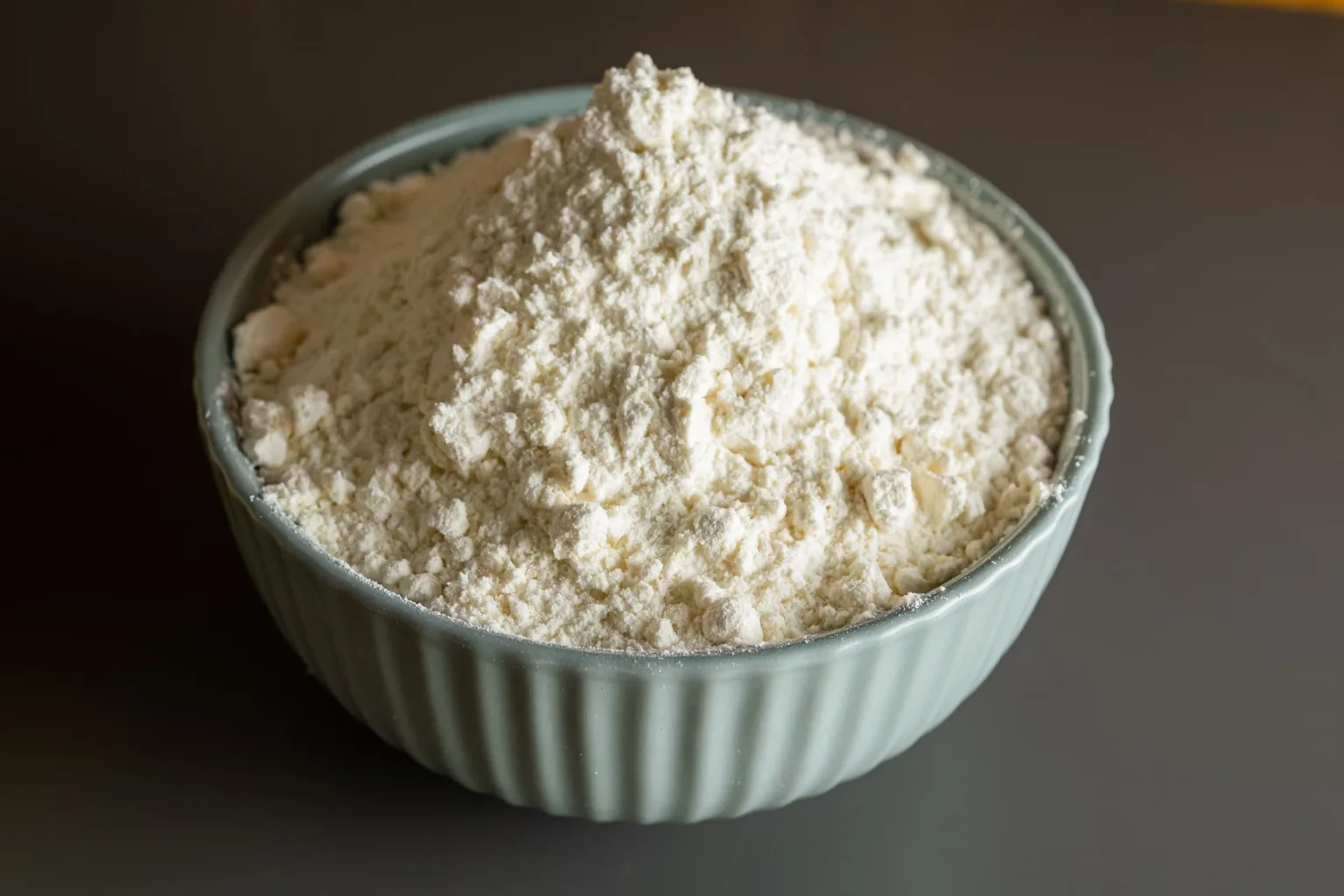
- Category
- Baking
- State
- Powdered
- Usual unit
- teaspoon
What it is
Here, “Natron” means food-grade baking soda, also known as sodium bicarbonate: a salt used as a chemical leavener in batters and doughs. When it meets an acidic ingredient and moisture, it releases carbon dioxide; the bubbles help expand the mixture. It is not the same as baking powder, which contains baking soda along with acidic components. Nor is it the same as mineral natron, a hydrated sodium carbonate mineral distinct from the bicarbonate used in baking. Check the product label to ensure that it is intended for food use, rather than for cleaning or another purpose.
When to use it
Use it when a recipe specifically calls for baking soda and includes an acidic ingredient such as buttermilk, vinegar, yogurt, or sour milk. The reaction releases gas that can lighten the mixture, but it begins once the wet and dry ingredients are combined. Prepare the oven and other ingredients first, then mix and cook the batter promptly. Do not substitute it automatically for baking powder in a recipe: the two products are different and a direct swap may require changes to the formula.
How to use it
Follow the amount given in the recipe and measure with a clean, dry measuring spoon rather than estimating. Mix the baking soda evenly with the dry ingredients, and prepare any acidic wet ingredients separately as directed. Combine the wet and dry mixtures when you are ready to cook, then stir gently just until incorporated. The carbon-dioxide-producing reaction starts when the soda meets moisture and acid, so avoid leaving the batter to stand for a long time. Cook it promptly to make use of the gas bubbles that help the mixture rise.
Flavour and texture
Baking soda is used chiefly for its leavening action, not to add flavor. In a well-formulated recipe, it helps a batter or dough expand and become lighter. Its reaction with acid creates carbon dioxide bubbles; if the mixture stands too long, some bubbles may escape before cooking and the finished result can be denser. Texture also depends on the recipe and mixing, so measure accurately, mix gently, and follow the stated method rather than adding extra soda.
How to choose it
Choose a package clearly labeled as food-grade baking soda or sodium bicarbonate for cooking or baking. Do not confuse the word “Natron” with mineral natron, a hydrated sodium carbonate, or with baking powder; these are different products. Check the label and make sure the package is intact. Use a clean, dry spoon to avoid contaminating the powder. If the label does not establish that the product is suitable for food, do not use it in a recipe.
Storage
Keep baking soda in a tightly closed container in a dry place, away from moisture and strong odors. Avoid dipping in a wet spoon or one that has touched other ingredients, which can contaminate the powder. Refrigeration is not needed; a product stored in a refrigerator can absorb surrounding odors. Keep the baking supply separate from any baking soda reserved for cleaning or other non-food uses, and follow the package directions.
Substitutions
Baking powder is not a direct replacement for baking soda: it contains baking soda and acidic components, and a recipe may need adjustments to work properly. Use it only when you can adapt the formula or the recipe provides a specific substitution. Yeast also produces gas, but works differently and belongs in a recipe designed for yeast. Do not replace baking soda with mineral natron or another product that is not labeled as suitable for food.
Common mistakes
Do not treat baking soda and baking powder as interchangeable. Another common mistake is combining the soda with wet ingredients long before cooking; the reaction starts with moisture and acid, and bubbles can be lost while the batter waits. Measure the stated amount, avoid overmixing, and never use a product unless its package identifies it as suitable for food.
Safety and allergens
Use only baking soda labeled for food use and follow the recipe and package directions. Do not use mineral natron, sodium carbonate, or cleaning products as culinary substitutes.
Culinary uses
- Chemical leavener for batters and doughs
- Acid-neutralizing ingredient in recipes formulated for it
Recommended techniques
- Measure accurately and mix with the recipe’s acidic ingredients
- Bake or cook promptly after the wet and dry ingredients are combined
Pairs well with
- Buttermilk
- Vinegar
- Yogurt or sour milk
Frequently asked questions
Are baking soda and baking powder the same?
No. Baking soda needs an acidic ingredient in the recipe to release carbon dioxide; baking powder already contains baking soda and acidic components.
Why should I bake the mixture soon after mixing?
The reaction begins when baking soda meets moisture and acidic ingredients. If the batter waits too long, some carbon dioxide bubbles may escape before cooking.
Is baking soda the same as mineral natron?
No. In this profile, “Natron” refers to culinary sodium bicarbonate. Mineral natron is hydrated sodium carbonate, a different substance and not a baking substitute.
Ingredient allergens
Allergen listThere are no verified associations for these ingredients yet.
Sources and review
Automatically researched, cross-checked and validated content. Sources consulted:
- Client Challenge doi.org/10.2307/jj.27939689.16
- Baking Soda -- The Everyday Miracle ™ oconto.extension.wisc.edu/files/2011/02/Baking-Soda.pdf
- 3 Key Chemical Leavening Agents in Baking | K-State | Kansas State University www.johnson.k-state.edu/programs/health-food-safety/newsletter-articles/agents-articles/3-ke…
- Burton-Conner House | The Guide to Residences housing.mit.edu/residences/burton-conner-house
- Want berries with fewer pesticides? Here’s how to wash them | Harvard T.H. Chan School of Public Health hsph.harvard.edu/news/want-berries-with-fewer-pesticides-heres-how-to-wash-them/
- Virtual Labs | CSUF - The Division of Information Technology www.fullerton.edu/it/services/computer-labs/virtual-labs/
- Natrón - Wikipedia, la enciclopedia libre es.wikipedia.org/wiki/Natr%C3%B3n
- Natrón www.quimica.es/enciclopedia/Natr%C3%B3n.html
- Natrón para Niños ninos.kiddle.co/Natr%C3%B3n