- Category
- Vegetables
- State
- Dry
- Usual unit
- sheet
What it is
Nori is an edible seaweed from the genus Porphyra, commonly sold as thin, pressed, dried sheets. The name is used for edible related seaweeds rather than just one species. Dried sheets are the familiar format for wrapping rice in maki, temaki, and onigiri. Nori is also sold cut into strips, flakes, or powder for use as a seasoning. Its dry, light sheet form differs from fresh seaweed and from thicker seaweeds, so these forms should not be treated as interchangeable in every recipe. The format you choose affects whether nori acts as a wrapper, a garnish, or a seasoning.
When to use it
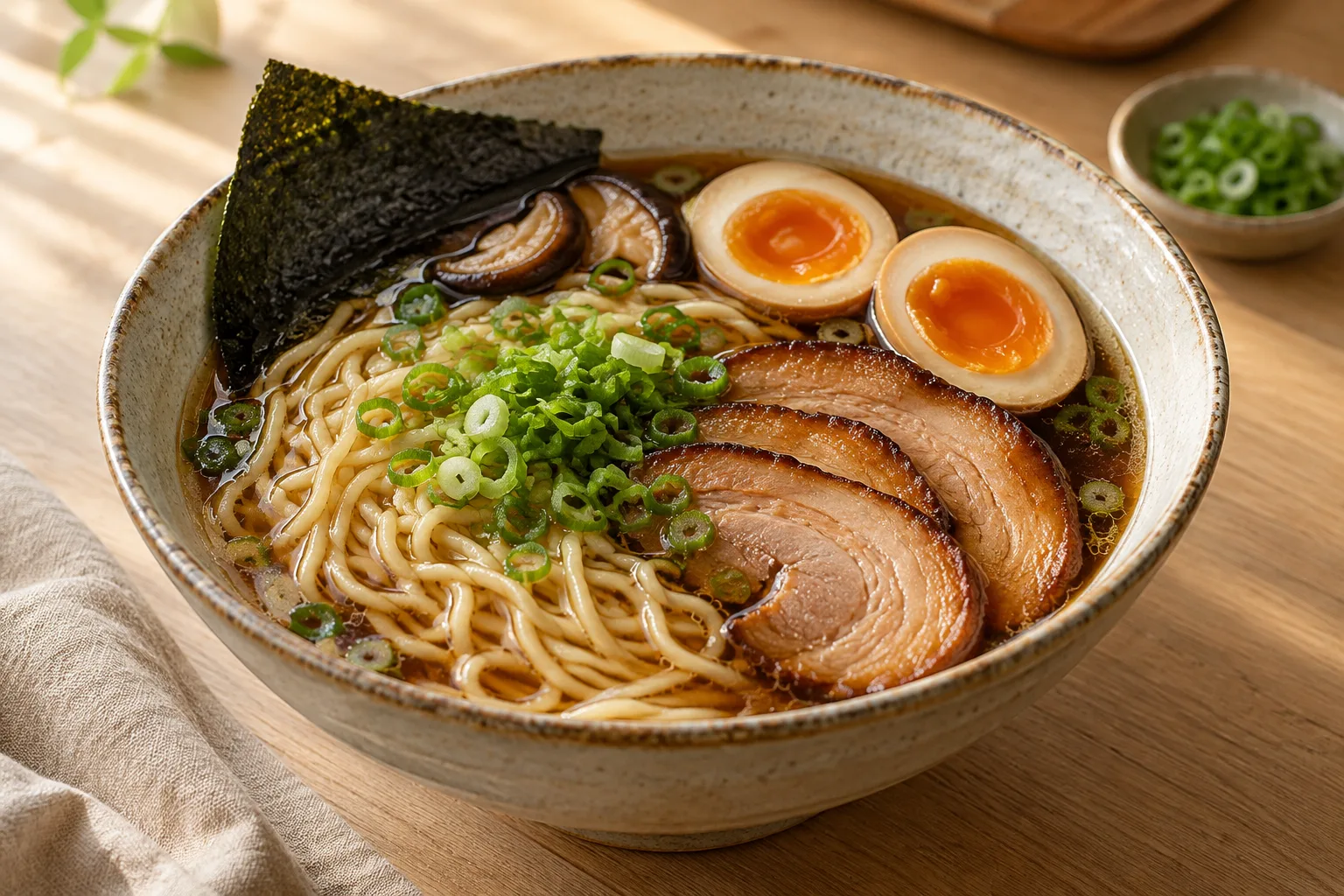
Choose nori sheets when you want to wrap rice and fillings for maki, temaki, or onigiri, or form sushi pieces with a seaweed exterior. Cut sheets into strips to finish soups, noodles, or rice dishes just before serving. If you want the savory sea flavor spread throughout a dish, crumble or grind the nori and use it as a seasoning. It is a practical choice when you want a thin wrapper or a light garnish rather than a thicker seaweed that serves a different purpose. The finished texture depends on whether the nori stays dry or comes into contact with moist ingredients.
How to use it
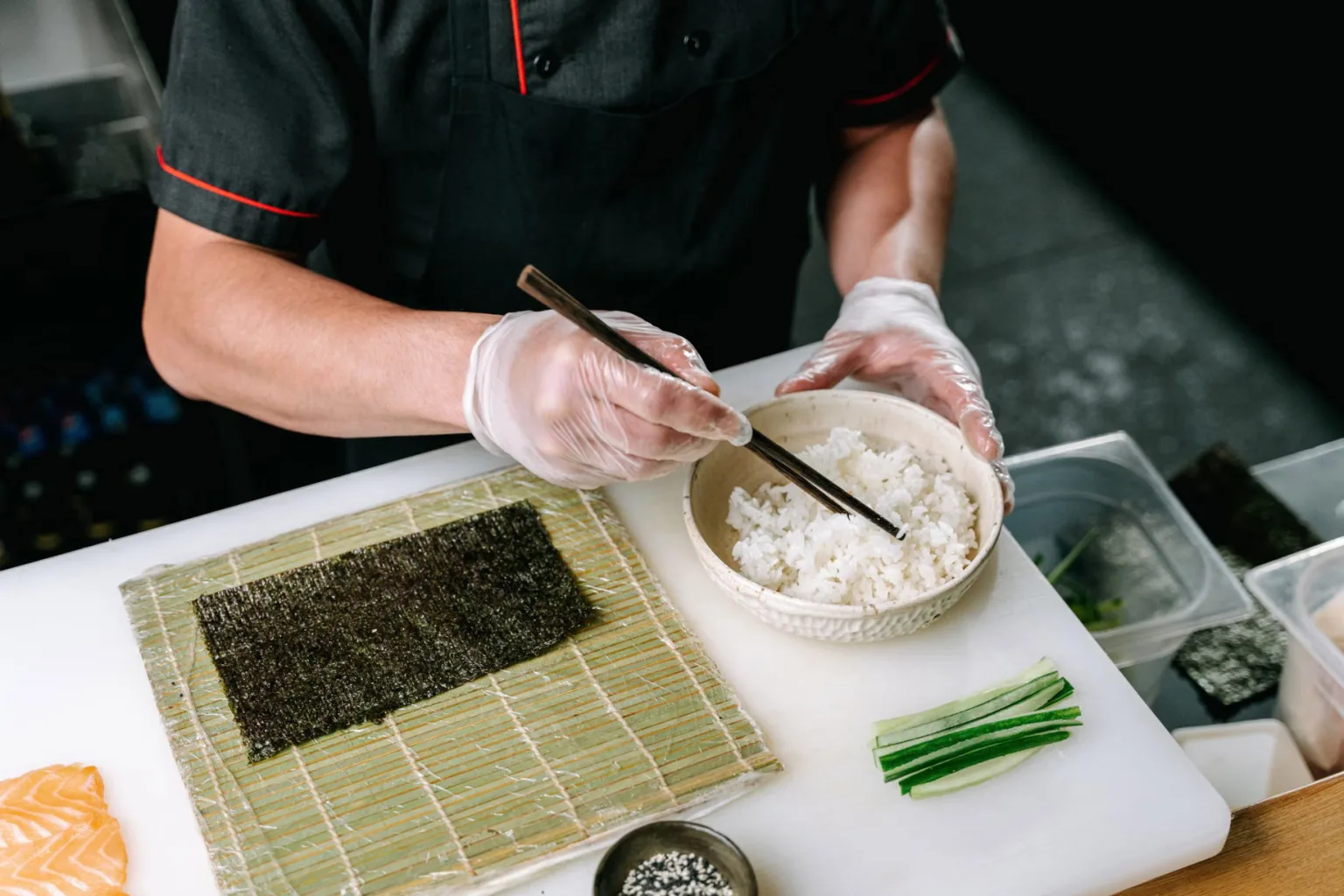
For a wrap, place a sheet on a clean surface, add rice and fillings, then roll or fold it to suit the dish. For onigiri, wrap the shaped rice with a strip or piece of sheet. To use nori as a finishing touch, cut or crumble it and scatter it over soup, noodles, rice, or vegetables just before eating. You can also grind it dry to add to a savory seasoning. Follow the package directions if they specify a particular preparation. Dried nori becomes less crisp when it gets damp, so add it at the end and avoid leaving it in prolonged contact with wet food when you want to retain a crisp texture.
Flavour and texture
Nori has a savory, marine flavor with umami character; toasting can make it more aromatic. Dry sheets are thin and brittle, but become flexible when they touch rice or other moist ingredients. Cut or crumbled nori adds a light texture, while a whole sheet can serve as a wrapper. The result varies with the product format and exposure to moisture.
How to choose it
Choose the format for the task: whole sheets for wrapping, and strips, flakes, or powder for sprinkling. For sushi or onigiri, look for intact sheets that can be handled without falling apart when the package is opened. Check that the package is sealed and read its storage and preparation directions. Toasted nori is a common ready-to-use format, but follow the label because products can differ.
Storage
Dried nori is sensitive to moisture, which can take away its crisp texture. After opening, reseal the package tightly or transfer the sheets to an airtight container and keep them dry; use a desiccant only if it is supplied for the product. Follow the package storage directions and avoid leaving sheets exposed to air or steam. If the sheet has lost its texture or the package is damaged, check the manufacturer's information before using it.
Substitutions
The available evidence does not establish a direct substitute for a nori sheet when it is needed to wrap sushi or onigiri. Another edible seaweed may provide a marine note, but its thickness, texture, and behavior can differ. Kombu, for example, is mainly used for broth and does not serve the same wrapper role. Choose any alternative according to the job nori performs in the recipe, not simply because it is another seaweed.
Common mistakes
Do not assume all seaweeds are interchangeable: a thicker variety may not roll like a nori sheet. Keep dried nori away from moisture if you want to preserve its texture. For a crisp garnish, add it at the end rather than leaving it on soup or other moist food for a long time.
Safety and allergens
If you have a food allergy, check the ingredient list and allergen information for the specific product; mixes and prepared products can vary. Package information is important for identifying declared ingredients.
Culinary uses
- Sushi and rice wrapper
- Savory sea-flavoring and garnish
Recommended techniques
- Wrap cooked rice and fillings in a sheet
- Cut, crumble, or grind into a seasoning
Pairs well with
- Rice
- Soups and noodles
- Eggs and vegetables
Frequently asked questions
Is nori always sold fresh?
No. The familiar format for sushi and onigiri is the dried, pressed sheet; nori is also sold in strips, flakes, or powder.
How can I use nori beyond sushi?
Cut or crumble it over soups, noodles, and rice, or grind it dry to use as a seasoning.
How can I stop nori sheets losing their texture?
Protect dried nori from moisture: seal the package well or use an airtight container, and follow the label's storage directions.
Ingredient allergens
Allergen listThere are no verified associations for these ingredients yet.
Sources and review
Automatically researched, cross-checked and validated content. Sources consulted:
- Client Challenge doi.org/10.2307/jj.27939689.16
- Los japonesismos culinarios | OpenAlex openalex.org/W2906636610
- Agencia Española de Seguridad Alimentaria y Nutrición www.aesan.gob.es/
- Allergies - Food Safety - European Commission food.ec.europa.eu/food-safety/campaign-2026/allergies_en
- Food allergen portal | Food Standards Australia New Zealand www.foodstandards.gov.au/consumer/foodallergies/food-allergen-portal
- Sustainable Nutrition and Food Allergy: A State-of-the-Art Review - PMC pmc.ncbi.nlm.nih.gov/articles/PMC12348080/
- - YouTube www.youtube.com/watch?v=syG9nsy0rEM
- El papel del alga nori en el sushi: historia, tipos y usos creativos - Espai Niwaka espainiwaka.com/es/el-papel-del-alga-nori-en-el-sushi-historia-tipos-y-usos-creativos/
- Tipos de algas comestibles: guía para elegir las mejores opciones asiáticas y para hacer sushi sukimotril.es/tipos-algas-comestibles/
- Algas comestibles: tipos, usos y guía de cocina atlántica blog.cib.education/es/notes/algas-comestibles-que-son-tipos-y-usos-de-la-verdura-del-mar/
- Nori alga milenaria - Muy Japones www.muyjapones.com/nori-alga-milenaria/
- 5 recetas con alga nori: descubre cómo incorporar en la cocina este gran ingrediente bonviveur.com/es/recetas/lista/algas-nori/
- Alga Nori: Un Ingrediente Versátil en la Cocina www.jiashengseaweed.com/es/Nori-Seaweed-A-Versatile-Ingredient-in-the-Kitchen
- Cómo preparar y cocinar algas | Gastronomía Vegana www.gastronomiavegana.org/ingredientes/como-preparar-y-cocinar-algas/
- Alga nori más allá del sushi: mitos, beneficios y cómo incorporarla a tus recetas diarias www.huleymantel.com/despensa/alga-nori-mas-alla-sushi-mitos-beneficios_103426_102.html