- Category
- Fish and seafood
- State
- Fresh
- Usual unit
- kg
What it is
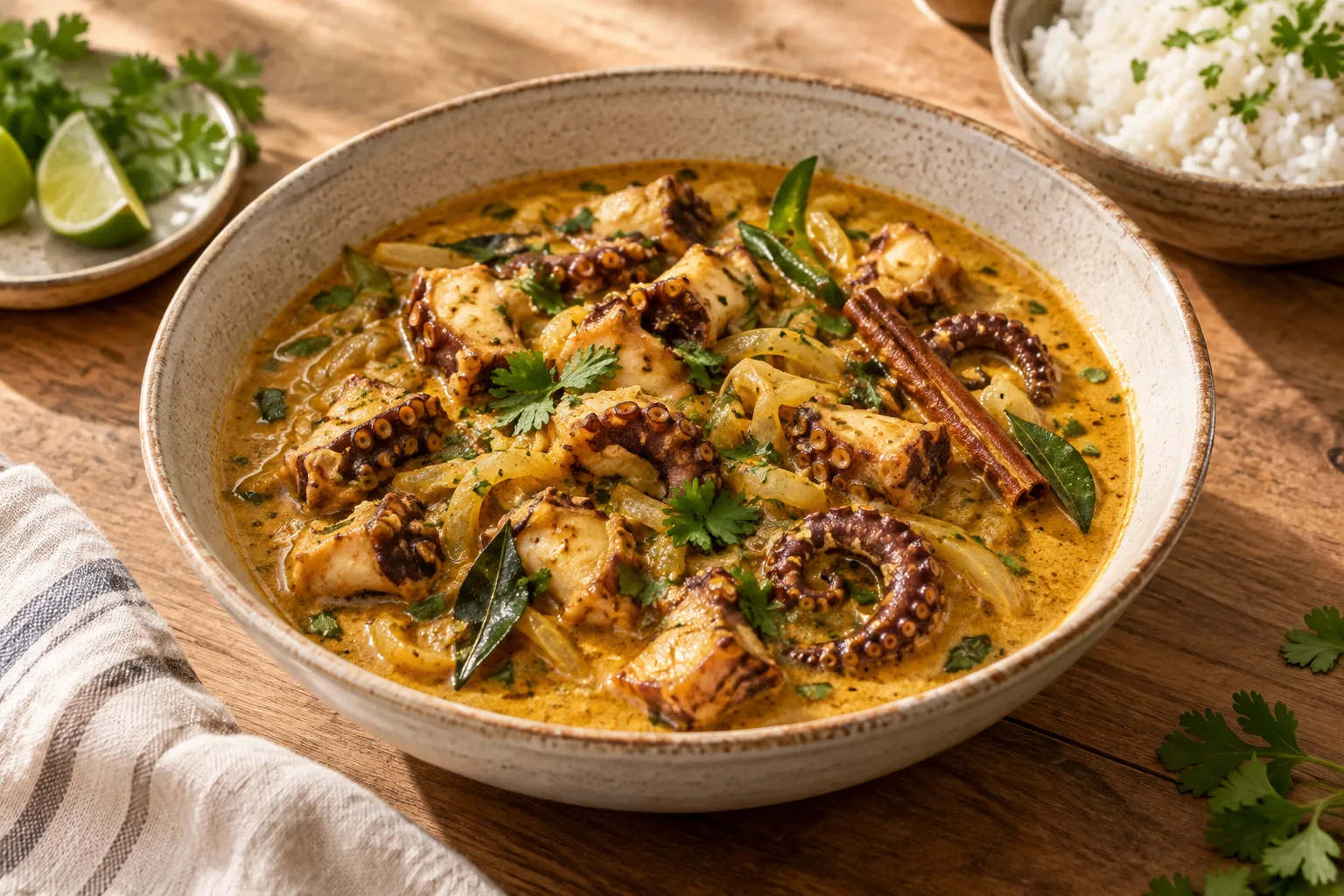
Octopus is a marine cephalopod used as a seafood ingredient. In the kitchen it may be prepared whole, in pieces or as tentacles, then served in hot dishes, salads or sharing plates. Its firm flesh suits several methods, including cooking in water, roasting and grilling. It is also common to cook it first and then sear or brown the pieces for color. Octopus is sold fresh and may also be available already cooked; these forms should be treated differently because they do not need the same cooking process. There is no single preparation: it can be simply dressed or paired with aromatic spices and marinades.
When to use it
Choose octopus when you want seafood to be the centerpiece of a dish or a substantial salad. Cooking it in water provides a base for recipes where an even, tender texture is wanted; it can then be served as is, dressed or seared. Grilling and roasting work well when you want a more browned surface and toasted flavors. For a shared meal, serve it on a platter with potatoes, oil and paprika, or pair it with fresh vegetables. If you buy cooked octopus, use it for quicker preparations and avoid giving it a long, unnecessary cooking.
How to use it
Before cooking, check whether the octopus is fresh or already cooked and follow the product label or seller’s preparation and storage instructions. Cooking in water is a common option for fresh octopus; the available evidence does not establish one universal cooking time, so do not rely on a fixed time without considering the product and its size. Once cooked, slice it for a salad, serve it with potatoes, or sear the tentacles on a hot griddle or grill. You can also roast it or use an aromatic marinade with oil, lemon, garlic and spices before cooking. Adjust salt and seasonings at the end, especially if other salty ingredients are included.
Flavour and texture
Octopus has a marine flavor that works with a simple dressing or with more assertive spices and marinades. Its flesh is firm and, when cooked until tender, can be sliced or served as tentacles. Grilling or griddling adds a browned surface and toasted notes; cooking it first makes it easy to use in salads and hot dishes.
How to choose it
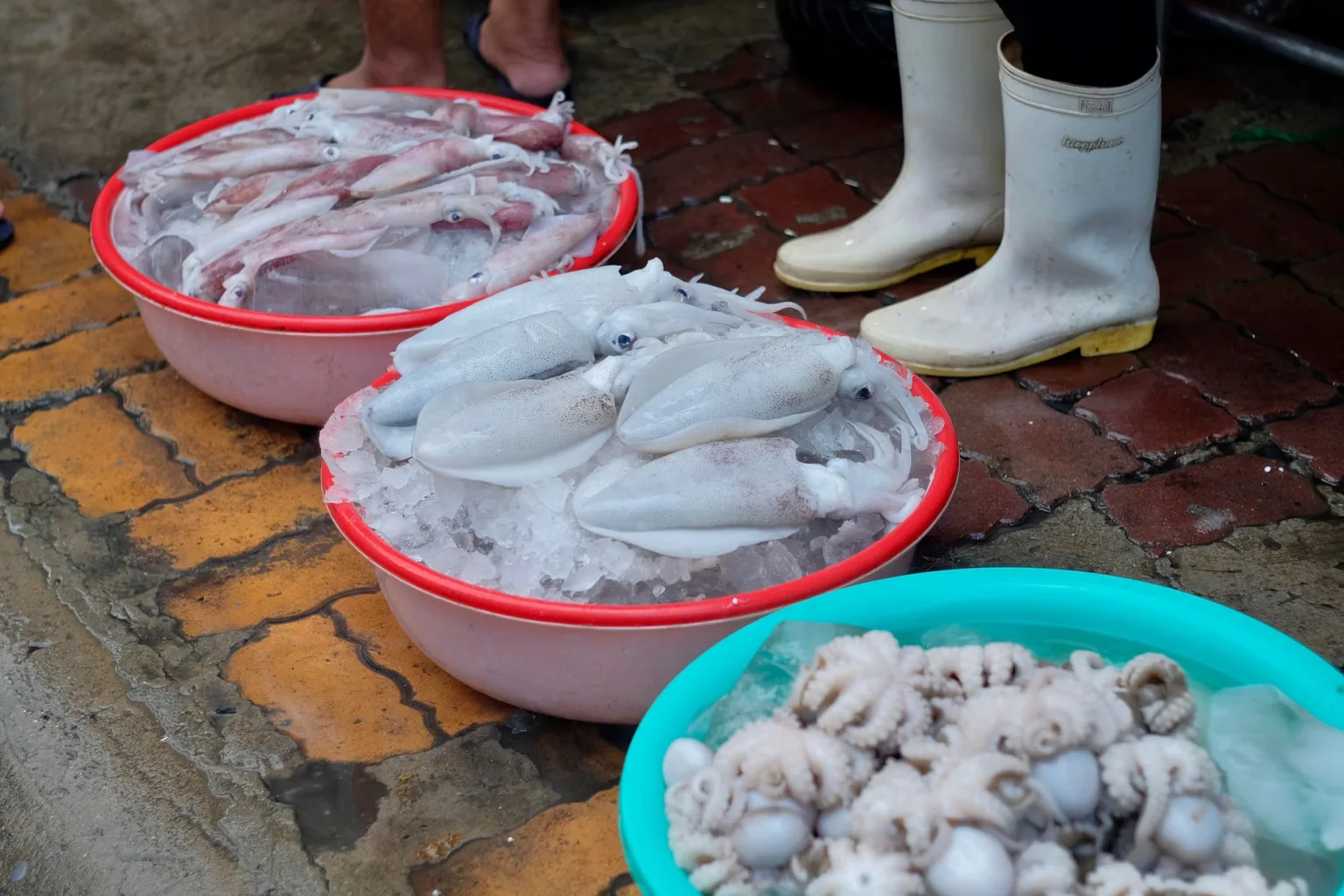
Choose between fresh and cooked octopus according to the recipe, since the two forms need different preparation. For a packaged product, check the label, date and storage instructions; at a fish counter, ask about its condition and recommended preparation. Select a quantity and format that suit the dish, such as pieces or tentacles for individual servings.
Storage
Store octopus according to the package directions or the advice given by the seller. Keep it protected and separate from ready-to-eat foods, and do not leave it at room temperature longer than necessary. If you will not cook it soon, check the label or ask the seller how to store it safely; there is no universal storage duration that applies to every product.
Substitutions
No identical substitute is established here. To shorten preparation, replace fresh octopus with previously cooked octopus and adapt the method, since cooked product does not need the same initial cooking. If the dish is served in portions, cooked tentacles can stand in for a whole cooked octopus; adjust the presentation to fit the format available.
Common mistakes
Do not treat fresh octopus and cooked octopus as interchangeable in the cooking process: cooked product can become tough if given a long, unnecessary cook. Another mistake is applying one fixed time to every size and format without checking the product directions. When grilling or searing, avoid overwhelming its flavor with too many seasonings; start simply and adjust at the end.
Safety and allergens
Handle octopus hygienically and keep it appropriately chilled. Follow the package or seller’s instructions and official food-safety guidance for seafood.
Culinary uses
- Main ingredient in hot seafood dishes
- Ingredient for salads and shared seafood plates
Recommended techniques
- Boiling or simmering
- Grilling or searing
- Roasting
- Marinating before cooking
Pairs well with
- Olive oil, lemon, garlic and fresh herbs
- Paprika and potatoes
- Cumin, sumac or za’atar
Frequently asked questions
Which cooking methods work for octopus?
It can be cooked in water, roasted or grilled. Another option is to cook it first and then briefly sear the tentacles.
What pairs well with octopus?
Try olive oil, lemon, garlic, herbs, paprika and potatoes. For a more spiced profile, cumin, sumac or za’atar are also options.
Can I use cooked octopus?
Yes. It is convenient for salads or briefly seared tentacles, but adapt the recipe because it does not need the same initial cooking as fresh octopus.
Ingredient allergens
Allergen listDocumented presence
-
Molluscs
Octopus
Estimated nutrition
- Fat
- 1.18 g
- Saturates
- 0 g
- Carbohydrate
- 1.18 g
- Sugars
- 0 g
- Fibre
- 0 g
- Protein
- 16.5 g
- Salt
- 1.47 g
Sources and review
Automatically researched, cross-checked and validated content. Sources consulted:
- Client Challenge doi.org/10.2307/jj.27939689.16
- The Essential Glossary of Cooking Terms for the Culinary Arts - Escoffier www.escoffier.edu/blog/culinary-arts/the-essential-glossary-of-cooking-terms-for-the-culinar…
- Food – Page 2 – To GT-Europe…and Beyond! gtlblog.gatech.edu/category/gte-topics/food/page/2/
- Para la ciudadanía www.aesan.gob.es/para-la-ciudadania
- Why an Octopus is Chef Greg Proechel's Spirit Animal | Institute of Culinary Education www.ice.edu/blog/why-octopus-chef-greg-proechels-spirit-animal
- Octopuses Are Highly Intelligent. Should They Be Farmed for Food? - Yale E360 e360.yale.edu/features/octopus-intelligence-conservation
- Orbigo waypoints.ace.fordham.edu/items/browse?amp%3Bamp%3Bamp%3Bamp%3Boutput=omeka-xml&%3Bamp%3B…
- Winners | Dining Services | Division of Student Life & Enrollment | University of Connecticut dining.uconn.edu/culinary-olympics/winners/
- Dos filosofías culinarias en un mismo alimento: el pulpo. | anacef.com anacef.com/archivos/4707
- Cinco formas de comer pulpo que querrás probar este 8 de octubre | Hostelería Salamanca www.hosteleriasalamanca.es/noticias-hosteleria/octubre-2026/cinco-formas-comer-pulpo-querras…
- Maneras de cocinar pulpo: técnicas tradicionales vs. modernas. - 3 de Pulpo 3depulpo.es/maneras-de-cocinar-pulpo-tecnicas-tradicionales-vs-modernas/
- Managing allergens | Food Standards Scotland www.foodstandards.gov.scot/business-guidance/running-a-food-business/managing-allergens