- Category
- Oils and fats
- State
- Liquid
- Usual unit
- tablespoon
What it is
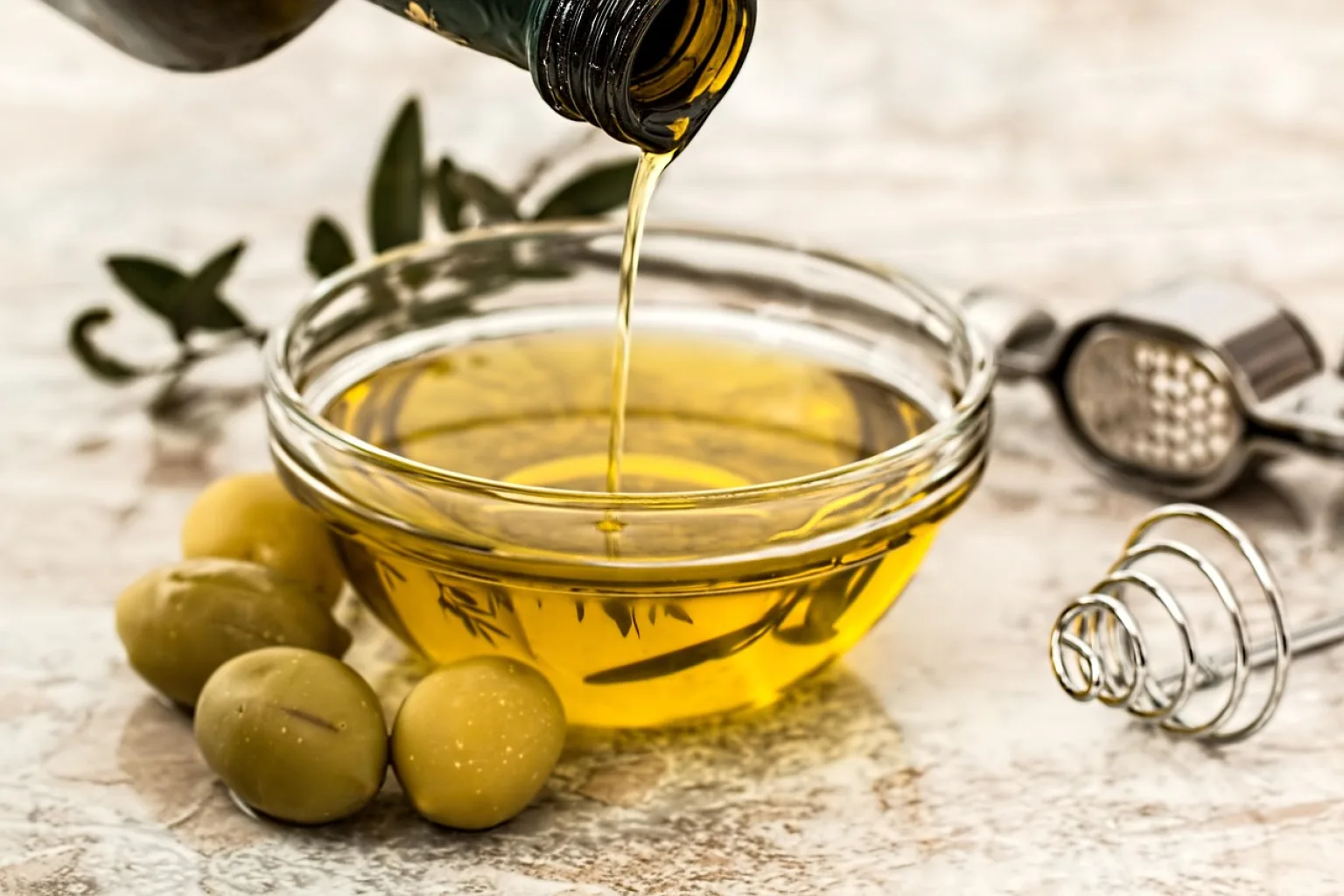
Olive oil for finishing is not a separate category of oil; it describes a culinary use. It is drizzled over food shortly before serving rather than necessarily being added during cooking. A flavorful extra-virgin olive oil can add an aromatic accent to a salad, soup, vegetables, or pasta, while a milder oil gives a less prominent finish. Olive oils vary in flavor and intensity, so choose one that suits the dish and the result you want. The oil can also be used in dressings or served with bread for dipping. The phrase “for finishing” describes when and how the oil is used, not a specific variety, region, or harvest season.
When to use it
Use it when a dish is ready and you want a noticeable olive-oil aroma without cooking it further. A drizzle can complement salads, cooked or roasted vegetables, soups and purées, pasta, rice dishes, or bread. It is useful for adjusting a dish at the table: start with a small amount, taste, and add more only if needed. Choose a mild oil when you want a subtle finish, or a more pronounced one when you want the oil’s own flavor to stand out. It also works in vinaigrettes and other dressings.
How to use it
Drizzle the oil over plated food just before serving, using a thin stream or a few drops. For a salad, whisk it into vinegar or lemon juice and the other dressing ingredients; add enough to lightly coat the leaves without making them heavy. On soup, purée, or vegetables, start with a small drizzle and stir only if you want the oil distributed throughout. To serve with bread, pour it into a small dish and add other seasonings if desired. If the food is very hot, the oil will blend into it and its aroma may come across differently; for a fresher-tasting finish, add it at serving time. There is no fixed amount: begin sparingly and adjust to taste.
Flavour and texture
The flavor depends on the particular oil: it may be mild or distinctly fruity, and some oils have a more pronounced character. Added at the end, its aroma remains noticeable and gives food a smooth, flowing richness. Taste the oil first so you can judge how strongly it will come through.
How to choose it
Choose an olive oil whose aroma and taste you enjoy on their own. For a clearly noticeable finish, select an extra-virgin oil with a pronounced flavor; for a subtler result, look for a milder profile. Read the label to identify the type of oil, and do not rely on color alone as a guide to flavor.
Storage
Keep the bottle tightly closed in a cool, dark place, away from heat, light, and prolonged exposure to air. These conditions can damage stored oil. Check its smell before use and replace it if it develops a bitter or unpleasant odor. Avoid leaving the bottle open beside a heat source.
Substitutions
You can use another olive oil if you enjoy its flavor, though the intensity of the finish may change. Avocado oil or canola oil can also work when you want a milder or more neutral-tasting oil; they will not necessarily reproduce olive oil’s characteristic flavor.
Common mistakes
Using too much oil can hide the other flavors, so start with a few drops and adjust. Another common mistake is leaving the bottle exposed to light, heat, or air for a long time. Do not assume every olive oil tastes the same: taste it first and choose one that suits the dish.
Safety and allergens
Avoid heating oil until it smokes, since this can produce unpleasant flavors. If making homemade oil infused with garlic or herbs, do not improvise its storage: use a tested food-safety method and follow its storage instructions.
Culinary uses
- finishing drizzle
- salad dressing and vinaigrette ingredient
- flavor accent for soups, vegetables, bread, and cooked dishes
Recommended techniques
- drizzling just before serving
- whisking into a dressing or vinaigrette
- dipping bread
Pairs well with
- salads and fresh vegetables
- soups and purées
- bread
- pasta and rice dishes
Frequently asked questions
Which olive oil should I use for finishing?
Choose according to the flavor you want. A pronounced extra-virgin oil gives a more distinctive finish, while a milder oil is more subtle. Taste it before adding it to food.
When should I add finishing oil?
Usually, drizzle it over food that is already prepared, just before serving, so its aroma and flavor are noticeable in the finished dish.
How should I store olive oil?
Keep it tightly closed in a cool, dark place away from heat and light. Replace it if it develops a bitter or unpleasant odor.
Ingredient allergens
Allergen listThere are no verified associations for these ingredients yet.
Estimated nutrition
- Fat
- 93.3 g
- Saturates
- 13.3 g
- Carbohydrate
- 0 g
- Sugars
- 0 g
- Protein
- 0 g
- Salt
- 0 g
Sources and review
Automatically researched, cross-checked and validated content. Sources consulted:
- The Essential Glossary of Cooking Terms for the Culinary Arts - Escoffier www.escoffier.edu/blog/culinary-arts/the-essential-glossary-of-cooking-terms-for-the-culinar…
- Efectos territoriales de las denominaciones de origen protegidas de aceite de oliva en España | Archivo Digital UPM doi.org/10.20868/upm.thesis.40612
- Nutrition After Your Transplant - Health Online healthonline.washington.edu/sites/default/files/record_pdfs/Nutrition-After-Your-Transplant-…
- Cooking with Fats and Oils: Can they withstand the heat? - Kendall Reagan Nutrition Center www.chhs.colostate.edu/krnc/monthly-blog/cooking-with-fats-and-oils/
- Edition Parent Communications Unit 4: Fats in Foods hsph.harvard.edu/wp-content/uploads/2024/10/Parent-Comm-U4.pdf
- Appendix B: Recipes for Disease Prevention – Culinary Medicine opentextbooks.library.arizona.edu/culinarymedicine/back-matter/appendix-b-recipes/
- Healthy Food Donation List.pdf www.lyon.k-state.edu/docs/fcs/Healthy%20Food%20Donation%20List.pdf
- How to Safely Make Infused Oils: Best Practices for Food Safety | CAES Field Report fieldreport.caes.uga.edu/publications/C1334/how-to-safely-make-infused-oils/
- Maqueta.qxp:Maqueta Comità CientÃfico Nâ« 2 aesan.gob.es/dam/jcr:07120507-cbae-498b-85a7-2ec557b6becb/comite_cientifico_11.pdf
- Usos del aceite de oliva en la cocina aceitesabril.com/usos-del-aceite-de-oliva-en-la-cocina/
- Aceite de Oliva en la Cocina: Más que un Ingrediente, un Tesoro Mediterráneo - ACEITES DE TRUJILLO www.aceitesdetrujillo.es/aceite-de-oliva-en-la-cocina-mas-que-un-ingrediente-un-tesoro-medit…
- 5 usos del aceite de oliva virgen extra en la cocina española orgazmadrid.com/usos-del-aceite-de-oliva-virgen-extra-en-la-cocina-espanola/
- Are short food supply chains a sustainable alternative to ... ageconsearch.umn.edu/record/336046/
- Historia del Aceite de Oliva - Herriza de la Lobilla www.lalobilla.es/historia-del-aceite-de-oliva/?srsltid=AYCX9vK73fmmG2PAHZLPe4d0D5H3Oz319KhY2…
- Tradiciones culinarias con aceite de oliva en todo el mundo rontonar.com/blog/el-papel-del-aceite-de-oliva-en-las-tradiciones-culinarias-del-mundo?srslt…