- Category
- Oils and fats
- State
- Liquid
- Usual unit
- ml
What it is
Olive oil for frying means olive oil used as the cooking fat for frying food in a pan or by immersion. It does not necessarily refer to one distinct commercial category: different kinds of olive oil can be used, with different flavor profiles. Extra virgin and virgin oils have their own olive character, while a milder-tasting olive oil may have less influence on the finished dish. The right choice depends on the cooking method and on how noticeable you want the oil to be. Olive oil need not be reserved only for dressings; it can also be used for frying and other cooking, provided you keep an eye on the heat.
When to use it
Use it when frying food or cooking in a pan with a fat that can contribute olive flavor. A more pronounced oil can become part of the finished dish; a milder one may suit food where you want the main ingredient to stand out. It can also be used for sautéing or drizzled over a finished dish. Consider the flavor and cost, not just the label: extra virgin olive oil can be used for frying, but you do not have to choose it if you prefer a more subtle result.
How to use it
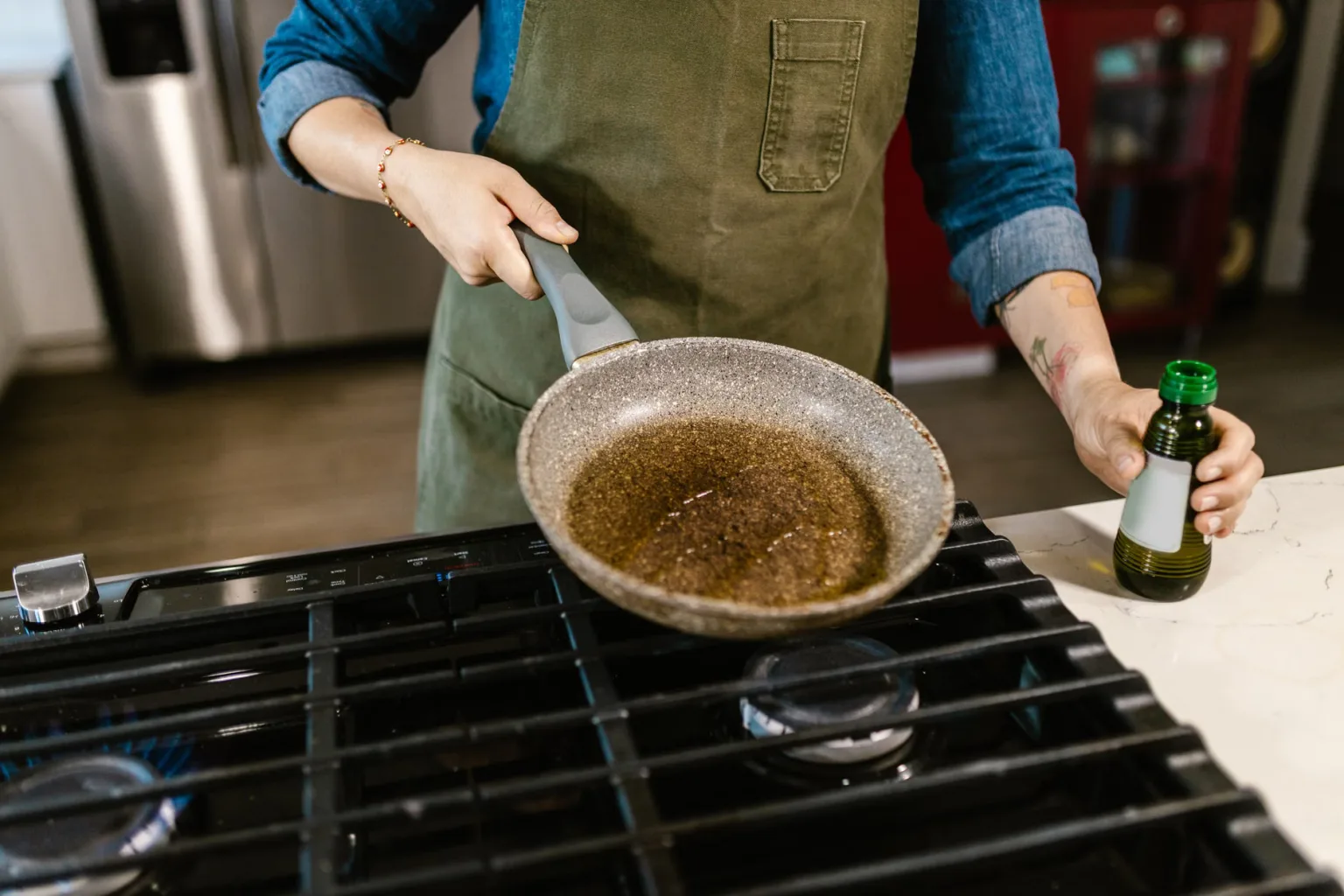
Add enough oil for the cooking method and heat it gradually. Do not leave it unattended or allow it to start smoking. Add food carefully to avoid splashes. When frying, aim to brown the food without burning the oil; the size and amount of the pieces affect the result. After cooking, decide whether the used oil is suitable for another use: remove food particles and check its appearance and smell before reusing it. Discard it if it has become dark, smells rancid or has otherwise lost its quality. You can also drizzle a little uncooked olive oil over the finished dish for aroma.
Flavour and texture
Flavor varies by oil: some are fruity and more pronounced, with possible bitter or peppery notes, while others are milder. In frying, oil adds richness and can help food brown and develop a crisp surface, depending on the ingredient and cooking method. A strongly flavored oil will be more noticeable in simple dishes; a mild one lets other ingredients take the lead.
How to choose it
Check the product name and choose a flavor profile that suits the way you plan to cook. Choose virgin or extra virgin if you want a more distinctive olive character, or a milder oil for a less pronounced taste. Make sure the container is intact and the product is clearly identified on the label. If you mainly want oil for frying, consider the cost per quantity and save more distinctive oils for dishes where their aroma can stand out.
Storage
Keep the oil tightly closed in a cool, dark place away from heat. Limit how long the container stays open and close it again after pouring. Keeping it away from light and heat helps protect its quality and aroma. Refrigeration is not necessary for ordinary household use; follow any storage directions on the package and avoid storing it next to the stove.
Substitutions
Sunflower oil can replace olive oil when you want a more neutral flavor. Avocado oil is another possible option if you have a type intended for cooking, and olive-pomace oil can also be used for frying. Each alternative changes the flavor and may behave differently when heated; follow the product directions rather than assuming all oils have the same characteristics.
Common mistakes
Do not heat oil unattended or wait for it to smoke before adding food. Choosing a strongly flavored oil without considering the dish can make the olive character more prominent than you want. Do not automatically reuse frying oil: check its appearance and smell, and discard it if it is dark or smells rancid.
Safety and allergens
Handle hot oil carefully to avoid splashes. Watch it while heating and do not let it begin to smoke.
Culinary uses
- grasa para freír
- medio de cocción
- aporte de sabor
Recommended techniques
- freír
- saltear
- añadir en crudo al terminar el plato
Pairs well with
- verduras y hortalizas
- pescados y carnes
- legumbres y patatas
Frequently asked questions
Can you fry with extra virgin olive oil?
Yes. Extra virgin olive oil can be used for frying; its flavor may be more noticeable than that of a milder oil.
Which olive oil should I choose for frying?
Choose according to the flavor you want and how you plan to use it. Virgin and extra virgin oils have distinct profiles, while a milder oil has less influence on flavor.
Can I reuse oil after frying?
Do not reuse it automatically. Remove food particles and check its appearance and smell; discard it if it is dark or smells rancid.
Ingredient allergens
Allergen listThere are no verified associations for these ingredients yet.
Sources and review
Automatically researched, cross-checked and validated content. Sources consulted:
- Efectos territoriales de las denominaciones de origen protegidas de aceite de oliva en España | Archivo Digital UPM doi.org/10.20868/upm.thesis.40612
- Qué aceite de oliva usar para cocinar: tipos, cómo usarlos y cuándo usar girasol www.directoalpaladar.com/cultura-gastronomica/aceite-de-oliva-la-guia-definitiva-que-varieda…
- 5 usos del aceite de oliva virgen extra en la cocina española orgazmadrid.com/usos-del-aceite-de-oliva-virgen-extra-en-la-cocina-espanola/
- Descubre cuál es el mejor aceite de oliva para cocinar www.aceitesposito.es/blog/cual-es-mejor-aceite-oliva-para-cocinar/?srsltid=AYCX9vLZz5tJVILeH…
- ¿Sirve el aceite de oliva virgen extra para freír? | Almazaras de la Subbética | Tienda Online de AOVE Premiado almazarasdelasubbetica.com/sirve-aceite-de-oliva-virgen-extra-para-freir/
- Usos del Aceite de Oliva en la Cocina aceitesvallejo.com/blog/usos-aceite-de-oliva-en-cocina/?srsltid=AYCX9vLeRYcWzMCC_vWCDiXPkkOm…
- Aceite de oliva: freír, confitar, marinar – Aceites Abril tienda.aceitesabril.com/blogs/aceites-abril/aceite-oliva-tecnicas-cocina?srsltid=AYCX9vLdFaV…
- Aceite de Oliva para Cocinar: Guía Definitiva para Elegir el Mejor – Olium Bosques del Sur aceitesbosquesdelsur.es/blogs/blog/aceite-de-oliva-para-cocinar?srsltid=AYCX9vIJzCCz3OZX6HBD…
- Complementación económica y transferencia de know how, cadenas de valor aceiteras : los casos aceite de palma en Chiriquí, Panamá y aceite de oliva en San Juan, Argentina. | OpenAlex openalex.org/W7219462518
- El arte del maridaje: Aceite de oliva virgen extra sin filtrar y comidas miolivagourmet.com/es-es/blogs/mi-oliva-gourmet/maridaje-aceite-oliva-virgen-extra-sin-filtr…
- 5 Técnicas para maridar el Aceite de Oliva como un experto – Aceites Ducoy www.aceitesducoy.com/blogs/noticias/5-tecnicas-para-maridar-el-aceite-de-oliva-como-un-exper…