- Category
- Drinks
- State
- Liquid
- Usual unit
- tablespoon
What it is
Orange blossom water, also called orange flower water, is an aromatic liquid associated with the distillation of bitter orange flowers. Its fragrance is floral with citrus-like notes, but it does not taste like orange juice and is not a direct replacement for it. Aroma and intensity can vary with the product and its concentration. In baking, it is used to perfume doughs, creams and syrups; in a filling, a small amount can add character without acting as a sweetener. Check that the product is intended for culinary use: cosmetic aromatic products are not interchangeable with food products.
When to use it
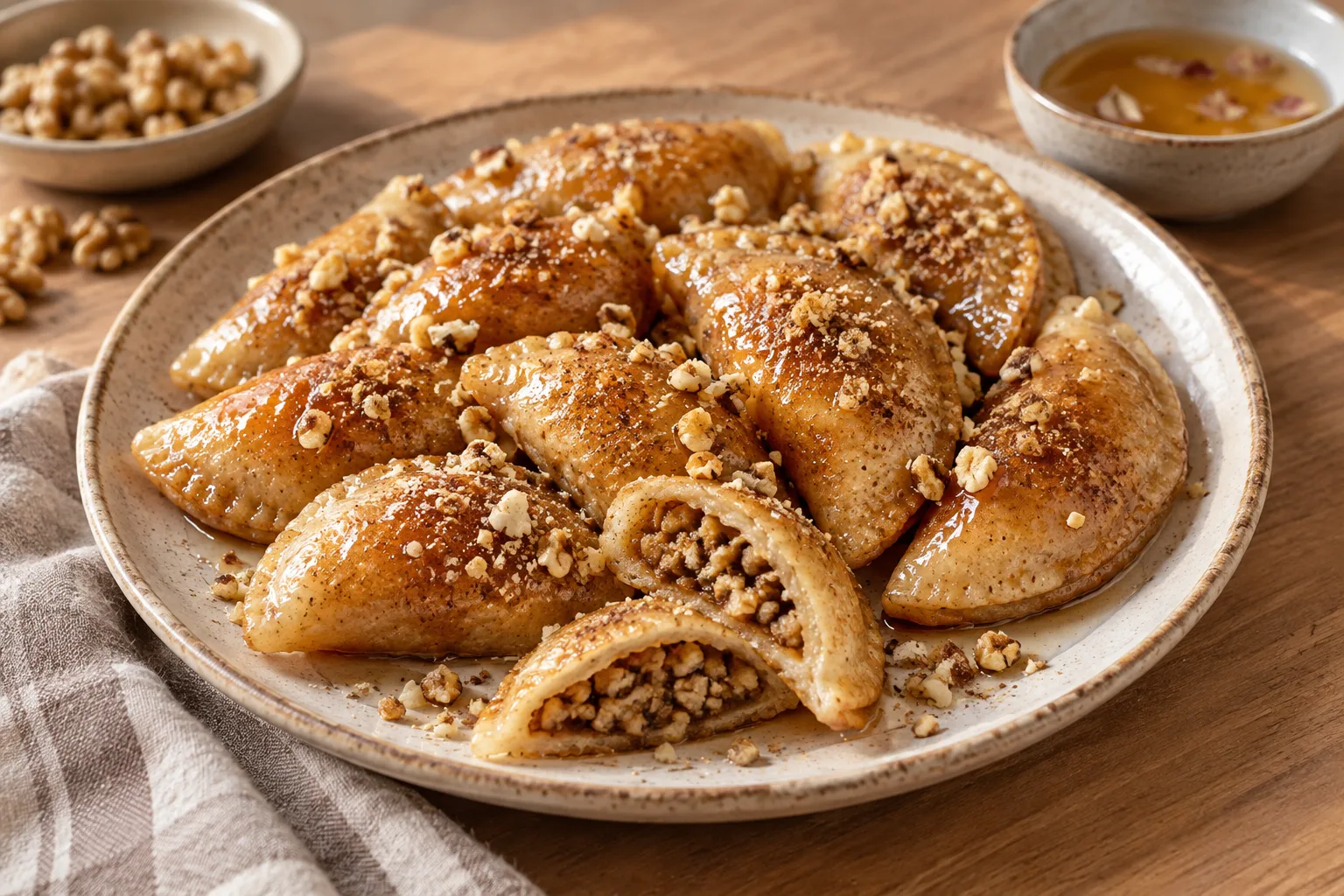
Use it when you want a filling to have a distinct floral fragrance, such as in creams, almond-based preparations or sweets with honey. It can also perfume syrups for cakes and pastries, enriched doughs and spoon desserts. It works particularly well when the other ingredients can sit comfortably alongside floral or citrus-like notes. Since products vary in intensity and too much can dominate a preparation, begin with a small amount, mix thoroughly and taste before adding more.
How to use it
For a filling or cream, add a small amount of orange blossom water and mix thoroughly before tasting. If the filling is already made, add it gradually so you can control the aroma; do not assume every product has the same strength. For a cooked cream, you can stir it in near the end. For syrup, add it after removing the syrup from the heat to help preserve its fragrance. In dough, mix it with the other liquid ingredients and account for the recipe’s total liquid. Pair it with almonds, honey or citrus, while making sure its aroma does not mask the filling.
Flavour and texture
It brings a floral fragrance with delicate citrus-like notes and may have a slightly bitter edge. It is not a sweetener and should not be confused with orange juice or zest. The product is liquid and generally clear; aroma and intensity vary by product and concentration. In a filling, its fragrance can carry through the whole preparation, so too much may overpower other flavors. Heat can also change or diminish some aromatic notes.
How to choose it
Choose a product whose label clearly identifies it as suitable for food or culinary use. Do not confuse cooking orange blossom water with toners or other cosmetic products, even if they smell similar. Check the label for ingredients and manufacturer directions; products can differ in aroma and intensity. If a recipe calls for orange flower water, it generally means orange blossom water, but still check that the product is food-grade.
Storage
Follow the storage instructions and date on the package, as directions can differ between products. Keep the bottle closed and avoid storing it in conditions that conflict with the label. Before use, check that the liquid looks and smells as expected; do not use it if you notice unusual changes. There is no single storage period that applies to every formulation.
Substitutions
Rose water can provide a different floral fragrance, but the result will not taste the same; use it sparingly and expect a noticeable change. Orange zest can add a citrus note, but it will not reproduce the aroma of orange flowers. Choose an alternative to suit the filling and start with a small amount. Do not substitute a cosmetic product or a flavoring not labelled for food use.
Common mistakes
Adding too much at once can make the floral aroma dominate the filling. Do not assume all brands have the same concentration: add a little, mix and taste before adjusting. Another mistake is treating orange blossom water as interchangeable with orange juice or zest, which bring different flavors, or using a cosmetic product in food. Check the food-use directions on the label.
Safety and allergens
Use only a product labelled as suitable for cooking and follow its package directions. Cosmetic products should not be treated as food ingredients. Do not use the product if its appearance or smell has changed unusually.
Culinary uses
- Floral and citrus-like flavoring for sweet fillings
- Aromatic ingredient for creams, syrups, cakes and enriched doughs
Recommended techniques
- Stir into a filling or cream in a small amount, then taste and adjust
- Mix into dough with the other liquid ingredients, or add to syrup after cooking
Pairs well with
- Almonds and honey
- Citrus fruits and white-fleshed fruits such as peach or apricot
- Dark chocolate, cinnamon, cardamom and vanilla
Frequently asked questions
Does orange blossom water taste like orange?
It has a floral fragrance with citrus-like notes, but it does not taste like orange juice. It is not a direct substitute for zest either.
When should I add it to a filling?
Add a small amount and mix it in well. For a cooked preparation, adding it near the end is practical; taste before adjusting.
Can I use cosmetic orange blossom water in baking?
No. Use only a product whose label says it is suitable for food or culinary use.
Ingredient allergens
Allergen listThere are no verified associations for these ingredients yet.
Sources and review
Automatically researched, cross-checked and validated content. Sources consulted:
- Agua de azahar: qué es, qué usos tiene en la cocina y dónde se puede comprar www.directoalpaladar.com/ingredientes-y-alimentos/donde-comprar-agua-de-azahar
- ¿Qué es más efectivo para reducir el consumo de agua, la concienciación o un incremento de las tarifas? doi.org/10.64628/aao.56cdfwcqt
- Ruperto de Nola 1529 Italian part 1.pdf www.eg.bucknell.edu/~lwittie/sca/food/Ruperto%20de%20Nola%201529%20Italian%20part%201.pdf
- Cuando dicen agua de flor de naranjo, es agua de azahar | Gastronomía & Cía www.gastronomiaycia.com/cuando-dicen-agua-de-flor-de-naranjo-es-agua-de-azahar/
- Agua de azahar para cocinar: análisis y comparativa de las mejores opciones para tus dulces caseros aliciascake.es/agua-de-azahar-para-cocinar/
- Agua de azahar: análisis, usos y mejores opciones para repostería y dulces caseros doncaramelo.es/agua-de-azhar/
- Combinaciones con agua de azahar • Norohy www.norohy.es/combinaciones-con-agua-de-azahar/
- Quédate en casa y cocina: #LeCordonBleuAtHome (Roscón de reyes) www.cordonbleu.edu/madrid/quedate-en-casa-y-cocina-lecordonbleuathome-roscon-reyes/es
- agua de azahar archivos - Agua de Azahar aguadeazahar.com/tag/agua-de-azahar/?srsltid=AYCX9vKgobzIrH_thlUYIJeU8Rklrb3J3vnUw7nzD3VVv4V…
- Ingredientes: Agua de azahar – Balansiya balansiya.com/ingredientes-agua-de-azahar/
- El universo de los sentidos: sabores, colores y olores del Nuevo Mundo | OpenAlex openalex.org/W2189936295
- Pan de muerto - Wikipedia, la enciclopedia libre es.wikipedia.org/wiki/Pan_de_muerto
- Agua de azahar para roscón: análisis y comparativa de las mejores opciones para perfumar y realzar el dulzor chocomechocolates.es/agua-de-azahar-para-roscon/?srsltid=AYCX9vJEwtm6bWAkpKQR5e_m-OuyljLMofh…