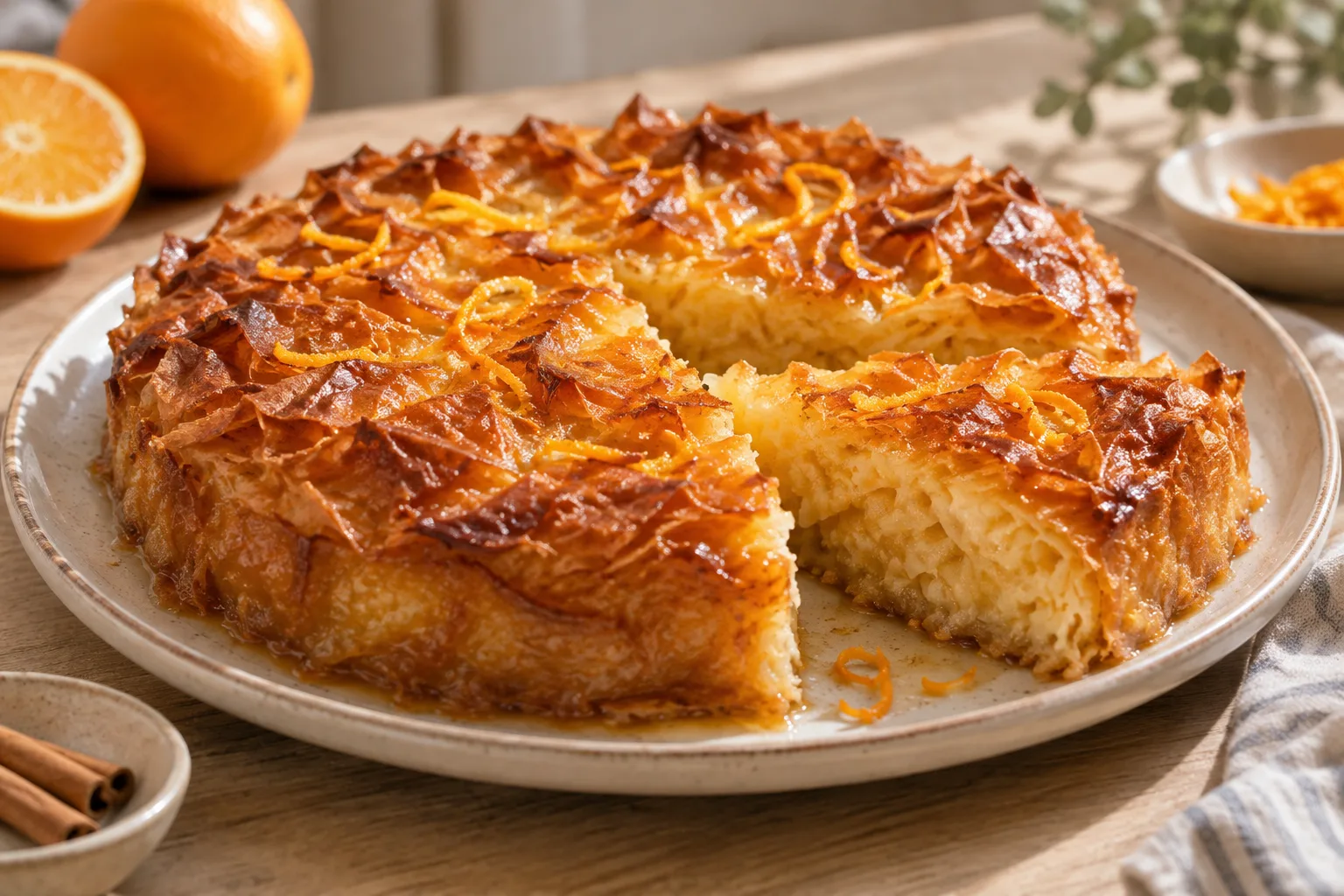
- Category
- Fruit
- State
- Liquid
- Usual unit
- cup
What it is
Orange juice is the liquid obtained by squeezing oranges. In syrup, it serves as the liquid base and contributes the fruit’s aroma and flavour, with a balance of sweetness and acidity that varies with the oranges used. It can be heated with sugar to make a syrup; as the mixture cooks and concentrates, it thickens. The amount of sugar relative to the juice affects the consistency: more juice makes a lighter syrup, while a greater proportion of sugar produces a thicker result. Orange juice can also be used to moisten cakes and other baked desserts or as an ingredient in other sweets. It is not the same thing as prepared orange syrup: it is one possible ingredient in that preparation and must be cooked with sugar to become syrup.
When to use it
Use orange juice when you want a syrup to add citrus flavour to cakes, tarts and other desserts. It is useful for moistening a baked dessert while leaving it with a fruity note. Choose a lighter mixture when you want to soak a cake, or a thicker one when you want a more concentrated coating; the juice-to-sugar balance lets you adjust the result. It is also a good choice when you want orange flavour to be noticeable rather than making a neutral syrup. If a recipe calls for a measured quantity, squeeze and measure the juice before cooking.
How to use it
Squeeze the oranges and measure the juice before you begin. Put it in a saucepan with sugar and heat gently, stirring to help prevent sticking. Once the mixture has a syrup-like consistency, take it off the heat and let it cool before applying it to a cake or tart. For a lighter syrup, use more juice in relation to the sugar; for a thicker one, increase the proportion of sugar. The final concentration depends on cooking, so watch the consistency rather than assuming there is one universal measure. As an alternative to juice, some syrup preparations use orange peel and water to draw out aroma; the result has a different character. Follow the juice package’s storage instructions and the directions for the syrup recipe.
Flavour and texture
Orange juice is fruity, sweet and tart, although the balance varies from orange to orange. Cooked with sugar, it gives syrup a citrus character, and the mixture thickens as it concentrates. A higher proportion of juice makes a lighter syrup; more sugar produces a denser consistency.
How to choose it
For a fresh-tasting syrup, choose juicy oranges and squeeze them shortly before cooking. If buying ready-squeezed juice, check the ingredient list and choose a product whose flavour and composition suit the recipe. Check whether it contains pulp, which may change the syrup’s texture.
Storage
Store packaged juice according to the directions on its container, particularly after opening. If you squeeze oranges for a recipe, measure what you need and do not leave the juice unrefrigerated longer than the product’s directions allow. Do not assume homemade syrup is shelf-stable: follow a validated preservation recipe and its relevant instructions.
Substitutions
For syrup without orange flavour, use water and sugar, but expect to lose the citrus character. Another syrup-making option is to cook orange peel with water and sugar; this contributes peel aroma, not the same flavour or texture as juice. Match the replacement to the intended use and do not assume an exact equivalence.
Common mistakes
Do not assume every proportion gives the same consistency: more juice makes a lighter syrup, while more sugar can make it thicker. Do not leave the mixture unattended as it cooks; stir to help prevent sticking. Do not pour hot syrup over a dessert when the preparation calls for it to cool first.
Safety and allergens
Follow the storage directions on the juice package and check the ingredient information for commercial juice. If an allergy requires avoiding an ingredient, check the label of the specific product; ingredients can vary.
Culinary uses
- Citrus-flavoured liquid base for syrup
- Sweet-tart flavouring for desserts and sauces
Recommended techniques
- Squeeze and strain fresh oranges if a smooth juice is wanted
- Simmer with sugar, stirring, to make a syrup
Pairs well with
- Cakes and other baked desserts
- Chocolate
Frequently asked questions
Is orange juice the same as orange syrup?
No. Juice is a liquid ingredient; syrup is made by cooking it with sugar until the mixture reaches a syrup-like consistency.
How can I make a lighter orange syrup?
Use more juice in relation to the sugar. The mixture will be less concentrated than one made with a higher proportion of sugar.
What desserts can use orange-juice syrup?
It can moisten cakes and tarts or add citrus flavour to other desserts.
Ingredient allergens
Allergen listThere are no verified associations for these ingredients yet.
Sources and review
Automatically researched, cross-checked and validated content. Sources consulted:
- Client Challenge doi.org/10.2307/j.ctvndv9t9.22
- Gastronomía del Perú - Wikipedia, la enciclopedia libre es.wikipedia.org/wiki/Gastronom%C3%ADa_del_Per%C3%BA
- Etiquetado de sustancias que causan alergias e intolerancias alimentarias www.aesan.gob.es/seguridad-alimentaria/informacion-alimentaria/etiquetado-sustancias
- Naranjas, mil usos en la cocina - Mercado de Chamartín mercadodechamartin.es/blog/naranjas/
- Las propiedades culinarias de la naranja | Recetas Nestlé www.recetasnestle.com.ec/escuela-de-sabor/coccion/propiedades-naranja
- Evolución del léxico culinario desde 1932 a 1972 | OpenAlex openalex.org/W2291578502
- Allergies - Food Safety - European Commission food.ec.europa.eu/food-safety/campaign-2026/allergies_en
- Guía para el control oficial del etiquetado y composición de ... www.juntadeandalucia.es/export/drupaljda/Gu%C3%ADa%20etiquetado%20y%20composici%C3%B3n%20CA%…
- Food allergen labelling and information requirements technical guidance - GOV.UK www.gov.uk/government/publications/food-allergen-labelling-and-information-requirements-tech…
- ▷ Aprende A Preparar Almíbar De Naranja | FrutaMare www.frutamare.com/almibar-de-naranja/
- Cómo hacer almíbar con zumo de naranja - Gesvending www.gesvending.com/como-hacer-almibar-con-zumo-de-naranja/
- ¿Cómo hacer almíbar de naranja? | Naranjas Quique www.naranjasquique.com/blog/como-hacer-almibar-de-naranja/
- Naranja en almíbar natural: todas las claves www.lazayafruits.com/es/blog-de-frutas-en-conserva/discos-de-naranja-en-almibar-naturales/
- - YouTube www.youtube.com/watch?v=l4ENfx7aMJA
- Rollitos de piel de naranja en almíbar (receta sefardí) - Diario de Gastronomía: Cocina, vino, gastronomía y recetas gourmet diariodegastronomia.com/rollitos-piel-naranja-almibar-receta-sefardi/
- El maridaje perfecto: naranja y chocolate – La vida sabe mejor www.lavidasabemejor.es/recetas/el-maridaje-perfecto-naranja-y-chocolate/