- Category
- Oils and fats
- State
- Other
- Usual unit
- g
What it is
The name “palm nut butter” is ambiguous and does not, by itself, identify what is in a package. A related product is palm shortening: a fat derived from palm oil that may be semi-solid or solid at room temperature and used in baked goods and other preparations. It should not automatically be confused with palm kernel oil: palm oil comes from the fruit’s pulp, whereas palm kernel oil comes from the seed. This profile refers to palm shortening only when the product is identified as such and is food-grade. Texture, flavor, and intended uses depend on the specific formulation and processing.
When to use it
Use it only when the package confirms that it is a food product and suitable for the intended preparation. Palm shortening may be appropriate for doughs and baked goods when the label says so. Some palm products are also used for frying, but do not assume that every product called “palm nut butter” is suitable for high heat. If you want a particular flavor or texture, check the product description: the characteristics of palm shortening can vary with its formulation and processing.
How to use it
Before cooking, confirm that the product is food-grade and read its instructions: the name “palm nut butter” alone does not establish whether it is shortening, a spread, or another preparation. If the label identifies it as vegetable shortening suitable for baking, add it to dough according to the recipe and package directions. If the package says it is suitable for frying, use it only as directed. Do not automatically replace butter with an equal amount of palm-derived fat: composition, moisture, and performance may differ. Never use oleochemical or cosmetic products as cooking ingredients.
Flavour and texture
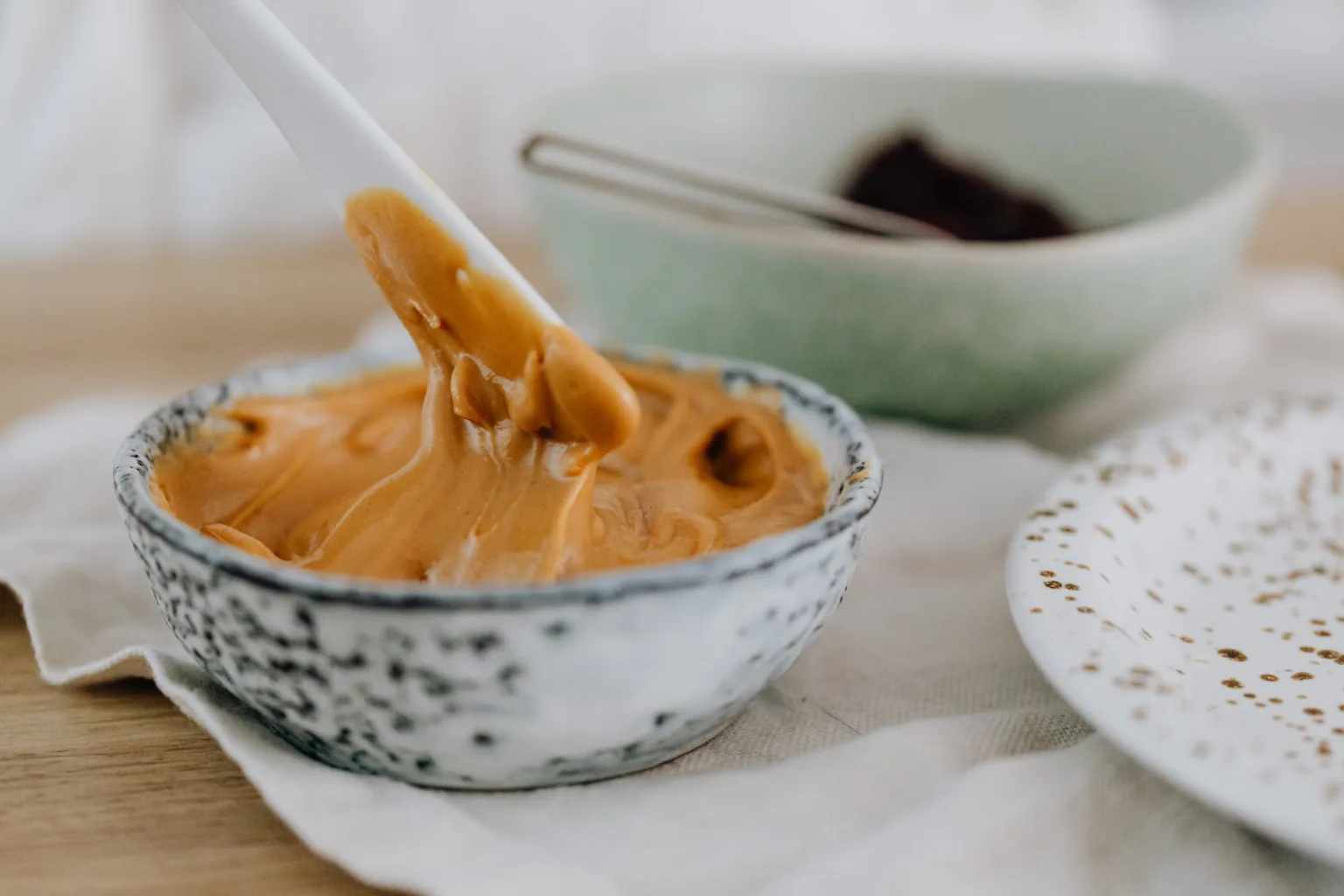
Palm shortening may be semi-solid or solid at room temperature, with a creamy, spreadable consistency. Some products are described as off-white to pale yellow, with a mild or neutral flavor and aroma. These characteristics do not necessarily apply to every similarly named product: processing and added ingredients can change them. Check the label of the specific product you have.
How to choose it
Choose a package that expressly identifies the product as food and lists its ingredients and uses. Check whether it contains palm oil, palm kernel oil, or a blend: these terms are not interchangeable, since palm oil comes from the fruit’s pulp and palm kernel oil from its seed. Also check whether the maker specifies spreading, baking, or frying. If the only description is “palm nut butter” and details are unclear, do not infer its composition or suitability for cooking.
Storage
Follow the storage directions on the package, which can vary by formulation and processing. Some palm shortenings are described as solid or semi-solid fats, but this does not establish a universal shelf life or a single suitable storage temperature for every product. Keep the container closed and do not use the product if the package indicates damage or the product shows signs of spoilage. If storage instructions are unclear, consult the label or manufacturer.
Substitutions
Butter can replace palm shortening in some recipes, but flavor, texture, and results may change because the products can differ in composition and moisture. Another vegetable shortening may work if it is intended for the same cooking technique. Since “palm nut butter” does not by itself define a precise product, compare labels and follow the recipe rather than assuming that an equal-quantity substitution will behave identically.
Common mistakes
A common mistake is confusing palm shortening with palm oil, palm kernel oil, or a similarly named cosmetic product. Do not assume that every palm-derived fat is suitable for frying, baking, or spreading: intended use depends on the specific product and its label. Avoid relying on a generic storage duration or swapping fats without allowing for possible changes in texture and flavor.
Safety and allergens
Use only products identified as food, and follow the package directions. Do not eat fats or oils sold for cosmetic or industrial use. Storage and heating instructions can vary among products; follow the specific manufacturer’s directions.
Culinary uses
- Grasa para cocinar, solo cuando el envase confirma que es un producto alimentario y adecuado para ese uso
- Grasa para masas y productos horneados, si se trata de una manteca vegetal de palma indicada para hornear
Recommended techniques
- Incorporar a masas y mezclas de repostería cuando el producto esté etiquetado para hornear
- Fundir o usar para freír únicamente si el fabricante indica que es apropiado para ello
Pairs well with
- Masas de panadería y repostería
- Preparaciones dulces o saladas que requieran una grasa sólida, según la etiqueta del producto
Frequently asked questions
Are palm nut butter and palm kernel oil the same thing?
Not necessarily. Palm kernel oil comes from the fruit’s seed, while palm oil comes from its pulp. The name “palm nut butter” alone does not show which one a product contains, so check the ingredient list.
Can I use it for baking?
Only if the package identifies it as food and says it is suitable for baking. Some palm shortenings are used in baked goods, but that does not automatically apply to every similarly named product.
Can it be used for frying?
That depends on the formulation. Do not assume that every product called “palm nut butter” is suitable for frying; check the manufacturer’s instructions and follow its directions for use and heating.
Ingredient allergens
Allergen listThere are no verified associations for these ingredients yet.
Estimated nutrition
- Fat
- 53 g
- Saturates
- 10.6 g
- Carbohydrate
- 30.3 g
- Sugars
- 9.09 g
- Fibre
- 3 g
- Protein
- 12.1 g
- Salt
- 0.74 g
Sources and review
Automatically researched, cross-checked and validated content. Sources consulted:
- Agencia Española de Seguridad Alimentaria y Nutrición www.aesan.gob.es/
- USDA FoodData Central libguides.marist.edu/fdc
- Qué es la psicología de emergencia y por qué es fundamental en La Palma doi.org/10.64628/aao.u7ghmcrc5
- UNIVERSITY O F MAINE A T A U G U S T A www.uma.edu/about/wp-content/uploads/sites/2/2022/11/UniverofMaineAugustaFlavours.pdf
- Food for Thought: A Culinary Conversation Among Women | Institute of Culinary Education www.ice.edu/blog/icc-food-for-thought-womens-month
- Dining Locations | University of Rochester Campus Dining dining.rochester.edu/locations/
- Aggregator | Department of Food Science and Technology | Nebraska foodscience.unl.edu/aggregator/
- Medieval Tastes | Columbia University Press cup.columbia.edu/book/medieval-tastes/9780231167864/
- Ask the Expert: Healthy Fats • The Nutrition Source nutritionsource.hsph.harvard.edu/2012/06/21/ask-the-expert-healthy-fats/
- Qué es peor, ¿el aceite de palma, la manteca de cerdo o la mantequilla? www.directoalpaladar.com/salud/que-peor-aceite-palma-manteca-cerdo-mantequilla
- Bio Greenware Ltd | Manteca de palma www.biogreenware.com/es/products/oleochemicals/palm-shortenings/
- El cuestionado aceite de palma | Observatorio de alimentación observatorio.escueladealimentacion.es/entradas/alimentacion-y-salud/el-cuestionado-aceite-de…
- Avances en los usos comes- tibles del aceite de palma publicaciones.fedepalma.org/index.php/palmas/article/download/385/385