- Category
- Herbs and spices
- State
- Liquid
- Usual unit
- teaspoon
What it is
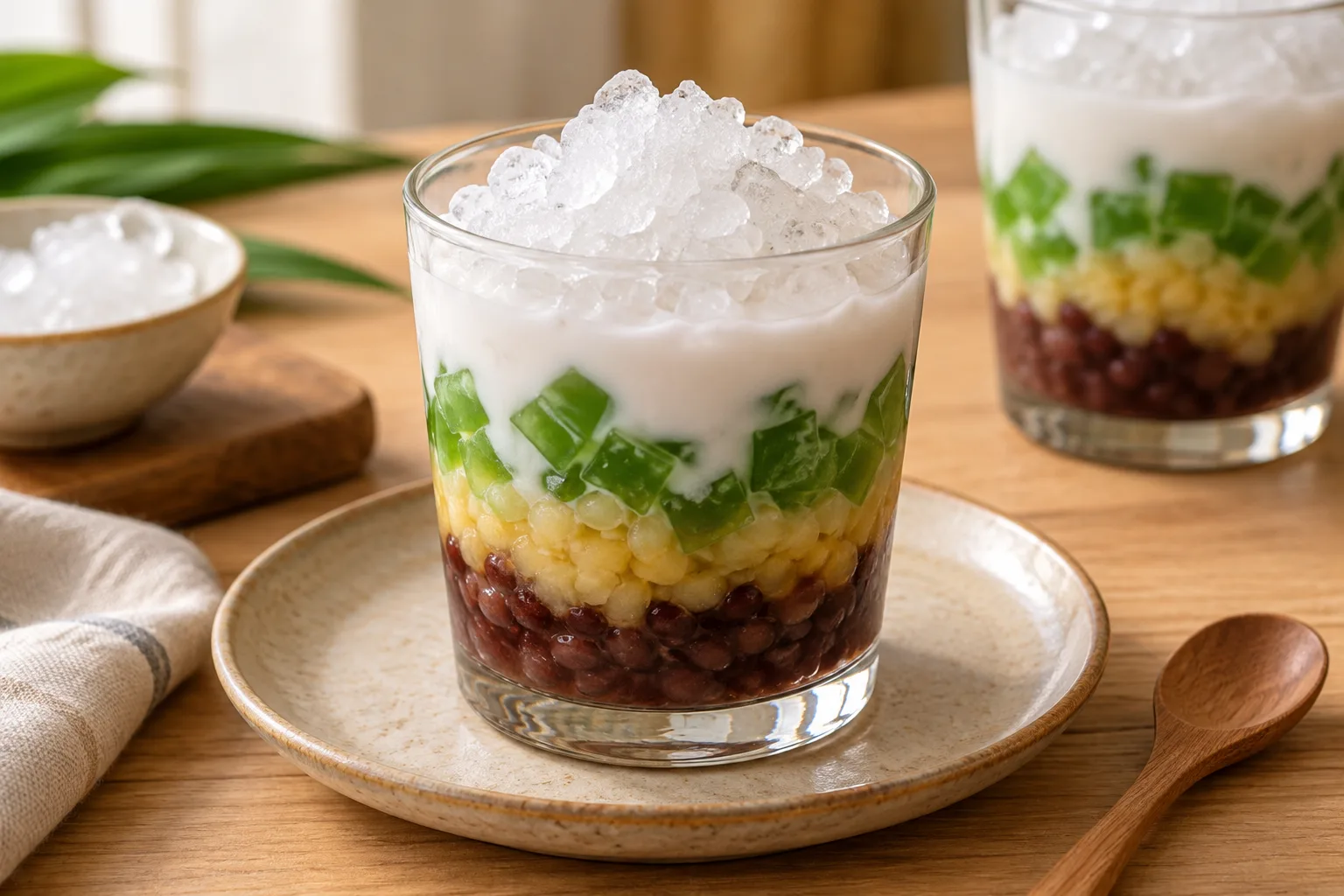
Pandan flavoring is a product used to add the aroma associated with pandan, a plant whose leaves are used in several Southeast Asian cuisines. In shops, flavoring may be sold as a liquid extract, essence, or concentrate; other formats, such as paste and powder, are also available but are not automatically interchangeable by volume. Some products are made with pandan, while others may include added flavors, colors, or other ingredients, so check the ingredient list. Pandan leaves can also be used to perfume food during cooking and are usually removed before serving. Commercial flavoring is added directly to a recipe, in the amount appropriate for that product and as directed by its label.
When to use it
Use pandan flavoring when you want to add fragrant, sweet, vegetal notes without putting whole leaves into a dish. It is convenient in cakes, creams, desserts, drinks, and batters, where it can be mixed through readily. It may also flavor rice or coconut-based preparations when the product is intended for that use. Strength and color differ between products, so do not assume one brand or format will work like another. For a subtler aroma or a leaf-based way to perfume rice, infuse pandan leaves during cooking and remove them before serving.
How to use it
First read the product directions and ingredient list: liquid pandan flavorings do not all have the same strength or composition. Start with a small amount, such as a few drops or a fraction of the recipe’s stated measure, mix well, and taste before adding more. In batters, creams, and liquid mixtures, add it with the other liquid ingredients, or follow the product directions, so it disperses evenly. For drinks, add gradually and adjust to taste. If you want green color as well as aroma, check that the product is intended to color food; pandan flavoring does not guarantee a particular shade. To perfume rice with leaves, add them during cooking and remove them before serving. This is a different method from dosing an extract.
Flavour and texture
Pandan is commonly associated with a sweet, fragrant profile, with notes often compared to vanilla and coconut alongside vegetal nuances. Commercial products can differ considerably: some emphasize aroma, others color, and an essence may not have the same composition as a leaf extract. Liquid flavoring changes the aroma and taste, not the texture of a recipe, apart from the small amount of liquid it contributes.
How to choose it
Check whether the product is an extract, essence, or concentrate, and read its ingredients: added flavorings or colorants may be present. A vivid green color does not by itself show how much pandan the product contains. Choose a product with clear directions and use its suggested amount as a starting point; compare labels before switching brands.
Storage
Store the product as directed on its label and follow any refrigeration instructions after opening. Keep the container closed, and do not assume all pandan flavorings have the same storage requirements: formulas, packaging, and directions can vary. Do not use a product if its container is damaged or if it has unusual changes in appearance or smell.
Substitutions
You can substitute another pandan extract or essence, but adjust the amount to match its directions and strength. An infusion of pandan leaves can give a subtler aroma, though it adds liquid and may not provide color. Paste and powder are not automatically equivalent to liquid extract; adapt the recipe and check the product label.
Common mistakes
A common mistake is adding the amount used for a different brand all at once: products vary in strength, and the result may be overpowering. Do not assume every pandan flavoring is green, natural, or made only from leaves. Check the label, start small, and distinguish commercial flavoring from leaves that are infused and removed.
Safety and allergens
Check the ingredient list for anything you need to avoid and follow the package directions. If you have a food allergy, do not assume a product is free of that allergen without checking its label.
Culinary uses
- Flavoring
- Aroma
- Coloring (some products)
Recommended techniques
- Stir into batters, creams, or drinks
- Add to rice or other cooking liquids
- Infuse pandan leaves and remove them before serving
Pairs well with
- Coconut milk
- Rice
- Vanilla
- Sweet batters and creams
Frequently asked questions
Is pandan flavoring the same as pandan leaves?
No. Flavoring is a prepared or concentrated product added directly to a recipe; leaves are used to perfume food during cooking and are usually removed.
How much pandan flavoring should I use?
It depends on the product’s strength and the recipe. Follow the label, start with a small amount, mix, and taste before adjusting.
Is all pandan flavoring green?
Not necessarily. Some products contain colorants, while others may add little or no color. Check the ingredients and do not use color as a measure of flavor strength.
Ingredient allergens
Allergen listThere are no verified associations for these ingredients yet.
Sources and review
Automatically researched, cross-checked and validated content. Sources consulted:
- ¿Por qué la muerte es origen de miedos y tabúes? doi.org/10.64628/aao.fccyk3qj3
- El pandan, el nuevo ingrediente de moda que arrasa en Instagram - Bulevar Sur sevilla.abc.es/estilo/bulevarsur/noticias/estilo-de-vida/pandan-ingrediente-de-moda-instagra…
- Why Kara Nielsen Sees Cotton Candy Grapes in Your Future | Bostonia | Boston University www.bu.edu/articles/2020/kara-nielsen-food-trend-spotter/
- Menu Item – Dining dining.ucla.edu/menu-item/?recipe=4008
- Global Cuisine Series: Exploring Indonesian Cuisine - Kendall Reagan Nutrition Center www.chhs.colostate.edu/krnc/monthly-blog/global-cuisine-series-exploring-indonesian-cuisine/
- Pandan: qué es y por qué conquista la gastronomía europea | Gastronomía & Cía www.gastronomiaycia.com/pandan-que-es-y-por-que-conquista-la-gastronomia-europea/
- Hojas de pandan: análisis y comparativa de las mejores opciones asiáticas para cocinar y preparar sushi sukimotril.es/leaves-pandan/
- Pacific Food Guide | Pandanus manoa.hawaii.edu/ctahr/pacificfoodguide/index.php/grown-from-the-ground/pandanus/
- Malaysia Kitchen for the World with Zak Pelaccio | Institute of Culinary Education www.ice.edu/blog/malaysia-kitchen-world-with-zak-pelaccio
- Blog - 6 Unique Reasons International Students Should Pursue a Culinary Arts Course at Sunway Le Cordon Bleu www.cordonbleu.edu/malaysia/blog-6-uniques-reason-international-students-should-pursue-culin…
- consumer acceptability of aromatic and non-aromatic rice openscholar.uga.edu/record/11410/files/deveriya_meera_l_200708_ms.pdf
- Pandan - Pandanus amaryllifolius ( Spanish; Castilian ) eol.org/pages/1081475/articles?locale_code=show_all&resource_id=607
- Las distintas formas del pandan: hojas, pasta, polvo o extracto, ¿cuál – Maison Pandan maison-pandan.com/es-es/blogs/guia-del-pandan/formas-pandan-hojas-pasta-polvo-extracto?srslt…
- - YouTube www.youtube.com/watch?v=NUyTe9Br7c4