- Category
- Nuts and seeds
- State
- Paste
- Usual unit
- cup
What it is
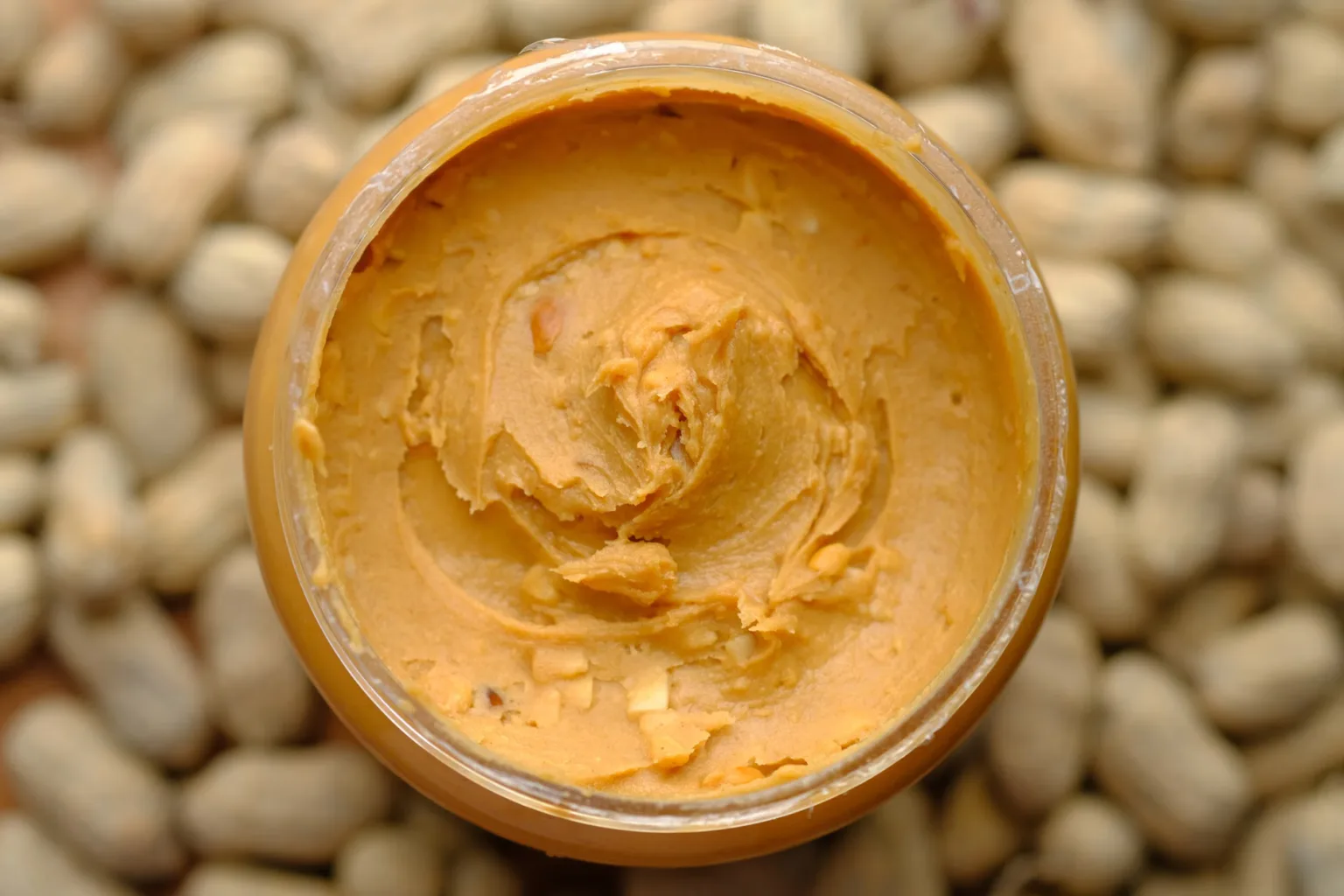
Peanut butter is a spreadable paste made mainly from ground peanuts; some products use roasted peanuts. Smooth varieties have an even texture, while crunchy ones retain small peanut pieces. Recipes vary: one product may contain only peanuts, while another may include salt, sugar, oil, or other ingredients. The name alone does not tell you exactly what is in a jar. Peanut butter is a peanut paste used as a spread and cooking ingredient, not dairy butter. Check the ingredient list and package information to choose a product that suits the dish and the people who will eat it. Its flavor and texture can vary between brands and styles, so tasting and checking the label are useful before adjusting a recipe.
When to use it
Use peanut butter when you want a distinct peanut flavor and a thick, spreadable texture. It works on toast, bread, or crackers and pairs well with fruit such as bananas and strawberries. It can also be mixed into oats or added to savory sauces and rice-and-vegetable dishes. Choose smooth peanut butter when you want an even mixture; crunchy peanut butter adds pieces. Products can differ in salt, sugar, and other ingredients, so check the label if you need a particular flavor or texture, or need to avoid an ingredient.
How to use it
For a simple spread, stir the contents if the texture or oil has separated, unless the package gives different directions, then spread an amount to suit your dish on bread, toast, or crackers. Pair it with fruit for a snack, or mix it into oats with nuts or dried fruit. In savory cooking, stir it into a sauce or a rice-and-vegetable dish, then taste and adjust other seasonings to account for the product’s saltiness or sweetness. To reduce lumps in a mixture, incorporate the peanut butter gradually with the other ingredients. Check the label before cooking: commercial varieties do not all have the same ingredients, and some contain additions beyond peanuts.
Flavour and texture
Peanut butter has a recognizable peanut flavor, whose intensity depends on the product and its added ingredients. It may be smooth and easy to spread, or crunchy with small peanut pieces. Some varieties taste saltier or sweeter than others, so check the label before adding more salt or sweetener to a recipe.
How to choose it
Read the ingredient list to tell a simple peanut butter from one containing salt, sugar, oil, or other additions. Choose smooth or crunchy according to how you plan to use it: smooth blends readily, while crunchy leaves pieces in the dish. Check that the package is intact and read the manufacturer’s information, especially if you need to avoid a particular ingredient.
Storage
Follow the storage directions on the package because ingredients and recommendations can differ between products. Keep the jar closed between uses and use clean utensils when serving. If the manufacturer says to refrigerate it after opening, follow that direction; do not infer storage requirements from the product name alone.
Substitutions
Sunflower seed butter can replace peanut butter in many mixtures, spreads, or snacks, although the flavor and possibly the texture will change. Another nut or seed butter may work if it suits the dish and the people eating it. Check the alternative’s label: products differ in consistency and ingredients.
Common mistakes
Do not assume every variety contains only peanuts; check the label before cooking. Do not automatically add salt or sugar, since some products already contain them. A crunchy variety may leave pieces in a mixture that should be smooth, so choose the texture before you begin if consistency matters.
Safety and allergens
Peanut butter is made from peanuts. Read the package’s ingredient and allergen information, and follow the manufacturer’s handling and storage directions.
Culinary uses
- spread
- sauce and recipe ingredient
Recommended techniques
- spread
- stir into sauces or mixtures
Pairs well with
- bread and toast
- banana and strawberries
- oats and dried fruit
- rice and vegetables
Frequently asked questions
Is peanut butter the same as dairy butter?
No. It is a paste made mainly from ground peanuts; the name does not mean it contains dairy butter.
What is the difference between smooth and crunchy peanut butter?
Smooth peanut butter has a more even texture. Crunchy peanut butter retains small pieces of peanut.
Can I use peanut butter in savory dishes?
Yes. It can be added to sauces and savory preparations such as rice-and-vegetable dishes. Adjust other seasonings to suit the product’s flavor.
Estimated nutrition
- Fat
- 46.7 g
- Saturates
- 3.33 g
- Carbohydrate
- 10 g
- Sugars
- 3.33 g
- Fibre
- 6.7 g
- Protein
- 23.3 g
- Salt
- 0.5 g
Sources and review
Automatically researched, cross-checked and validated content. Sources consulted:
- Preparación para Emergencias: Almacenamiento de Alimentos a Largo Plazo para Desastres | CAES Field Report fieldreport.caes.uga.edu
- ¿Por qué la muerte es origen de miedos y tabúes? doi.org
- Food & Nutrition | Colorado State University Extension foodsmartcolorado.colostate.edu
- Mantequilla de cacahuete - Wikipedia, la enciclopedia libre es.wikipedia.org
- Para la ciudadanía aesan.gob.es
- Tanzania Food Composition Tables | The Nutrition Source nutritionsource.hsph.harvard.edu
- Pan Tostado De Animalitos - Expanded Food and Nutrition Education Program efnep.tamu.edu
- Fruity Pizza/Pizza De Frutas (LCH) | CSU Northridge w2.csun.edu
- Bolitas de Avena con Arándanos Rojos receta | Servicio de Extensión de OSU extension.oregonstate.edu
- Conéctate con tu adolescente a través de la cocina paralela - Spend Smart Eat Smart spendsmart.extension.iastate.edu
- Propiedades de la crema o mantequilla de cacahuete – Botanical-online botanical-online.com
- ▷ Mantequilla de cacahuete 【 Kitchen Academy 】 kitchenacademy.es
- Mantequilla de cacahuete o maní | Consumer consumer.es