- Category
- Grains, flour and pasta
- State
- Dry
- Usual unit
- g
What it is
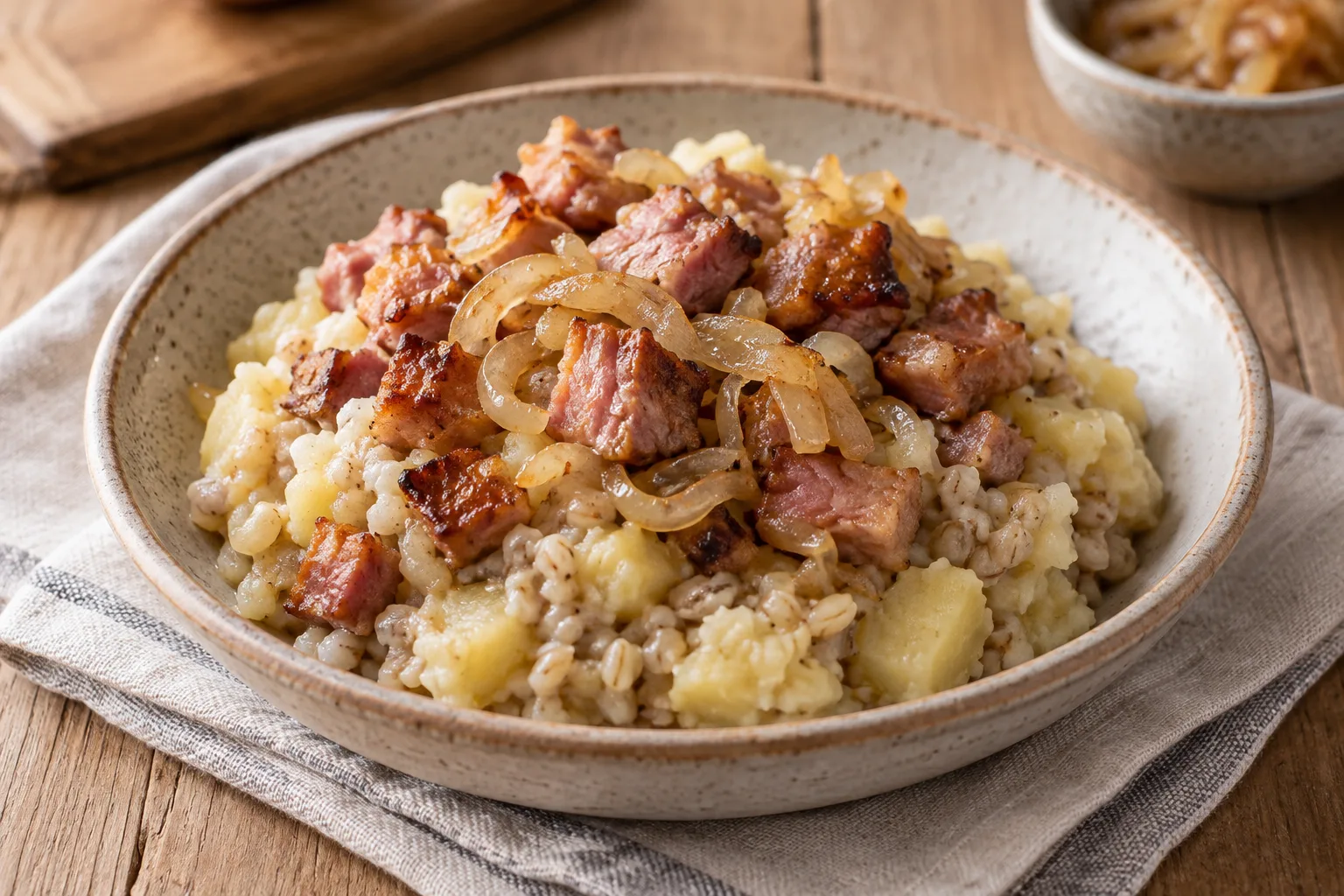
Pearl barley is a barley grain processed to remove its outer bran layer. It is therefore different from hulled barley and should not be confused with quick-cooking barley products, which may need different handling. Sold dry, it becomes tender with a slightly firm center and a pleasantly chewy texture when cooked. Serve it as a side, stir it into soups or salads, or use it in creamy dishes inspired by risotto. Check which type of barley you have and use its package directions to choose a suitable method: recommended liquid amounts and cooking times can vary between products. If a recipe depends on a particular texture, taste a grain during cooking rather than relying on the clock alone.
When to use it
Choose pearl barley when you want a substantial grain for soup, stew, salad, or a side dish. Its cooked texture is tender but chewy, making it useful in dishes where the grains should keep their shape and add substance. It can also stand in for rice in a risotto-style preparation, although the cooking and finished texture will differ. In soup, allow for the grain to cook and absorb some liquid; check its texture before serving and adjust the liquid if needed. Check the package to confirm which barley product you have and follow its specific directions. For a looser result, cooking it in plenty of water and draining it when tender gives you control over the final bite.
How to use it
Measure the amount you need and rinse the pearl barley before cooking. One straightforward method is to put it in a pot with water, bring the liquid to a boil, then reduce the heat, cover, and maintain a gentle simmer until the grains are tender. One example uses three parts water to one part barley and gives an estimate of about 45–60 minutes; this is only a reference, so follow the timing and proportions on your package. Taste a grain before finishing: if it is still hard, continue cooking with enough liquid. For closer control of the texture, cook it in plenty of water and drain it when it reaches the desired tenderness. Toss it with herbs, tomato, vegetables, butter, or spices, add it to soup, or serve it alongside meat, fish, or vegetables. Take care around hot water and steam when draining.
Flavour and texture
Cooked pearl barley has a mild, grain-like flavor that does not overpower other ingredients, so it works well with herbs, spices, and seasonings. Its texture is usually tender and chewy, with the final result depending on the product and cooking method. Cooking until tender without letting the grains fall apart helps them remain distinct. In a creamy preparation, it can instead combine with the cooking liquid and seasonings for a more cohesive result. Taste the grains as they cook to choose whether you prefer a firmer center or a softer bite.
How to choose it
Look for a package clearly labeled pearl barley and check its cooking directions before buying. Do not treat pearl barley, hulled barley, and quick-cooking barley as identical products; their characteristics and cooking times can differ. Choose a sealed, dry package in good condition and avoid product or packaging that appears damp or visibly damaged. If a recipe gives a specific cooking time, prioritize the directions for the product you actually have, since package instructions may vary. Check that the product format suits the dish you plan to make.
Storage
Keep dry pearl barley in a cool, dry place, sealed in its original package or stored in a clean container with a lid. Protect it from moisture and check the package for any specific storage directions. Once cooked, refrigerate leftovers in a covered container and follow local food-safety guidance. Avoid leaving the cooked grain at room temperature for extended periods; the cited guide advises refrigerating leftovers within two hours. Do not use it if you notice unusual moisture, insects, or other visible signs of spoilage.
Substitutions
Rice can replace pearl barley in a risotto-style dish, but it will not have exactly the same texture. Adjust the liquid and cooking method to the rice package directions. A quick-cooking barley product may also work if its format suits the recipe, but it behaves differently. Do not swap products blindly: check the package and adapt the method to the grain you are using. In soups or salads, account for changes to cooking time and the finished texture.
Common mistakes
Do not confuse pearl barley with hulled or quick-cooking barley, since their characteristics and cooking times may differ. Do not rely on the clock alone: check the texture and follow the package directions. If cooking with a limited amount of water, make sure the pot does not dry out before the grain is tender. In soup, monitor the liquid as the barley cooks; for distinct, loose grains, cook it separately in plenty of water and drain when tender.
Safety and allergens
Follow the package directions and local food-safety guidance for handling and refrigerating leftovers. Take care when draining pearl barley, as hot water and steam can cause burns. Refrigerate cooked leftovers and avoid leaving them at room temperature for extended periods.
Culinary uses
- Side dish
- Soup and stew grain
- Base for grain salads and bowls
Recommended techniques
- Rinse before cooking
- Simmer covered in water or stock
- Boil in plenty of water and drain when tender
Pairs well with
- Fresh herbs such as parsley, mint, or sage
- Tomato, onion, and vegetables
- Butter, curry spices, or other seasonings
- Meat, fish, or vegetables as a side dish
Frequently asked questions
Is pearl barley the same as hulled barley?
No. Pearl barley has had its outer bran layer removed, so it differs from hulled barley.
How long does pearl barley take to cook?
It depends on the product and method. One cooking example gives about 45–60 minutes, but follow your package directions and check the texture.
Can I use pearl barley in a salad?
Yes. Once cooked and drained, it can be added to salads; check that the grains are tender and let excess liquid drain away.
Ingredient allergens
Allergen listThere are no verified associations for these ingredients yet.
Estimated nutrition
- Fat
- 1 g
- Saturates
- 0 g
- Carbohydrate
- 78 g
- Sugars
- 0 g
- Fibre
- 16 g
- Protein
- 10 g
- Salt
- 0 g
Sources and review
Automatically researched, cross-checked and validated content. Sources consulted:
- ¿Por qué la muerte es origen de miedos y tabúes? doi.org/10.64628/aao.fccyk3qj3
- Client Challenge doi.org/10.2307/jj.27939689.16
- Propuesta de aplicación de técnicas de elaboración de pasta con especias dulces en preparaciones de cocina de autor | OpenAlex openalex.org/W2935162661
- ¿Qué es la demencia? www.alzheimers.gov/es/alzheimer-demencias/demencia
- Diario Que! La información puede ser entretenida www.que.es/
- - YouTube www.youtube.com/watch?v=PjDxbUPoGY0
- Más que un móvil | AEPD www.aepd.es/mas-que-un-movil
- Boquerones fritos en casa al estilo andaluz: la mejor receta que vas a encontrar www.directoalpaladar.com/recetas-de-pescados-y-mariscos/como-hacer-mejores-boquerones-fritos…
- Cocinando con cebada, un cereal muy versátil - Macrosano macrosano.com/cocinando-con-cebada-un-cereal-muy-versatil/
- Cebada perlada con hierbas, receta paso a paso. www.cocinayaficiones.com/cebada-perlada-con-hierbas-receta-paso-a-paso/
- Cocina cebada perlada para una comida cotidiana fitonomyapp.com/es/blog/cook-pearl-barley-for-meals/
- - YouTube www.youtube.com/watch?v=9KzRM7QWlGk
- Food allergen labelling and information requirements technical guidance - GOV.UK www.gov.uk/government/publications/food-allergen-labelling-and-information-requirements-tech…