- Category
- Vegetables
- State
- Fresh
- Usual unit
- g
What it is
Peeled sweet potato is the edible tuberous root of Ipomoea batatas, a plant in the Convolvulaceae family. “Peeled” describes its form without skin; it is not the name of a separate variety. The root is also known by regional names such as batata, boniato, and sweet potato, although naming differs from place to place. Its taste is described as sweet. This profile refers to the fresh, peeled ingredient as identified in the product, not to a cooked, canned, or dried preparation.
When to use it
Use it when a recipe calls for peeled sweet potato or when you prefer to start with the peeled form instead of peeling the root yourself. Sweet potato is an edible root with a sweet taste, so it can be included in preparations that call for this ingredient. Let the recipe guide the cut, cooking, and accompanying ingredients; there is no single method that applies to every preparation. Also check whether the stated quantity refers to the product after peeling or to the unpeeled root.
How to use it
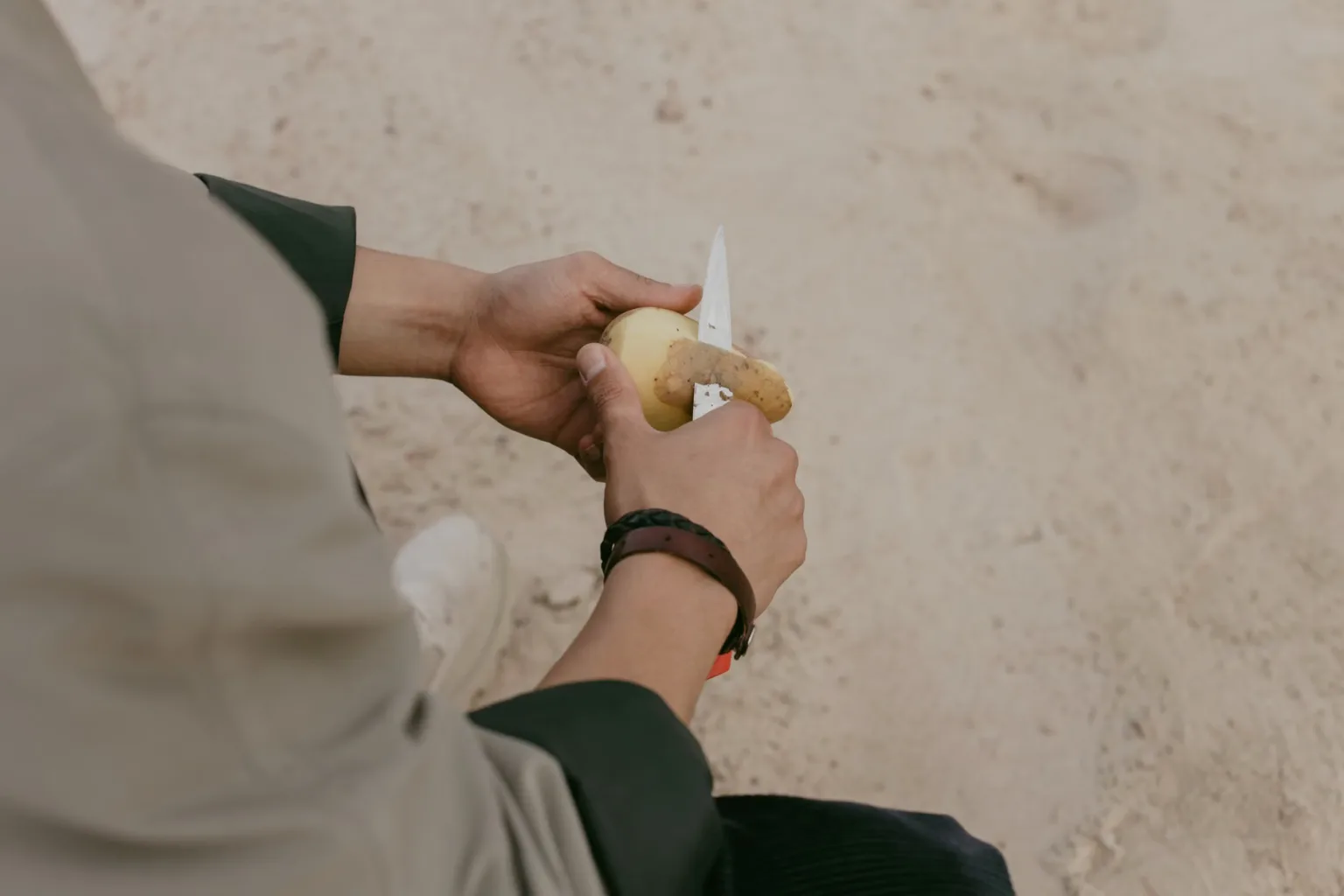
Check that the ingredient is fresh, peeled sweet potato, then measure the amount specified by the recipe. If starting with a whole root, remove the skin before preparing it and adjust the quantity to the requested weight. Cut and cook the sweet potato according to the instructions for the dish; the recipe, rather than a universal rule, should determine piece size and method. It can be included in a sweet or savory preparation when the recipe calls for it. Follow the product’s handling instructions and do not confuse it with a cooked or canned form.
Flavour and texture
The edible root is characterized by a sweet taste. The name “peeled sweet potato” says that the skin has been removed, but it does not specify a variety or determine the texture after cooking. The available information does not establish one texture for every root or preparation. For the intended result, follow the recipe’s cutting and cooking directions, which can differ from one dish to another.
How to choose it
Look for a product clearly identified as fresh, peeled sweet potato and check that this is the form your recipe calls for. Regional names vary: batata and boniato are also used for this root. Check the product description rather than relying only on the local name. If the package includes use or handling instructions, consult them. Choose a quantity and cut that match the preparation you plan to make.
Storage
Follow the storage instructions on the peeled sweet potato’s package. If there are none, consult the food-safety guidance that applies locally to this fresh product rather than assuming a storage period or temperature. Do not automatically transfer instructions for whole, cooked, frozen, or canned sweet potatoes to the peeled form. Before using it, check that the product matches the form required by the recipe.
Substitutions
The closest substitute is another peeled sweet potato, using the quantity specified by the recipe. You can also start with a whole sweet potato and remove its skin before measuring. These choices retain the requested ingredient without suggesting another root as an equivalent. If considering a different alternative, do not assume it will have the same taste or produce the same result in the dish.
Common mistakes
Do not confuse fresh, peeled sweet potato with cooked or canned sweet potato; these are different forms. Check whether the recipe gives the weight before or after peeling, because the product described here is already skinless. Avoid assuming that every dish uses the same cut or cooking method: follow the specific recipe and any instructions supplied with the product.
Safety and allergens
Follow the package’s handling and storage instructions and the food-safety guidance that applies in your area. Do not use a product if its package says it is not suitable for consumption.
Culinary uses
- Edible tuberous root
- Sweet-tasting ingredient for recipe-directed preparations
Recommended techniques
- Use already peeled, or peel a whole sweet potato before use
- Cut and prepare according to the recipe
Pairs well with
- Other ingredients specified for a sweet preparation
- Other ingredients specified for a savory preparation
Frequently asked questions
What is peeled sweet potato?
It is the edible root of Ipomoea batatas supplied without its skin. “Peeled” describes its preparation, not a different variety.
Do sweet potato and batata refer to this root?
Sweet potato and batata are regional names used for this root; the common name can vary by location.
Can I substitute a whole sweet potato?
Yes. Peel the whole root, then measure the quantity required by the recipe before preparing it.
Ingredient allergens
Allergen listThere are no verified associations for these ingredients yet.
Sources and review
Automatically researched, cross-checked and validated content. Sources consulted:
- Client Challenge doi.org/10.2307/jj.27939689.16
- The Essential Glossary of Cooking Terms for the Culinary Arts - Escoffier www.escoffier.edu/blog/culinary-arts/the-essential-glossary-of-cooking-terms-for-the-culinar…
- Ipomoea batatas - Wikipedia, la enciclopedia libre es.wikipedia.org/wiki/Ipomoea_batatas
- USDA FoodData Central libguides.marist.edu/fdc
- - YouTube www.youtube.com/watch?v=CA6OP0fdLtk
- Desarrollo de una nueva propuesta gastronómica con base en el uso de palmito en recetas de sal y dulce | OpenAlex openalex.org/W2588337870
- Project MUSE -- Verification required! muse.jhu.edu/pub/1/article/950423/pdf
- Factors affecting farmers' willingness and ability to adopt and ... vtechworks.lib.vt.edu/bitstream/10919/93401/1/Jenkins2018_Article_FactorsAffectingFarmersWil…
- La publicación del presente recetario se debe al aporte de distintas organizaciones de Cañete, incluyendo la Cooperativa Agraria... cipotato.org/wp-content/uploads/2014/09/Recetario_Camote.pdf