- Category
- Dairy and eggs
- State
- Fresh
- Usual unit
- g
What it is
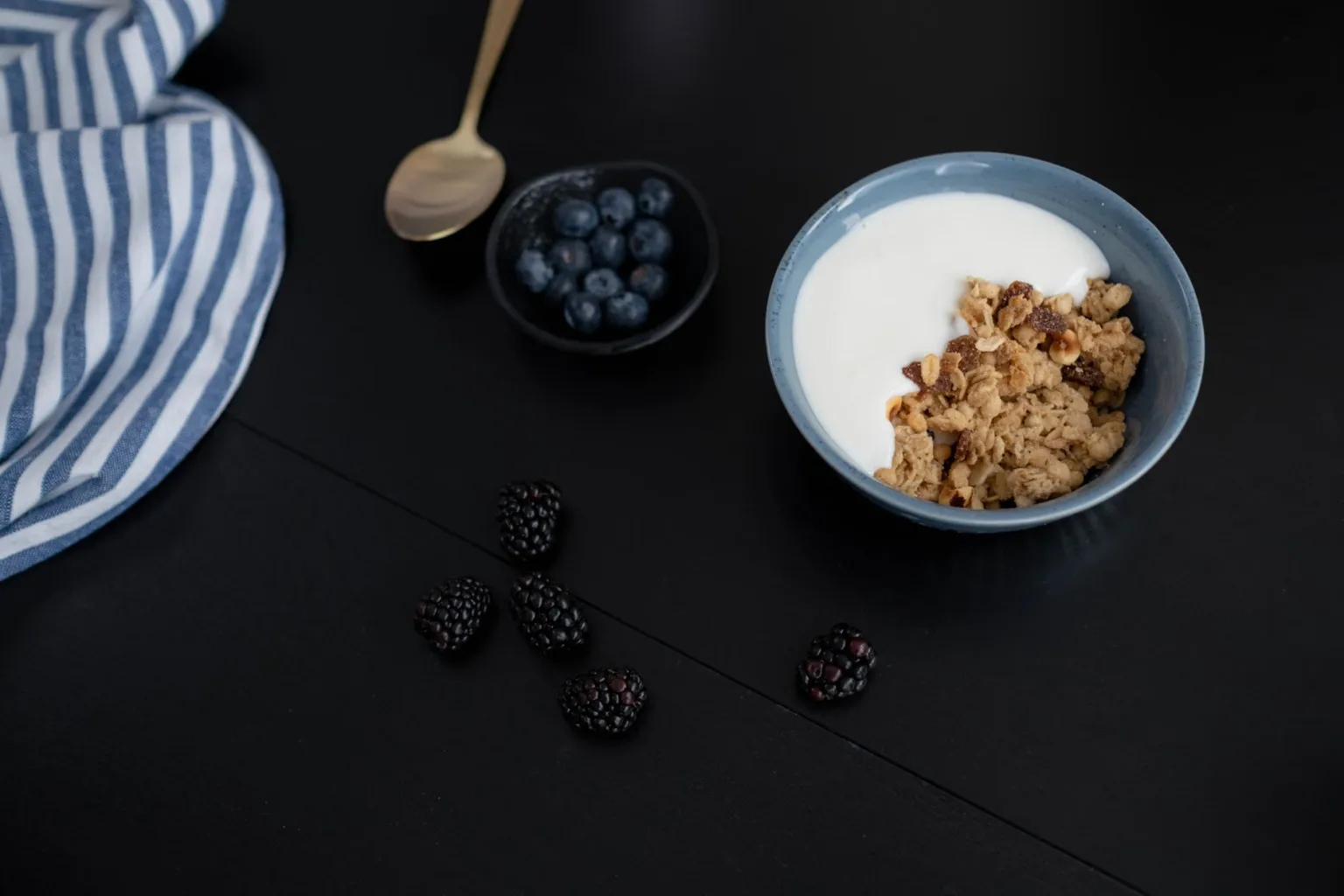
Plain unsweetened yogurt is a dairy product made by fermenting milk with specific cultures. During fermentation, some of the milk’s natural lactose is converted into lactic acid, contributing to yogurt’s tangy taste and characteristic texture. “Unsweetened” generally means that sugar or sweeteners have not been added; it does not mean the product has no naturally occurring sugars, because milk contains lactose. The milk used and the production process affect the yogurt’s thickness and flavor. Check the ingredient list and label to confirm what is in a particular product.
When to use it
Use it when you want a creamy, mildly tangy base without added sweetness, in either savory or sweet preparations. Serve it with fruit, blend it into a smoothie, or mix it with cucumber, garlic, lemon, and herbs for a sauce or dip. It can also accompany vegetables, legumes, or meat. Plain yogurt has its own acidity, so taste it before adjusting the lemon, salt, or other seasonings in a recipe.
How to use it
Stir the yogurt before serving if you want an even texture. For a dip, gently mix it with chopped or grated cucumber, garlic, and fresh herbs; add lemon and seasonings gradually, tasting as you go. For a smoothie, blend it with fresh or frozen fruit and other ingredients to taste, and do not mistake unsweetened yogurt for a product that has already been sweetened. It can also be served with fruit, oats, nuts, or seeds. Strain it for a thicker result, or choose plain drinkable yogurt when a looser texture suits the recipe. Keep it refrigerated as directed on its package.
Flavour and texture
Its flavor is usually mild, dairy-like, and slightly tangy, without the sweetness of sweetened yogurt. Texture can range from creamy or set to relatively fluid, depending on the milk and production method. A little liquid may separate; stir it back in if the product has been stored according to its label. Strained yogurt is thicker than unstrained yogurt.
How to choose it
Check that the package identifies the product as plain yogurt, then read the ingredient list to see whether sugar, sweeteners, fruit, or other ingredients have been added. “No added sugar” does not necessarily mean there are no naturally occurring sugars from milk. Choose a consistency that suits your cooking and check the package’s storage directions and dates. If you have an allergy or intolerance, consult the allergen information.
Storage
Store the yogurt according to the conditions printed on its package, and follow the dates and use directions provided. After opening, close the package again and keep it refrigerated if the label instructs you to do so. Use clean utensils when serving and avoid leaving it outside the stated conditions. If the package is damaged or the product has unusual signs, do not consume it; follow applicable food-safety guidance.
Substitutions
For a thicker sauce or dip, plain Greek-style yogurt can work, but its consistency may differ. In smoothies or sauces that can be thinner, plain drinkable yogurt may be suitable. These are not identical exchanges: adjust the amount and other liquids gradually until the recipe reaches the texture you want.
Common mistakes
Do not confuse “no added sugar” with “sugar-free”: plain yogurt can contain lactose naturally present in milk. Do not assume every product labeled plain has the same ingredients or texture; check the package. When making a sauce, add lemon and salt gradually so they do not overwhelm the yogurt’s tang. Do not overlook the package’s storage directions.
Safety and allergens
Yogurt is a dairy product and may contain milk, an allergen that must be identified in food information. Read the label, especially if you have an allergy or intolerance. Follow the package’s storage directions and dates; specific requirements can vary with the product and how it is sold.
Culinary uses
- Creamy base for sauces and dips
- Ingredient for smoothies and blended drinks
- Topping or accompaniment for sweet and savory dishes
Recommended techniques
- Stir or whisk to make a smooth sauce
- Blend with fruit or other smoothie ingredients
- Strain to make a thicker texture
Pairs well with
- Fresh or frozen fruit
- Cucumber, garlic, lemon, and fresh mint
- Oats, nuts, or seeds
Frequently asked questions
Does plain unsweetened yogurt contain no sugars?
Not necessarily. It can contain lactose, the naturally occurring sugar in milk, even when no sugar or sweetener has been added.
How can I use it in a sauce?
Mix it with cucumber, garlic, lemon, and herbs. Add seasonings gradually and taste to balance its tang.
How should I store it?
Follow the storage instructions and dates on the package; after opening, also follow any storage directions provided by the manufacturer.
Ingredient allergens
Allergen listThere are no verified associations for these ingredients yet.
Estimated nutrition
- Fat
- 1.55 g
- Saturates
- 1 g
- Carbohydrate
- 7.04 g
- Sugars
- 7.04 g
- Fibre
- 0 g
- Protein
- 5.25 g
- Salt
- 0.18 g
Sources and review
Automatically researched, cross-checked and validated content. Sources consulted:
- En el etiquetado alimentario hay algunas menciones que son obligatorias eletiquetadocuentamucho.aesan.gob.es/obligatoria.html
- Client Challenge doi.org/10.2307/jj.27939689.16
- The Essential Glossary of Cooking Terms for the Culinary Arts - Escoffier www.escoffier.edu/blog/culinary-arts/the-essential-glossary-of-cooking-terms-for-the-culinar…
- ¿Qué es el yogur? Preguntas frecuentes - Yogurt in Nutrition www.yogurtinnutrition.com/es/que-es-el-yogur-preguntas-frecuentes/
- USDA FoodData Central libguides.marist.edu/fdc
- Appendix B: Recipes for Disease Prevention – Culinary Medicine opentextbooks.library.arizona.edu/culinarymedicine/back-matter/appendix-b-recipes/
- Processed Foods and Health • The Nutrition Source nutritionsource.hsph.harvard.edu/processed-foods/
- Changes to the Nutrition Facts Label | FDA go.unl.edu/guidanceregulation
- Preguntas y respuestas sobre el yogur - FOM ortegaygasset.edu/preguntas-y-respuestas-sobre-el-yogur/
- FSHN12-01s/FS198: De compras para la salud: Yogur ask.ifas.ufl.edu/publication/FS198
- Para la ciudadanía www.aesan.gob.es/para-la-ciudadania
- El mundo de la cocina con yogur: recetas originales y beneficios para la salud | Leche Larsa leitelarsa.es/blog/el-mundo-de-la-cocina-con-yogur-recetas-originales-y-beneficios-para-la-s…
- Hacer Yogur en Casa - Illinois Extension extension.illinois.edu/media/8256/download?inline=
- Are smoothies a healthy choice for my family? | ¿Son los licuados una opción saludable para mi familia? | University of Nevada, Reno www.unr.edu/nevada-today/news/2021/atp-smoothies
- Yogur: historia, tipos y cómo hacerlo en casa de forma fácil sin yogur – Paleobull paleobull.com/blogs/estilo-paleo/yogur-historia-tipos-y-como-hacerlo-en-casa-de-forma-facil-…
- Los yogures naturales sin azúcares añadidos son la opción saludable | Gastronomía & Cía www.gastronomiaycia.com/los-yogures-naturales-sin-azucares-anadidos-son-la-opcion-saludable/
- Food allergen labelling and information requirements technical guidance - GOV.UK www.gov.uk/government/publications/food-allergen-labelling-and-information-requirements-tech…