- Category
- Grains, flour and pasta
- State
- Powdered
- Usual unit
- g
What it is
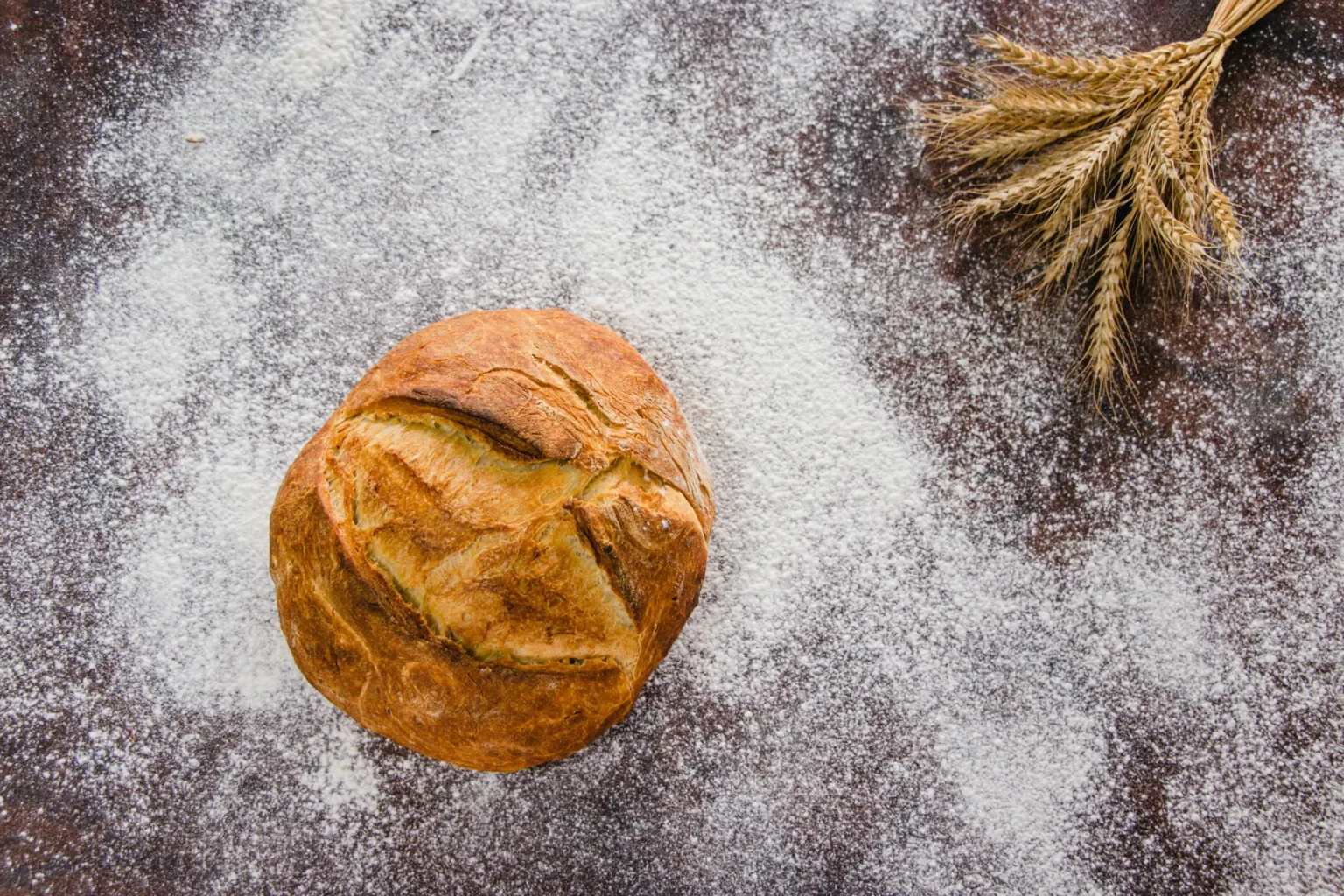
Plain wheat flour is wheat milled into a fine powder. The words “plain” or “ordinary” do not guarantee that every bag has identical properties: protein quantity and quality, milling and extraction can vary. When wheat flour is hydrated and worked, its proteins can form gluten, which gives elasticity and structure to some doughs. Stronger flour generally absorbs more liquid and stands up better to fermentation, while weaker flour is often suitable for preparations that need less elasticity. Refined and whole-wheat flour also behave differently: whole-wheat flour retains more parts of the grain, has a more pronounced flavor and tends to make denser doughs. Check the package and the recipe rather than assuming that every flour sold as plain wheat flour will work identically in every preparation.
When to use it
Use plain wheat flour when a recipe calls for a versatile flour and does not specify a particular strength or degree of refinement. It can work in cakes and biscuits, sauces, light coatings and some doughs. For bread, pizza or other fermented doughs, check whether the recipe calls for strong flour: plain flour may not have the same absorption and ability to withstand a long fermentation. When a recipe depends on an especially light crumb or an elastic dough, the flour specification matters more than a general label. Whole-wheat flour gives a more pronounced flavor and often a denser result than refined flour.
How to use it
Weigh the flour and follow the recipe’s liquid proportions and method. For a sauce, add the flour gradually to the specified liquid or fat and mix to prevent lumps; cook the preparation as directed by the recipe. For dough, add liquid gradually and knead only as the method instructs: hydration and working affect gluten formation and elasticity. For delicate baked goods, mix just enough to combine the ingredients rather than assuming that prolonged kneading is appropriate. For coating, apply a thin layer and shake off excess before cooking. If you switch to whole-wheat flour or flour made from another ingredient, expect a different result; the liquid, binding ingredients or technique may need adjustment.
Flavour and texture
Refined wheat flour usually has a mild, fairly neutral flavor; flour containing more parts of the grain can be more aromatic. Dry flour is a fine powder, though milling and product type can affect how it feels. Once hydrated, wheat flour can form an elastic dough when worked and provide structure in baking. Strength, extraction and milling influence absorption and the final texture. More whole-grain flour tends to make denser preparations than refined flour and may need more liquid. Not every flour described as plain will produce exactly the same result.
How to choose it
Read the package and confirm that the product is wheat flour; the word “plain” alone does not specify its strength or degree of refinement. If you are making bread or fermented dough, look for flour intended for that purpose or check any strength information provided. For cakes, biscuits, sauces or light coatings, plain flour can be useful when the recipe does not call for a different type. Choose an intact, dry package and follow its product description and storage directions. If you need to avoid wheat or gluten, check ingredient and allergen information carefully rather than relying on a flour’s general name.
Storage
Keep flour in a tightly closed container in a cool, dry place, away from strong odors. Protecting it from moisture helps it remain a free-flowing powder; use clean, dry utensils when scooping. Follow the package storage directions and date. Whole-wheat flour may keep for less time than refined flour because it contains parts of the grain with fats that deteriorate sooner. Check older flour before combining it with a new supply.
Substitutions
Pastry flour may work in some preparations that suit a weaker flour, but it is not a universal replacement. Whole-wheat flour brings more flavor and often a denser texture; it may require a liquid adjustment. Rice or corn flour does not create the same structure as wheat flour and requires an adapted recipe, sometimes with changes to hydration or binders. Replacing flour by weight alone does not guarantee the same outcome: consider the preparation and the flour’s role.
Common mistakes
Do not assume that all flour labeled plain has the same strength or will suit every recipe. A weaker flour can change a fermented dough that needs structure; switching to more whole-grain flour can also make a preparation denser and alter how much liquid it absorbs. Another common mistake is replacing wheat flour with rice or corn flour without adapting the recipe. Measure accurately, and do not add all the liquid at once when the method calls for gradual addition.
Safety and allergens
Wheat flour contains gluten. If you need to avoid gluten or have a wheat allergy, check the label and prevent cross-contact from shared utensils and surfaces. Keep flour dry and follow the package storage directions.
Culinary uses
- Aporta estructura a masas y productos horneados
- Espesa salsas y preparaciones
- Sirve para rebozar y enharinar
Recommended techniques
- Amasar e hidratar para formar masas
- Mezclar con líquidos para espesar
- Enharinar o rebozar antes de cocinar
Pairs well with
- Agua y otros líquidos para formar masas
- Grasas y azúcares en masas enriquecidas
- Leche y mantequilla en salsas y preparaciones de repostería
Frequently asked questions
Does plain flour always mean the same thing?
No. The term is general and does not, by itself, specify strength, milling or refinement. Check the package and the recipe.
Can I use plain flour for bread?
It depends on the recipe and the flour. Some bread doughs need stronger flour, which can absorb more liquid and better withstand fermentation.
Does plain wheat flour contain gluten?
Yes. Wheat proteins can form gluten when hydrated and worked, so wheat flour is not suitable for a gluten-free diet.
Ingredient allergens
Allergen listThere are no verified associations for these ingredients yet.
Estimated nutrition
- Fat
- 1.66 g
- Saturates
- 0.24 g
- Carbohydrate
- 72.5 g
- Sugars
- 0.31 g
- Fibre
- 2.4 g
- Protein
- 12 g
- Salt
- 0 g
Sources and review
Automatically researched, cross-checked and validated content. Sources consulted:
- Tipos de harina de trigo, un alimento básico en la cocina: guía para usarlas www.directoalpaladar.com/ingredientes-y-alimentos/guia-para-distinguir-diferentes-tipos-hari…
- Harina: tipos, usos en cocina y elegir - CocinoPedia.com cocinopedia.com/enciclopedia-gastronomica/harina-tipos-usos-elegir/
- Evaluación de harina de amaranto como ingrediente antioxidante para la preparación de matrices alimentarias funcionales doi.org/10.35537/10915/162211
- Washington State Food Access English-Spanish Glossary wpcdn.web.wsu.edu/wp-snaped/uploads/sites/2/2025/10/Food-Access-Spanish-Glossary.pdf
- Para la ciudadanía www.aesan.gob.es/para-la-ciudadania
- ¿Qué es la harina? | ¡¡TE LO CONTAMOS TODO!! - Nutrición Duque restauranteduque.es/que-es-la-harina/
- Recipes | Servicio de Extensión de OSU extension.oregonstate.edu/es/food/recipes
- Pan De Manzana - Expanded Food and Nutrition Education Program efnep.tamu.edu/pan-de-manzana/
- Friday Fives: Top 5 Food Items on Campus | Stories & News | Visit & Connect | Undergraduate Admissions | University of Notre Dame admissions.nd.edu/es/visit-and-connect/stories-news/friday-fives-top-5-food-items-on/
- Food allergen labelling and information requirements technical guidance - GOV.UK www.gov.uk/government/publications/food-allergen-labelling-and-information-requirements-tech…