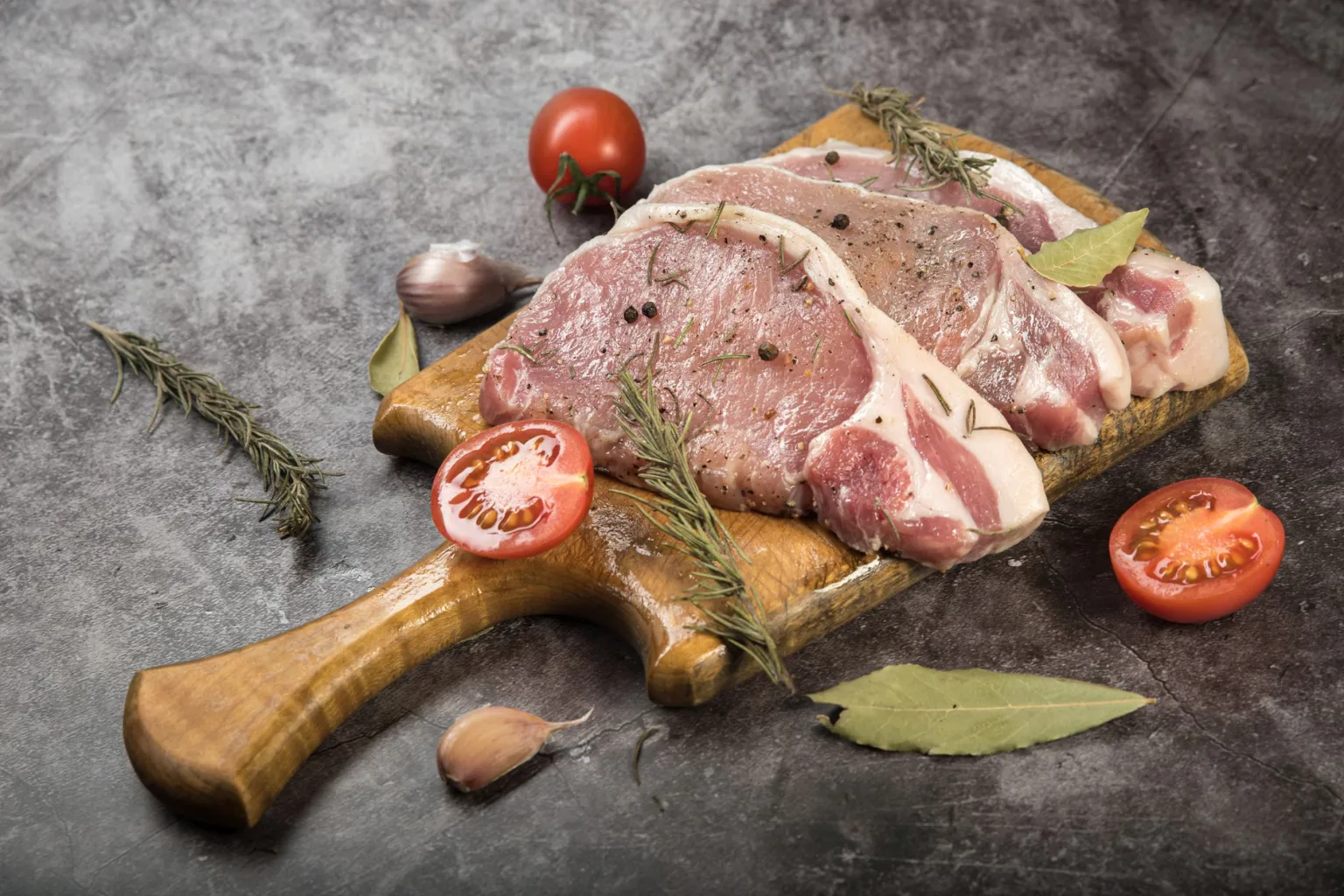
- Category
- Meat
- State
- Fresh
- Usual unit
- kg
What it is
Pork bones are bone-in pieces from the animal, used mainly as an ingredient in stocks and dishes cooked with liquid. They may come from different cuts, including backbone, ribs or ham bone; these pieces do not all contain the same amount of meat, fat or connective tissue. Those differences affect the character of the broth. Collagen from bones, cartilage and skin can pass into the cooking liquid and make it gelatinous as it cools. Bones may be sold fresh or salted. Salted bones add salt to a dish, so the seasoning needs particular attention when they are used.
When to use it
Use pork bones when you want a pork-flavored stock, cocido-style dish, puchero or stew cooked with liquid. They can form a base for dishes with legumes or vegetables and are useful when you want broth that develops more body as it cools. Choose a type of piece to suit the dish: backbone, ribs and ham bone are distinct options, and a salted piece changes the salt level of the finished food. They are not the right choice when you do not want a pork-based flavor in the cooking liquid.
How to use it
Add the bones to a liquid-based preparation such as stock or cocido, and cook according to the instructions for the dish you are making. The flavor and texture of the liquid depend on the piece and on the proportions of the other ingredients. Salted bones can contribute substantial salt; soaking them in water for a few hours before cooking can reduce some of it. Season cautiously and taste the liquid before adding more salt. As a collagen-rich broth cools, it may become gelatinous. How noticeable this is varies with the amount of bone and the other ingredients in the preparation.
Flavour and texture
The broth’s flavor depends on the cut and the ingredients cooked with it. Pork bones give the liquid a pork-based depth, while collagen can contribute body and a gel-like texture as the broth cools. The effect varies with the amount of bone, cartilage and skin in the preparation, as well as with the other ingredients. Salted bones also contribute salt, which affects the final seasoning.
How to choose it
Choose a piece for the intended dish, and ask which cut it is if it is not identified: backbone, ribs and ham bone have different characteristics. Check whether the product is fresh or salted, since salted bones can noticeably increase the saltiness of a broth. The amount of meat, fat and connective tissue can vary between pieces, so the final texture will not necessarily be the same every time.
Storage
Follow the storage directions on the package and from the seller for fresh bones; the available evidence does not support one universal storage time or temperature. A culinary reference notes that salted bones can keep in the refrigerator for several days and suggests freezing them if they will not be used soon. That advice concerns salted bones and should not automatically be applied to other forms. Keep the product clearly identified by its state.
Substitutions
If the cut you planned to use is unavailable, other pork bones such as backbone, ribs or ham bone can be considered for stocks and cocido-style dishes. The result will not be identical: differences in meat, fat, connective tissue and salt can change the broth’s flavor and body. Take particular care with seasoning if the substitute is salted.
Common mistakes
A common mistake is treating salted bones like fresh ones and seasoning the broth in the same way. Salted bones can add a lot of salt; soaking them before cooking and tasting the liquid before adjusting the seasoning can help avoid an overly salty result. Do not expect every cut to produce the same gel-like texture, since this depends on the piece and the other ingredients.
Safety and allergens
Follow the package’s storage instructions and do not apply guidance for salted bones to fresh ones. If the piece is salted, account for its salt and taste the broth before adding more. No specific storage time or temperature is provided here for all product forms.
Culinary uses
- Add a pork-based flavor to broth, cocido and other soups.
- Contribute collagen that can give cooled broth a gel-like texture.
Recommended techniques
- Cook in broth or a one-pot dish such as cocido.
- Soak salted bones in water before cooking when reducing their saltiness is desired.
Pairs well with
- Broths and cocido-style dishes
- Legumes and vegetables cooked in broth
Frequently asked questions
What are pork bones used for?
They are mainly used to add flavor to stocks, cocido-style dishes, puchero and stews cooked with liquid.
Why can broth turn gelatinous as it cools?
Collagen from bones, cartilage and skin can enter the broth and contribute to a gel-like consistency. The effect varies with the preparation.
Should salted pork bones be soaked?
Soaking them in water for a few hours can reduce some of the salt they contribute. Taste the broth before adding more seasoning.
Ingredient allergens
Allergen listThere are no verified associations for these ingredients yet.
Estimated nutrition
- Fat
- 13.78 g
- Saturates
- 4.85 g
- Carbohydrate
- 0 g
- Sugars
- 0 g
- Fibre
- 0 g
- Protein
- 26.15 g
- Salt
- 0.91 g
Sources and review
Automatically researched, cross-checked and validated content. Sources consulted:
- La carne de cerdo, pilar de la cocina tradicional – Ibéricos Alhandiga ibericosalhandiga.com/la-carne-de-cerdo-pilar-de-la-cocina-tradicional/
- Carne de cerdo - Wikipedia, la enciclopedia libre es.wikipedia.org/wiki/Carne_de_cerdo
- - YouTube www.youtube.com/watch?v=W38i73mInAk
- Hueso blanco, hueso de canilla blanca, hueso salado, hueso andaluz… esencia de un cocido | Gastronomía & Cía www.gastronomiaycia.com/hueso-blanco-hueso-de-canilla-blanca-hueso-salado-hueso-andaluz-esen…
- Carne de cerdo: cortes, zonas y mejores usos culinarios www.ifema.es/noticias/alimentacion-bebidas/corte-cerdo-guia-mejores-partes
- El Uso del Cerdo en la Gastronomía: Tradición y Versatilidad - Rancho El Rincón de los Romo ranchoelrincondelosromo.com/el-uso-del-cerdo-en-la-gastronomia-tradicion-y-versatilidad/
- Evolución del léxico culinario desde 1932 a 1972 | OpenAlex openalex.org/W2291578502
- Food Allergies | FDA www.fda.gov/food/nutrition-food-labeling-and-critical-foods/food-allergies
- Risk assessment of food allergens: part 1: review and validation of Codex alimentarius priority allergen list through risk assessment: meeting report www.who.int/publications/i/item/9789240042391
- Food allergens | Food Safety and Quality | FAO www.fao.org/food-safety/scientific-advice/food-allergens/en
- Allergen guidance for food businesses - GOV.UK www.gov.uk/government/publications/allergen-guidance-for-food-businesses
- **Comparativa de los mejores huesos para cocido: calidad, sabor y opciones recomendadas** laovejaquebala.es/huesos-para-cocido/