- Category
- Meat
- State
- Fresh
- Usual unit
- g
What it is
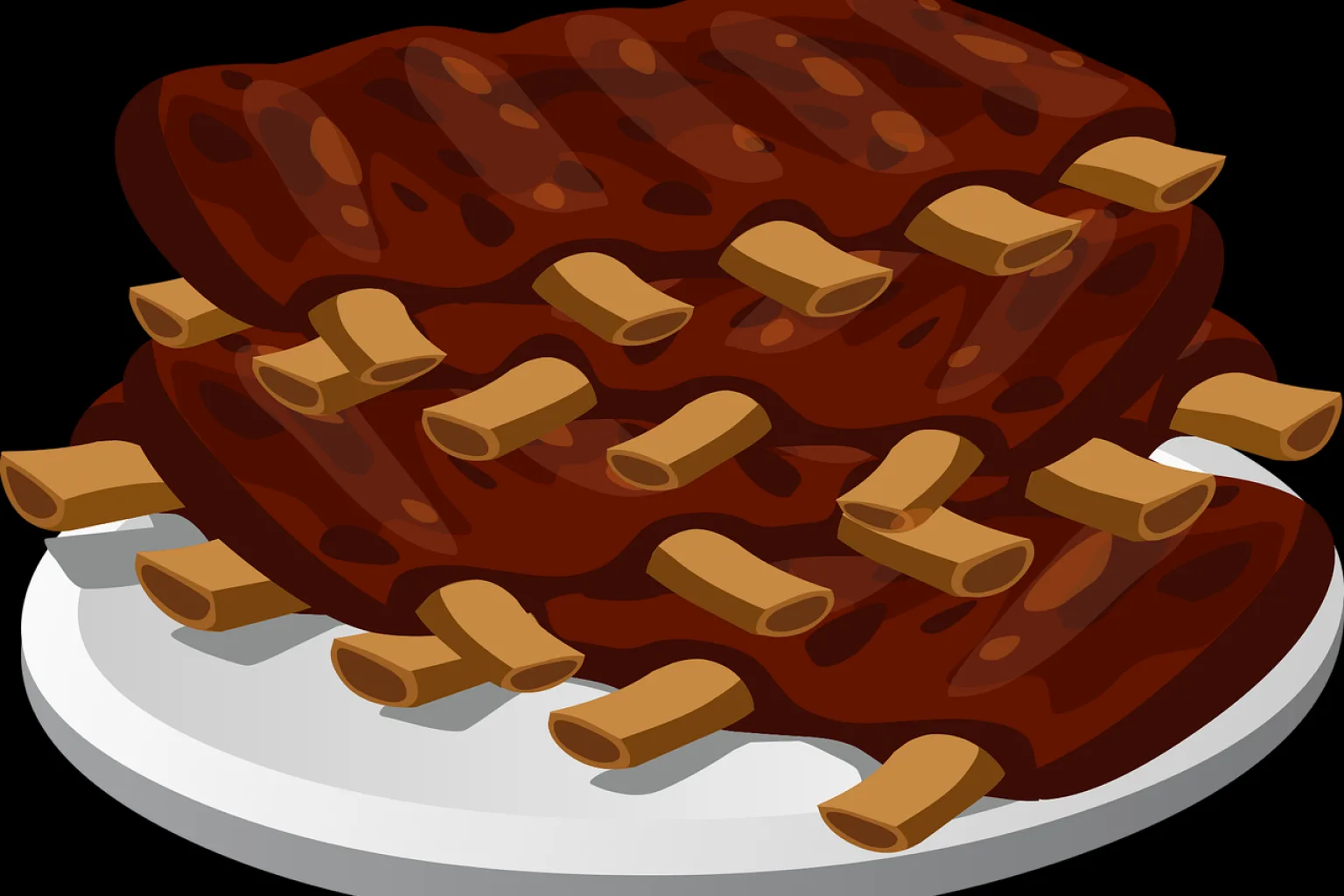
Pork ribs are a cut taken from the pig’s rib cage. They are sold with bone and meat, often in alternating sections, and the amount of meat and shape of the cut can vary. They may be sold as individual ribs or as a rack. They are not the same cut as a pork chop: their bone-in structure makes them useful for roasting and for cooking in liquid-based dishes. Ribs can be the main feature of a meal or contribute flavour and substance to stews, rice dishes, soups and noodles. Fresh ribs may be sold plain or already seasoned with a marinade, so check the product before deciding how much extra seasoning to add.
When to use it
Choose pork ribs when you want a bone-in cut to serve as a main dish or meat that can cook alongside other ingredients. In the oven or on a barbecue, they work with a marinade or sauce; in a stew, they can flavour the cooking liquid, potatoes and vegetables. They can also be added to rice dishes, soups and noodle casseroles. Keep the format in mind: a whole rack, separated ribs and pre-marinated ribs may call for different preparation. For a dish with other ingredients, cut the ribs to a size that suits the recipe.
How to use it
Before cooking, check whether the ribs are plain or marinated and cut them to suit the dish: separate pieces for easier distribution, or larger portions when cooking a rack. For roasting, season them and serve or cook them with a sauce or marinade; the oven and grill are common options. For a stew, brown the ribs first if the recipe calls for it, then add them to the dish with vegetables, potatoes or stock. They can also go into rice dishes, soups and noodle casseroles. Sweet or spiced sauces are options for glazing or serving, but are not essential. For safe preparation, follow the product instructions and consult official food-safety advice for your area.
Flavour and texture
Pork ribs combine meat, fat and bone and can be juicy with a pronounced flavour. The finished texture depends on the cut and cooking method: roasting can brown the outside, while stewing can make the meat tender and add flavour to the cooking liquid. Ribs do not always have the same meat-to-bone ratio, so the eating experience can vary. A marinade or sauce adds its own flavour notes but is not required to enjoy the cut.
How to choose it
Look at the format and cut: ribs may be sold individually or as a rack, with differing amounts of meat and bone. Check whether they are plain or marinated, since the seasoning and salt in a marinade affect how much more you may want to add. Choose a size and format that suits your recipe; manageable portions are often more convenient than a whole rack for stews or rice dishes.
Storage
Follow the storage instructions and date on the package, especially if the ribs are marinated or sold in a particular commercial format. Keep the product in its packaging until preparation and avoid leaving raw meat at room temperature during preparation. If the package gives no clear guidance, ask the seller or consult official food-safety advice for your area.
Substitutions
Lamb or beef ribs can stand in for pork ribs in some dishes, but they are not identical: flavour, size and the proportion of bone to meat differ. Adjust the cut to the recipe and follow the cooking guidance for the chosen piece. Another pork cut may be a closer alternative for keeping a stew pork-based, although it will not exactly reproduce rib texture.
Common mistakes
Do not assume every rack has the same amount of meat or that a whole rack cooks just like separated ribs. Another common mistake is adding plenty of seasoning without checking whether the product is already marinated. For stews, match the size of the pieces to the dish and follow the recipe’s cooking guidance.
Safety and allergens
For safe handling and preparation of pork ribs, follow the package instructions and consult official food-safety advice for your area. If the product gives no clear guidance, ask the seller or your local food-safety authority.
Culinary uses
- Corte de cerdo para servir como plato principal
- Ingrediente para guisos, arroces y sopas
Recommended techniques
- Asar al horno
- Cocinar a la parrilla o barbacoa
- Guisar
- Dorar en sartén antes de una cocción húmeda
Pairs well with
- Patatas y verduras en guisos
- Arroz o fideos
- Salsas y adobos, incluida la salsa barbacoa
Frequently asked questions
Are pork ribs and pork chops the same cut?
No. Ribs come from the rib cage and are sold bone-in; a pork chop is a different cut.
Can pork ribs go in a stew?
Yes. They can cook with vegetables, potatoes or stock and can also be used in rice dishes, soups and noodle casseroles.
Do pork ribs always need a marinade?
No. They can be cooked plain or with a marinade or sauce. If they are already marinated, check the seasoning before adding more.
Ingredient allergens
Allergen listThere are no verified associations for these ingredients yet.
Estimated nutrition
- Fat
- 9.29 g
- Saturates
- 3.57 g
- Carbohydrate
- 17.9 g
- Sugars
- 14.3 g
- Fibre
- 0 g
- Protein
- 12.1 g
- Salt
- 1.77 g
Sources and review
Automatically researched, cross-checked and validated content. Sources consulted:
- ¿Por qué la muerte es origen de miedos y tabúes? doi.org/10.64628/aao.fccyk3qj3
- directrices del grupo de trabajo electrónico “aditivos en derivados de www.aesan.gob.es/dam/jcr:61b6b064-2831-4aaa-b068-2e63b9c9215d/trabajo_electronico.pdf
- Evolución del léxico culinario desde 1932 a 1972 | OpenAlex openalex.org/W2291578502
- Allergies - Food Safety - European Commission food.ec.europa.eu/food-safety/campaign-2026/allergies_en
- Food Allergies | FDA www.fda.gov/food/nutrition-food-labeling-and-critical-foods/food-allergies
- Risk assessment of food allergens: part 1: review and validation of Codex alimentarius priority allergen list through risk assessment: meeting report www.who.int/publications/i/item/9789240042391
- Food allergens | Food Safety and Quality | FAO www.fao.org/food-safety/scientific-advice/food-allergens/en
- Costillas de cerdo - Wikipedia, la enciclopedia libre es.wikipedia.org/wiki/?oldid=127871917&title=Costillas_de_cerdo
- 34 formas de cocinar costillas de cerdo para chuparse los dedos, literalmente www.directoalpaladar.com/recetas-de-carnes-y-aves/31-formas-de-cocinar-costillas-de-cerdo-pa…
- ¿Cómo conseguir que las costillas de cerdo ibérico queden jugosas y tiernas? - Montesierra montesierra.com/blog/como-conseguir-que-las-costillas-de-cerdo-iberico-queden-jugosas-y-tier…
- - YouTube www.youtube.com/watch?v=qhAbSYLv-OI
- Secretos de costilla de cerdo ibérico adobada - César Nieto www.cesarnieto.com/secretos-costilla-de-cerdo-iberico-adobada/
- **Costilla Adobada: Comparativa y Análisis de las Mejores Opciones del Mercado** laovejaquebala.es/costilla-adobada/
- 4 maneras de cocinar las costillas para saborearlas en todo su esplendor www.elconfidencial.com/gastronomia/2018-08-28/maneras-cocinar-costillas_1607164/
- Costillar de Cerdo a Baja Temperatura [PREPARACIÓN] | Venta de Carnes Ibéricas al Por Mayor | Dehesium Meats dehesium.com/blog/costillar-cerdo-baja-temperatura
- 8 recetas de costillas de cerdo: ideas sencillas y muy sabrosas para cocinarlas bonviveur.com/es/recetas/lista/costillas-cerdo/