- Category
- Meat
- State
- Fresh
- Usual unit
- g
What it is
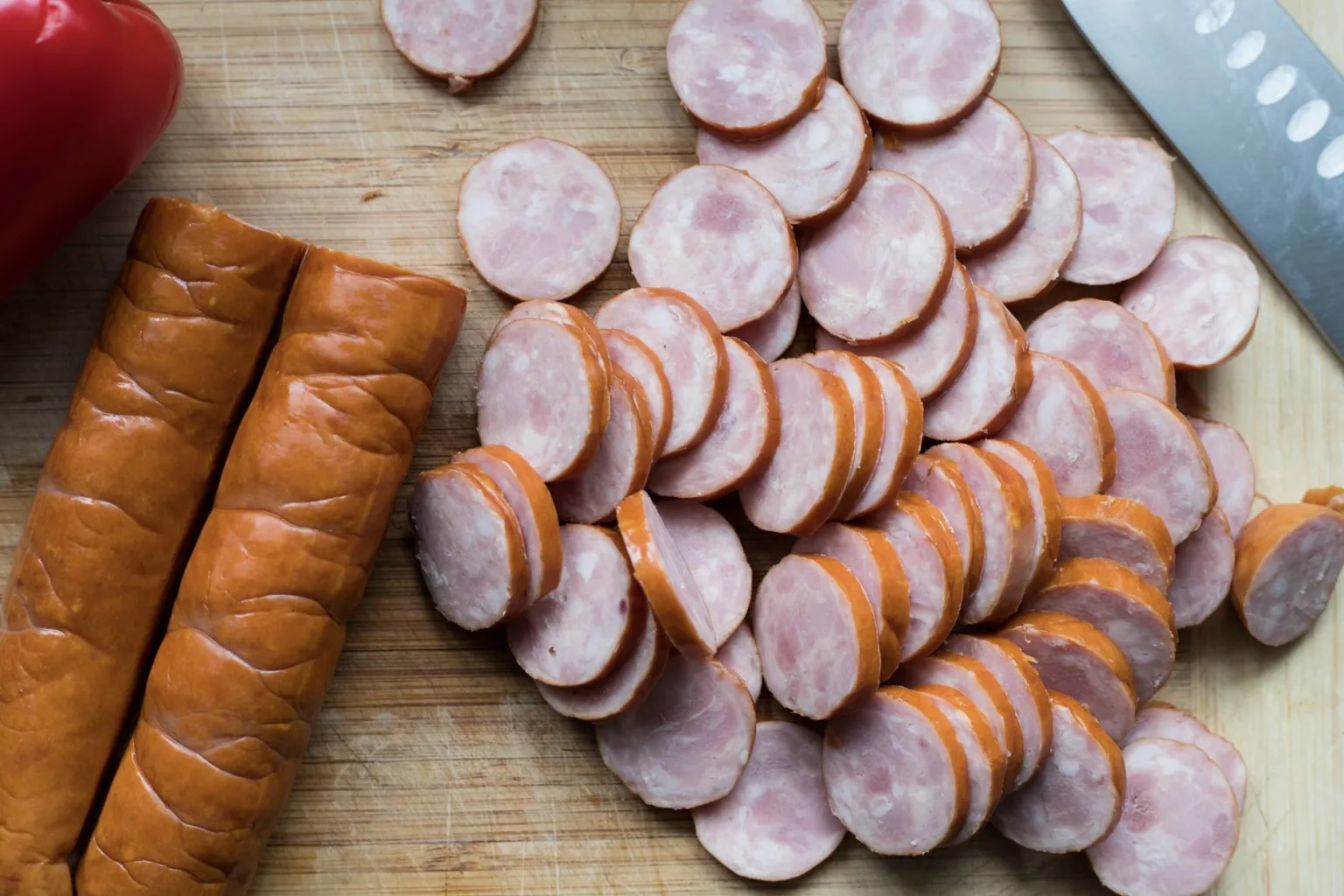
Pork sausage is a seasoned meat product made from ground pork, commonly shaped in a casing. Depending on the product, the mixture may also contain fat, salt, spices, and other ingredients. This profile covers fresh sausage: it has not been cured or cooked and needs to be cooked before eating. Pork sausages are not all interchangeable. Some products are cooked, smoked, or cured, so check the package and its preparation instructions to identify what you have before serving or cooking it.
When to use it
Choose fresh pork sausage when you want a savory protein for a simple meal or an ingredient to enrich a larger dish. It can be served grilled or pan-fried with onions, peppers, or potatoes, or added to pasta, stews, and bean dishes. Seasoning and saltiness differ by product, so taste the dish before adding more salt or spices. Do not assume that a cooked or cured sausage should be handled like fresh sausage; use the package directions for the specific product.
How to use it
Keep fresh sausage refrigerated until you are ready to cook, and use clean utensils and work surfaces. Cook it thoroughly before eating, following the package directions; browning on the outside alone is not a reliable indication that the center is cooked. For pan-frying, use moderate heat and turn the sausages so they cook evenly without scorching the casing. On a grill, avoid charring the exterior before the inside is cooked. You can also remove the casing, crumble the meat, and cook it for a sauce, stew, or filling. Wash surfaces and utensils that have touched raw meat before using them for ready-to-eat food.
Flavour and texture
Flavor depends on the proportions of pork and fat and on the seasonings in the recipe; some sausages are mild, while others are more aromatic or strongly spiced. The filling is compact inside its casing and can remain juicy when cooked without drying it out. Check the ingredient list for the specific seasonings and ingredients, since formulas vary among products.
How to choose it
Look for clear package labeling that identifies the sausage as fresh or uncooked, and check the ingredient list, date, and storage directions. Appearance alone cannot tell you reliably whether a sausage is raw, cooked, or cured. Choose an intact package and keep it cold on the way home. If you need to avoid particular ingredients, check the allergen information as well.
Storage
Keep fresh sausage refrigerated in its packaging or covered, and follow the date and storage directions on the label. Avoid leaving it at room temperature while preparing a meal, and keep it separate from ready-to-eat foods to reduce cross-contamination. If you will not use it within the period stated on the package, follow the manufacturer’s directions for freezing and thawing.
Substitutions
Seasoned ground pork can work in a similar role, though it will not necessarily have the same juiciness or casing. Another fresh sausage can be substituted if its meat, seasoning, and salt level suit the dish. Adjust seasoning to account for the product, and cook any raw substitute thoroughly before serving.
Common mistakes
Do not assume every sausage is ready to eat: fresh sausage needs to be cooked. A browned exterior alone does not confirm that the center is fully cooked. Avoid adding salt or spices before tasting, since commercial mixtures may already be seasoned. Do not use utensils that touched raw meat on ready-to-eat food without washing them first.
Safety and allergens
Fresh pork sausage should be cooked thoroughly before eating. Follow the package directions and keep the meat refrigerated. Prevent raw meat and its juices from contacting ready-to-eat foods. If the package is damaged or you cannot confirm that the sausage was stored properly, do not use it.
Culinary uses
- Main protein in a meal
- Flavorful addition to pasta, stews, and vegetable dishes
Recommended techniques
- Pan-frying
- Grilling or roasting
Pairs well with
- Onions and peppers
- Potatoes and beans
- Mustard and bread
Frequently asked questions
Can fresh pork sausage be eaten without cooking?
No. Fresh sausage needs to be cooked thoroughly before eating. Check the package: cooked or cured sausages are different products.
What ingredients might pork sausage contain?
It is commonly made with pork and may also contain fat, salt, spices, and other ingredients. Formulas vary, so check the ingredient list and allergen information.
What foods pair well with pork sausage?
Try it with onions, peppers, potatoes, beans, pasta, or bread. Adjust added salt and seasoning to the flavor of the sausage you have.
Ingredient allergens
Allergen listThere are no verified associations for these ingredients yet.
Estimated nutrition
- Fat
- 17.9 g
- Saturates
- 7.14 g
- Carbohydrate
- 0 g
- Sugars
- 0 g
- Fibre
- 0 g
- Protein
- 26.8 g
- Salt
- 1.96 g
Sources and review
Automatically researched, cross-checked and validated content. Sources consulted:
- Almacenamiento Seguro de Alimentos: - El Refrigerador y el Congelador bookstore.ksre.ksu.edu/download/safe-food-storage-the-refrigerator-and-freezer-spanish_MF313…
- ¿Por qué la muerte es origen de miedos y tabúes? doi.org/10.64628/aao.fccyk3qj3
- The Essential Glossary of Cooking Terms for the Culinary Arts - Escoffier www.escoffier.edu/blog/culinary-arts/the-essential-glossary-of-cooking-terms-for-the-culinar…
- Building Communication between Serve City and the Hamilton ... etd.ohiolink.edu/acprod/odb_etd/ws/send_file/send?accession=muhonors1114807342&disposition=i…
- Tipos de salchichas: variedades y características www.campofrio.es/tipos-de-salchichas
- Salchicha - Wikipedia, la enciclopedia libre es.wikipedia.org/wiki/Salchicha
- Ingredientes de las salchichas: ¿qué contienen? | Consumer www.consumer.es/alimentacion/ingredientes-salchichas.html
- La salchicha: un alimento universal que ha marcado la tradición culinaria de todo país y civilización - Picken picken.es/la-salchicha-un-alimento-universal-que-ha-marcado-la-tradicion-culinaria-de-todo-p…
- Tipos de salchichas: variedades y usos en la cocina www.uncomo.com/comida/articulo/tipos-de-salchichas-variedades-y-usos-en-la-cocina-55697.html
- Revista del comité científico de la aecosan número 24 aesan.gob.es/dam/jcr:979384c0-5bd9-46d4-a29e-ccf5876c769c/RCC_24.pdf
- Wholesome Kitchen, Wholesome Pies abre sus puertas en Generation Park | Culinary Institute Lenotre culinaryinstitute.edu/es/wholesome-kitchen-wholesome-pies-abre-sus-puertas-en-generation-par…
- Summer sausage and deli-style meats | Servicio de Extensión de OSU extension.oregonstate.edu/es/catalog/sp-50-735-summer-sausage-deli-style-meats