- Category
- Meat
- State
- Fresh
- Usual unit
- g
What it is
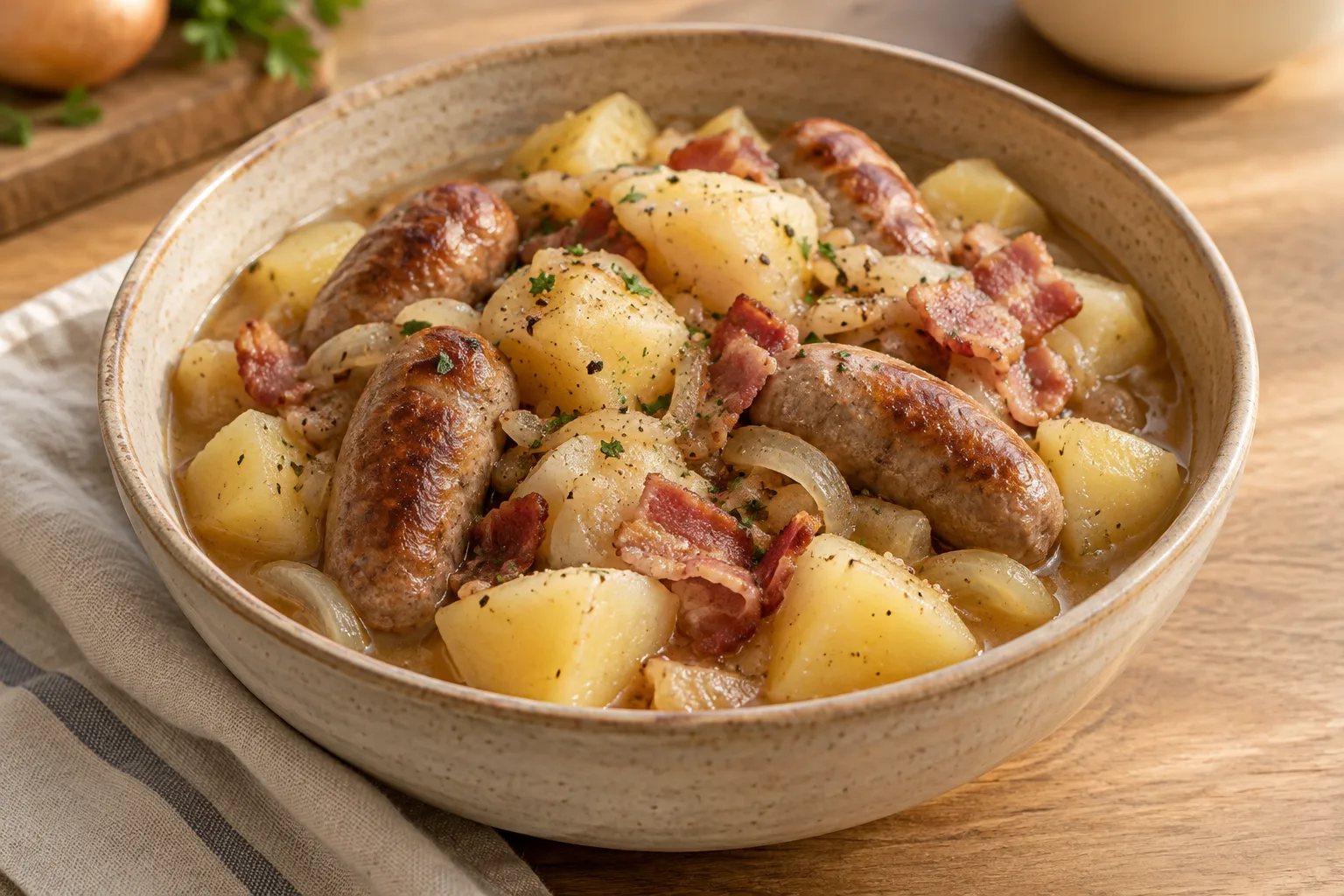
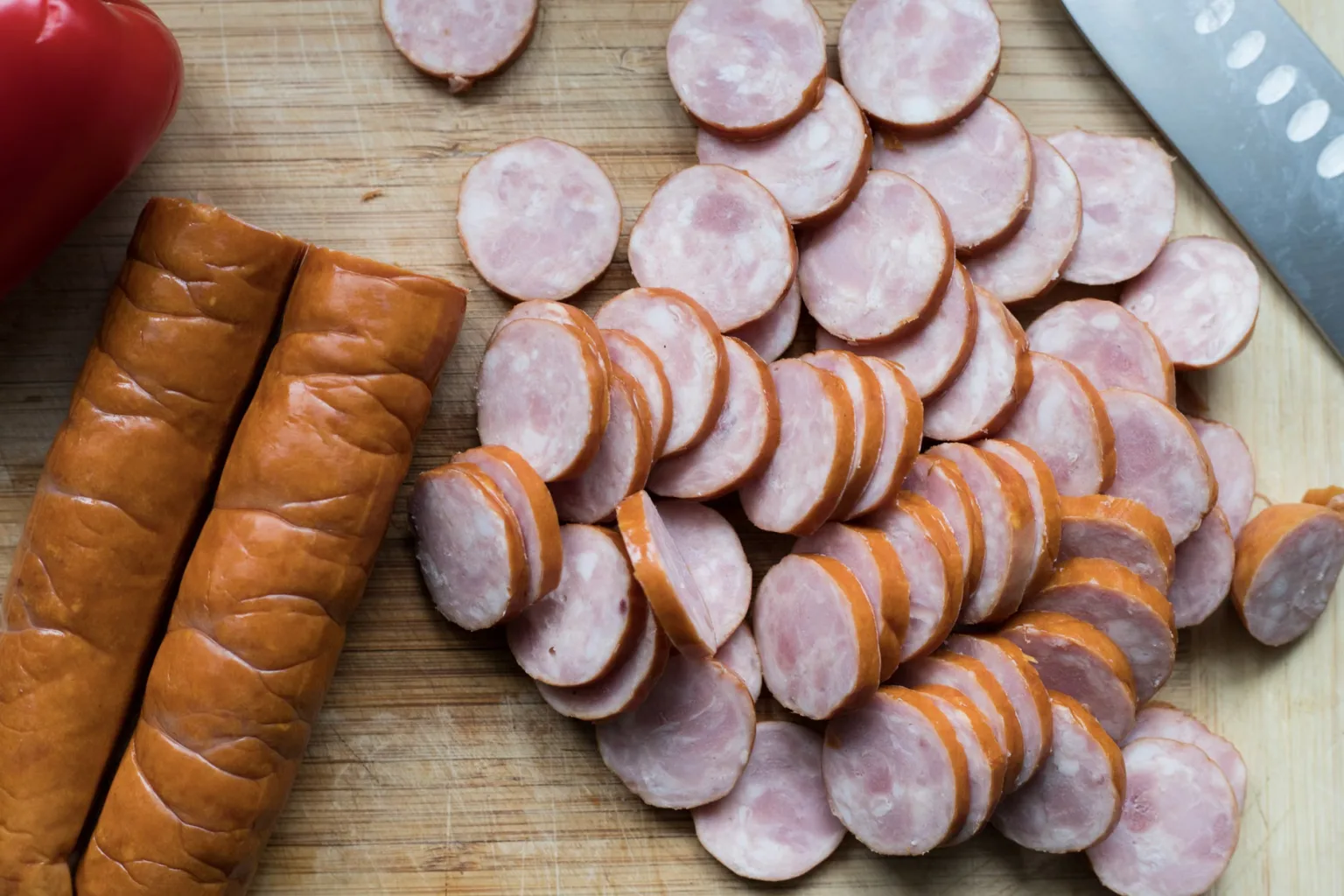
Fresh pork sausages are cylindrical portions of minced, seasoned pork, usually enclosed in a casing. “Fresh” describes an uncured variety that needs cooking before it is eaten; it should not be confused with cooked, smoked or cured sausages, which have different processing and uses. The mixture, grind, fat content, seasonings and casing depend on the product. As a result, pork sausages can differ considerably in flavor and texture. Check the product name and package directions, since not all sausages are prepared in the same way or are ready to eat.
When to use it
Use them when you want a flavorful meat portion for a main meal, a barbecue or a bread filling. Fresh sausages can be browned in a pan or cooked on a grill, and they can also be included in dishes prepared with liquid. Choose the method according to the product’s size and package directions, and cook them completely before serving. If you want a product that only needs reheating, check that it is a cooked variety: fresh sausages are not interchangeable with ready-to-eat ones.
How to use it
Read the label first to confirm that the sausages are fresh and to follow the product-specific cooking instructions. To brown them in a pan, leave space between them and turn them so they cook evenly; avoid excessive heat if the outside browns before the center is done. On a grill, turn them regularly and control the heat so the surface does not burn while the middle is still raw. They can also be cooked in liquid or roasted, depending on the product and recipe. Do not rely only on the outside color to decide whether they are done: follow the package directions and serve them fully cooked. Pair with bread and mustard, or add them to a simple dish.
Flavour and texture
Flavor depends on the meat mixture and seasonings, so it can range from mild to strongly spiced. Texture also varies with the grind and composition of the sausage. During cooking, the outside may brown while the center remains juicy; manage the heat so the casing does not burn before the middle is cooked through. The specific product, not simply the word “pork,” determines the final character.
How to choose it
Choose a package identified as fresh pork sausage if you want a variety to cook from raw. Read the label for ingredients, seasonings and the maker’s cooking directions; fresh, cooked, smoked and cured sausages are different products. Check that the package is intact and follow its storage and date information. If you need to avoid a particular ingredient, consult the full ingredient list: some recipes may include ingredients such as soy or milk proteins.
Storage
Store the product according to its label and keep the package closed until use. Storage conditions and shelf life can differ by product and packaging, so there is no single time limit that applies to every sausage. If you will not cook them soon, check the package for freezing and thawing guidance. After opening, follow the manufacturer’s directions and avoid leaving the sausages unrefrigerated for extended periods.
Substitutions
Fresh beef, chicken or turkey sausages can replace pork sausages when changing the type of meat, though flavor, texture and cooking behavior may differ. Check that the substitute is also fresh and that its preparation instructions suit the recipe. Cooked or cured sausages are not a direct substitute for fresh ones in dishes that rely on cooking raw meat; adapt the preparation to the variety you choose.
Common mistakes
Do not confuse a fresh sausage with a cooked or cured one: fresh sausages need cooking before eating. Do not rely only on a browned casing, since the outside can cook before the center. Avoid uncontrolled high heat, and do not assume every sausage has the same thickness, seasonings or directions. Use the product label as your guide to preparation.
Safety and allergens
Follow the package’s refrigeration and cooking directions. Cook fresh sausages completely before eating, and check the label for the ingredients and any allergens in the specific product.
Culinary uses
- main dish protein
- filling for hot dogs or sandwiches
Recommended techniques
- pan-frying
- grilling
- boiling or simmering
- oven roasting
Pairs well with
- mustard
- bread or rolls
Frequently asked questions
Can fresh pork sausages be eaten without cooking?
No. Fresh sausages need to be cooked before eating. Check the label to distinguish them from cooked or cured varieties.
What is the best way to cook them?
They can be pan-fried, grilled, boiled or roasted. The suitable method depends on the product and its size; follow the package directions and make sure they are fully cooked.
Do all pork sausages have the same ingredients?
No. Recipes and seasonings vary between products. Read the ingredients and package information to identify the specific variety.
Ingredient allergens
Allergen listThere are no verified associations for these ingredients yet.
Estimated nutrition
- Fat
- 27.25 g
- Saturates
- 8.83 g
- Carbohydrate
- 1.42 g
- Sugars
- 1.09 g
- Fibre
- 0 g
- Protein
- 18.53 g
- Salt
- 2.04 g
Sources and review
Automatically researched, cross-checked and validated content. Sources consulted:
- ¿Por qué la muerte es origen de miedos y tabúes? doi.org/10.64628/aao.fccyk3qj3
- The Essential Glossary of Cooking Terms for the Culinary Arts - Escoffier www.escoffier.edu/blog/culinary-arts/the-essential-glossary-of-cooking-terms-for-the-culinar…
- Aplicaciones de la Biotecnología en Seguridad Alimentaria aesan.gob.es/dam/jcr:2eecb52a-e252-4339-b93a-db3e3c7faab6/biotecnologia.pdf
- Qué es (y qué no es) la estadística, usos y abusos de una disciplina clave en la vida de los países y las personas | Estudios económicos doi.org/10.52292/j.estudecon.2015.740
- Tipos de salchichas: variedades y características www.campofrio.es/tipos-de-salchichas
- Ingredientes de las salchichas: ¿qué contienen? | Consumer www.consumer.es/alimentacion/ingredientes-salchichas.html
- - YouTube www.youtube.com/watch?v=sK_qXUmfNvc
- Chorizo - Wikipedia, la enciclopedia libre es.wikipedia.org/wiki/Chorizo
- Revista del comité científico de la aecosan número 24 aesan.gob.es/dam/jcr:979384c0-5bd9-46d4-a29e-ccf5876c769c/RCC_24.pdf
- Léxico culinario autorizado en el primer diccionario académico | OpenAlex openalex.org/W2285293455
- La vuelta al mundo en 55 tipos de salchichas www.google.com/goto?url=CAESoQEB6zswFfT0dIdOeEW7pgUR3kQagGOy1thMo_97V7Q6fP8qfPB6ayBS3JVpK_uA…
- Harina de cáscara de cítricos como ingrediente para la industria cárnica | OpenAlex openalex.org/W4402755888
- Nuevas técnicas con geles y silicio para elaborar salchichas más saludables – Scientias scientias.net/nuevas-tecnicas-con-geles-y-silicio-para-elaborar-salchichas-mas-saludables/
- Los cuatro mejores métodos para cocinar las salchichas perfectas - Picken www.google.com/goto?url=CAESjgEB6zswFZOe9MjMnhQ7gbHjOIlAzEIRVsZBhsAj-J7oQwFx5ouPq2s2RJjdOVO1…