- Category
- Vegetables
- State
- Fresh
- Usual unit
- unit
What it is
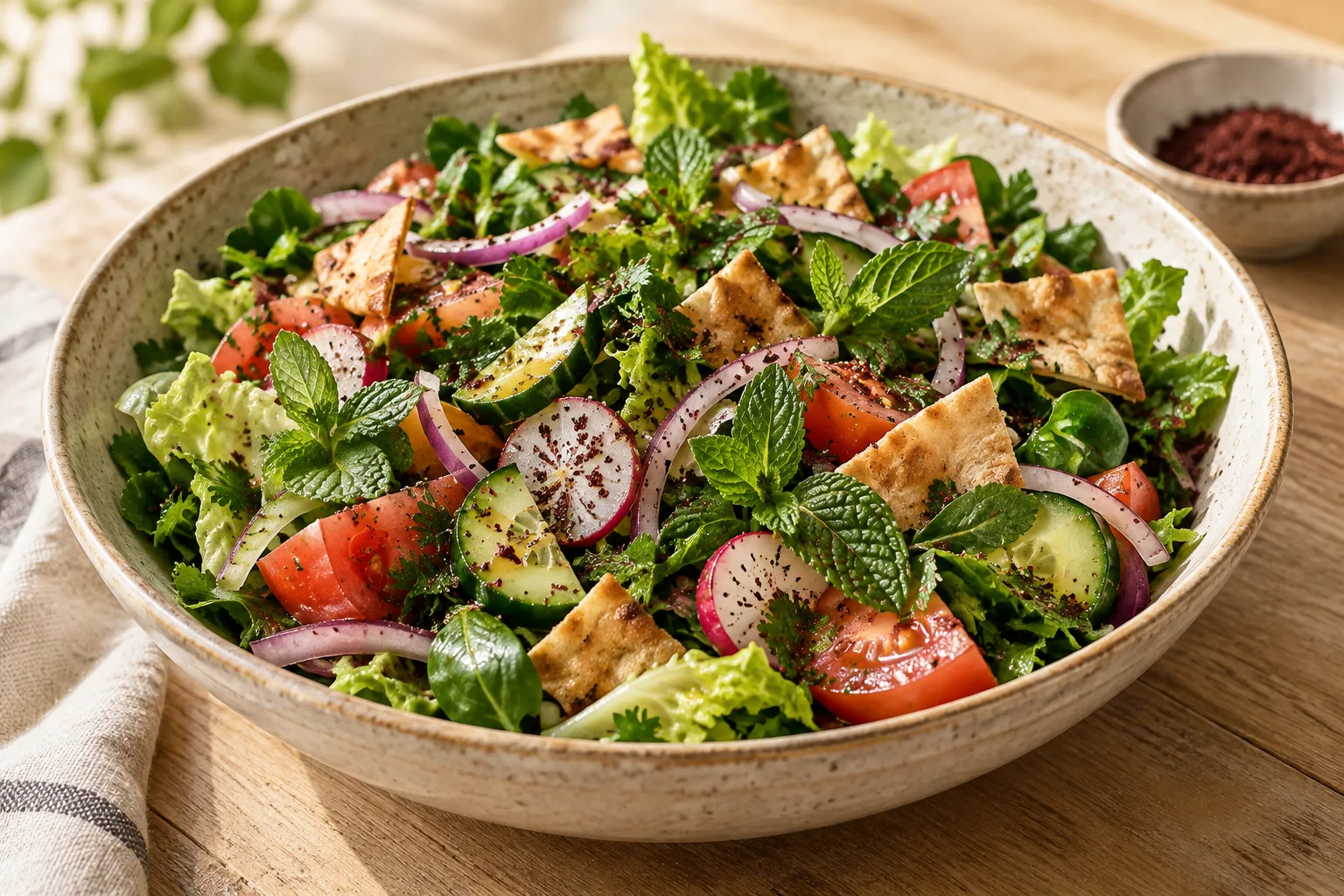
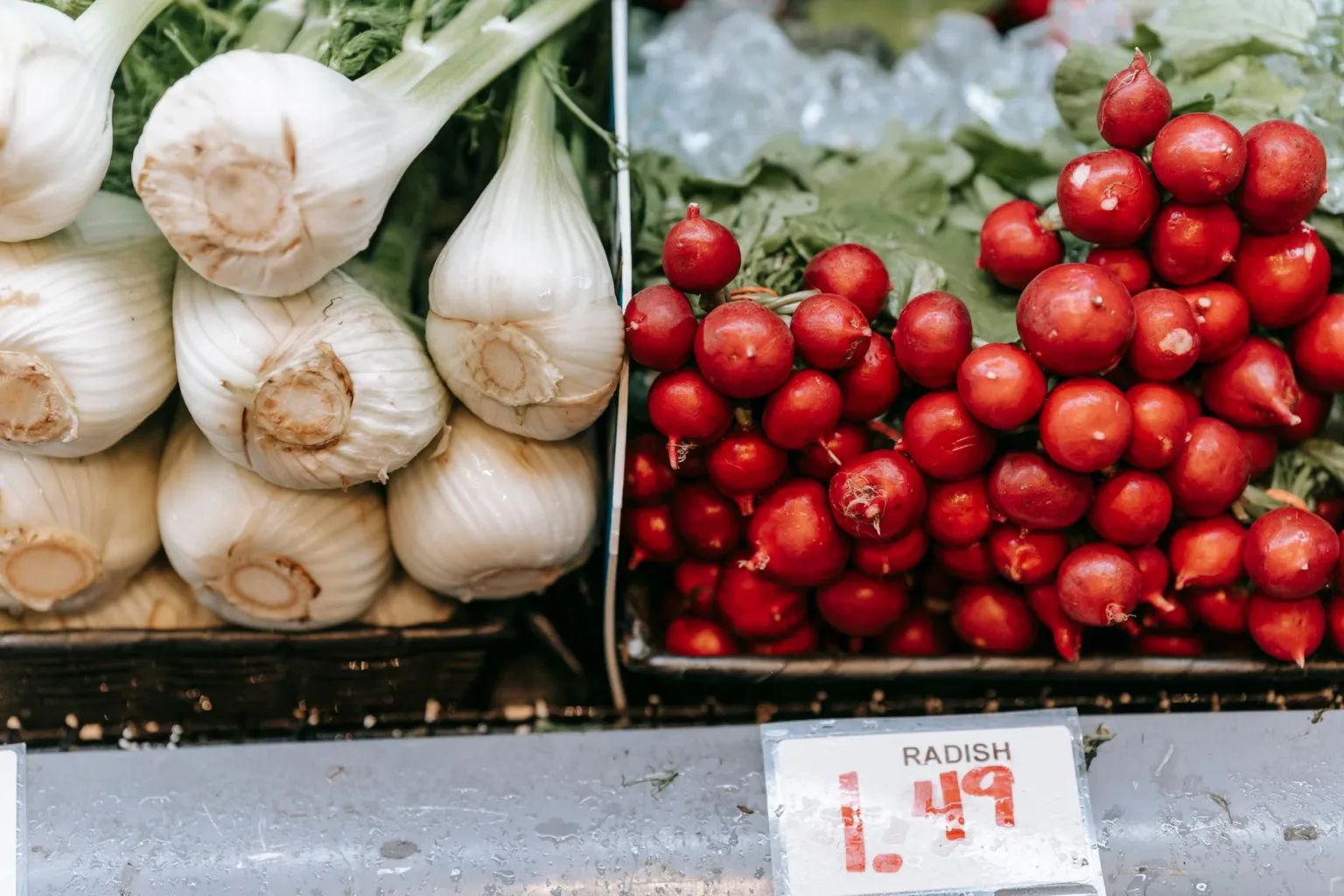
Radish is an edible-root vegetable in the Brassicaceae family, also known as the crucifers. The familiar small radish is often round or elongated, with red, pink, purple, or white skin and white flesh. Other varieties include the long, white daikon, which is usually milder, and the black radish, which has dark skin and white flesh. Radishes therefore vary in appearance and intensity; they are not all red or the same shape. They can be eaten raw or cooked. Their crisp texture and lightly peppery flavor make them useful as a fresh contrast in many dishes.
When to use it
Use radishes when a dish needs freshness, color, and crunch: add them to salads, tacos, soups, or vegetable sides. Small, firm radishes work well in thin slices or as a fresh bite, while milder, juicier daikon can be cut into larger pieces. If you prefer a gentler flavor and a softer texture, add radish to a cooked dish such as a stir-fry or roasted vegetables. In Spain, radishes are generally more prominent in markets from May to July, although cultivation at different times makes them available throughout the year. Local availability depends on region and variety.
How to use it
Remove any leaves and clean the radish before preparing it. To serve it raw, slice it thinly or cut it into small pieces, then add it to salads, tacos, soups as a fresh finishing touch, or vegetable dishes. It pairs well with orange and mustard, and can also be served on bread with butter and a little salt. To cook radishes, cut them into halves, quarters, or cubes and roast or sauté them; heat softens the flesh and mellows the peppery bite. Taste a piece first, since intensity varies by variety and individual root, then adjust the cut and quantity to suit the dish. Tender leaves may also be used if they are fresh and in good condition.
Flavour and texture
Common radishes taste fresh and mildly peppery, with firm, crisp flesh. The skin can contribute to the peppery sensation, which may be reduced by peeling or cooking. Varieties differ: daikon is often milder and juicier, while black radish has dark skin and firmer white flesh. Cooking softens the texture and makes the flavor less pronounced.
How to choose it
Choose radishes that feel firm and fleshy, with smooth, intact skin and no cracks or soft spots. For red radishes, a vivid color is a useful sign of a fresh appearance. If the leaves are attached, look for green, perky leaves and avoid yellowing or wilted ones. Very large roots may be more fibrous, so choose a medium size when that option suits the variety. Keep in mind that color, shape, and size vary across radish types.
Storage
If the radishes have leaves, remove them before storing the roots, as the leaves can speed drying. Keep unwashed radishes in the refrigerator in a perforated plastic bag, and wash them shortly before use. They may keep for up to seven days this way; their starting condition and storage conditions can affect how long they last. Check them periodically and remove any that become soft or deteriorate.
Substitutions
Replace small red radishes with daikon when you want a milder flavor and a juicier root; adjust the cut to suit its larger size. For a result closer to a common small radish, choose another small radish variety, bearing in mind that its color and pepperiness may differ. Substitutions change appearance and intensity, so taste and adjust the amount to your preference.
Common mistakes
Do not assume every radish has the same size, color, or intensity: varieties differ. Avoid soft or cracked roots, or very large ones when you want a tender, crisp texture. If you want less bite, do not assume an untested radish will be mild; peeling or cooking can mellow it. For storage, separate the leaves and wait to wash the roots until shortly before use.
Safety and allergens
Wash radishes with clean drinking water before cutting or eating, and remove damaged parts. Refrigerate any radishes you are not using right away.
Culinary uses
- Fresh, crisp addition to salads and garnishes
- Peppery accent for soups, stews, and vegetable dishes
Recommended techniques
- Serve raw, thinly sliced or diced
- Roast or sauté to soften the texture and mellow the peppery bite
Pairs well with
- Salad greens, orange, and mustard
- Bread, butter, and a little salt
Frequently asked questions
Do radishes need to be peeled?
Not necessarily. The skin is edible, and peeling may soften the peppery sensation. Some varieties, such as black radish, can have a rougher skin.
Can radishes be cooked?
Yes. Roast or sauté them in halves, quarters, or cubes. Cooking softens their texture and mellows their peppery flavor.
How long do radishes keep in the refrigerator?
With the leaves removed, unwashed, and stored in a perforated bag, radishes may keep in the refrigerator for up to seven days. Wash them shortly before use.
Ingredient allergens
Allergen listThere are no verified associations for these ingredients yet.
Estimated nutrition
- Fat
- 0.1 g
- Saturates
- 0.03 g
- Carbohydrate
- 3.4 g
- Sugars
- 1.86 g
- Fibre
- 1.6 g
- Protein
- 0.68 g
- Salt
- 0.1 g
Sources and review
Automatically researched, cross-checked and validated content. Sources consulted:
- Client Challenge doi.org/10.2307/jj.27939689.16
- Los japonesismos culinarios | OpenAlex openalex.org/W2906636610
- Migas - Wikipedia, la enciclopedia libre es.wikipedia.org/wiki/Migas
- Aplicaciones de la Biotecnología en Seguridad Alimentaria aesan.gob.es/dam/jcr:2eecb52a-e252-4339-b93a-db3e3c7faab6/biotecnologia.pdf
- Ingredientes que maridan con rábano picante ✓ basmatic.com/maridaje/rabano-picante
- Cómo aprovechar el rábano al máximo | Recetas Nestlé www.recetasnestle.com.ec/escuela-de-sabor/tips-de-recetas/rabano
- Rábano www.mapa.gob.es/ca/ministerio/servicios/informacion/rabano_tcm34-102379.pdf
- Rábano patrimonioalimentario.culturaypatrimonio.gob.ec/wiki/index.php?oldid=8846&title=R%C3%A1bano
- Selection polk.extension.wisc.edu/files/2013/09/Radishes_Veggie-Bite-Polk-County.pdf
- Rábano: el ingrediente del momento - Food & Wine en Español foodandwineespanol.com/actualidad/en-boga-el-rabano/
- Los rábanos (raphanus sativus): rábano negro, rábano negro español, o de invierno, y una tapita con rábanos rojos y negros www.afuegolento.com/articulo/los-rabanos-raphanus-sativus-rabano-negro-rabano-negro-espanol-…
- Rábano ⋆ Larousse Cocina laroussecocina.mx/palabra/rabano/
- Rábanos - 5 al día 5aldia.cl/frutas-y-vegetales/rabanos/
- Rábano | Introducción | Verduras y hortalizas | EROSKI CONSUMER verduras.consumer.es/rabano/introduccion
- **2.3.1 Origen y tipos de cultivo** repositorio.umsa.bo/xmlui/bitstream/handle/123456789/6074/T-901.pdf?isAllowed=y&sequence=1