- Category
- Grains, flour and pasta
- State
- Fresh
- Usual unit
- g
What it is
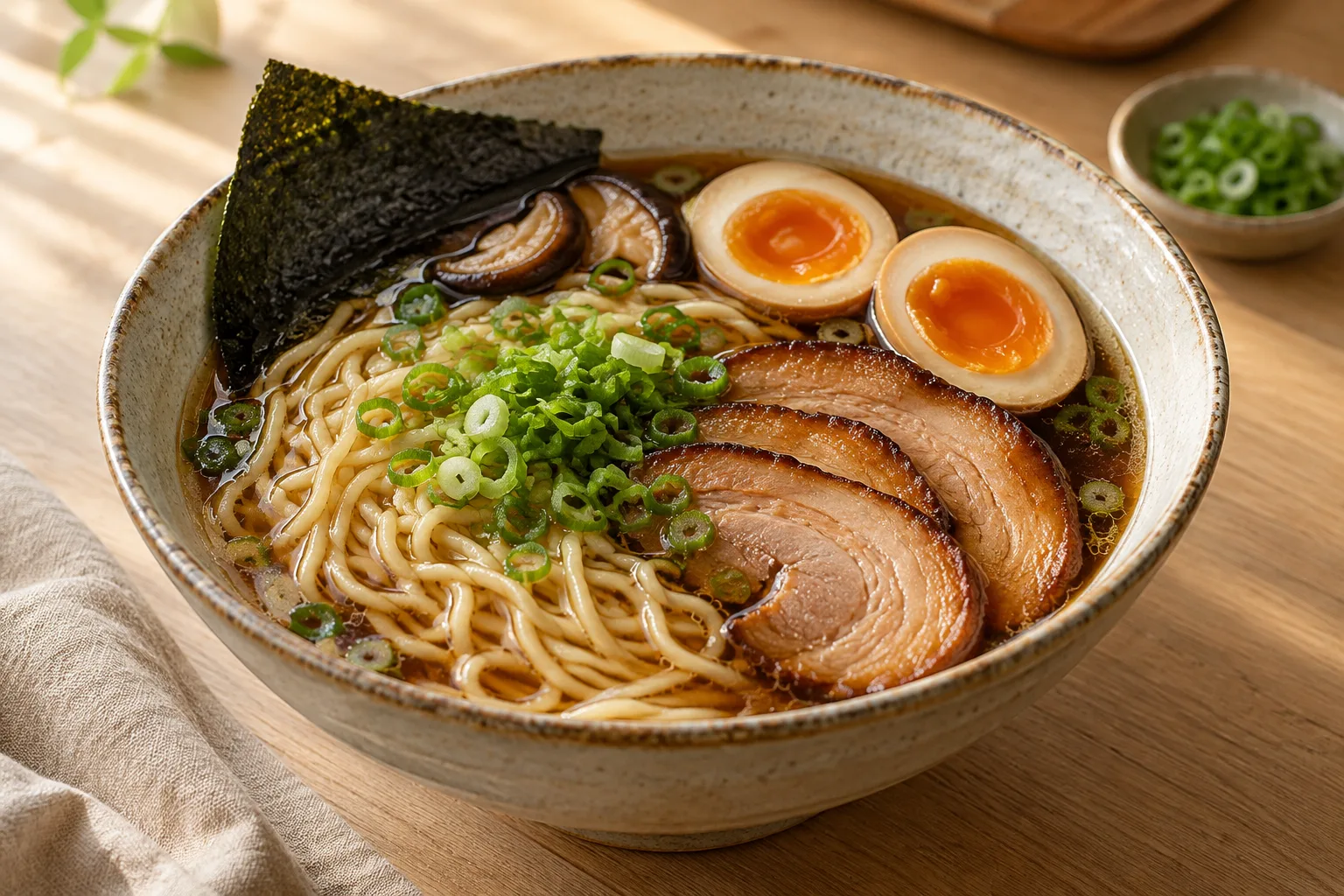
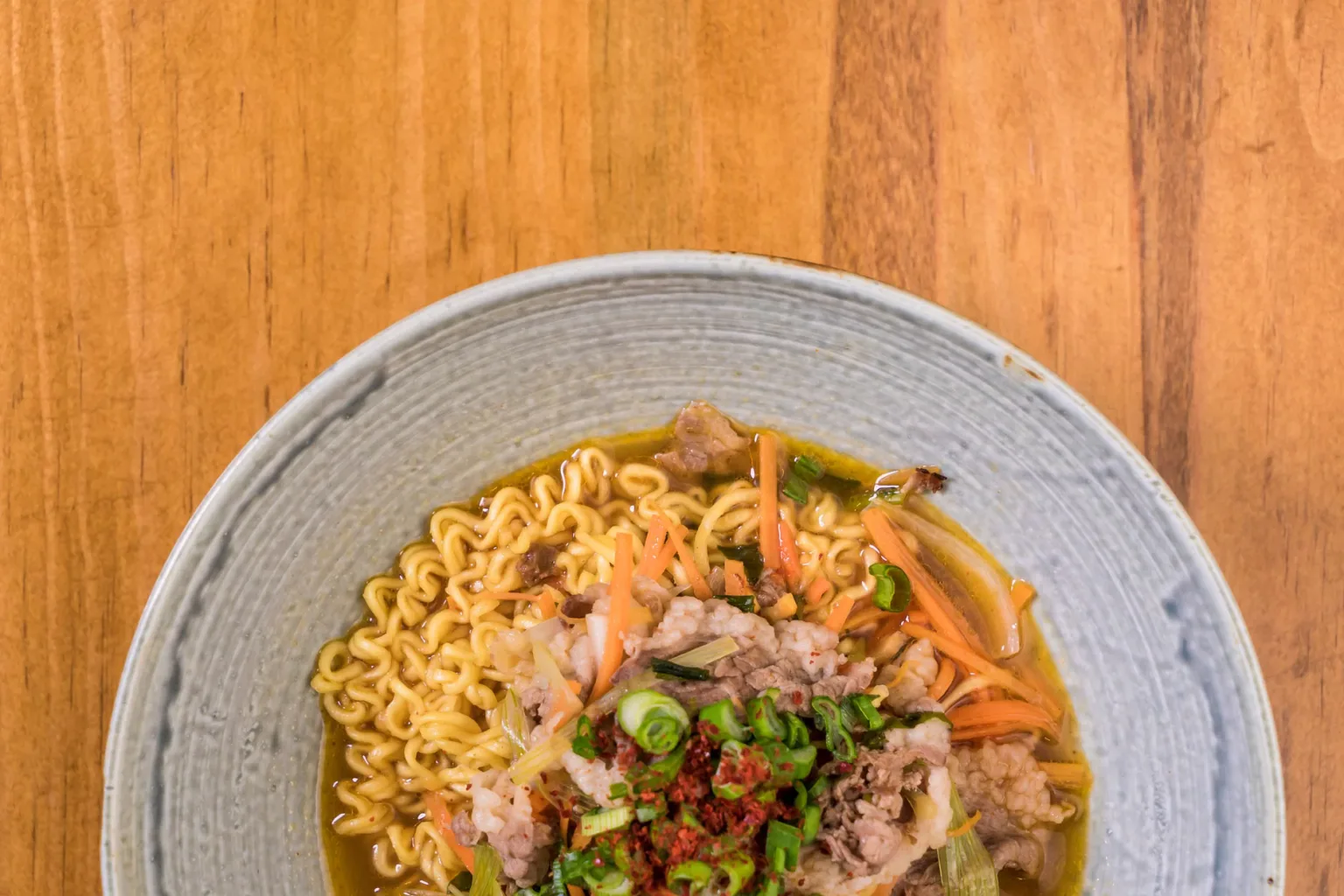
Ramen noodles are noodles associated with the Japanese soup called ramen. They are typically made from wheat, although ingredients and shapes can vary by product. The noodles are not the whole dish: a bowl of ramen generally combines noodles with broth, a seasoning base, and toppings. Products include fresh noodles as well as dried or instant varieties, which may come with separate seasoning sachets. When shopping or cooking, distinguish the noodles from the complete dish and check the label for the specific product you have.
When to use it
Use ramen noodles when you want a noodle soup with a strongly flavoured broth, such as one seasoned with soy sauce, miso, or salt. They can also be served with the broth on the side for dipping, as in tsukemen-style serving. Choose a shape and thickness that suit your dish, bearing in mind that products vary and may not share the same cooking instructions. For a fuller bowl, add toppings such as spring onion, bamboo shoots, nori, meat, or egg.
How to use it
Cook the noodles according to the package directions, since the method and timing can differ between fresh, dried, and instant products. Prepare the broth and seasonings separately; common styles include soy sauce, miso, and salt-based seasonings. Drain the noodles if the product directions call for it, then serve them in the broth or separately with a more concentrated broth for dipping. Add toppings at the end, such as spring onion, seasoned bamboo shoots, nori, pork, or egg. If the package includes a seasoning sachet, check its ingredients before using it.
Flavour and texture
The noodles themselves are usually mild, so the broth and seasonings contribute much of the dish's character. Texture varies by product: ramen noodles come in different thicknesses and shapes, and cooking affects the result. Do not confuse ramen noodles with soba, which is made with buckwheat, or udon, which is generally thicker.
How to choose it
Check whether you are buying fresh, dried, or instant noodles, and read the ingredient list and preparation directions. Instant packs may include broth or seasoning sachets, so the noodle label alone may not describe everything in the package. Shape and thickness vary, so choose a product suited to your dish and check that the packaging is intact.
Storage
Follow the storage directions on the package: fresh, dried, and instant noodles do not necessarily have the same requirements. After opening, store the product as directed by its manufacturer and check its use instructions. Do not assume that fresh noodles keep in the same way as dried noodles.
Substitutions
Chinese-style wheat noodles may work in some noodle dishes, although shape, texture, and cooking requirements can differ. Steamed Chinese noodles used for yakisoba are also similar to ramen noodles in some uses, but are not identical. Adapt the preparation to the directions for the product you choose.
Common mistakes
Do not confuse ramen noodles with the complete dish or assume every package has the same ingredients. A common mistake is to apply instructions for dried or instant noodles to fresh noodles. Check the package and cook each variety as directed.
Safety and allergens
If you need to avoid an allergen, check the label for the entire product, including seasoning sachets; ingredients vary by brand and variety. Follow the package's handling and storage directions too.
Culinary uses
- Base for noodle soups such as ramen
- Noodles for serving with broth or dipping broth
Recommended techniques
- Boil or cook according to the product package directions
- Serve in broth, or serve separately with a concentrated dipping broth
Pairs well with
- Broths seasoned with soy sauce, miso, or salt
- Toppings such as spring onion, bamboo shoots, seaweed, pork, or egg
Frequently asked questions
Are ramen noodles always fresh?
No. They are sold in different formats, including fresh, dried, and instant. Check the package and follow its directions.
What broth goes well with ramen noodles?
They are commonly served with broth seasoned with soy sauce, miso, or salt. Choose according to the flavour you want and the other ingredients in the bowl.
Do ramen noodles necessarily contain the ingredients in the broth?
No. Noodles and broth are separate components; instant packages may include separate seasonings. Read the ingredient list for the complete product.
Ingredient allergens
Allergen listThere are no verified associations for these ingredients yet.
Estimated nutrition
- Fat
- 21.9 g
- Saturates
- 10.9 g
- Carbohydrate
- 57.8 g
- Sugars
- 3.12 g
- Fibre
- 1.6 g
- Protein
- 9.38 g
- Salt
- 4.3 g
Sources and review
Automatically researched, cross-checked and validated content. Sources consulted:
- Client Challenge doi.org/10.2307/jj.27939689.16
- Aditivos tóxicos en fideos instantáneos ultraprocesados del área metropolitana de Toluca | OpenAlex openalex.org/W7128846060
- Food Allergies | FDA www.fda.gov/food/nutrition-food-labeling-and-critical-foods/food-allergies
- Food allergens | EFSA www.efsa.europa.eu/en/safe2eat/food-allergens
- Food allergen portal | Food Standards Australia New Zealand www.foodstandards.gov.au/consumer/foodallergies/food-allergen-portal
- Information on Food Allergy & Intolerance www.sfa.gov.sg/food-safety-tips/food-risk-concerns/food-allergy-intolerance
- Food allergens www.cfs.gov.hk/english/trade_zone/safe_kitchen/Food_allergens.html
- Todo sobre el ramen | Kikkoman www.kikkoman.es/reportajes-gastronomicos/detail/ramen-goes-international
- Ramen - Wikipedia, la enciclopedia libre es.wikipedia.org/wiki/Ramen
- Historia y Origen del Ramen - Yummy Barcelona yummybarcelona.com/historia-y-origen-del-ramen/
- Advertencia para personas con alergia a los crustáceos: Presencia de crustáceo en fideos instantáneos procedentes de Alemania (Ref ES2025/036) aesan.gob.es/alertas/2025_03
- ¿Qué es el Ramen?: de dónde es, dónde comprarlo y receta - Oriental Market www.orientalmarket.es/ramen/?srsltid=AYCX9vIQtqGitFBo4bdRXbDe3JtE1wRmd7ch9DYtSqaH3JG9Re5rsTn…
- Ramen, soba, udon y otros fideos japoneses | ComerJapones comerjapones.com/ramen-soba-udon-y-otros-fideos-japoneses/
- ¿Quieres saber lo que es el ramen y cómo se cocina? www.cocinista.es/web/es/recetas/cocina-internacional/japon/-que-es-el-ramen-y-como-se-hace-.…
- TOKYO-YA - Líder en Alimentación Japonesa al por Mayor y Menor www.tokyo-ya.es/blog/ramen-japones/?srsltid=AYCX9vLj6o7KMEe_T7NpuCuLti6MbQiWsHZf5QjtXiKna3iP…
- Significado de ramen en español: origen, tipos y mejores opciones para disfrutar en casa yuanlaosi.es/significado-de-ramen-en-espanol/
- - YouTube www.youtube.com/watch?v=xnP_Op3Ok84