- Category
- Bread and dough
- State
- Fresh
- Usual unit
- unit
What it is
Raqaq bread is the name used for a bakery product, but the available information does not establish one recipe, shape, grain, or texture for every product sold under that name. Bread in general is made mainly from cereal, water, and salt, though it may include yeast and other ingredients. Wheat is commonly used in bread, and other grains may also be used. These general facts do not identify the ingredients in a particular raqaq product. They also do not confirm that it is always flat, thin, flexible, crisp, or unleavened. To find out what a specific product contains and how it should be used, check its package or ask its maker. Decide how to serve it after inspecting the piece and reading the product information.
When to use it
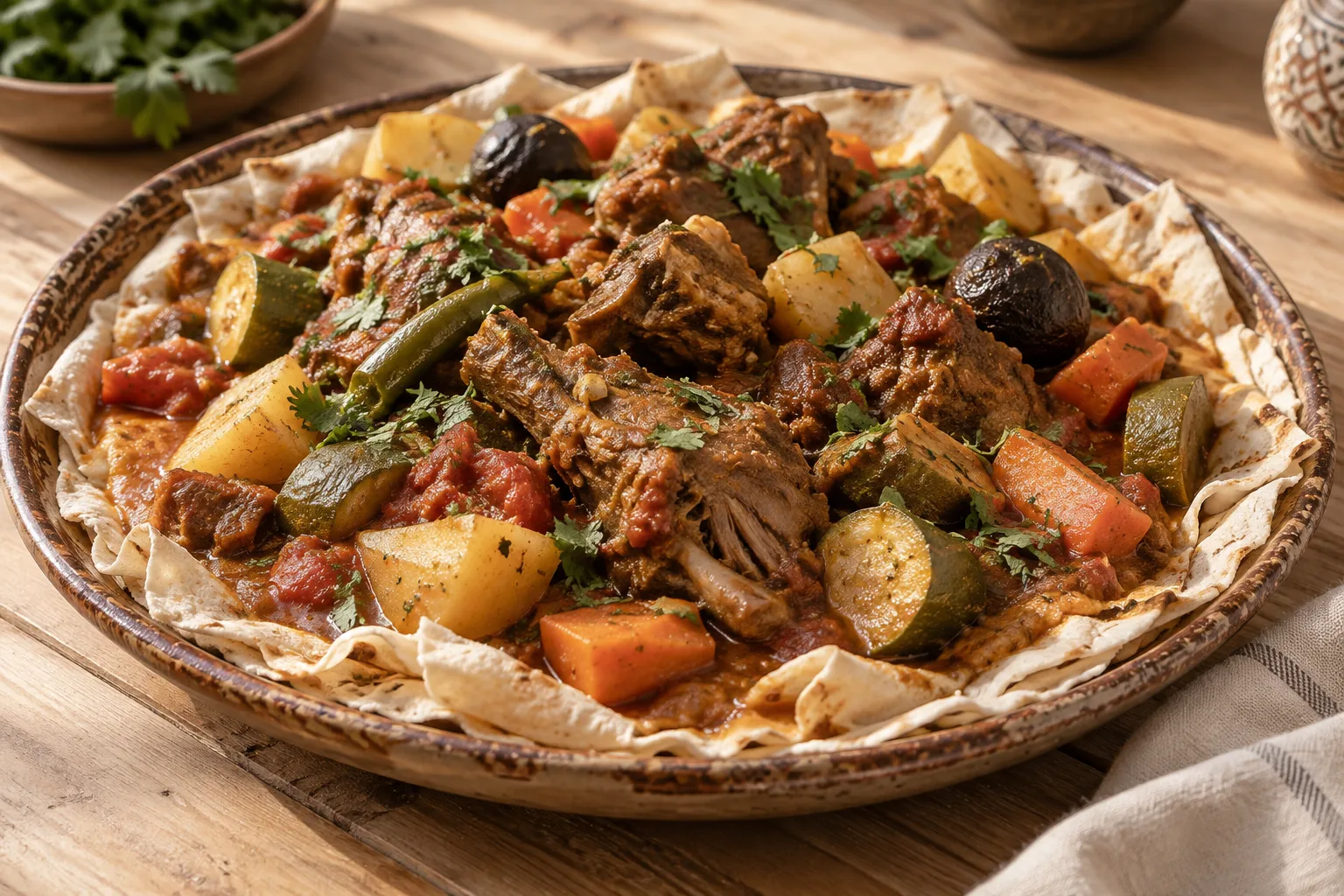
You can serve it as a meal accompaniment or alongside soup, stew, cheese, and spreads, which are common uses for bread in general. It may also help scoop up sauce if the piece is sturdy enough, but do not assume every raqaq product will handle moisture or the weight of a filling in the same way. Before planning to fold, roll, or keep it crisp, inspect the particular product and check its directions. If you are unsure about its consistency, start with a simple use, such as serving it beside the meal, then adapt how you eat it to its actual texture.
How to use it
First read the ingredient list and package directions, especially if you need to know the product’s composition or check for allergens. Serve the bread alongside soup or stew, or with cheese and spreads. If you want to use it as a base for other foods, try a small piece to see whether its firmness and size are suitable. It may be used to scoop up sauce when its texture allows, but do not assume it is flexible or can support a wet filling. There is no single heating instruction established for all products called raqaq: follow the maker’s directions if provided. If no preparation guidance is given, serving it as it is avoids assuming a method that may not suit that particular piece.
Flavour and texture
The available information does not establish one characteristic flavor or texture for every version of raqaq bread. Grain, recipe, and production affect bread, but those general points do not identify the composition of a particular product. Inspect its appearance and consistency before pairing it with other foods. Do not assume that it is always thin, flexible, crisp, or unleavened; check the specific product for those qualities.
How to choose it
Choose an intact package and check the product name, ingredient list, and any preparation or storage directions. If you need a particular feature, such as flexibility, a certain thickness, or the absence of an ingredient, confirm it on the label or with the seller rather than inferring it from the name raqaq. Also check the stated date and the bread’s visible condition. The name alone does not confirm a recipe or texture.
Storage
Follow the package storage directions, since no specific recommendation is established here for every product called raqaq. Keep the bread in its packaging or in a clean, tightly closed container if the product directions advise this. Do not assume it needs refrigeration or can be stored for a set period; those conditions depend on the particular product. If the package gives more detailed instructions, use them instead of applying a general rule.
Substitutions
Another plain bread may serve a similar purpose as a meal accompaniment. If a preparation depends on shape, another flatbread may work only if its thickness, size, and texture are suitable. Neither option is guaranteed to produce the same result as the original product. Check the ingredients if composition matters, and use a substitute as a wrap or filling support only after confirming that its texture can handle the task.
Common mistakes
Do not infer the recipe, grains, use of yeast, thickness, or flexibility from the name raqaq alone. Avoid using it as a wrap or base for wet ingredients until you have checked that the particular piece can hold them. Do not apply a heating method or storage rule without checking the product directions. The label and the bread’s actual texture are more reliable guides than assumptions based on its name.
Safety and allergens
Check the specific product’s ingredient list and allergen information, since the name does not establish its composition. Follow the package storage directions. If the packaging is damaged or the bread’s condition raises concerns, do not eat it.
Culinary uses
- Meal accompaniment
- Bread served alongside soups, stews, cheese, or spreads
Recommended techniques
- Serve alongside food or use to scoop up sauce, if the piece is sturdy enough
- Toast or warm only when the product directions support it
Pairs well with
- Soups and stews
- Cheese and spreads
Frequently asked questions
Is raqaq bread always thin and flexible?
That cannot be assumed for every product sold under the name. Check the thickness and flexibility of the particular piece before using it as a wrap.
How can I serve raqaq bread?
Try it alongside soup or stew, or serve it with cheese and spreads. Choose a use that suits the product’s firmness and follow its package directions.
What ingredients or allergens does it contain?
That depends on the particular formulation. Read the ingredient list and allergen statement on the package; the name raqaq alone does not establish its contents.
Ingredient allergens
Allergen listThere are no verified associations for these ingredients yet.
Sources and review
Automatically researched, cross-checked and validated content. Sources consulted:
- ¿Por qué la muerte es origen de miedos y tabúes? doi.org/10.64628/aao.fccyk3qj3
- Pan - Wikipedia, la enciclopedia libre es.wikipedia.org/wiki/Pan
- Client Challenge doi.org/10.2307/jj.27939689.16
- The Biradical Origin of Semitic Roots repositories.lib.utexas.edu/bitstreams/a339d602-8446-4b1a-8bfd-90da928a1efd/download
- - YouTube www.youtube.com/watch?v=ygxjn-adxrs
- ✅ Maridaje de Pan y Comida: ¡El Arte de Acompañar Cada Bocado con la Miga Justa! - Bandejas de Panaderia www.bandejaspanaderia.es/maridaje-de-pan-y-comida-el-arte-de-acompanar-cada-bocado-con-la-mi…
- Comparativa de los mejores **pan crackers**: maridajes ideales con quesos y embutidos www.google.com/goto?url=CAESYgHrOzAVWDGijXlAwvvAdt8bUqmJimolkd2WbBPYNtkUxg5uDFkOJIGxwRN-AAUq…