- Category
- Oils and fats
- State
- Other
- Usual unit
- tablespoon
What it is
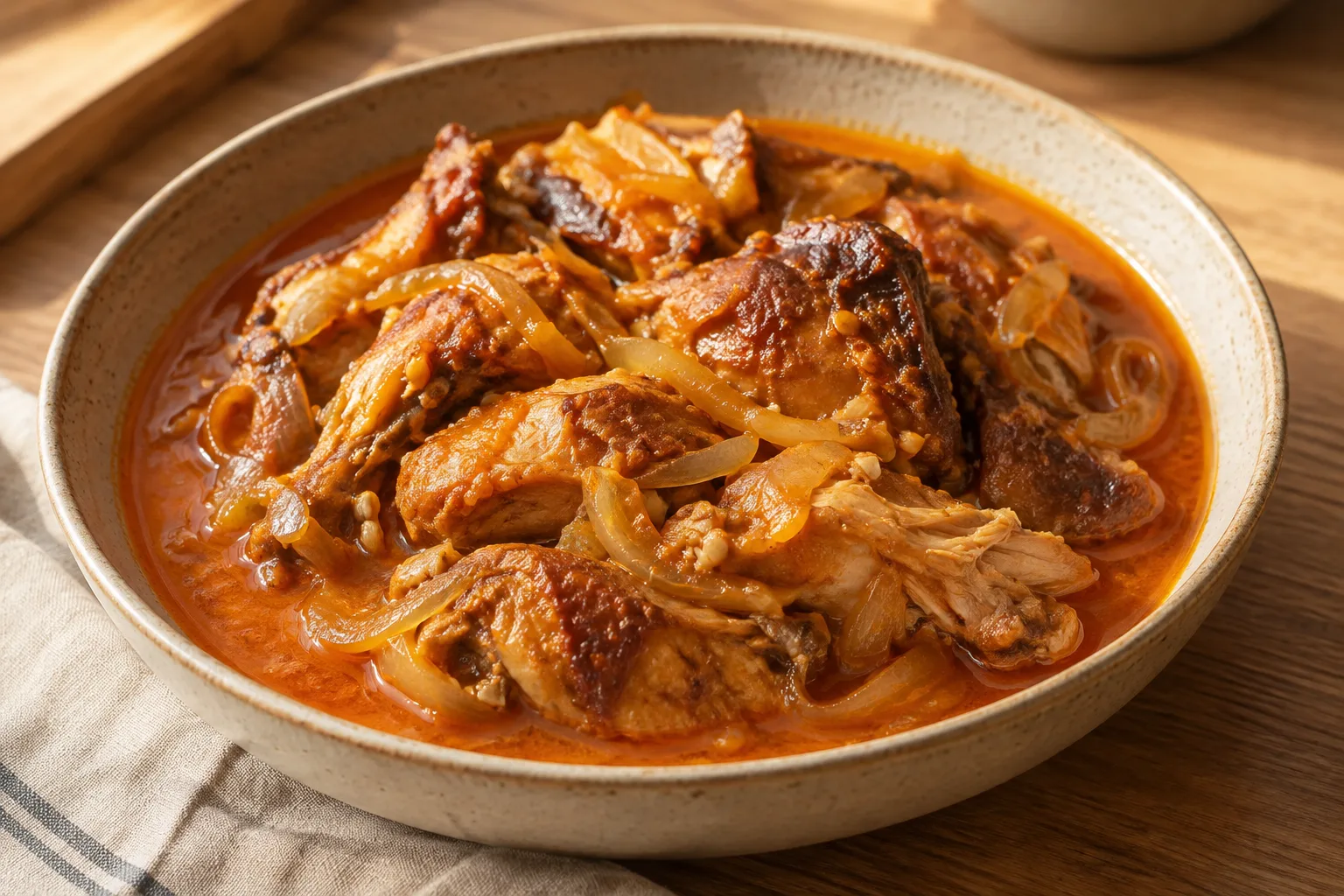
Red palm oil is a vegetable oil obtained from the pulp of the palm fruit, rather than from the seed, which yields palm-kernel oil. The red color is associated with unrefined oil and its natural pigments. Palm products do not all look alike: refined products may differ in color and texture, so check the package to identify what you are buying. Palm oil can be semi-solid and spreadable at room temperature, which means it may not pour like a fully fluid oil. It is a cooking ingredient, and should not be confused with palm oils intended for industrial use.
When to use it
Use it when you want a cooking fat for frying or for adding to sauces and prepared dishes, provided the product is labeled for food use. Its color may give a dish a noticeable hue, so consider that when planning how the finished food should look. If a recipe depends on a fat staying fluid, check the oil’s consistency in your kitchen first. For a dish where the oil’s color or character is not wanted, choose another cooking fat, such as olive or sunflower oil.
How to use it
Check that the package identifies the product as food and read its directions before cooking. If the oil is semi-solid, spoon out the amount you need and let it soften only enough to incorporate; do not assume every red palm oil pours in the same way. It can be used for frying or added to sauces and cooked dishes. Stir it in until the fat is evenly distributed, and take its color into account when judging the finished dish. When replacing another fat, adjust the amount to suit the recipe and texture you want rather than assuming that different oils behave identically.
Flavour and texture
The most distinctive feature of red palm oil is its reddish color when it is an unrefined product. Palm oil may be semi-solid and spreadable at room temperature, although the precise consistency depends on the product and its conditions. The available information does not establish one exact flavor for every type of red palm oil; check the label and take the character of the particular product into account when choosing it for a recipe.
How to choose it
Look for a product clearly labeled as red palm oil and intended for food use. Check the ingredients and package directions to distinguish it from other palm products, including palm-kernel oil, which comes from the seed. Color and consistency can vary, so appearance alone is not a reliable way to identify the product. Choose an intact package and check the manufacturer’s storage instructions.
Storage
Follow the storage directions printed on the package, because one condition cannot be recommended for every product. Keep the container closed and avoid contaminating the contents when serving. Texture may change with room temperature; thickening or softening alone does not show whether the oil is still in good condition. If the package is damaged, the product seems abnormal, or storage is uncertain, consult the label or do not use it.
Substitutions
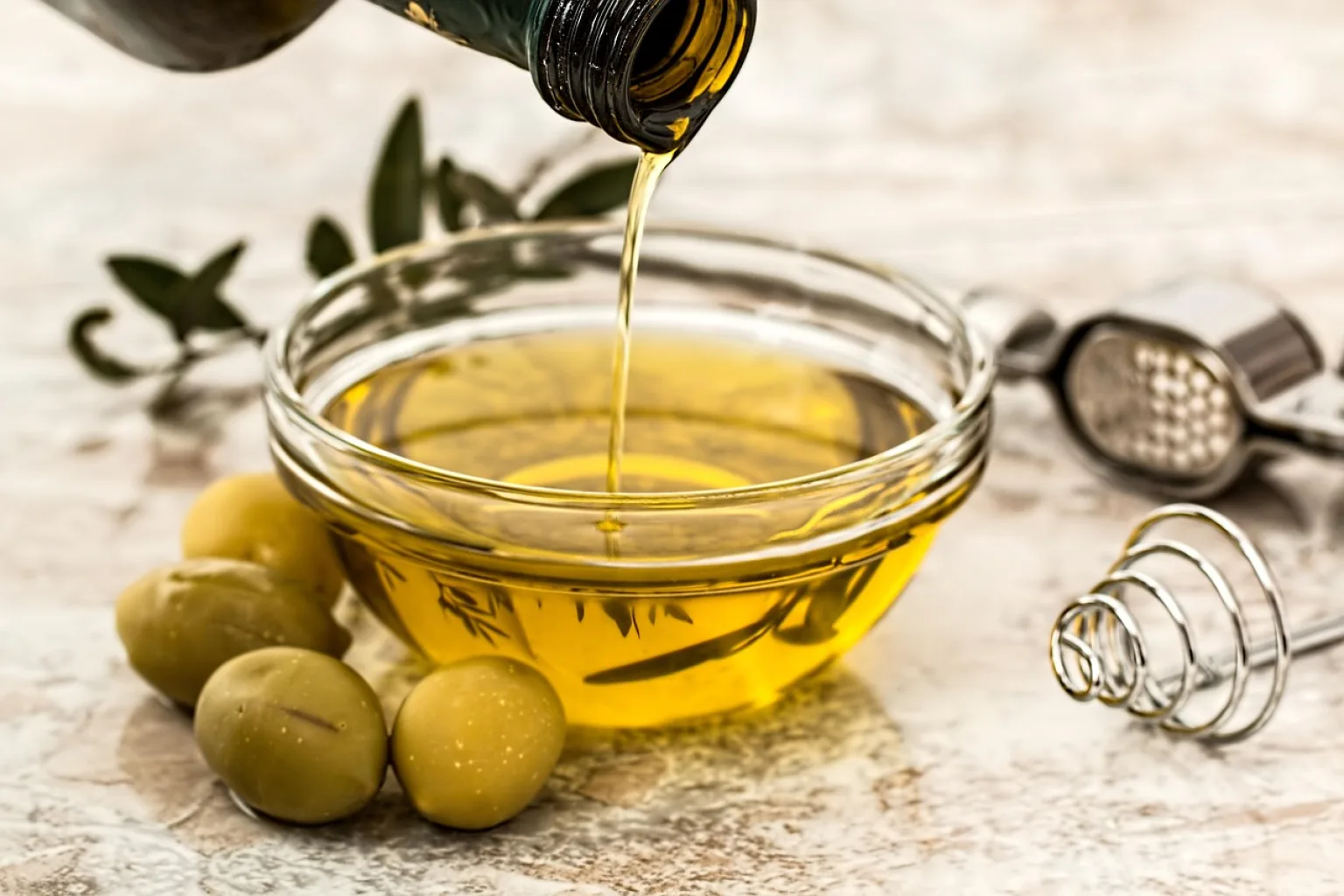
Olive oil and sunflower oil are culinary alternatives that may be used in place of other fats in preparations. Choose according to the flavor, color and consistency you want, since a different oil can change the result. Do not assume the swap will be identical in every recipe, especially when palm oil’s semi-solid texture is part of the desired result.
Common mistakes
Do not confuse oil from the fruit pulp with palm-kernel oil, which comes from the seed. Do not assume every palm oil is red, fluid or suitable for frying: check that the product is food-grade and follow its directions. Another common error is expecting every brand and variety to have identical color or texture.
Safety and allergens
Use only a product labeled for food use and follow the package directions. No specific temperature or storage recommendation can be given here for every brand.
Culinary uses
- Cooking fat for frying
- Ingredient in sauces and prepared dishes
Recommended techniques
- Frying
- Stirring into sauces or prepared dishes
Pairs well with
- Savoury sauces
- Prepared and cooked dishes
Frequently asked questions
Which part of the palm fruit is used to make red palm oil?
Culinary palm oil comes from the fruit pulp. Palm-kernel oil, by contrast, comes from the seed.
Why might red palm oil be semi-solid?
Palm oil can be semi-solid or spreadable at room temperature. Its exact texture also depends on the product and its conditions.
Can I replace it with another oil?
Olive or sunflower oil can be culinary alternatives. They may change the flavor, color and texture of the dish.
Ingredient allergens
Allergen listThere are no verified associations for these ingredients yet.
Estimated nutrition
- Fat
- 100 g
- Saturates
- 57.1 g
- Carbohydrate
- 0 g
- Sugars
- 0 g
- Fibre
- 0 g
- Protein
- 0 g
- Salt
- 0 g
Sources and review
Automatically researched, cross-checked and validated content. Sources consulted:
- Agencia Española de Seguridad Alimentaria y Nutrición www.aesan.gob.es/
- USDA FoodData Central libguides.marist.edu/fdc
- Galenic Medicine and Women's Recipes in the Early etd.ohiolink.edu/acprod/odb_etd/ws/send_file/send?accession=akron1744386918268332&dispositio…
- Healthy Eating Plan for Weight Management med.uc.edu/docs/default-source/mobility-study/healthy-eating-and-physical-activity-plan-(spa…
- Qué es la psicología de emergencia y por qué es fundamental en La Palma doi.org/10.64628/aao.u7ghmcrc5
- Ask the Expert: Healthy Fats • The Nutrition Source nutritionsource.hsph.harvard.edu/2012/06/21/ask-the-expert-healthy-fats/
- El cuestionado aceite de palma | Observatorio de alimentación observatorio.escueladealimentacion.es/entradas/alimentacion-y-salud/el-cuestionado-aceite-de…
- Extra virgin olive oil diposit.ub.edu/bitstreams/b73032fa-bf0f-4b41-9328-1a96c93f9df6/download
- Aceite de palma - Wikipedia, la enciclopedia libre es.wikipedia.org/wiki/Aceite_de_palma
- ¿Qué es el aceite de palma y para qué sirve? - Grefusa grefusa.com/que-es-el-aceite-de-palma-y-usos//
- El aceite de palma | Consumo Responde www.consumoresponde.es/art%C3%ADculos/el_aceite_de_palma