- Category
- Herbs and spices
- State
- Dry
- Usual unit
- teaspoon
What it is
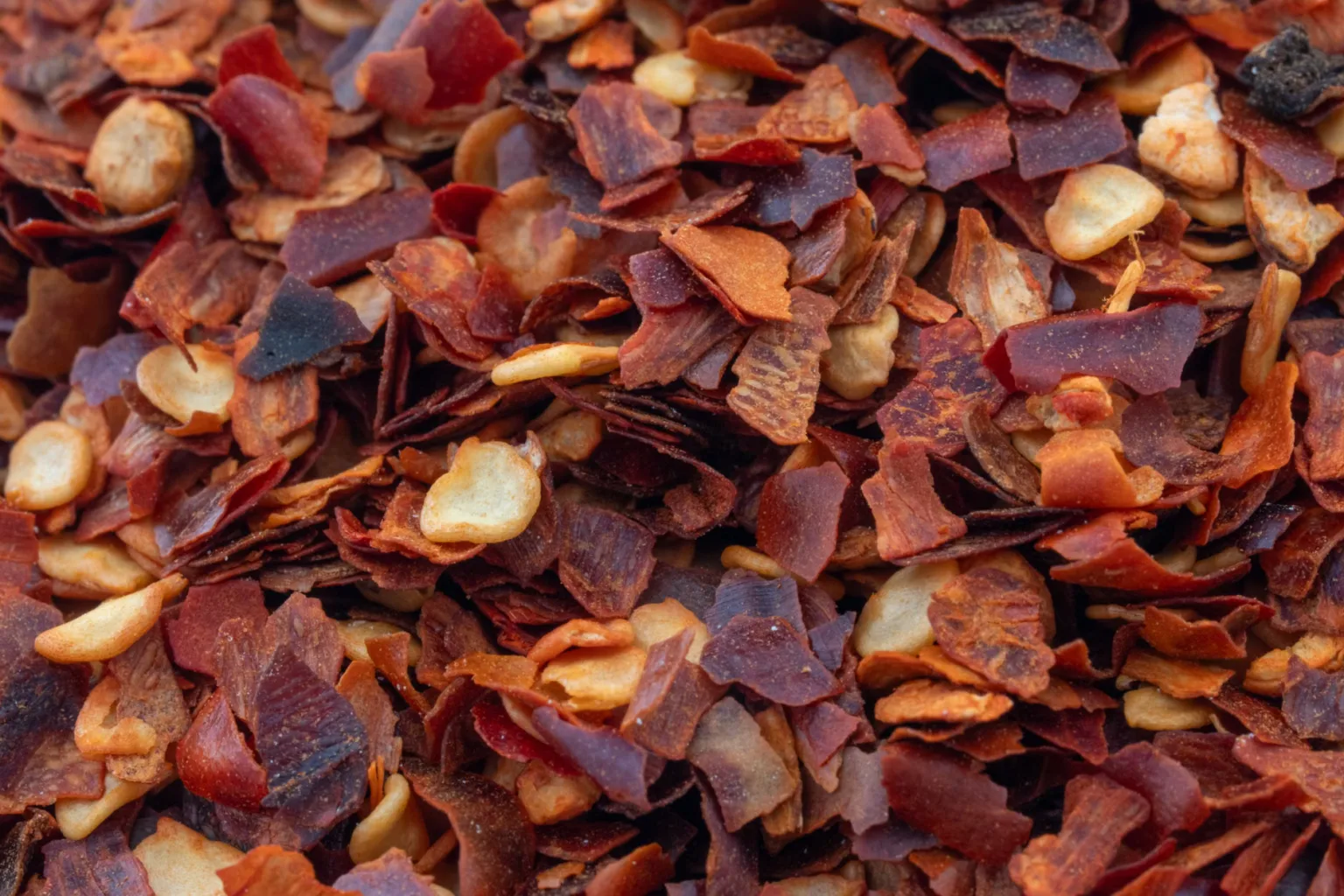
Red pepper flakes are dried red chiles broken into small pieces, sometimes including seeds. They are used as a seasoning to add heat and flecks of color to food. The name does not identify one single chile variety: some commercial products use cayenne, while the blend can vary by brand. It is therefore unwise to assume every jar has the same flavor or heat level. They are different from fresh red bell pepper and from liquid chile sauce: flakes are dry and can be sprinkled on food or mixed into a preparation. Check the product name and ingredient list to find out what a particular package contains.
When to use it
Use them when you want a visible, spicy accent without turning a dish into a sauce. They work as a finishing touch on avocado toast and can also be added to chile preparations, such as a vinegar-based jicama and pepper relish. They are handy when diners can adjust the heat at the table. Since the variety and strength are not identical in every product, begin with a small amount and taste before adding more. They are optional: if a dish should remain mild or you do not know how much heat others prefer, leave them out or serve them on the side.
How to use it
For a finishing touch, sprinkle a small amount over the dish just before serving; avocado toast is a straightforward pairing. You can also mix the flakes into a recipe as you prepare it, for example in a vinegar-based jicama and pepper relish. Start with a little, stir well, and taste before adding more, because heat can vary between products. To distribute the spice more evenly, stir the flakes through the preparation rather than leaving them all on top. Avoid adding a large amount out of habit when you do not know how strong that package is. Check the label for the specific product’s ingredients.
Flavour and texture
Their defining flavor is spicy dried chile, but the profile and heat can vary with the blend and variety used. The flakes add small visible pieces and a light texture, unlike a smooth chile sauce. Some blends include seeds and pieces of different sizes. Do not assume that a red color indicates a particular heat level: check the product and add it gradually to suit the dish.
How to choose it
Read the product name and ingredient list to see which chile is in the package; commercial flakes can vary, and some products use cayenne. A crushed appearance does not guarantee that brands share the same blend, piece size or heat. If you want to control the spice, choose a product that identifies the chile and try a small amount before using it in a whole recipe. Also check any storage and use directions on the label.
Storage
The available information does not establish one universal shelf life or storage condition for every brand. Follow the storage and use directions printed on the package, and keep the label available so you can check the product’s ingredients and instructions. Observe any special conditions stated on the package. Do not infer a best-before date from the seasoning’s appearance or name.
Substitutions
Ground cayenne can be an alternative when you want red-chile flavor, but it is not an exact replacement: the texture changes and the heat may differ. Other dried red chile flakes are another option; check their variety and ingredients. In either case, begin with a small amount and adjust after tasting, since labels and blends do not guarantee a uniform strength.
Common mistakes
Do not assume every red pepper flake product is cayenne or has the same heat; blends can vary. Another mistake is adding a large amount before tasting or confusing the flakes with sweet red bell pepper. Start small, check the package ingredients, and adjust gradually. If a dish needs to stay mild, serve the flakes separately rather than adding them without checking.
Safety and allergens
Check the product label for its ingredients and any use or storage directions. When cooking for others, let them know the dish contains hot chile and allow them to choose whether to add it. The available information does not identify a specific allergen inherent to the flakes; commercial formulations may differ, so check the label where allergies or intolerances are a concern.
Culinary uses
- Condimento picante
- Toque final para platos
Recommended techniques
- Espolvorear sobre el plato antes de servir
- Incorporar a una mezcla o preparación durante su elaboración
Pairs well with
- Aguacate y tostadas
- Jícama, pimiento y preparaciones avinagradas
Frequently asked questions
Are red pepper flakes always made from cayenne?
No. Some products use cayenne, but the variety or blend can differ. Check the ingredient list.
How can I control the heat?
Add a small amount, stir, and taste before adding more. Strength can vary between brands and blends.
What can I use red pepper flakes with?
Sprinkle them on avocado toast or mix them into a chile preparation such as vinegar-based jicama and pepper relish.
Ingredient allergens
Allergen listThere are no verified associations for these ingredients yet.
Estimated nutrition
- Fat
- 12.8 g
- Saturates
- 1.56 g
- Carbohydrate
- 6.57 g
- Sugars
- 4.28 g
- Fibre
- 1.8 g
- Protein
- 1.04 g
- Salt
- 0.05 g
Sources and review
Automatically researched, cross-checked and validated content. Sources consulted:
- En el etiquetado alimentario hay algunas menciones que son obligatorias eletiquetadocuentamucho.aesan.gob.es/obligatoria.html
- ¿Por qué la muerte es origen de miedos y tabúes? doi.org/10.64628/aao.fccyk3qj3
- Gastronomía de México - Wikipedia, la enciclopedia libre es.wikipedia.org/wiki/Gastronom%C3%ADa_de_M%C3%A9xico
- Vamos a Conservar Alimentos: Proceso Rápido para preparar Pepinillos en Vinagre extension.psu.edu/vamos-a-conservar-alimentos-proceso-rapido-para-preparar-pepinillos-en-vin…
- Salsa Picante de Jícama (Spanish) - National Center for Home Food Preservation nchfp.uga.edu/how/can/canning-salsa/spicy-jicama-relish-spanish/
- Avocado Toast – Community Nutrition Security Research Group web.uri.edu/community-nutrition/avocado-toast/
- ¿Qué son en realidad los HOJUELAS de CHILES secos que dan en las pizzerías? www.cocinadelirante.com/hogar/que-son-en-realidad-los-hojuelas-de-chiles-secos-que-dan-en-la…
- 1. Prescripciones técnicas para el diseño de pasos de fauna y vallados perimetrales www.miteco.gob.es/es/biodiversidad/temas/ecosistemas-y-conectividad/fragmentacion/fragm-publ…
- Documentos de referencia sobre las mejores técnicas disponibles | EU-BRITE bureau-industrial-transformation.jrc.ec.europa.eu/es/reference
- Técnicas de Comunicación en Medicina Clínica (215035) www.uah.es/es/estudios/estudios-oficiales/grados/asignatura/Tecnicas-de-Comunicacion-en-Medi…
- - YouTube www.youtube.com/watch?v=wnD3mR-vaNQ