- Category
- Sauces and condiments
- State
- Liquid
- Usual unit
- ml
What it is
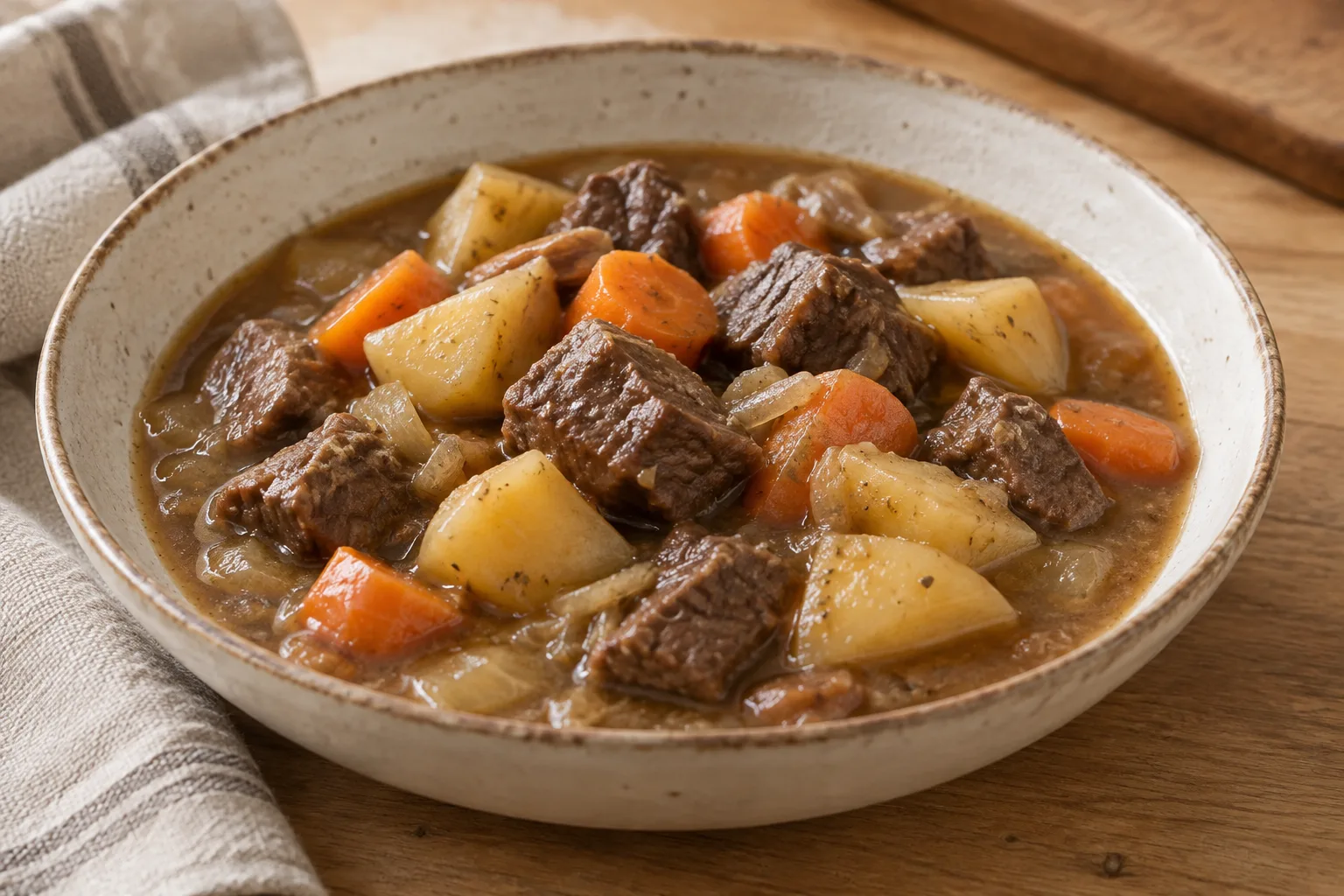
Reindeer stock is a broth identified by that name and used as a cooking liquid or served as broth. In culinary terms, broth is the liquid left after cooking one or more ingredients in water; it can be made with meat, bones, fish or vegetables. The ingredients and preparation method determine its color, intensity, saltiness and texture. If you buy a packaged product, its ingredient list and label directions help you find out what it contains and how to use it. Broth is not necessarily the same as a stock base: in cooking, a stock is often more concentrated, for example when the liquid is reduced.
When to use it
Use it as a liquid base for soup, cream soup, stew or sauce, or to cook rice, pasta and legumes. You can also serve it as broth and add ingredients of your choice. Taste it before seasoning, since concentration and salt levels can vary. If you want a more intense flavor, you can reduce the broth; if it is concentrated or salty, carefully adjust how much you add to the recipe. Check the label if you are using a packaged product, especially if it says that it should be diluted or prepared before use.
How to use it
When using a packaged product, read the ingredient list and preparation directions: products can differ in ingredients, concentration and saltiness. Add the broth as part of the liquid in soup, stew, or a rice, pasta or legume dish. Taste before adding salt or other seasonings. The general method for homemade broth is to cook ingredients in water and strain the liquid at the end. Gentle cooking keeps the liquid from being vigorously agitated; to concentrate the flavor, reduce it uncovered and taste as it cooks down. Adjust the amount to the flavor and concentration of the particular broth rather than assuming a fixed ratio.
Flavour and texture
Flavor and texture depend on the ingredients and preparation method. Broth can be clear or more concentrated, and its color varies with what has been cooked in it. Solids, fat and seasonings also affect the result. Taste the particular broth before combining it with other ingredients, then adjust the salt and other seasonings to suit its intensity. For packaged products, the label may indicate whether the broth is ready to use or needs dilution.
How to choose it
When buying packaged reindeer stock, check the name and ingredient list to see what it contains. Find out whether it is ready to use or concentrated, and read the preparation and storage directions. Products can vary in ingredients, saltiness and concentration, so do not assume they all work in the same quantity. Choose an intact package and check the date and directions printed on it. These checks are especially useful when substituting one broth for another in a recipe.
Storage
Follow the storage directions on the package, since instructions can vary by product and format. After opening, check the label to find out how to store the broth and for how long. Keep the package closed when not in use and avoid leaving the broth outside the conditions specified by the manufacturer. For homemade broth, follow official food-safety guidance in your area. Do not use a product if its package is damaged or if it shows signs that conflict with the label directions.
Substitutions
You can substitute another meat broth or vegetable broth, bearing in mind that the flavor will change. Fish broth also provides liquid but may give the dish a very different flavor profile. Water works for cooking and adjusting the liquid level, although it generally contributes less flavor than broth. Taste the dish before adding salt; if the substitute is concentrated or salty, adjust the amount carefully and season to suit the result.
Common mistakes
Do not assume every reindeer stock has the same intensity, saltiness or ingredients: check the label and taste before seasoning. Avoid automatically replacing ordinary broth with the same amount of concentrate, since the dish may become too strong or salty. Do not confuse broth with a reduced stock base, either: greater concentration can change a dish’s balance. Add the liquid gradually if you are unfamiliar with the product.
Safety and allergens
For packaged broth, follow the label’s use and storage directions. For homemade broth, consult official food-safety guidance in your area and handle it hygienically.
Culinary uses
- Base líquida para sopas, cremas y guisos
- Líquido de cocción para arroz, pasta y legumbres
- Base para salsas
Recommended techniques
- Cocer a fuego suave
- Colar para retirar los sólidos
- Reducir para concentrar el líquido
Pairs well with
- Verduras
- Arroz y pasta
- Legumbres
Frequently asked questions
What is reindeer stock used for?
It can be used as a liquid base for soups, cream soups, rice, pasta, legumes, stews and sauces, or served as broth. Its intensity depends on the preparation or product.
Is reindeer stock the same as a stock base?
Not necessarily. A stock is often more concentrated than broth, for example when the liquid is reduced. The name alone does not tell you a product’s concentration.
What can I use if I do not have reindeer stock?
Try another meat broth or vegetable broth. Water also provides liquid but generally less flavor. Taste the dish and adjust the seasoning to suit the substitute.
Ingredient allergens
Allergen listThere are no verified associations for these ingredients yet.
Sources and review
Automatically researched, cross-checked and validated content. Sources consulted:
- ¿Por qué la muerte es origen de miedos y tabúes? doi.org/10.64628/aao.fccyk3qj3
- Caldo - Wikipedia, la enciclopedia libre es.wikipedia.org/wiki/Caldo
- Los diferentes tipos de caldo: Descubre 5 opciones www.aldelis.com/tipos-caldo/
- Galenic Medicine and Women's Recipes in the Early etd.ohiolink.edu/acprod/odb_etd/ws/send_file/send?accession=akron1744386918268332&dispositio…
- Caldo | Gastronomía & Cía www.gastronomiaycia.com/caldo/
- What did ancient Babylonians eat? A Yale-Harvard team tested their recipes | Yale News news.yale.edu/2018/06/14/what-did-ancient-babylonians-eat-yale-harvard-team-tested-their-rec…
- Caldo de res, un clásico de los domingos - Rumba Meats® rumbameats.com/es/lafamilia/caldo-de-res-un-clasico-de-los-domingos/
- National Centers for Environmental Information (NCEI) guides.libraries.indiana.edu/national-centers-environmental-information
- VitisNet: ''Omics'' Integration through Grapevine Molecular ... openprairie.sdstate.edu/cgi/viewcontent.cgi?article=1053&context=plant_faculty_pubs
- Continuities and Ruptures in Italy's Postwar Filmic Foodscape academiccommons.columbia.edu/doi/10.7916/d8-qxce-hc15/download
- HHS Public Access - ScholarWolf - University of Nevada, Reno scholarwolf.unr.edu/bitstreams/f9dd5a6d-4229-445a-a04e-efe5de40a469/download
- National Institute on Aging cega.berkeley.edu/organization/national-institute-on-aging/
- - YouTube www.youtube.com/watch?v=6EGW94GgESM
- El caldo en la cultura gastronómica española margavilan.substack.com/p/el-caldo-en-la-cultura-gastronomica