- Category
- Grains, flour and pasta
- State
- Fresh
- Usual unit
- g
What it is
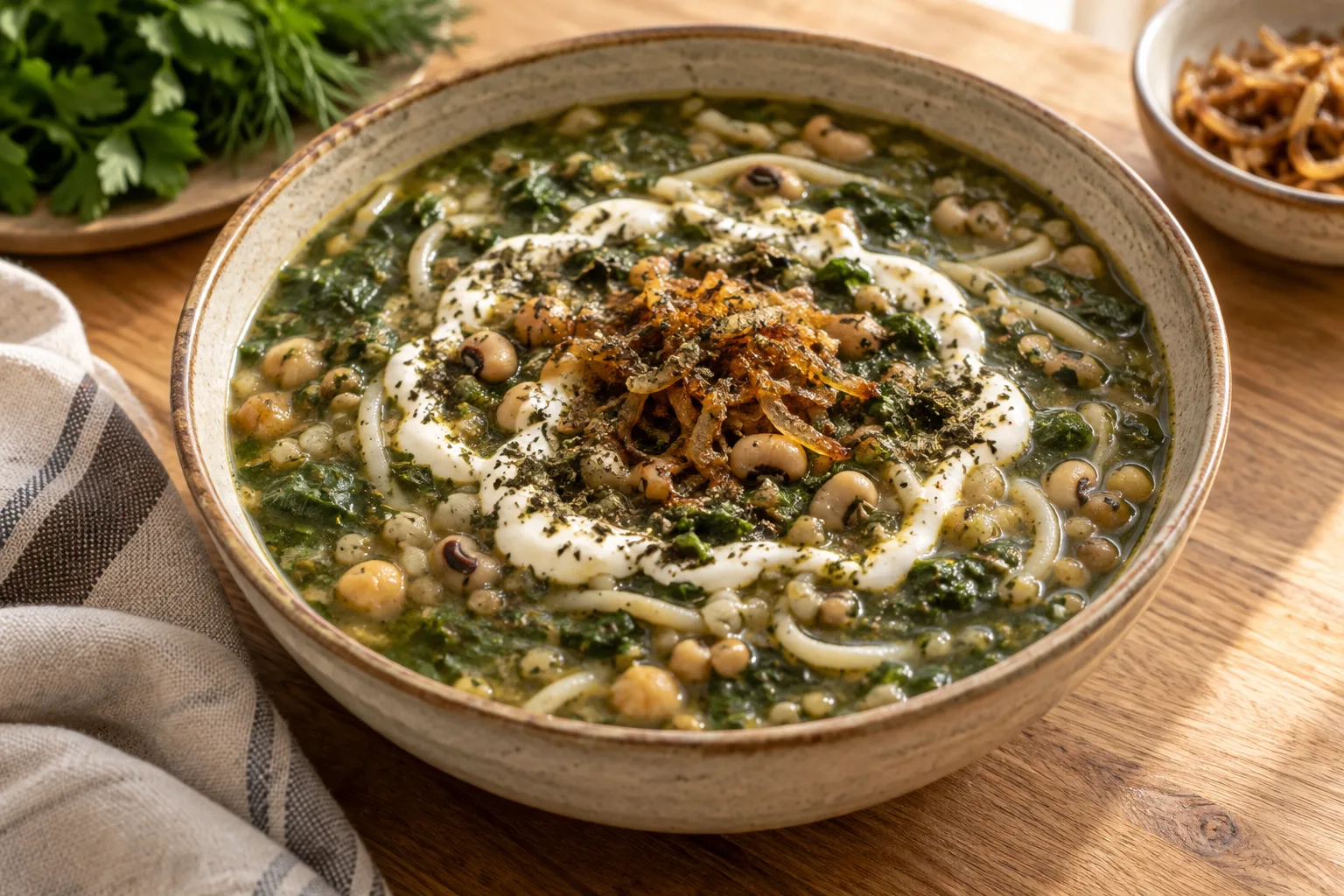
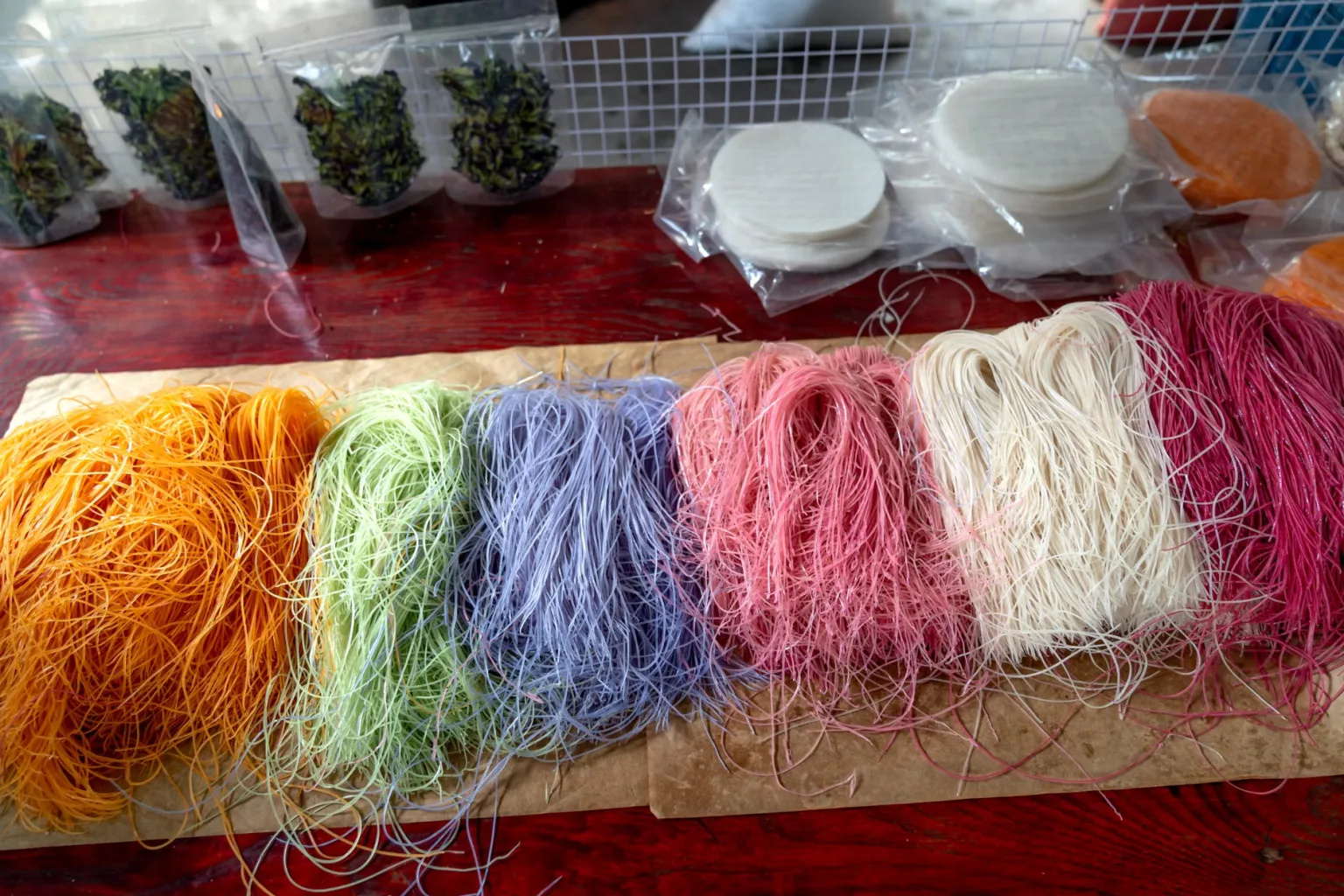
Reshteh is the name of noodles associated with Iranian cooking. In ash reshteh recipes, they are added to a thick soup with legumes and herbs, contributing a pasta-like texture alongside chickpeas, beans and lentils. Available descriptions most often identify traditional reshteh as wheat noodles, although some references mention rice versions. The name alone therefore does not guarantee a single ingredient list: check the package, particularly if you need to avoid wheat or gluten.
When to use it
Use reshteh when making ash reshteh or another thick soup with legumes and herbs in an Iranian style. In these dishes, the noodles are added toward the end so they cook in the pot and become part of the soup's texture. They can also work in recipes that call for fine noodles, but the result may vary with the product's thickness and ingredients. There is no need to reserve them for a particular season; descriptions include reshteh dishes for everyday meals as well as special occasions.
How to use it
Read the package directions first, because noodle ingredients and thickness can vary. For an ash reshteh-style soup, cook the legumes and herbs according to the recipe, then add the noodles when the rest of the dish is nearly ready. Stir gently to distribute them without breaking them apart, and adjust the liquid if the soup thickens more than you want. Some recipes keep the strands long and intact; others break them before adding them. Serve with the accompaniments specified in your recipe, such as fried herbs, onion or mint and, if appropriate, kashk. Kashk is a dairy ingredient, not part of the noodles.
Flavour and texture
Reshteh on its own is generally mild; its final flavor also depends on the dough and the recipe. In soup, the noodles take on some of the flavor of the herb-and-legume broth. Their texture can range from tender to slightly firm, with thickness and the package's cooking directions affecting the result.
How to choose it
Look for reshteh in Iranian grocery shops or stores with a broad pasta selection. Check the ingredient list and cooking directions: descriptions most often identify wheat noodles, but rice versions are also mentioned. If you avoid gluten, do not assume every product sold under this name is suitable; confirm the label and the manufacturer's allergen information.
Storage
Follow the storage directions on the package, as no verified recommendation is available here that applies to every product sold as reshteh. Keep the package closed and protected from moisture if the label directs. After opening, store it according to the manufacturer's instructions and check the product before use.
Substitutions
You can substitute fine wheat noodles or rice noodles if the recipe allows. Wheat noodles may be closer to common descriptions of reshteh, while rice changes the texture and cooking behavior. Follow the directions for the alternative product; do not assume the substitution will produce exactly the traditional result.
Common mistakes
Do not assume all reshteh have the same ingredients: check whether the product is made from wheat or rice. Avoid adding the noodles too early, as they may become overly soft or thicken the soup considerably. Do not break them automatically either: some recipes keep the strands long, while others call for shorter pieces.
Safety and allergens
Check the ingredient and allergen label, especially if you need to avoid wheat or gluten. Follow the package's cooking and storage instructions.
Culinary uses
- Noodle ingredient for thick soups
- Adds body and a chewy element to legume-and-herb dishes
Recommended techniques
- Add to simmering soup near the end of cooking
- Break into shorter lengths if the recipe calls for it; otherwise keep the strands intact
Pairs well with
- Legumes such as chickpeas, beans and lentils
- Fresh herbs such as parsley, spinach, dill and spring onion
- Kashk, when making ash reshteh
Frequently asked questions
What are reshteh?
They are noodles associated with Iranian cooking and are used, among other dishes, in the thick soup ash reshteh.
Are reshteh always made from wheat?
Do not assume so. Many descriptions identify them as wheat noodles, but rice products are also mentioned; check the label.
When should I add them to soup?
Ash reshteh recipes add them near the end; follow the recipe method and the package directions.
Ingredient allergens
Allergen listThere are no verified associations for these ingredients yet.
Sources and review
Automatically researched, cross-checked and validated content. Sources consulted:
- ¿Por qué la muerte es origen de miedos y tabúes? doi.org/10.64628/aao.fccyk3qj3
- Client Challenge doi.org/10.2307/jj.27939689.16
- - YouTube www.youtube.com/watch?v=qHZWvsRBJ6I
- Sopa de fideos persa | Recetas | Cook For Your Life www.cookforyourlife.org/es/recetas/sopa-de-fideos-persa/
- Ash reshteh - Wikipedia, la enciclopedia libre es.wikipedia.org/wiki/Ash_reshteh
- Ash Reshteh: origen, ingredientes y alérgenos www.menuella.com/es/food-wiki/ash-reshteh
- Ash-e Reshteh www.uppersiaviaje.com/sopas/aash-e-reshteh-recipe.html
- Ash reshteh: la espesa sopa iraní con fideos | Comer viajando www.jidlonacestach.cz/es/ash-reshteh/
- Behrooz Parhami web.ece.ucsb.edu/~parhami/pers_blog.htm
- Ash-e Reshteh: origen, ingredientes y alérgenos www.menuella.com/es/food-wiki/ash-e-reshteh
- - YouTube www.youtube.com/watch?v=gQN3hR5G4QU
- Aash E Reshteh (Sopa Iraní De Alubias Y Fideos) Receta de emd1943- Cookpad cookpad.com/es/recetas/96959
- Ash reshteh | Visit iran www.visitiran.ir/es/cuisine/ash-reshteh
- Gastronomía en Irán www.orienteviajes.com/info/13574/gastronomia_iran.php