- Category
- Fruit
- State
- Fresh
- Usual unit
- unit
What it is
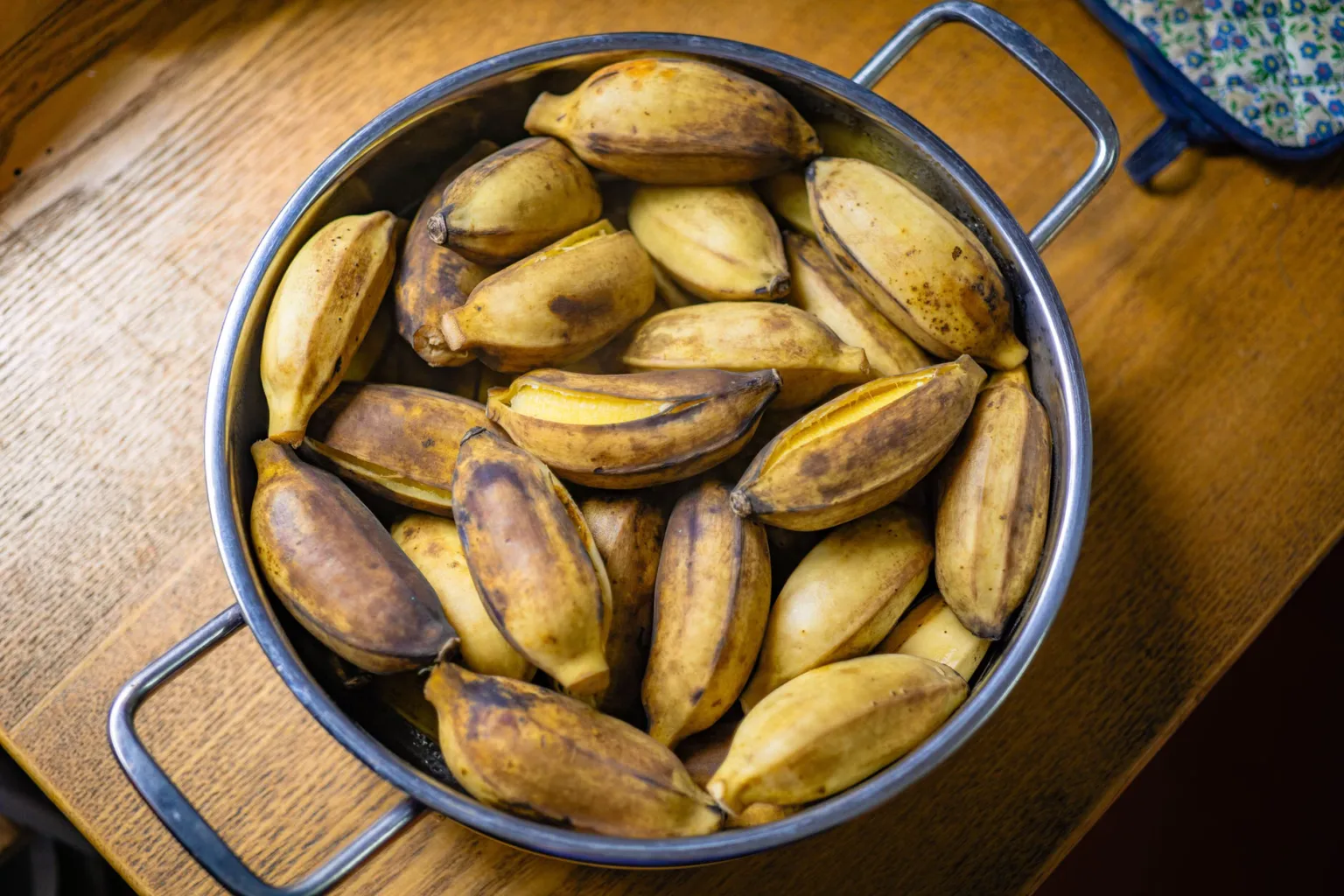
Ripe plantain is a cooking fruit from the Musa genus at a later stage of ripeness. Its peel is usually yellow and may develop dark patches; as the fruit ripens, the flesh tends to become softer and sweeter. Unlike green plantain, which is firmer and starchier, ripe plantain suits dishes where sweetness and a tender texture are welcome. It is commonly cooked, although some sources describe yellow ripe plantain as edible raw. Names and specific varieties differ from one region to another, so the exact fruit sold as plantain may vary.
When to use it
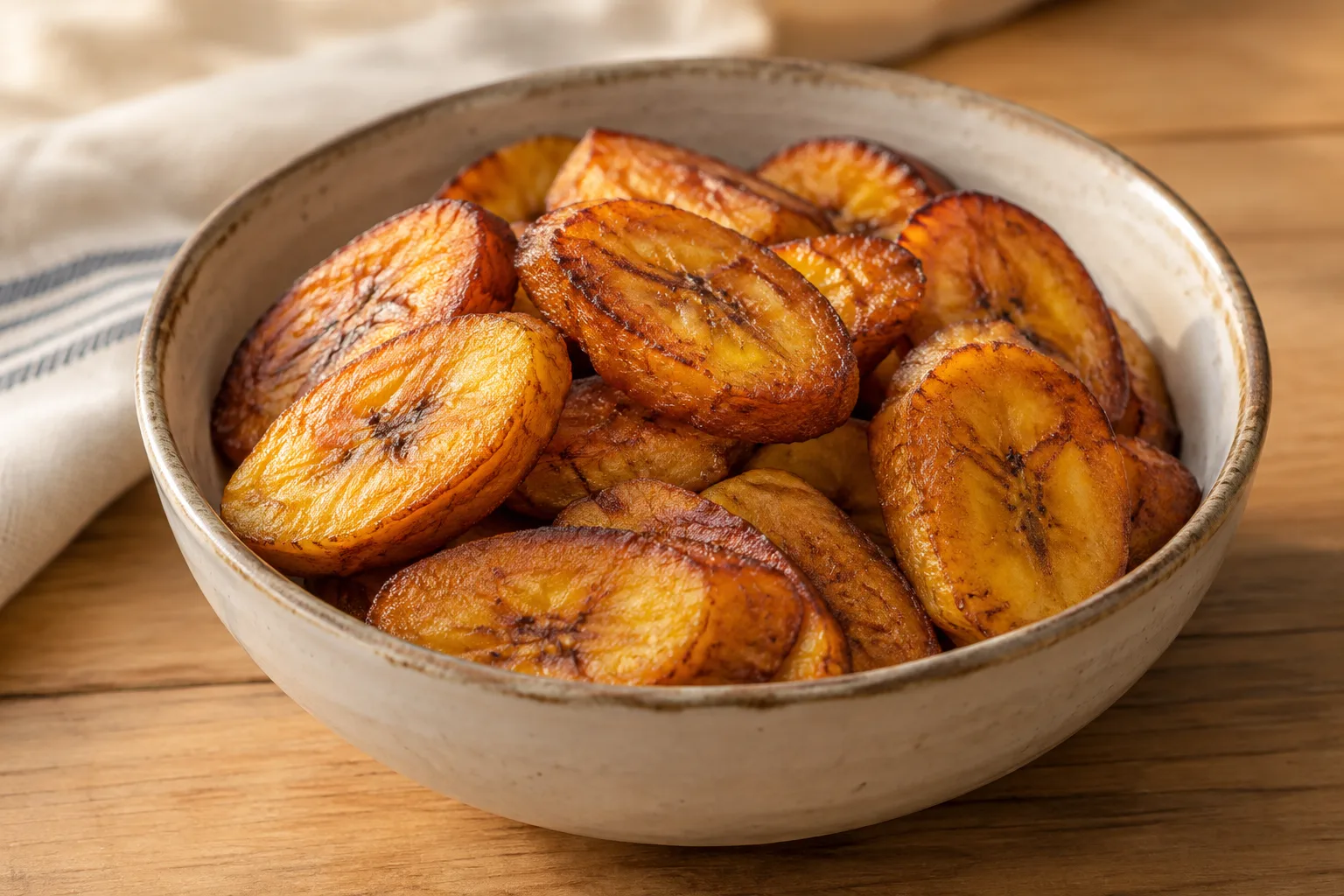
Choose ripe plantain when you want a sweet side dish, an accompaniment for beans or meat, or an ingredient for desserts and baked preparations. It works well sliced and fried, roasted, or boiled until tender. A mostly yellow peel, sometimes marked with dark patches, and softer flesh are practical signs of ripeness. If a recipe depends on firm pieces, slices that hold their shape, or a less sweet flavor, green or partly ripe plantain may be a better fit; ripeness changes the result.
How to use it
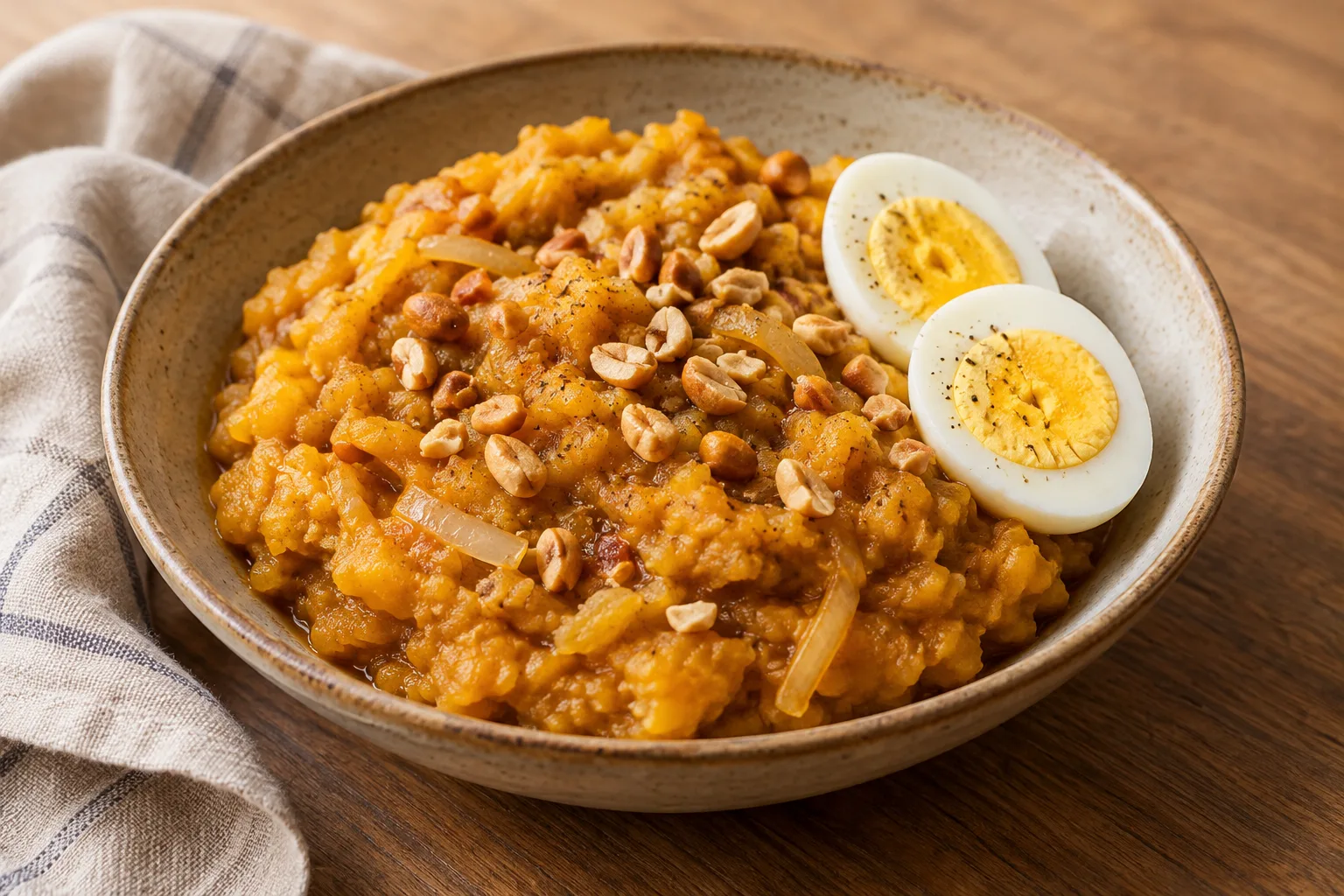
Peel ripe plantain and slice it for frying until golden, or cook it whole or in pieces by boiling, roasting, or baking. Heat softens the flesh and makes its sweetness more pronounced. Serve it as a side with white cheese or cream, or alongside beans and meat. You can also boil and mash it for a soft accompaniment or a sweet preparation. Choose the cut and method for the texture you want: slices hold their shape better, while longer cooking makes mashing easier.
Flavour and texture
Ripe plantain flesh is sweet and softer than green plantain; as it ripens, both sweetness and softness tend to increase. Frying or roasting can brown the surface and bring its sweetness forward. Results vary between varieties and ripeness stages: a firmer fruit is easier to cut into pieces that hold their shape, while a very ripe one breaks down more readily.
How to choose it
Look for mostly yellow skin when you need ripe plantain; dark patches may appear as ripening progresses. A very dark peel can indicate an overripe fruit with particularly soft, sweet flesh, which may suit mashes or baking. Choose according to the dish: for slices that hold together better, select fruit that is less soft; for mash or cakes, softer flesh can be useful. Varieties and market names differ by region.
Storage
The available information does not establish an exact shelf life or specific storage conditions for ripe plantain. To get the texture you need, buy fruit at the ripeness stage suited to your preparation and check it before use. Keeping the fruit whole until peeling avoids having to decide how to store exposed flesh; do not assume a fixed keeping time for fruit whose variety and ripeness can differ.
Substitutions
A ripe dessert banana can work in some sweet preparations, but may produce a softer result and a different flavor. Partly ripe plantain is another option if you want firmer, less sweet flesh. Neither exactly reproduces ripe plantain’s flavor and texture, so adapt the cut and check the cooking as you go.
Common mistakes
Treating green and ripe plantain as interchangeable without adjusting the recipe is a common mistake: ripe plantain is softer and sweeter. Another is expecting a very ripe fruit to stay in firm slices; it may work better in mash or other soft preparations. Dark patches alone do not tell you that the flesh will be firm, so check the texture when you peel it.
Safety and allergens
Peel the fruit with clean utensils and remove any part that is clearly spoiled. If its appearance or smell makes you doubt that it is in good condition, do not use it. Take care when handling hot oil if you choose to fry it.
Culinary uses
- Acompañamiento dulce o salado
- Ingrediente para postres y preparaciones de fruta cocida
Recommended techniques
- Freír en rodajas
- Hervir y hacer puré
- Hornear
- Asar
Pairs well with
- Queso blanco
- Crema agria o crema
- Frijoles negros
- Platos de carne
Frequently asked questions
How can I tell when plantain is ripe?
The peel is usually mostly yellow and may have dark patches. The flesh becomes softer and sweeter as ripening progresses.
Can ripe plantain be eaten raw?
Some sources describe yellow ripe plantain as edible raw, but it is commonly cooked. Frying, boiling, roasting, or baking gives it a softer texture.
What can I make with ripe plantain?
Fry it in slices, boil and mash it, roast it, or bake it. It works as a side with cheese, cream, beans, or meat.
Ingredient allergens
Allergen listThere are no verified associations for these ingredients yet.
Estimated nutrition
- Fat
- 20.22 g
- Saturates
- 4.89 g
- Carbohydrate
- 22.03 g
- Sugars
- 11.4 g
- Fibre
- 2.1 g
- Protein
- 12.81 g
- Salt
- 1.46 g
Sources and review
Automatically researched, cross-checked and validated content. Sources consulted:
- Usos culinarios apropiados de las variedades de plátano verde barraganete, dominico y maqueño, en la gastronomía ecuatoriana. | Revista de Gastronomía y Cocina doi.org/10.70221/rgc.v4i2.97
- Gastronomía de México - Wikipedia, la enciclopedia libre es.wikipedia.org/wiki/Gastronom%C3%ADa_de_M%C3%A9xico
- Contribuciones a la historia socio-ecológica de la culinaria de Isla Fuerte: la superación de la dualidad naturaleza-cultura a través del análisis de tres preparaciones tradicionales de la comida isleña | OpenAlex openalex.org/W4375814842
- Plátano maduro - Wikipedia, la enciclopedia libre es.wikipedia.org/wiki/Pl%C3%A1tano_maduro
- Guía de tipos de plátano y sus aplicaciones | Recetas Nestlé www.recetasnestle.com.ec/escuela-de-sabor/coccion-tecnica/tipos-platano
- Plátano macho: qué es, cómo se cocina y usos | Recetas Mexas recetasmexas.com/guia/platano-macho
- ¿Qué es más veloz, un plátano o un conquistador? doi.org/10.64628/aao.c539xdnt3
- Para mí, lo nutritivo es lo hecho en casa. Desde la cocina hacia la alimentación y la salud: habilidades culinarias y decisiones alimentarias | OpenAlex openalex.org/W2564834729
- PLANTAIN HYBRIDS - Scholar@UPRM scholar.uprm.edu/bitstreams/e0bac339-d190-4b9a-bf53-97109abe9a33/download
- Plátano macho: qué es, propiedades y cómo utilizarlo en la cocina www.google.com/goto?url=CAESqQEB6zswFXWSKIVhx_luSfMKeeGHupRSkGhSpKVN-qfSfYLJaW2i2Bzsbw72JGQD…