- Category
- Fruit
- State
- Fresh
- Usual unit
- unit
What it is
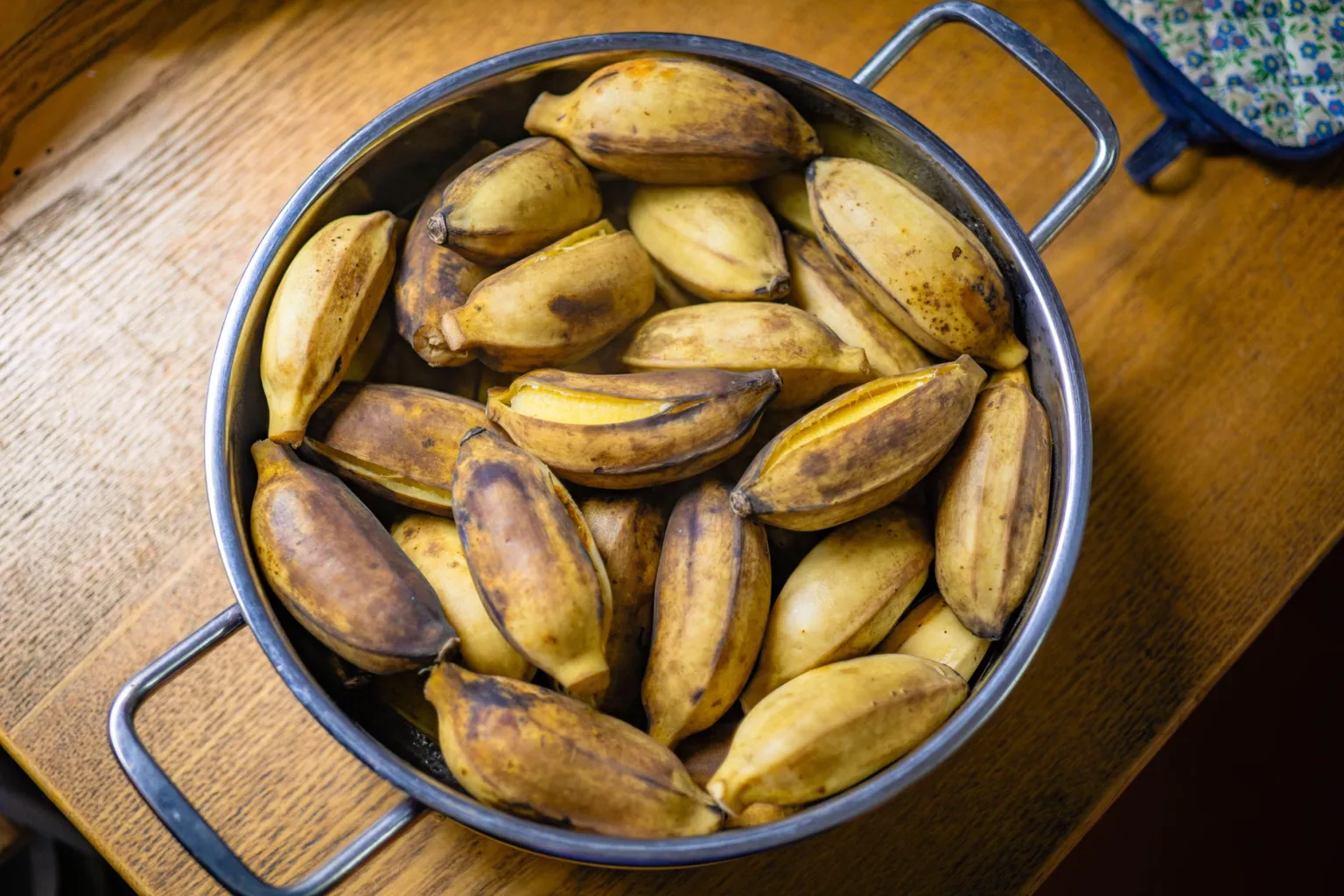
A ripe plantain is the fruit of a Musa plant that has progressed from its greener, less ripe stage. As it ripens, its skin commonly shifts toward yellow and may develop dark patches, while the flesh becomes softer and sweeter. Color and texture vary with the variety and degree of ripeness. Ripe plantains can be eaten raw, but they are often cooked. Cooking plantains are generally starchier and used cooked or fried, unlike many dessert bananas, which are commonly eaten raw; the two are related but do not always behave alike in a dish.
When to use it
Choose a ripe plantain when you want a sweeter flavor and flesh that softens during cooking. Sliced and fried or roasted plantain works as a side, while boiled plantain can be served whole or mashed. It also suits sweet preparations such as plantain pastries and desserts. Yellow skin with dark patches commonly signals more ripeness than green skin, though appearance alone cannot precisely predict the inside texture. For a firmer, more neutral result, use a less ripe plantain instead.
How to use it
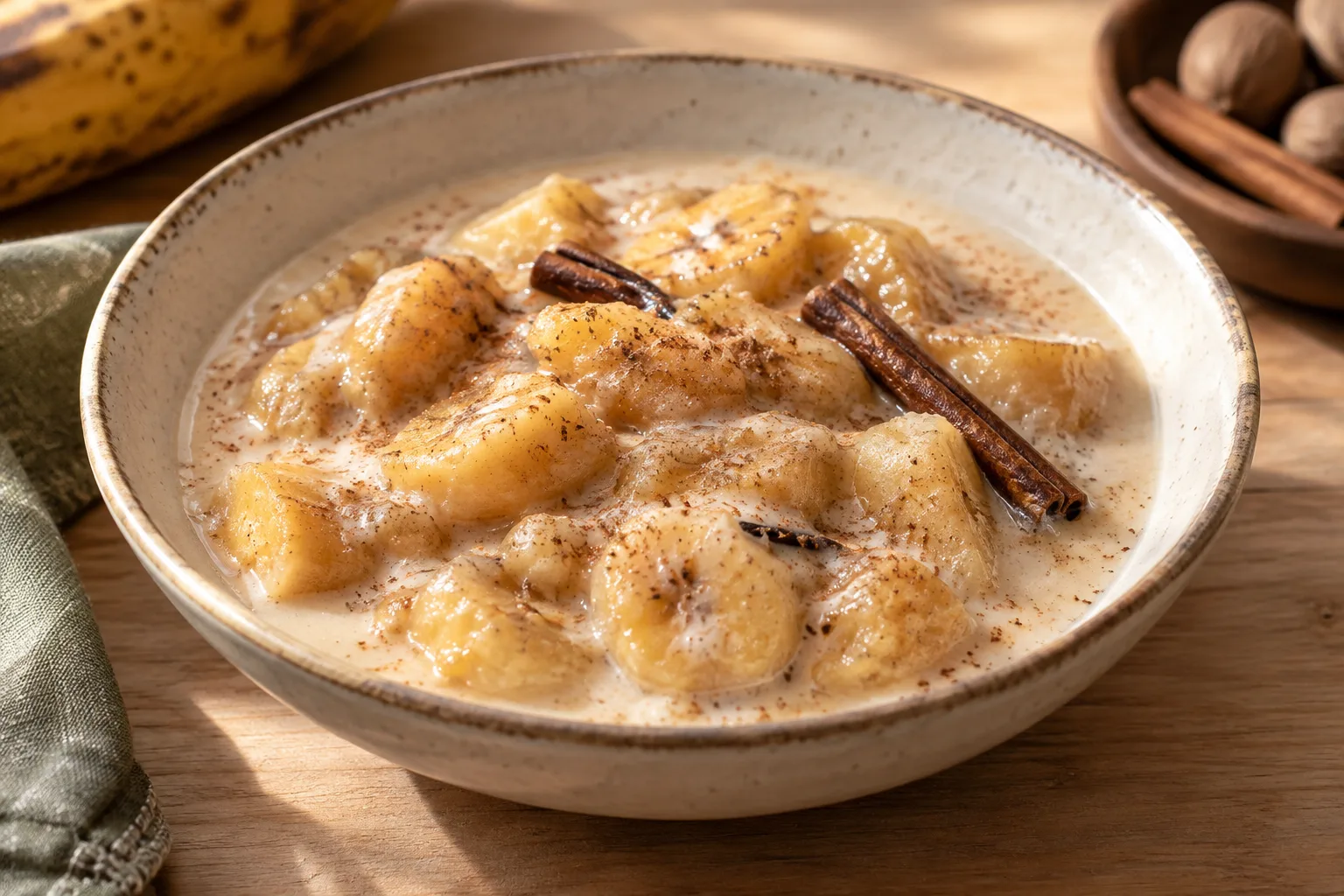
Peel the plantain and slice it for frying until browned, or bake or roast it until the flesh softens. You can also boil it and serve it whole or mash it into a purée. Slice thickness and cooking method affect the result: thin slices brown sooner, while thicker pieces retain more tender flesh. For a sweet-and-savory plate, pair cooked plantain with cheese or black beans; cream or cinnamon can also accompany it. There is no single cooking time that applies to every plantain and method, so use the texture and recipe as your guide.
Flavour and texture
As it ripens, plantain flesh becomes softer and sweeter than the firm, starchy, more neutral flesh of a green plantain. Frying or roasting can brown the outside and bring out a caramel-like quality while leaving the center tender. The result varies with plantain variety, ripeness, slice thickness and cooking method.
How to choose it
Choose intact fruit that feels appropriate for its ripeness. Yellow skin, sometimes with dark patches, is a useful sign when you want sweeter, softer flesh; greener skin generally indicates a less ripe, firmer fruit. Darkening can be part of ripening, but consider the overall condition of the fruit and choose according to how you plan to cook it.
Storage
The available information describes changes in color and texture during ripening but does not establish specific storage conditions or a storage life. Keep the fruit whole until you are ready to prepare it and check its condition before use. If you buy plantains at different stages of ripeness, use the yellower or more spotted ones first and leave greener ones for later.
Substitutions
Another ripe cooking plantain can serve a similar purpose, though sweetness and texture depend on the variety. A ripe dessert banana may work when a softer, sweeter result is acceptable, but it will not necessarily reproduce plantain's texture. Choose according to the dish and the texture you want.
Common mistakes
Do not assume every banana or plantain has the same texture: variety and ripeness affect sweetness and firmness. A green plantain may taste more neutral and starchy than expected in a sweet dish. A dessert-banana substitute may also be softer and sweeter than the plantain the recipe calls for.
Safety and allergens
The available evidence does not identify a specific food-safety warning or establish cooking times or temperatures for ripe plantains. Ripe plantains can be eaten raw, though they are often cooked. Choose a preparation method suited to the recipe and the condition of the fruit.
Culinary uses
- Sweet side dish
- Ingredient for desserts and baked goods
- Cooked or fried accompaniment
Recommended techniques
- Fry in slices
- Bake or roast
- Boil and mash
Pairs well with
- Cheese
- Black beans
- Cream
- Cinnamon
Frequently asked questions
How does a plantain change as it ripens?
Its flesh generally becomes softer and sweeter, while the skin changes from green toward yellow and may develop dark patches.
Can ripe plantains be eaten raw?
The available information indicates that yellow, ripe plantains can be eaten raw, although they are usually cooked and do not taste just like dessert bananas.
What are common ways to cook ripe plantains?
They can be fried in slices, boiled, baked or roasted. Boiled plantain can also be mashed.
Ingredient allergens
Allergen listThere are no verified associations for these ingredients yet.
Estimated nutrition
- Fat
- 3.26 g
- Saturates
- 0.54 g
- Carbohydrate
- 33.7 g
- Sugars
- 28.3 g
- Fibre
- 1.1 g
- Protein
- 1.09 g
- Salt
- 0 g
Sources and review
Automatically researched, cross-checked and validated content. Sources consulted:
- Gastronomía de México - Wikipedia, la enciclopedia libre es.wikipedia.org/wiki/Gastronom%C3%ADa_de_M%C3%A9xico
- Contribuciones a la historia socio-ecológica de la culinaria de Isla Fuerte: la superación de la dualidad naturaleza-cultura a través del análisis de tres preparaciones tradicionales de la comida isleña | OpenAlex openalex.org/W4375814842
- Banana - Wikipedia, la enciclopedia libre es.wikipedia.org/wiki/Banana
- Sabores de nuestras tierras/recetas - 2024 | Agricultura y Recursos Naturales ucanr.edu/site/agricultura-y-recursos-naturales/sabores-de-nuestras-tierras-recetas-2024
- Plátano macho: qué es, propiedades y cómo utilizarlo en la cocina www.directoalpaladar.com/ingredientes-y-alimentos/platano-macho-que-propiedades-como-utiliza…
- Client Challenge doi.org/10.2307/j.ctvs09qb4.7
- El genocidio es un delito fundamentalmente político: por qué es importante para Gaza doi.org/10.64628/aao.dkcgnayqh
- Plátano macho: qué es, cómo se cocina y usos | Recetas Mexas recetasmexas.com/guia/platano-macho
- Para mí, lo nutritivo es lo hecho en casa. Desde la cocina hacia la alimentación y la salud: habilidades culinarias y decisiones alimentarias | OpenAlex openalex.org/W2564834729
- Plátano maduro - Wikipedia, la enciclopedia libre www.google.com/goto?url=CAESbAHrOzAVw0zPrGWm1Hxsu4touCRbXaOqicvd9_lE_Tpp3tXacpWBBrFbMSbHrFLR…
- Guía de tipos de plátano y sus aplicaciones | Recetas Nestlé www.google.com/goto?url=CAESigEB6zswFdwebry9zdsOXCsMDpNJWQzZGujSCCbNDGlkU--WVyc9xRiyIiNIF9fa…