- Category
- Fish and seafood
- State
- Fresh
- Usual unit
- unit
What it is
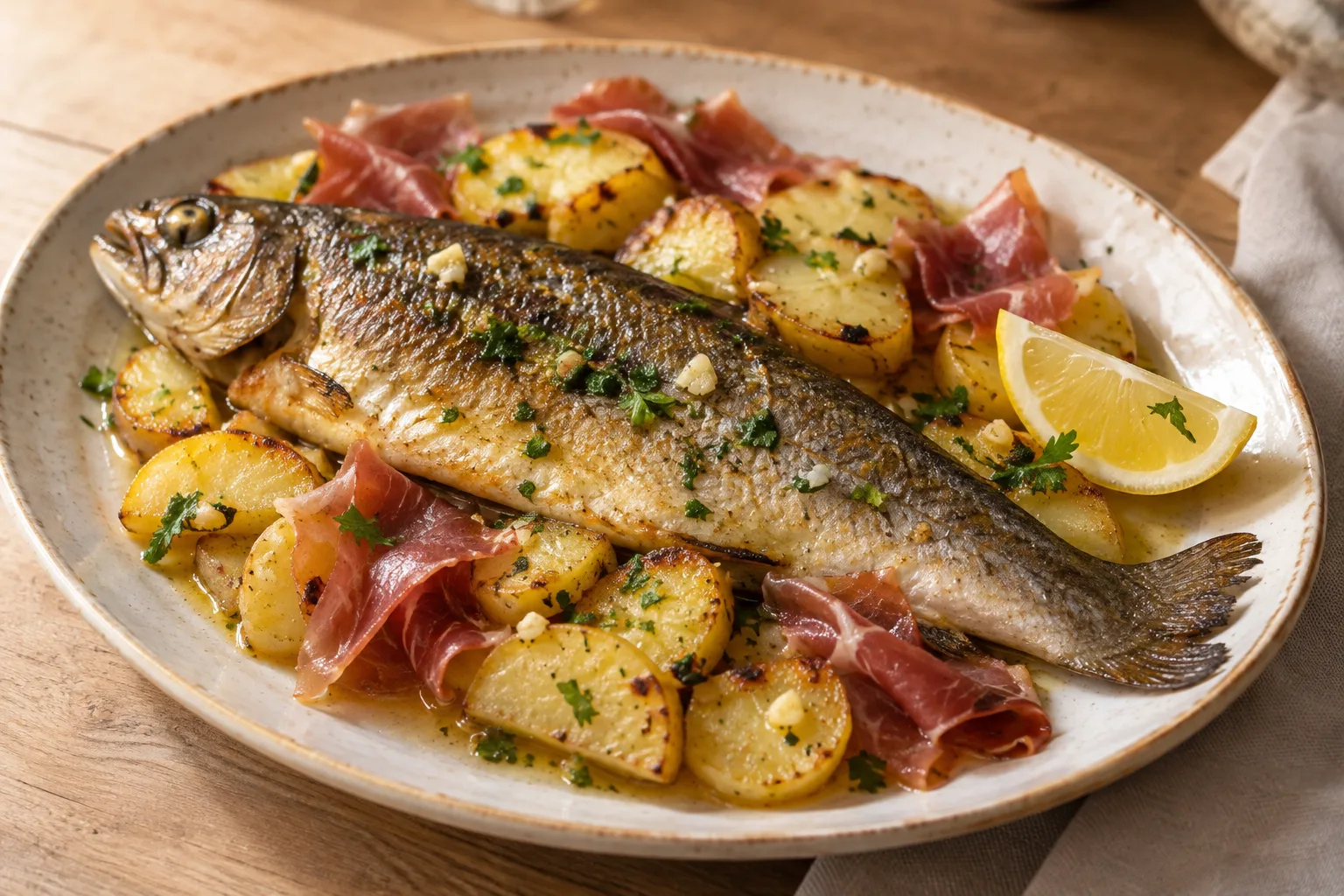
River trout is a common culinary name, not a precise identification of one species. Trout belong to the salmon family; familiar examples include brown trout (Salmo trutta) and rainbow trout (Oncorhynchus mykiss). Brown trout are associated with freshwater rivers and lakes, while rainbow trout are widely found in aquaculture. Size, skin appearance, and flesh color can vary. Check the label or ask the seller about species and origin when those details matter to your purchase or preparation. Treat the name as a useful general description rather than a guarantee of a particular species or source.
When to use it
Use trout when you want fish to be the main ingredient and can adapt the preparation to the size and form you have bought. A whole fish and portioned pieces do not require identical handling, so consider the format before choosing a recipe. The name “river trout” alone does not guarantee a particular species or a wild origin. Check the label if you need to distinguish brown trout from rainbow trout, or farmed product from fish of another origin.
How to use it
Before cooking, check the form of the fish—whole or portioned—and read any available information about species and origin. Trout can be cooked in a pan or in the oven; choose the method to suit the size, thickness, and recipe rather than applying one universal cooking time to different pieces. Keep accompaniments simple and use gentle herbs if you want the fish to remain the focus. Follow package directions where provided and local guidance for safe fish handling. Do not assume that flesh color identifies the species.
Flavour and texture
The name alone does not guarantee the same flavor or texture in every trout. Species, size, and other product differences affect appearance, and the flesh may be pale or more orange in tone. Rather than using color as your only guide, assess the particular product and follow preparation directions that suit the piece you have bought.
How to choose it
Choose a fish that looks fresh and is properly refrigerated at the point of sale. Check the label for species, form, and origin when that information is available; “river trout” can refer to more than one kind of trout. If your recipe calls for a whole fish or portions, buy the appropriate format and ask the seller for any details you need to prepare it well.
Storage
Keep fresh trout refrigerated and follow the package and retailer instructions. If you will not use it soon, check the label for the supplier’s guidance and avoid leaving the fish unrefrigerated while you prepare other ingredients. No single storage duration can be established here for every form of trout; follow the product-specific instructions and local food-safety guidance.
Substitutions
Rainbow trout and brown trout are alternatives within the trout group, but they are not interchangeable names for one species. When substituting one for the other, check the size and form and adjust the preparation accordingly; a recipe written for a particular piece may need changes.
Common mistakes
Do not assume that “river trout” names one species or that flesh color identifies it. Another common mistake is using the cooking time for a whole fish unchanged for a portion, or the other way around. Check the label and adapt the method to the product in front of you.
Safety and allergens
Keep fish refrigerated, follow package instructions, and use local guidance for safe fish handling. No universal storage or cooking time is provided here.
Culinary uses
- Main ingredient for a fish dish
- Whole fish or portioned fish for a meal
Recommended techniques
- Pan-cooking
- Oven-cooking
Pairs well with
- Mild, simply prepared accompaniments
- Fresh herbs or other gentle seasonings
Frequently asked questions
Is river trout always brown trout?
No. “River trout” is a common name that can refer to different trout. Check the label if you need the species.
Does orange flesh mean it is a different species?
Not necessarily. Flesh color alone is not enough to identify the species; check the product information.
Can I use rainbow trout instead of brown trout?
It can be an alternative, but check the size and form and adapt the preparation to the piece you have.
Ingredient allergens
Allergen listThere are no verified associations for these ingredients yet.
Sources and review
Automatically researched, cross-checked and validated content. Sources consulted:
- ¿Por qué la muerte es origen de miedos y tabúes? doi.org/10.64628/aao.fccyk3qj3
- Gastronomía del Perú - Wikipedia, la enciclopedia libre es.wikipedia.org/wiki/Gastronom%C3%ADa_del_Per%C3%BA
- Trucha, un pescado de río a reivindicar: qué es, cómo cocinarla y seis recetas para sacarla del olvido culinario www.directoalpaladar.com/ingredientes-y-alimentos/trucha-pescado-rio-a-reivindicar-que-como-…
- Qué es (y qué no es) la estadística, usos y abusos de una disciplina clave en la vida de los países y las personas | Estudios económicos doi.org/10.52292/j.estudecon.2015.740
- caribbean food crops society - AgEcon Search ageconsearch.umn.edu/record/264085/files/Castillo-Farias.pdf
- Mexican Trout publications list sites.utexas.edu/hendricksonlab/2024/12/11/mexican-trout-publications-list/
- Trucha - Reclaiming The Border Narrative bordernarrative.lib.arizona.edu/contributors/trucha/
- Trucha - Wikipedia, la enciclopedia libre es.wikipedia.org/wiki/Trucha
- Food allergen labelling and information requirements technical guidance - GOV.UK www.gov.uk/government/publications/food-allergen-labelling-and-information-requirements-tech…