- Category
- Vegetables
- State
- Fresh
- Usual unit
- unit
What it is
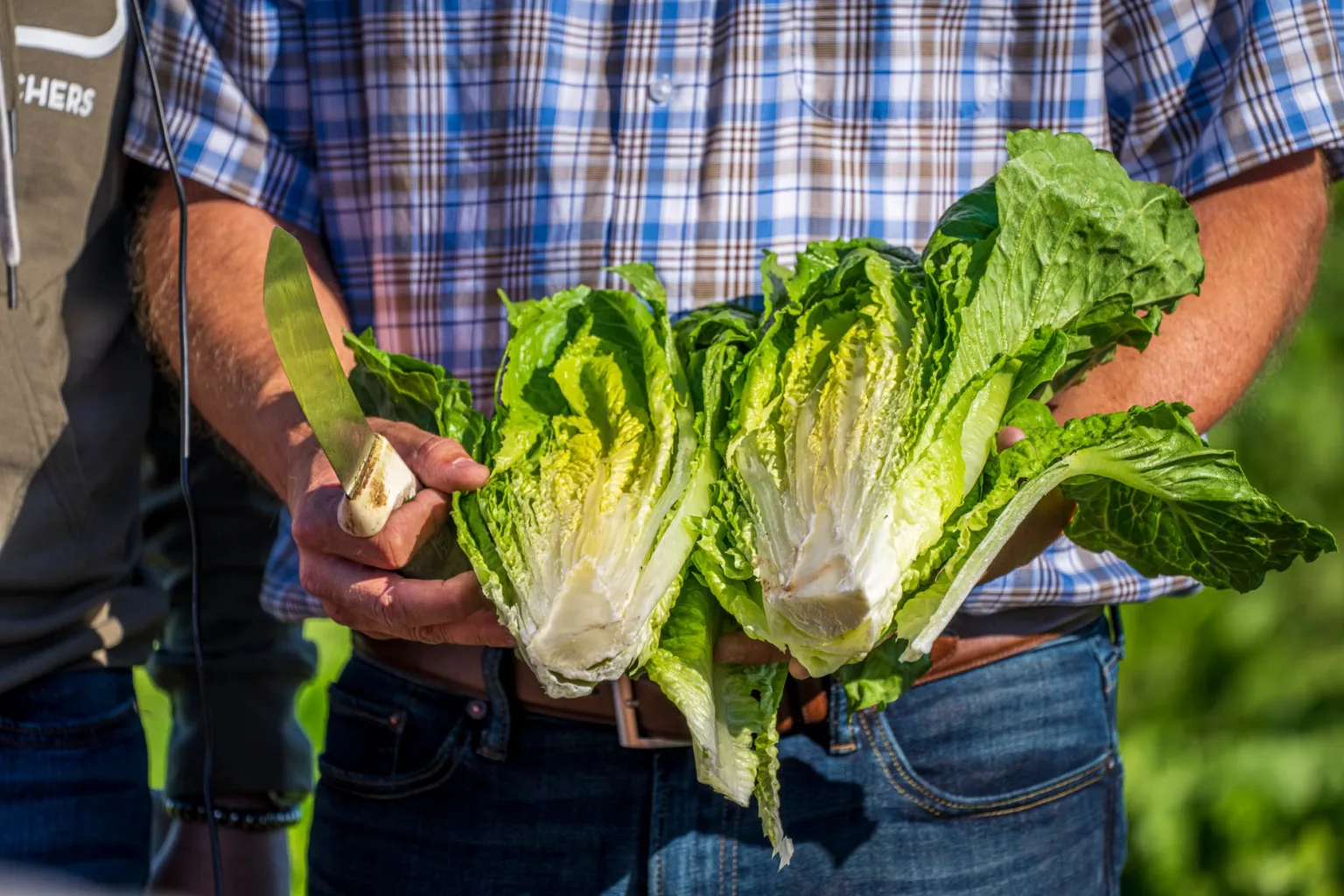
Romaine lettuce is a lettuce variety recognized by its long, firm leaves and prominent central rib. The outer leaves are often greener, while the inner leaves tend to be paler. Its texture is crisp, and its fresh, vegetal flavor can have a slight bitterness, especially in the rib. It is sold whole or in individual heads and is also called cos lettuce in some places. Unlike lettuce varieties with rounded, compact heads, romaine is known for its elongated, sturdy leaves. It is versatile in raw preparations and can also be used in some cooked dishes. The firm leaves provide a noticeable crunch and can hold their shape better than delicate salad leaves.
When to use it
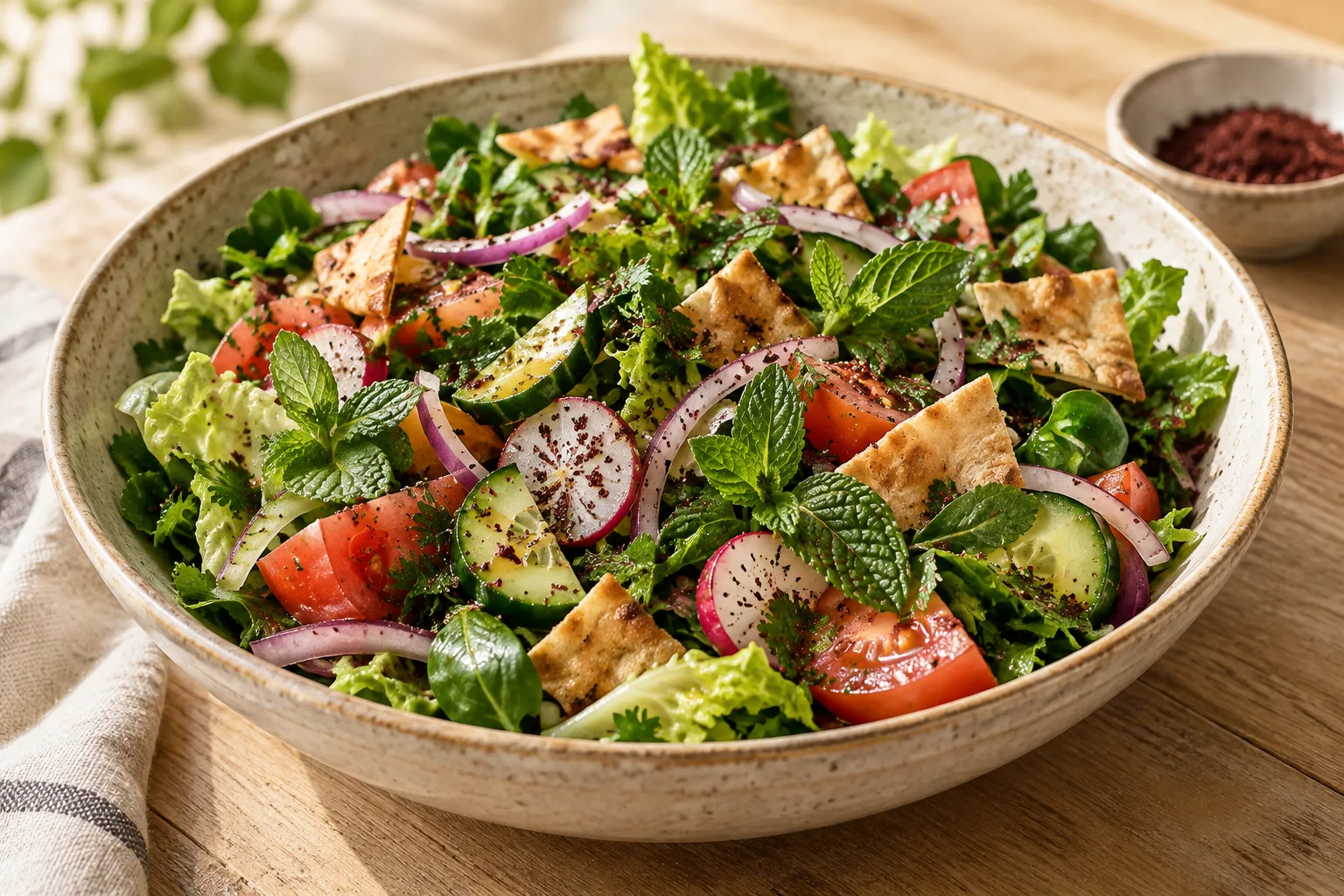
Choose romaine when you want leaves that stay firm in a salad or stand up to a creamy dressing. It is commonly used for Caesar salad and works as a fresh base or side for other dishes. The larger leaves can hold fillings as wraps, while halved heads can be briefly grilled or sautéed. If you prefer a milder taste, combine the leaves with other fresh ingredients or trim away some of the rib. Use romaine when you want a crisp contrast in a dish rather than only soft, delicate leaves. Its sturdy texture also makes it a practical choice when the leaves need to be handled or dressed before serving.
How to use it
Separate the leaves and rinse them with clean water before preparing; dry them well so excess water does not dilute the dressing. For a salad, cut or tear the leaves into pieces and toss them with dressing shortly before serving to help preserve their crispness. Keep the central rib for extra crunch, or remove part of it if its flavor is too bitter for your taste. Large, intact leaves can be used to wrap fillings. Romaine can also be halved and briefly cooked on a hot griddle, or sliced and added to a quick sauté. In hot dishes, a short cooking time helps the leaves retain some structure; avoid cooking them until they have completely lost their firmness.
Flavour and texture
Romaine has a fresh, vegetal flavor with a mild bitterness that may be more noticeable in the central rib. Its leaves are crisp and sturdy, though the inner parts can be more tender. This contrast helps the lettuce stand up to dressing and adds crunch to salads, sandwiches and wraps. When cooked, it loses some of its fresh crispness and becomes softer.
How to choose it
Look for a head with firm, fresh-looking leaves that are intact and green. Avoid heads with many wilted, damaged or visibly spotted leaves. The outer leaves may be darker and sturdier, while the inner leaves are often paler and more tender. If buying separated leaves, check that they are not limp or excessively wet. Choose a size that suits your intended use and check the overall condition before storing it.
Storage
Keep romaine lettuce refrigerated. To avoid unnecessary moisture, store it unwashed and rinse the leaves just before use; if already washed, dry them well before refrigerating. A clean bag or suitable container can help protect the leaves and keep them from being crushed by other foods. Check the lettuce before preparing it and remove damaged leaves. How long it keeps its quality depends on its condition when purchased and how it has been stored.
Substitutions
Iceberg lettuce can replace romaine when you want crisp leaves for a salad or wrap, though its shape and flavor differ. Batavia lettuce can also work in salads when you want fresh leaves with a firm texture. Neither substitute exactly matches romaine’s pronounced rib and mildly bitter flavor; adjust the amount and dressing to taste.
Common mistakes
Do not leave the leaves wet after rinsing: excess water can dilute dressing and reduce their crispness. Avoid dressing them too far ahead if you want them to stay crunchy. Do not automatically discard the central rib; it adds texture, though you can trim some away if you prefer a milder taste. Avoid cooking the leaves for so long that they lose all firmness.
Safety and allergens
For handling fresh lettuce, follow current official food-safety guidance. Use appropriate food-handling practices and consult official guidance if you have questions about preparation or storage.
Culinary uses
- Salad base
- Fresh garnish and accompaniment
- Leaf for wraps
Recommended techniques
- Serve raw, washed and dried
- Separate and tear or cut the leaves
- Briefly sauté or grill
Pairs well with
- Creamy salad dressings
- Chicken or fish
- Apple, celery and walnuts
Frequently asked questions
Is romaine lettuce eaten raw or cooked?
It is most often eaten raw in salads, but it can also be briefly grilled or sautéed.
Which part of romaine lettuce tastes more bitter?
The mild bitterness can be more noticeable in the central rib. Keep it for crunch or trim some away for a milder flavor.
How should romaine lettuce be stored?
Keep it refrigerated. If it is whole, storing it unwashed and rinsing it just before use is practical. Dry the leaves well if they have already been washed.
Ingredient allergens
Allergen listThere are no verified associations for these ingredients yet.
Estimated nutrition
- Fat
- 0 g
- Saturates
- 0 g
- Carbohydrate
- 3.53 g
- Sugars
- 1.18 g
- Fibre
- 2.4 g
- Protein
- 1.18 g
- Salt
- 0.02 g
Sources and review
Automatically researched, cross-checked and validated content. Sources consulted:
- ¿Por qué la muerte es origen de miedos y tabúes? doi.org/10.64628/aao.fccyk3qj3
- Client Challenge doi.org/10.2307/jj.27939689.16
- Ajoblanco - Wikipedia, la enciclopedia libre es.wikipedia.org/wiki/Ajoblanco
- Agencia Española de Seguridad Alimentaria y Nutrición www.aesan.gob.es/
- Historia de la gastronomía de España - Wikipedia, la enciclopedia libre es.wikipedia.org/wiki/Historia_de_la_gastronom%C3%ADa_de_Espa%C3%B1a
- El “lujo culinario”: elites, cocina y poder en el espacio Atlántico | OpenAlex openalex.org/W4408399161
- Para la ciudadanía www.aesan.gob.es/para-la-ciudadania
- Selection polk.extension.wisc.edu/files/2013/09/Lettuce_Veggie-Bite-Polk-County.pdf
- Lechuga romana: por qué es la más consumida de España, cómo conservarla, y en qué recetas usarla www.directoalpaladar.com/ingredientes-y-alimentos/lechuga-romana-que-consumida-espana-como-c…
- - YouTube www.youtube.com/watch?v=KCoVpUIIv4U
- 20 tipos de lechuga: sabor, textura y usos en la cocina | Cocinatis www.cocinatis.com/como-cocinar/consejos-trucos/tipos-de-lechuga_1_1142103.html
- ¿Sabes elegir la mejor lechuga para cada plato y momento? – A en verde – Medio de información de agricultura www.aenverde.es/sabes-elegir-la-mejor-lechuga-para-cada-plato-y-momento/
- La lechuga no es solo para ensaladas: 7 recetas fáciles y distintas - Mejor con Salud mejorconsalud.as.com/recetas/la-lechuga-no-es-solo-para-ensaladas-7-recetas-faciles-y-distin…
- Cuáles son los tipos de lechuga que existen | Recetas Nestlé www.recetasnestle.com.ar/escuela-sabor/ingredientes/tipos-lechuga
- Prueba de Adaptación y Rendimiento de cuatro variedades de albahaca (ocimun basilicum) manejadas orgánicamente con cuatro niveles de bokashi. | OpenAlex openalex.org/W99515604