- Category
- Bread and dough
- State
- Fresh
- Usual unit
- g
What it is
Rustic bread is not one standardized recipe. The name can describe a traditional-looking loaf or a particular appearance, but its ingredients depend on the baker and the product. Bread is commonly made from cereal flour, water, and salt, and is often fermented with yeast before baking. Other cereals or additional ingredients may be used, so the word “rustic” alone does not tell you exactly what is in the loaf. Treat it as fresh bread and check its label or ask the bakery if you need to know its ingredients, allergens, or storage instructions. The crust, crumb, and flavor can also vary, so use the loaf’s actual texture—not its name alone—when choosing bread for a particular dish.
When to use it
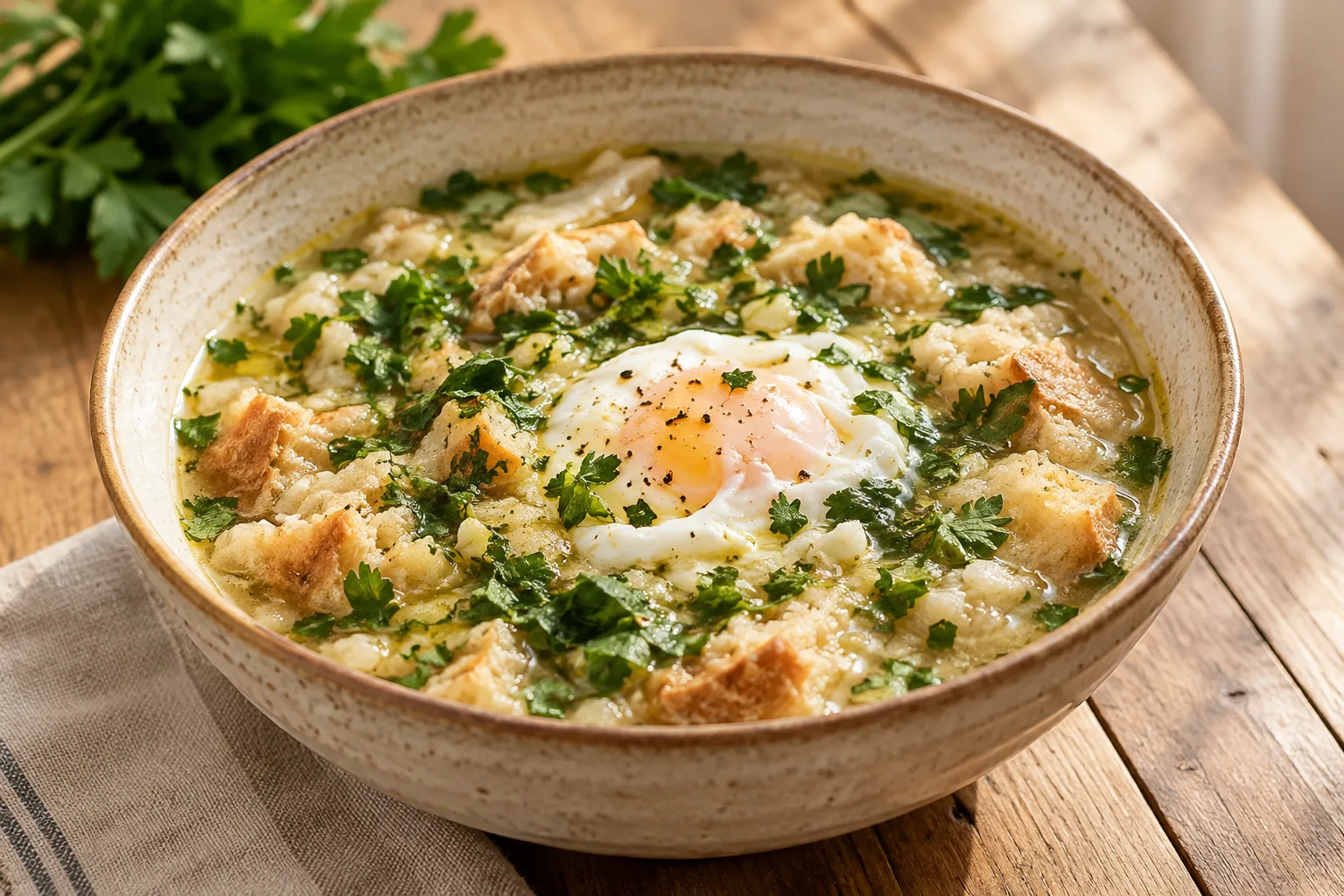
Use rustic bread when you want sliced bread to serve with a meal or to accompany toppings and spreads. It can be offered at the table, toasted, or used as a base for savory or sweet ingredients. It may also accompany soup or stew, although the crumb and crust differ from loaf to loaf. If a dish depends on a specific texture, such as a very soft or mild bread, check that the loaf you buy is suitable rather than relying on the word “rustic.” Check the label or ask the seller about ingredients and allergens when those details matter.
How to use it
Slice the loaf to the thickness you need and serve it as it is, with accompaniments, or toast it for a drier, crisper surface. Use slices as a base for spreads or other toppings, or serve them alongside soup or stew. For a recipe that calls for pieces of bread, cut only what you need and adjust the size to suit the dish. Moisture, crust, and crumb vary with the bread, so the result of toasting or reheating will not be identical for every loaf. If serving someone with an allergy or intolerance, verify the ingredients and allergen information on the packaging or with the seller; do not assume a loaf is suitable just because it is called rustic.
Flavour and texture
Flavor and texture vary with the cereals, fermentation, and other ingredients used. A loaf may have a pronounced crust and a firm or more open crumb, but “rustic” does not guarantee any particular feature. Toasting generally makes the surface drier and crisper.
How to choose it
Choose a loaf with the shape and texture you want, and check that the product is clearly identified. If you need to avoid an ingredient, read the ingredient and allergen information on packaged bread. For unpackaged bread, ask the seller how to access this information. Do not assume that all rustic loaves use the same recipe.
Storage
Follow any storage instructions on the package. Requirements can depend on the product and how it is sold, so there is no universal storage period that applies to every loaf here. If the bread is unpackaged and you are unsure how to store it, ask the seller and do not eat bread that shows obvious signs of spoilage.
Substitutions
Another loaf or a bread made with different cereals can substitute when a recipe simply calls for bread. Its crumb, crust, and flavor may differ. If the dish relies on a particular texture, choose a closer match and check the substitute’s ingredients.
Common mistakes
Do not assume “rustic” means a fixed recipe or that the bread is free of allergens; ingredients vary by product. Also consider the texture a dish needs when substituting one loaf for another, and do not ignore the package’s storage instructions.
Safety and allergens
Check the ingredient and allergen information, especially if you have an allergy or intolerance; recipes vary. For packaged bread, follow the storage and use instructions on the label. For unpackaged bread, ask the seller for verifiable allergen information.
Culinary uses
- Accompaniment for meals
- Base for open sandwiches, toast, and other toppings
Recommended techniques
- Slicing
- Toasting
- Baking or reheating
Pairs well with
- Soups and stews
- Cheese, spreads, or savory toppings
Frequently asked questions
Does rustic bread have a standard recipe?
No. The name can describe a style, but the cereals and other ingredients vary by product. Check the label or ask the bakery.
Can rustic bread be toasted?
Yes. Slice and toast it for a drier, crisper surface; the result depends on the loaf.
How can I find out whether it contains an allergen?
Check the package’s ingredient and allergen information. If it is unpackaged, ask the seller rather than relying on the product name.
Ingredient allergens
Allergen listDepends on the product
-
Cereals containing gluten
Rustic bread
-
Lupin
Rustic bread
-
Sesame
Rustic bread
Sources and review
Automatically researched, cross-checked and validated content. Sources consulted:
- En el etiquetado alimentario hay algunas menciones que son obligatorias eletiquetadocuentamucho.aesan.gob.es/obligatoria.html
- Pan - Wikipedia, la enciclopedia libre es.wikipedia.org/wiki/Pan
- Client Challenge doi.org/10.2307/jj.27939689.16
- Agencia Española de Seguridad Alimentaria y Nutrición www.aesan.gob.es/
- Kimchi casero: guía científica para una fermentación segura | CAES Field Report fieldreport.caes.uga.edu/publications/C1362-SP/kimchi-casero/
- USDA National Nutrient Database for Standard ... courses.washington.edu/bonephys/calist.pdf
- Entrees - Kendall Reagan Nutrition Center www.chhs.colostate.edu/krnc/recipes/entrees/
- - YouTube www.youtube.com/watch?v=f3KDD165M-U
- Historia del Pan - CEOPPAN www.ceoppan.es/historia.html
- Managing allergens | Food Standards Scotland www.foodstandards.gov.scot/business-guidance/running-a-food-business/managing-allergens