- Category
- Herbs and spices
- State
- Dry
- Usual unit
- teaspoon
What it is
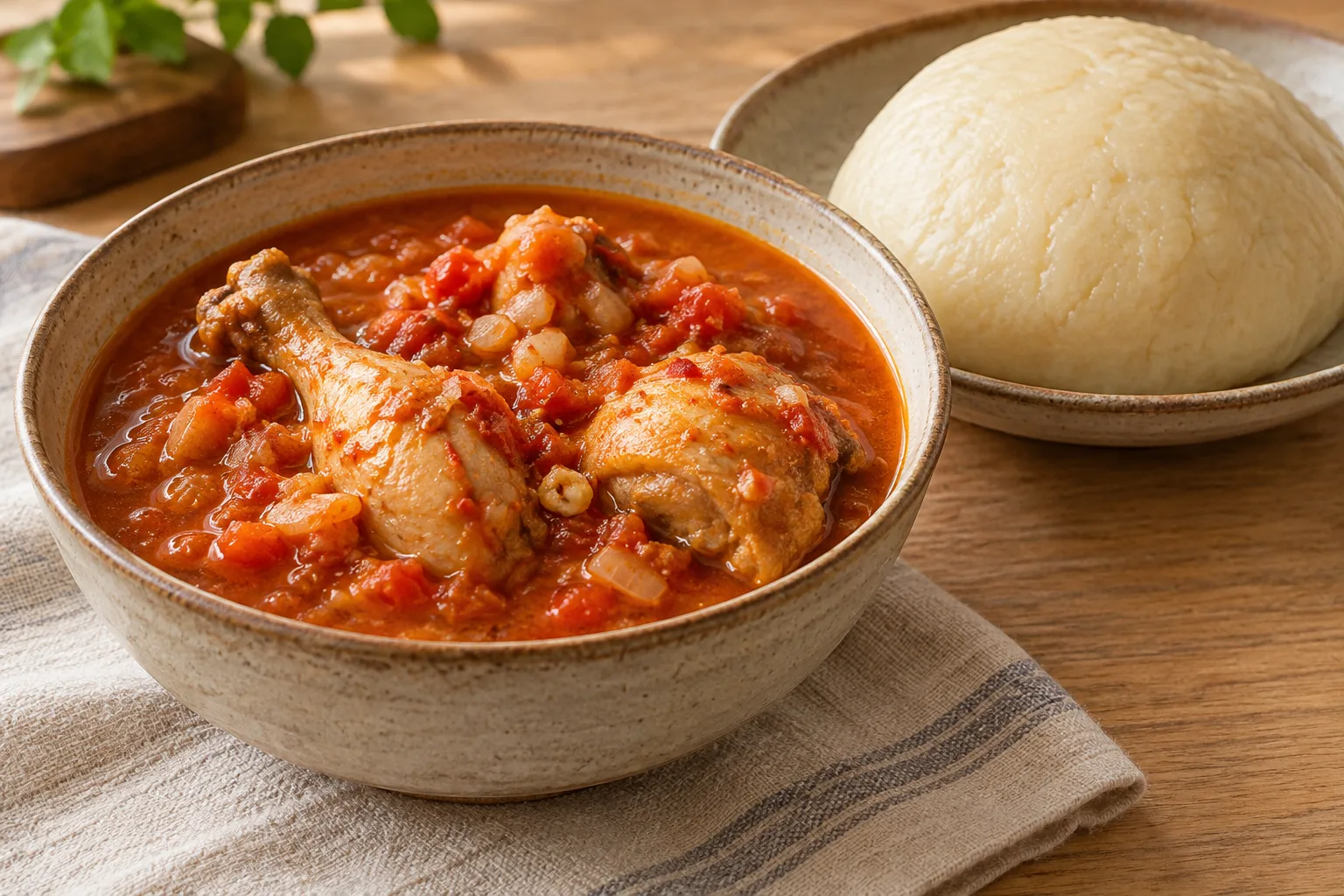
Salt for fufu is ordinary culinary salt used, if desired, to season the dough. It does not define fufu by itself: this preparation is made from starchy foods such as cassava, yam, or plantain, and recipes vary. Some formulas add a little salt while mixing; others leave fufu unseasoned because it is commonly served with strongly flavored soups, stews, or sauces. So “salt for fufu” describes a use, not a special type of salt. Choose a cooking salt suitable for your recipe, and consider the flavor of the accompanying dish before deciding whether to add it.
When to use it
Add salt if you want the dough itself to have some seasoning, especially when the accompaniment is mild or the recipe calls for it. Leave it out if you prefer a neutral base or if the soup, stew, or sauce already brings enough flavor. Practice varies between preparations: some recipes treat salt as optional, while others keep fufu without added salt. Decide based on the recipe and the whole meal, not simply on the ingredient’s name.
How to use it
If you choose to use salt, add it gradually to the fufu mixture and stir or work the dough so it is evenly distributed. In a recipe made from fresh ingredients, it can be added during blending; for other preparations, follow the timing in the recipe. There is no single amount that suits every version: the starch base, batch size, and accompaniments differ. Taste carefully and remember that the soup or stew may also be seasoned. If the dough is already cooked, avoid adding dry salt in one spot; mix it thoroughly to prevent unevenly seasoned patches.
Flavour and texture
Salt adds a salty taste and can enhance or balance other flavors; it does not by itself create fufu’s characteristic texture. Texture depends mainly on the starchy ingredients and how they are cooked and worked. Fine salt usually mixes in readily, while larger crystals may take longer to distribute if added directly. The final impression also depends on the amount used and how strongly the accompanying dish is seasoned.
How to choose it
There is no need to look for a product labeled specifically for fufu: ordinary culinary salt works for seasoning it. Choose a form that is easy for you to measure and mix, and check the package to identify the type of salt. If using larger crystals, make sure they are evenly distributed through the dough. Because salt is optional and recipes vary, there is no need to buy a special quantity just for this use.
Storage
Store salt according to the package directions and close the container after use. Take out only what you need with a clean utensil, and do not return salt that has touched food or a damp utensil to the package. Check the product label for any specific storage guidance.
Substitutions
You can omit salt and serve the fufu unseasoned, especially if you want a neutral base or the accompanying dish is already flavorful. You can also use another culinary salt you have on hand, adjusting the amount to taste. Salt types can differ in crystal size and texture, so mix them in thoroughly rather than assuming an identical measure will give exactly the same intensity.
Common mistakes
Adding salt without considering the soup or stew can make the whole meal taste too salty. Another mistake is tipping it in all at once without mixing thoroughly, which can leave unevenly seasoned areas. Since salt is optional and fufu varies by ingredients, there is no universal measure: start with a little, mix, and taste before adding more.
Safety and allergens
Use culinary salt in good condition and follow the package directions. Add it in moderation, particularly when the accompanying dish is also seasoned.
Culinary uses
- Seasoning for fufu
- Optional flavor enhancer
Recommended techniques
- Stir into the fufu mixture before cooking
- Season gradually and taste as you go
Pairs well with
- Fufu served with soup
- Fufu served with a savory stew or sauce
Frequently asked questions
Is salt essential in fufu?
No. Salt is optional: some recipes include it, while others serve fufu unseasoned.
When should salt be added?
If the recipe includes it, salt can be mixed into the fufu mixture during preparation. Follow the instructions for the version you are making.
What kind of salt works for fufu?
Ordinary culinary salt is suitable; a special variety is not required. Adjust the amount to taste and to the accompanying dish.
Ingredient allergens
Allergen listThere are no verified associations for these ingredients yet.
Sources and review
Automatically researched, cross-checked and validated content. Sources consulted:
- Client Challenge doi.org/10.2307/j.ctvndv9t9.22
- 15 tipos de sal para dar variedad a nuestros platos: cómo elegirlas y usarlas en la cocina www.directoalpaladar.com/ingredientes-y-alimentos/15-tipos-sal-para-dar-variedad-a-nuestros-…
- Sampling for Microbiological Analysis: Principles and Specific ... seafood.oregonstate.edu/sites/agscid7/files/snic/sampling-for-microbiological-analysis-princ…
- Fufu, la receta africana que ya se ha hecho internacional bonviveur.com/es/recetas/fufu
- Qué es el fufu africano, de dónde procede y cómo prepararlo | Gastronosfera www.gastronosfera.com/tendencias/que-es-el-fufu-africano-de-donde-procede-y-como-prepararlo
- - YouTube www.youtube.com/watch?v=gn_MMpQTQXI
- Amjambo Africa! (March 2022) digitalcommons.usm.maine.edu/cgi/viewcontent.cgi?article=1046&context=samgen_amjambo
- Fufu - Wikipedia, la enciclopedia libre es.wikipedia.org/wiki/Fufu
- Fufú togolés: Datos fascinantes al descubierto | Remitly www.remitly.com/blog/es/cultura-y-estilo-de-vida/platosnacional-hechos-fufu-fascinantes-togo…
- The Raw and the Stolen web.stanford.edu/~jhj1/papers/wrangham_etal1999.pdf
- Intergenerational Differences in Dietary Acculturation ... academicworks.cuny.edu/cgi/viewcontent.cgi?article=1310&context=bc_pubs
- Cassava Bacterial Blight and Postharvest Physiological ... epar.evans.uw.edu/wp-content/uploads/2024/08/EPAR_UW_Request_298_CBB-PPD-Production-Losses-a…
- Plato de fufu I Origen y receta en línea del plato africano foufou www.safinel.fr/es/fufu-plato-africano/