- Category
- Herbs and spices
- State
- Dry
- Usual unit
- teaspoon
What it is
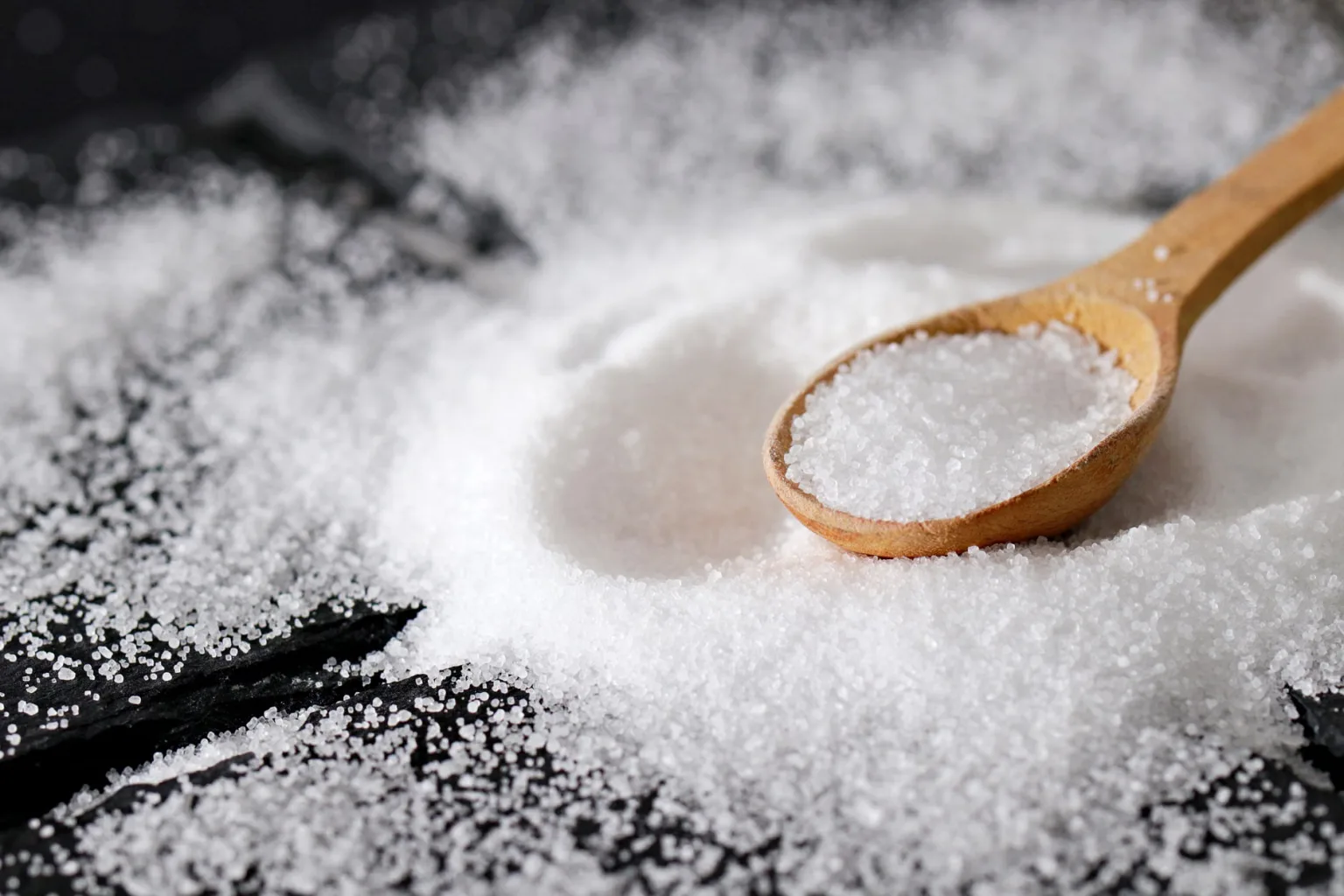
Salt for pork is culinary salt used to season pork cuts and other savory preparations. Ordinary table salt is often finely crystalline, while other culinary salts have larger grains and different textures. It is a mineral seasoning: in this profile, its role is to provide saltiness and complement the flavor of food, not to replace cooking instructions or turn meat into a cured product by itself. The package label matters: ordinary salt and specialist curing mixtures are not necessarily interchangeable. If a product is labeled for curing, use it only with a reliable recipe and follow its directions exactly.
When to use it
Use it when seasoning pork before or during everyday cooking, or when adjusting the seasoning of stews and other savory dishes. Start with a small amount and taste before adding more, especially if the meat, broth, or accompaniments already contain salt. Fine crystals are easy to distribute; coarse crystals have a different texture and may dissolve differently. For curing or preserving meat, do not improvise with ordinary salt or infer amounts from a seasoning recipe: follow a tested formula and the directions for the specific product.
How to use it
First check that you have culinary seasoning salt rather than a curing mixture that requires special directions. Sprinkle a small, even amount over the meat, or add it gradually to a stew or sauce; cook as directed by the recipe and taste before adding more. Consider crystal size: fine salt spreads readily, while larger crystals change the texture and may take longer to dissolve. Do not replace curing salt with ordinary salt, or use ordinary salt as though it were a curing mixture. Keep hands, boards, and utensils clean when handling raw meat, and wash them before using them with ready-to-eat foods.
Flavour and texture
Salt brings a salty taste and can enhance or balance other flavors in a dish. In cooking, differences among salt varieties are most apparent in refinement and in the size and shape of their crystals; fine salt feels different from coarse salt. Grain texture also affects how the salt spreads over meat and the finish it gives. Do not mistake pink table salt for curing salt because of its color: always check the product name and label directions.
How to choose it
Choose a product clearly identified as culinary salt if you need it for seasoning. Read the package and distinguish ordinary salt from curing salts, which may contain other components and require specific directions. Choose fine or coarse grains according to the texture and application you prefer; a product name alone does not guarantee that two salts are used in the same way. For a product intended to cure meat, buy a mixture labeled for that purpose and follow its specified recipe or instructions.
Storage
Check the package storage directions and keep the container closed when not in use. Prevent the salt from mixing with other ingredients or with utensils that have touched raw meat; use a clean, dry spoon to dispense it. If it is a curing mixture or flavored salt, keep its label and follow the manufacturer's specific instructions. This profile does not establish a universal shelf life: check any date or storage condition printed on the package.
Substitutions
Fine table salt, coarse culinary salt, or sea salt can be used as alternatives for seasoning, but their crystals differ in size and texture. Do not assume that a teaspoon of one variety is exactly equivalent to the same measure of another: add gradually and adjust to taste. Curing salts are not direct substitutes for ordinary salt, and ordinary salt is not a substitute for curing salt; curing meat requires an appropriate formula.
Common mistakes
Do not confuse ordinary seasoning salt with a curing mixture or improvise a curing amount. Another common error is adding a lot at once without considering salt already present in other ingredients. Fine and coarse varieties have different textures, so do not assume they behave identically in every recipe. Keep utensils that have touched raw meat separate from those used for ready-to-eat food.
Safety and allergens
Everyday salting does not replace safe cooking or a validated preservation process. To cure meat, use a tested recipe and the exact amounts and instructions for the specific product; some curing salts contain nitrites or nitrates that require precise use. Handle raw meat with clean hands and utensils, and wash surfaces and tools after contact.
Culinary uses
- Seasoning for pork and other meats
- Flavor enhancer in savory dishes
Recommended techniques
- Season meat before cooking
- Add gradually during cooking and taste
Pairs well with
- Pork
- Garlic and other savory seasonings
Frequently asked questions
Can ordinary salt cure pork?
Do not use it as though it were a curing mixture. Curing requires a validated formula and precise amounts; check the label and follow the specific product directions.
What is the difference between fine and coarse salt?
The main difference is crystal size and texture, which affect how the salt spreads. Add it gradually when changing varieties and adjust to taste.
When should I salt pork?
You can season it before or during cooking. Start with a small amount and taste before adding more, especially when other ingredients are already salty.
Ingredient allergens
Allergen listThere are no verified associations for these ingredients yet.
Sources and review
Automatically researched, cross-checked and validated content. Sources consulted:
- En el etiquetado alimentario hay algunas menciones que son obligatorias eletiquetadocuentamucho.aesan.gob.es/obligatoria.html
- The Essential Glossary of Cooking Terms for the Culinary Arts - Escoffier www.escoffier.edu/blog/culinary-arts/the-essential-glossary-of-cooking-terms-for-the-culinar…
- 15 tipos de sal para dar variedad a nuestros platos: cómo elegirlas y usarlas en la cocina www.directoalpaladar.com/ingredientes-y-alimentos/15-tipos-sal-para-dar-variedad-a-nuestros-…
- Nutrition After Your Transplant - Health Online healthonline.washington.edu/sites/default/files/record_pdfs/Nutrition-After-Your-Transplant-…
- Qué es eso llamado epistemología, para qué sirve, por qué es inexcusable para la universidad y para la paz | Reencuentro. Análisis de problemas universitarios doi.org/10.24275/uamxoc-dcsh/reencuentro/202386-14
- Vamos a Conservar Alimentos: Carnes extension.psu.edu/vamos-a-conservar-alimentos-carnes/
- La diabetes y la alimentación: Cómo planificar y cocinar comidas sabrosas y saludables | CAES Field Report fieldreport.caes.uga.edu/publications/C1364-08-SP/la-diabetes-y-la-alimentacion/
- Los tipos de sal y sus usos en la cocina | Recetas Nestlé www.recetasnestle.com.mx/escuela-sabor/ingredientes/15-clases-de-sal
- ALIMENTOS. Denominaciones sobre carne picada o ... servicio.mapa.gob.es/ricalwebwai/Fichero.aspx?id=ES&idConsulta=156
- Making cured bacon at home | Servicio de Extensión de OSU extension.oregonstate.edu/es/catalog/pnw-784-making-cured-bacon-home
- Para la ciudadanía www.aesan.gob.es/para-la-ciudadania
- Tanzania Food Composition Tables | The Nutrition Source nutritionsource.hsph.harvard.edu/wp-content/uploads/2023/09/Tanzania-Food-Composition-Tables…