- Category
- Herbs and spices
- State
- Dry
- Usual unit
- teaspoon
What it is
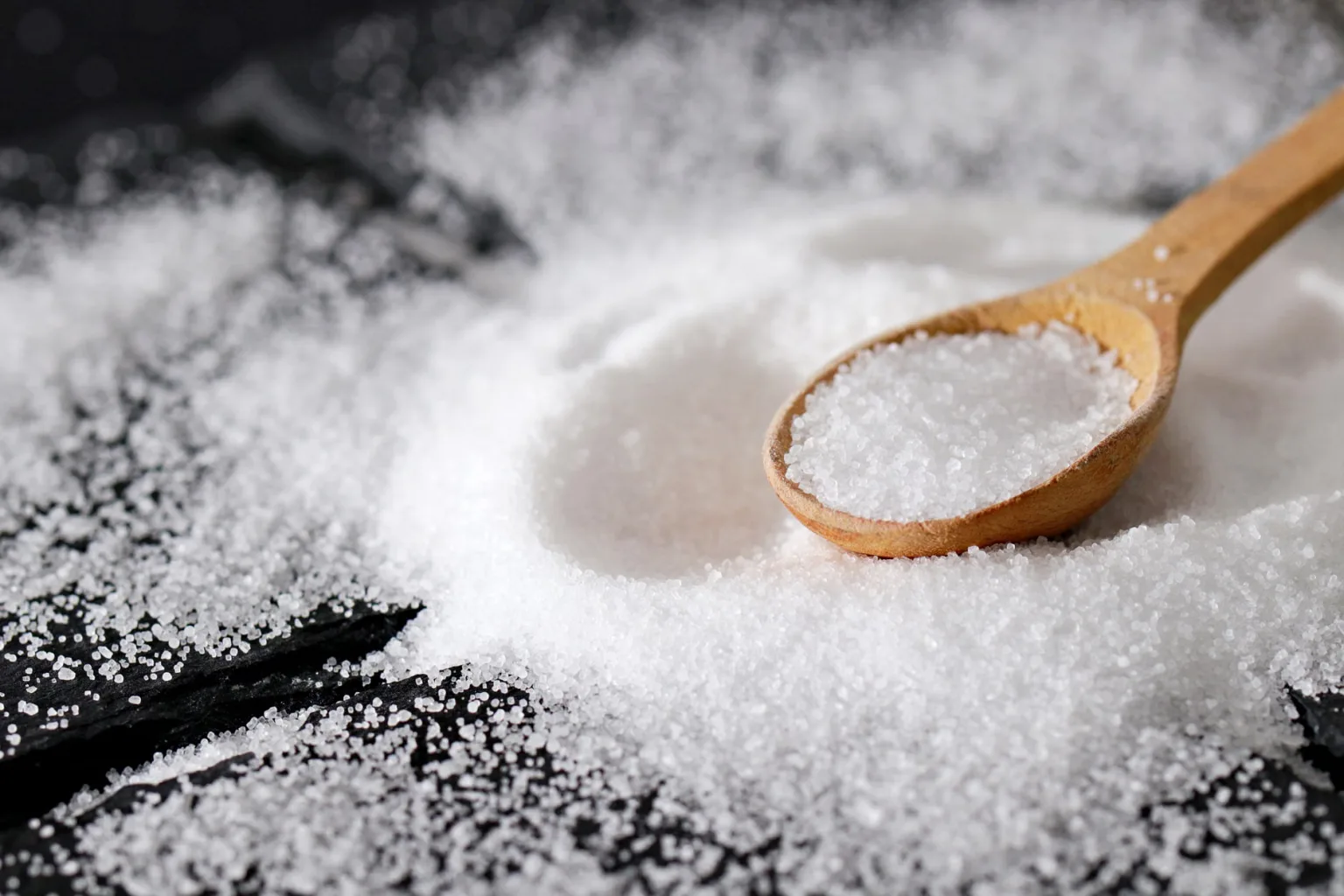
Salt for soup is edible salt used as a seasoning. Cooking salt consists mainly of sodium chloride and comes in different crystal sizes, from fine grains to coarse crystals and flakes. Fine salt usually disperses and dissolves readily in soup; larger crystals may need more time or stirring to dissolve fully. The name does not necessarily describe a special variety: it can simply mean the everyday table salt used to season soups and broths.
When to use it
Use it when a soup needs more saltiness or when you want to balance the flavors of its ingredients. Add a little early when making broth from scratch, while leaving room to adjust during cooking or at the end. If you use prepared broth, preserved ingredients, or any component that is already salted, taste first and wait before adding more. As liquid evaporates and the soup becomes more concentrated, its saltiness can become more noticeable.
How to use it
Start with a small amount and stir so the salt spreads through the liquid. Taste before adding another pinch; if the crystals are large, give them time to dissolve and stir again before judging the flavor. When the broth or other ingredients already contain salt, wait until you have tasted the combined soup before seasoning. To correct an underseasoned soup, add small amounts, stir, and taste again. Do not assume all crystal sizes behave alike when measured by volume: a spoonful of coarse salt does not disperse or dissolve like a spoonful of fine salt. For pickling and preserving, do not replace the precise instructions in a safe, reliable recipe with an improvised amount of salt.
Flavour and texture
Salt adds a salty taste; alongside other ingredients, it can make the flavors in soup seem more distinct and balanced. On its own, it does not have a complex flavor that reliably distinguishes every variety. Texture depends on the form: fine salt blends in quickly, while coarse crystals dissolve more slowly and can remain noticeable if added just before serving.
How to choose it
Choose food-grade salt in a crystal size that suits the job. Fine salt is convenient for soup because it spreads and dissolves easily; coarse salt can also be used if you let it dissolve before checking the seasoning. Read the label to see whether the salt is iodized or contains other added ingredients. For everyday soup, there is no need to choose a special salt just for its appearance.
Storage
Store salt according to the package directions and keep it from getting wet or contaminated by utensils used with other foods. For accurate seasoning, keep it in its labeled container and use a clean, dry spoon. The available information does not establish a specific storage period for this salt; follow any particular instructions provided by the manufacturer.
Substitutions
Fine table salt can replace another fine salt when seasoning soup. Sea salt or coarse salt can also be used, but add it gradually and allow it to dissolve before tasting. Crystal size affects how easily salt disperses and dissolves, so do not swap measured volumes without checking the result. If the broth is already salty, you may not need to add any.
Common mistakes
Adding a lot of salt at once, seasoning again without tasting, and judging the flavor before the crystals have dissolved are common mistakes. It is also easy to oversalt when broth, a preserved ingredient, or another component already contributes salt. Do not assume a teaspoon of fine salt behaves just like a teaspoon of coarse salt.
Safety and allergens
Use salt intended for food and follow a reliable, measured recipe for pickling or preserving; salt alone does not guarantee safe preservation. If you are home-canning soup, follow a tested process specifically for that food rather than improvising the preservation method.
Culinary uses
- Seasoning
- Flavor enhancer
- Finishing ingredient
Recommended techniques
- Season gradually and taste as you cook
- Dissolve fine salt into soup or broth
- Add a final pinch to adjust seasoning
Pairs well with
- Vegetable soups and broths
- Meat or fish soups and broths
- Herbs such as thyme, bay, and rosemary
Frequently asked questions
When should I add salt to soup?
You can begin with a small amount and adjust during cooking or at the end. Taste first if the broth or any ingredient may already contain salt.
Can I use coarse salt in soup?
Yes. Let it dissolve fully, stir, and taste before adding more; larger crystals take longer to disperse.
Does sea salt season soup differently?
The practical result depends largely on crystal size and how well the salt dissolves. Add it gradually and adjust to taste.
Ingredient allergens
Allergen listThere are no verified associations for these ingredients yet.
Sources and review
Automatically researched, cross-checked and validated content. Sources consulted:
- The Essential Glossary of Cooking Terms for the Culinary Arts - Escoffier www.escoffier.edu/blog/culinary-arts/the-essential-glossary-of-cooking-terms-for-the-culinar…
- 15 tipos de sal para dar variedad a nuestros platos: cómo elegirlas y usarlas en la cocina www.directoalpaladar.com/ingredientes-y-alimentos/15-tipos-sal-para-dar-variedad-a-nuestros-…
- Sal: tipos, usos y cómo salar bien - CocinoPedia.com cocinopedia.com/enciclopedia-gastronomica/sal-tipos-como-salar/
- Sabores de nuestras tierras/recetas - 2024 | Agricultura y Recursos Naturales ucanr.edu/site/agricultura-y-recursos-naturales/sabores-de-nuestras-tierras-recetas-2024
- Eating Spain: National Cuisine Since 1900 - UKnowledge uknowledge.uky.edu/context/hisp_etds/article/1031/viewcontent/Eating_Spain_National_Cuisine_…
- Qué es eso llamado epistemología, para qué sirve, por qué es inexcusable para la universidad y para la paz | Reencuentro. Análisis de problemas universitarios doi.org/10.24275/uamxoc-dcsh/reencuentro/202386-14
- Los tipos de sal y sus usos en la cocina | Recetas Nestlé www.recetasnestle.com.mx/escuela-sabor/ingredientes/15-clases-de-sal
- Vamos a Conservar Alimentos: Sopas extension.psu.edu/vamos-a-conservar-alimentos-sopas/
- Para la ciudadanía www.aesan.gob.es/para-la-ciudadania
- Seasonal Produce Handouts | UNL Food | Nebraska food.unl.edu/seasonal-produce-handouts/?page=2
- Sauerkraut - National Center for Home Food Preservation nchfp.uga.edu/how/ferment/sauerkraut/
- Sopas de sobre: cuidado con la sal | Consumer www.consumer.es/alimentacion/sopas-de-sobre-cuidado-con-la-sal.html
- ¿Cómo usar sal del mar para potenciar el sabor de sopas y caldos caser salroche.com/blogs/news/como-usar-sal-del-mar-para-potenciar-el-sabor-de-sopas-y-caldos-case…