- Category
- Fish and seafood
- State
- Preserved
- Usual unit
- unit
What it is
Salt herring is herring preserved by salting. It may be sold whole, headless, or in thick fillets, and products can differ in both format and saltiness. Some herring is also described as cured in brine for a few hours, so the name does not guarantee a uniform level of salt. The product may be made from fresh or frozen fish. Do not automatically treat it as the same thing as smoked or marinated herring: these are different preparations and may have different flavors and uses. Before preparing it, check the form you have and follow the product’s consumption instructions. Saltiness can affect the balance of a dish, so taste a small portion before adding salt to other ingredients.
When to use it
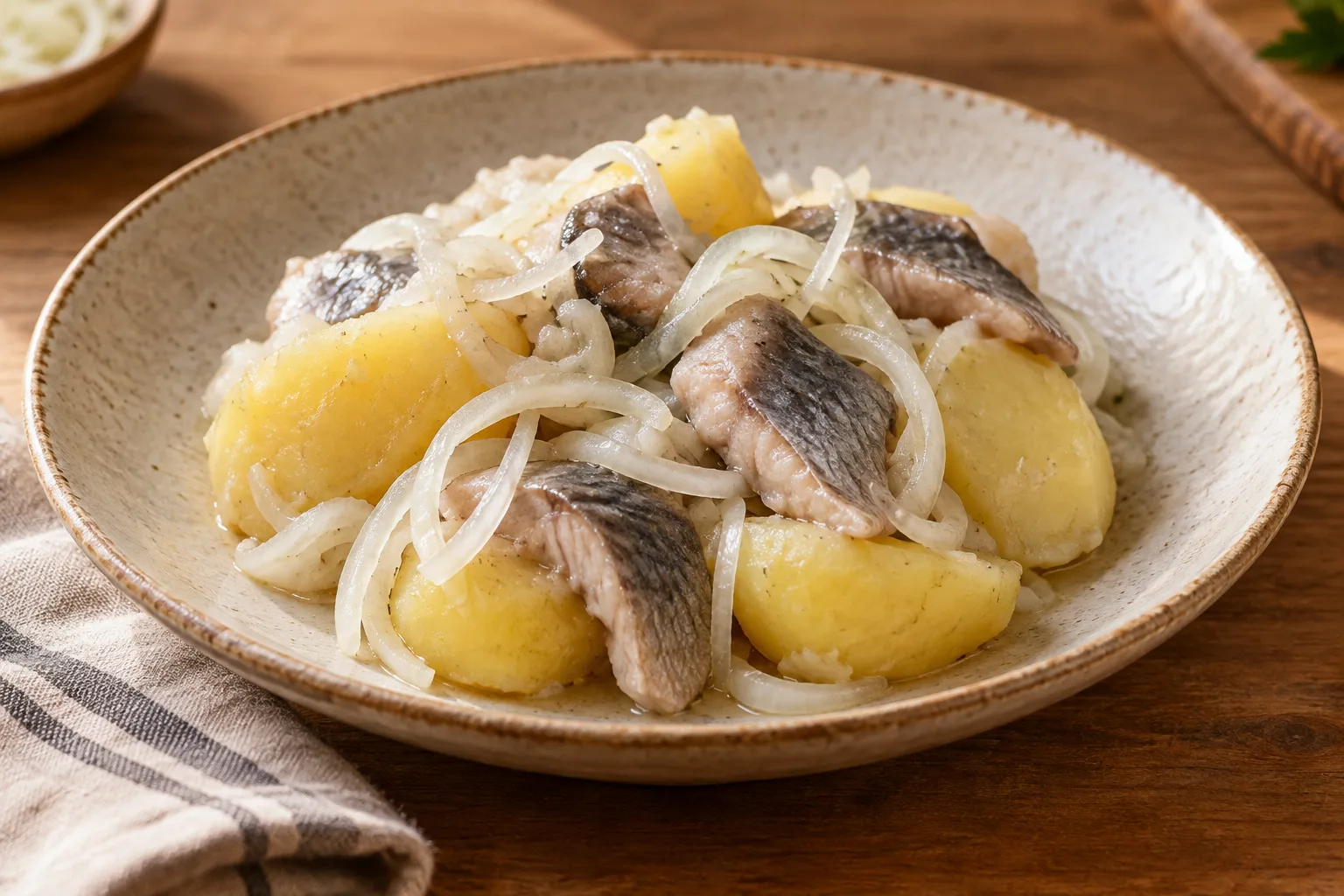
Use it when you want a pronounced salty, marine flavor in an appetizer or cold dish. It can be served in portions with onion or alongside bread, simple combinations that let its character come through. It can also be added to a cold salad or platter if the product’s form is suitable. Before using it in a recipe, check its saltiness and preparation instructions: some herring is eaten after washing, but do not assume every product needs the same treatment. Taste the combination before seasoning the other ingredients, since the fish may contribute considerable salt to the dish.
How to use it
Start by identifying the format and checking the product instructions. Available information describes herring sold whole, headless, or in thick fillets, and notes that some is eaten raw after washing. Do not extend that guidance to every product; follow the specific instructions for the one you bought. If washing is indicated, rinse it before serving and drain it, then cut it into manageable portions. A simple way to serve it is with onion and bread, or as part of a cold dish. Taste a piece before adding salt to the recipe and adjust the other ingredients to suit. Marinated and smoked herring are different preparations, so do not treat their instructions as interchangeable with those for salt herring.
Flavour and texture
Salt herring has a salty, marine flavor whose intensity can vary from product to product. The format also affects the eating experience: it may be sold whole, headless, or in thick fillets. Onion provides an aromatic contrast, while bread is a simple base for serving. Do not assume salt herring will taste the same as smoked or marinated herring, since these are different preparations. Taste a small portion before combining it with other ingredients so you can judge its saltiness and avoid over-seasoning the rest of the dish.
How to choose it
Choose a format that suits your planned use and check whether the herring is sold whole, headless, or as thick fillets. Read the product information to distinguish salted herring from brine-cured, smoked, or marinated herring; these preparations are not interchangeable. Check the preparation and consumption instructions, and do not infer the salt level from the name alone. If you want a product to serve without cooking, confirm that its information explains how it should be prepared and eaten. These distinctions help you select a suitable product for a salad, appetizer, or other cold dish.
Storage
There is no single storage instruction that applies to every form of salt herring. Check the specific instructions supplied with the product, and do not assume that salting alone determines how it should be stored or how long it will keep. If the available information does not explain storage after opening, ask the seller or manufacturer rather than guessing. Keep storage guidance separate from preparation instructions: washing the fish before serving does not determine how it should be stored. Do not rely on smell alone to decide whether fish is suitable to eat.
Substitutions
Salted or marinated mackerel and sardines can work as alternatives in some fish dishes, but they do not reproduce herring’s exact flavor or texture. Adjust the amount to the saltiness of the alternative and taste before seasoning. If a recipe depends on herring’s distinctive profile, the substitution will change the result. Also check that the alternative’s preparation instructions suit your intended use; do not automatically transfer directions from one product to another.
Common mistakes
Do not assume that every product called salt herring has the same saltiness, format, or preparation. Avoid washing or serving the fish without first checking the specific product instructions. Another mistake is salting the recipe before tasting the herring with the other ingredients. Do not confuse salt herring with smoked or marinated herring either: these are different preparations, and their consumption instructions may vary.
Safety and allergens
The available information describes herring eaten raw after washing, but it does not establish that this applies to every product. Follow the specific instructions for the herring you bought, and do not infer that it is suitable to eat without cooking solely because it is salted. If the product information does not explain how to prepare or consume it, ask the seller or manufacturer.
Culinary uses
- Ingrediente salado para aperitivos y platos fríos
- Aporte de sabor marino intenso en ensaladas y preparaciones con pan
Recommended techniques
- Enjuagar antes de servir cuando así lo indique el producto
- Cortar en porciones y servir frío
Pairs well with
- Cebolla
- Pan
Frequently asked questions
Does salt herring need to be rinsed?
It depends on the product. Available information describes herring eaten after washing, but follow the instructions for the specific product rather than assuming every one needs the same treatment.
Is salt herring always eaten raw?
Do not assume so. Check the product’s consumption instructions; salting alone does not tell you how it should be prepared.
What can I serve with salt herring?
It can be served in portions with onion or alongside bread. Taste its saltiness before adding salt to other ingredients.
Ingredient allergens
Allergen listThere are no verified associations for these ingredients yet.
Sources and review
Automatically researched, cross-checked and validated content. Sources consulted:
- Client Challenge doi.org/10.2307/jj.27939689.16
- Migas - Wikipedia, la enciclopedia libre es.wikipedia.org/wiki/Migas
- ¿Por qué el mar es salado? doi.org/10.64628/aao.gqqdwagtm
- Historia de la sal - Wikipedia, la enciclopedia libre es.wikipedia.org/wiki/Historia_de_la_sal
- Arenque salado o ahumado www.mapa.gob.es/ca/ministerio/servicios/informacion/arenque%20salado_tcm34-102830.pdf
- - YouTube www.youtube.com/watch?v=mTtQ7dF0j2M
- Información sobre el arenque en conserva alemán - Kommen Blog kommen.es/blog/informacion-arenque-en-conserva-aleman/
- COMO PREPARAR MARINADOS: TIEMPOS, RECIPIENTES Y TÉCNICAS www.alambique.com/blog/marinados-tecnicas-tiempos-n777?srsltid=AYCX9vLITqNpEA_6naVWPyilse-7V…
- Receta: Arenques marinados, tres variaciones y tres recetas www.evamuerdelamanzana.com/receta-arenques-marinados-tres-variaciones/
- Consejos para Presentar y Maridar Huevas de Pescado – Spherika caviarspherika.com/blogs/blogs/consejos-para-presentar-y-maridar-huevas-de-pescado?srsltid=A…
- Food allergen labelling and information requirements technical guidance - GOV.UK www.gov.uk/government/publications/food-allergen-labelling-and-information-requirements-tech…