- Category
- Vegetables
- State
- Preserved
- Usual unit
- g
What it is
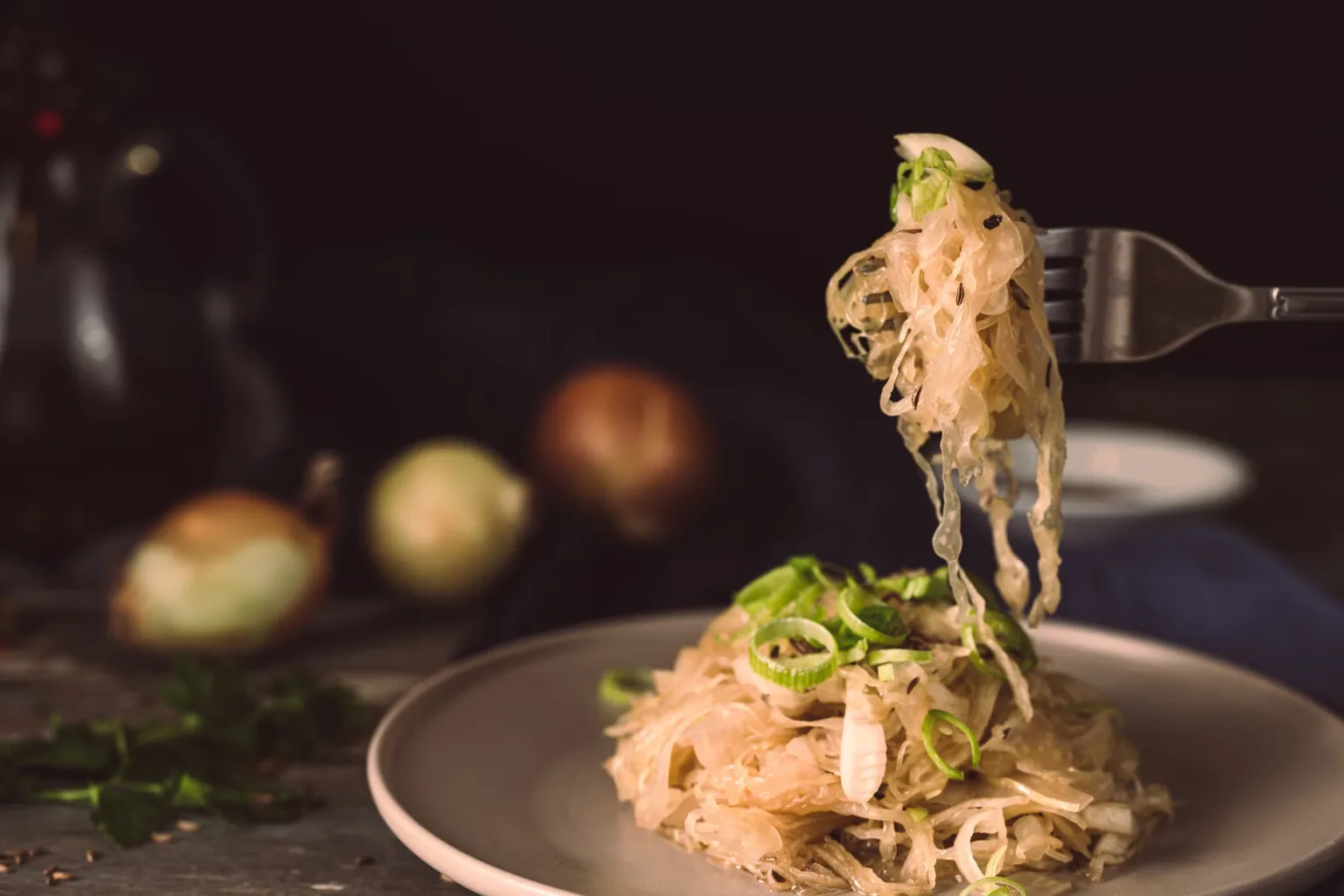
Sauerkraut is a preparation of finely cut cabbage fermented with salt. During fermentation, cabbage releases juice that forms a brine, and microorganisms transform some of its sugars, developing its characteristic tangy flavor. It is sold refrigerated or packaged; production methods and later processing vary, so some products retain active fermentation while others are heated to stop it. Sauerkraut can be made from green or red cabbage, and some versions include small amounts of other vegetables or seasonings. It is not simply fresh cabbage dressed with vinegar: fermentation is what defines the product.
When to use it
Use sauerkraut when you want to add a tangy, savory contrast to robust foods such as pork, sausages, potatoes, or legumes. It can also bring freshness and texture to sandwiches, salads, and grain bowls. In soups and stews, add it to blend its acidity into the dish; for a brighter flavor and firmer texture, stir it in near the end or serve it separately. Packaged sauerkraut is available throughout the year, so its use need not be limited to a particular season. Adjust the amount to suit its acidity and saltiness.
How to use it
Taste a small amount first to assess the product’s acidity and saltiness. To serve it as a side, drain it if you want a less wet result and place it alongside meat, potatoes, or legumes; you can also combine it with apple, onion, herbs, or a mild dressing. In sandwiches, use a moderate layer to add contrast without making the bread soggy. For soups and stews, drain it as desired and add it during cooking or near the end: heat softens its texture and flavor. Refrigerated products may differ from heat-treated packaged versions. Follow the package directions and store opened sauerkraut as stated on the label.
Flavour and texture
Its flavor is tangy, savory, and distinctly fermented, with nuances that depend on the cabbage, fermentation, and any added ingredients. The texture may be firm and crisp or softer, and the cabbage is usually cut into moist shreds with some of its juice. Heating and extended cooking tend to soften both the texture and the flavor. Color also varies; sauerkraut made from red cabbage may be purple-toned.
How to choose it
Choose an intact package and check the label to see whether the product is refrigerated, pasteurized, and what ingredients it contains. Sauerkraut may contain only cabbage and salt, or include seasonings and other vegetables; compare options based on the flavor and use you want. Check the date and the storage instructions, and avoid damaged or leaking packages. Do not assume all products have the same texture, acidity, or fermentation activity.
Storage
Store unopened sauerkraut according to its label, since requirements can vary with packaging and processing. Once opened, follow the manufacturer’s directions and use clean utensils when serving it. If the product is labeled for refrigeration, keep it chilled and tightly closed. No universal storage period can be given here: consult the package and discard the product if it shows signs of spoilage or if its appearance, smell, or packaging gives you concern.
Substitutions
Another fermented cabbage can replace sauerkraut in dishes where a tangy flavor is wanted, though acidity, cut, and seasonings may differ. For a quick side, fresh cabbage sautéed with a little vinegar adds acidity but does not reproduce the flavor or texture of fermented cabbage. Taste the substitute and adjust the salt and acid elsewhere in the recipe.
Common mistakes
Adding a large amount of sauerkraut without tasting it first can make a dish too tangy or salty. Do not treat it as interchangeable with fresh cabbage dressed with vinegar: its fermented profile is different. If you want to preserve a crisp texture, avoid prolonged cooking; if you want the flavor to meld, add it earlier. Draining or rinsing it also changes its intensity and moisture.
Safety and allergens
When making sauerkraut at home, use a tested preservation recipe and follow its proportions exactly; changing the amount of salt can make the food unsafe. Keep the cabbage submerged in liquid during fermentation, and use clean hands, utensils, and containers. For a commercial product, follow the storage directions on the label.
Culinary uses
- Acompañamiento ácido para platos sustanciosos
- Ingrediente para ensaladas, sándwiches, sopas y guisos
Recommended techniques
- Servir frío o a temperatura ambiente
- Calentar suavemente o incorporar a sopas y guisos
Pairs well with
- Cerdo y salchichas
- Patata, pan, manzana, cebolla, mostaza y enebro
Frequently asked questions
Is sauerkraut always sold unpasteurized?
No. Some products are refrigerated, while others are packaged after heat treatment. Check the label and storage instructions.
Can sauerkraut be cooked?
Yes. It can be added to soups, stews, and hot dishes; heat generally softens its texture and tangy flavor.
How can homemade sauerkraut be fermented safely?
Follow a tested preservation recipe without changing its salt proportions, and keep the cabbage submerged during fermentation.
Ingredient allergens
Allergen listThere are no verified associations for these ingredients yet.
Estimated nutrition
- Fat
- 0 g
- Saturates
- 0 g
- Carbohydrate
- 5.83 g
- Sugars
- 3.33 g
- Fibre
- 0.8 g
- Protein
- 1.67 g
- Salt
- 2 g
Sources and review
Automatically researched, cross-checked and validated content. Sources consulted:
- Client Challenge doi.org/10.2307/jj.27939689.16
- Vamos a Conservar Alimentos: Fermentación— Col Fermentada (Chucrut) y Pepinillos extension.psu.edu/vamos-a-conservar-alimentos-fermentacion-col-fermentada-chucrut-y-pepinill…
- Evolución del léxico culinario desde 1932 a 1972 | OpenAlex openalex.org/W2291578502
- Col Fermentada (Chucrut) y Pepinillos (Spanish) - National Center for Home Food Preservation nchfp.uga.edu/how/ferment/recipes/chucrut-y-pepinillos-spanish/
- Small batch sauerkraut tips | OSU Extension Service extension.oregonstate.edu/catalog/sp-50-1009-small-batch-sauerkraut-tips
- Todo sobre el chucrut | Hengstenberg www.hengstenberg.es/recetas/todo_sobre_el_chucrut
- Diferencia entre revisiones de «Chucrut» - EcuRed www.ecured.cu/index.php?diff=prev&oldid=3430141&title=Chucrut
- Chucrut para Niños ninos.kiddle.co/Chucrut
- Diferencia entre revisiones de «Chucrut» - Wikipedia, la enciclopedia libre es.wikipedia.org/?diff=prev&oldid=105093916
- - YouTube www.youtube.com/watch?v=JLFO6EgChyc
- Qué debes saber antes de fermentar chucrut | Sra. Kraut srakraut.com/once-cosas-antes-fermentar-chucrut/
- Ingredientes que maridan con chucrut ✓ basmatic.com/maridaje/chucrut