- Category
- Vegetables
- State
- Fresh
- Usual unit
- unit
What it is
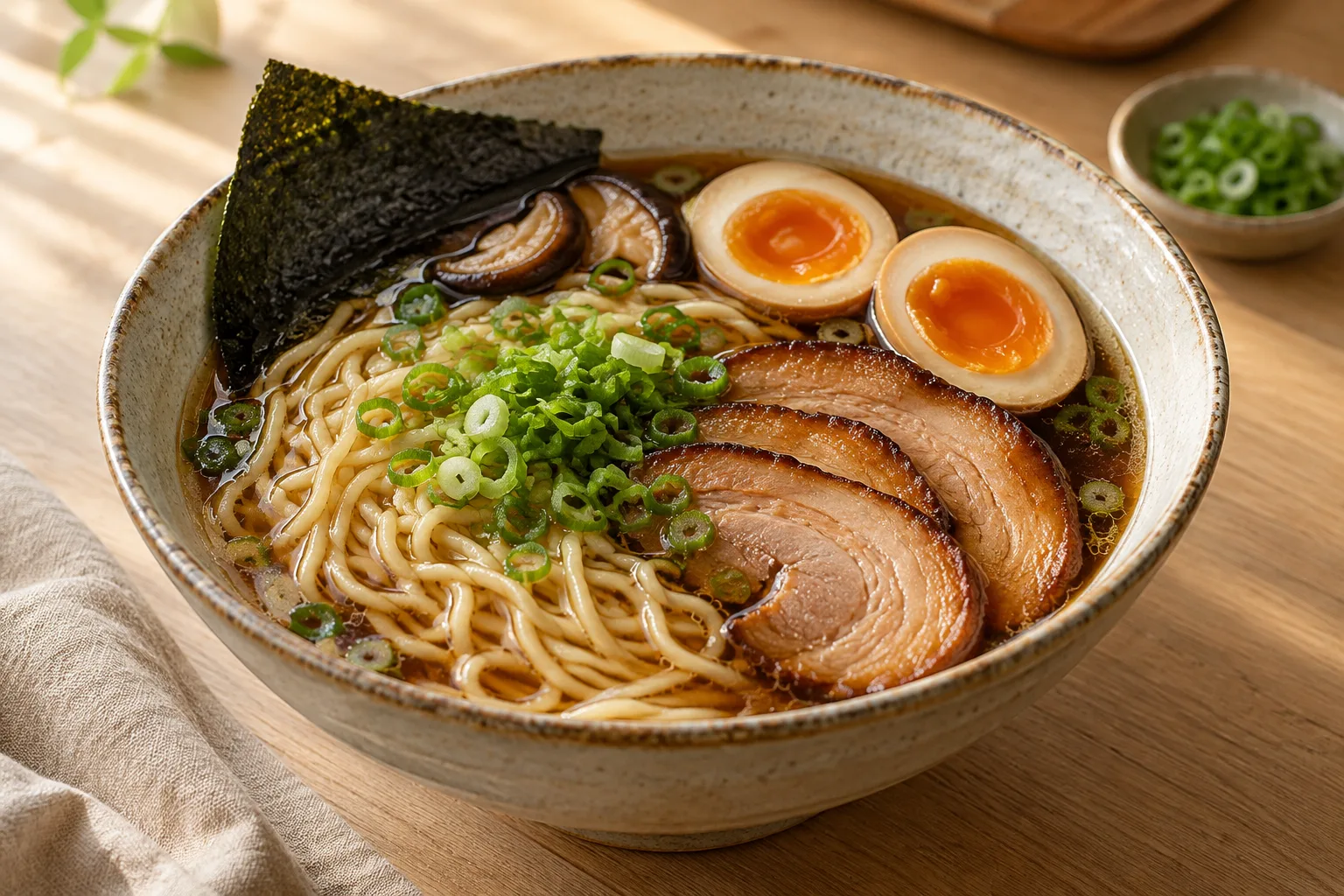
Scallion is an elongated vegetable in the allium family, related to the onion. It commonly has a white lower portion and green leaves, and both parts can be used in cooking. Its flavor may be milder and slightly sweet compared with that of a mature onion. Fresh scallion is not the same as a dry bulb onion: its texture is more tender, and its green leaves are also edible. For tare, it can contribute an aromatic note, but the cut and method of adding it depend on the recipe. The white part can be eaten raw, marinated, or used as the base of a cooked preparation; finely chopped green leaves can be added raw or used in broths, soups, and sautés.
When to use it
Use scallion when you want a gentle onion flavor and a fresh note in a sauce, broth, or soup. For a crisp, more direct flavor, finely slice the white part or tender leaves and add them at the end or serve them raw. For a more integrated flavor, cook the white part as an aromatic base or add the leaves to a broth or sauté. In tare, follow the specific recipe: scallion can contribute aroma, but when to add it depends on whether you want a raw, cooked, or garnish-like note.
How to use it
Remove any damaged parts and separate the white portion from the green leaves. Slice the white part thinly for raw use, marinating, or as the base of a cooked preparation. Finely chop tender leaves; add them raw to a sauce or soup, or use them in a broth or sauté. If the leaves are thick and fibrous, cooking them is preferable. For tare, adapt the cut and timing to the recipe: chopped scallion can provide an aromatic note or a finishing touch, but not every preparation needs the same treatment. Taste the mixture before adding more so the scallion stays balanced with the other ingredients.
Flavour and texture
Scallion has a delicate onion flavor that can have a hint of sweetness. The white part is firm and juicy; tender leaves are soft and can be finely chopped. Thicker leaves may feel fibrous when raw, so cooking them is preferable. Flavor and texture vary with freshness and the thickness of each piece.
How to choose it
Choose scallions that look fresh, with firm green leaves and no visibly damaged areas. Check that the white part is intact and the leaves are not wilted. Since the white and green parts can be used in different ways, choose scallions that let you make use of both. Size and thickness vary; thicker leaves may need cooking for a more pleasant texture.
Storage
Keep fresh scallions in the refrigerator and wait to wash them until you are ready to use them. Remove damaged pieces before storing and try to keep the scallions dry. Once cut, refrigerate them in a closed container and use them soon; no exact storage period is specified here. If the leaves lose their firmness or show damaged areas, check them before adding them to food.
Substitutions
Finely chopped white onion can provide a related allium flavor in a sauce or cooked preparation, but it does not reproduce scallion's texture or mildness. Shallot is another aromatic option with its own character. Adjust to taste and to the recipe; neither is an identical substitute.
Common mistakes
Do not automatically discard the green leaves: they can be used when fresh. Avoid using thick, fibrous leaves raw; cooking them may give a more pleasant texture. Do not treat scallion exactly like a dry onion: scallion has edible green leaves and a more tender texture.
Safety and allergens
If you have a food allergy, check the ingredient information for any prepared tare or packaged sauce, since composition depends on the product. For unpackaged preparations, ask about the ingredients if you need to avoid a particular allergen.
Culinary uses
- Fresh aromatic ingredient for sauces and seasonings
- Raw or cooked addition to soups and broths
Recommended techniques
- Slice the white part thinly for raw use or quick cooking
- Finely chop the green leaves; use them raw or cook them in broth or a sauté
Pairs well with
- Miso soup and broth
- Garlic and ginger
Frequently asked questions
Can you eat scallion greens?
Yes. If they are tender, chop them for raw use or add them to soups, broths, and sautés. If they are thick and fibrous, cooking them is preferable.
How can I use scallion in tare?
Chop it finely and follow the recipe: it can add an aromatic note or be used as a finish. When to add it depends on the result you want.
Is scallion the same as onion?
No. They are related, but scallion is usually elongated, has usable green leaves, and may have a milder flavor. Its texture is also more tender.
Ingredient allergens
Allergen listThere are no verified associations for these ingredients yet.
Sources and review
Automatically researched, cross-checked and validated content. Sources consulted:
- Client Challenge doi.org/10.2307/j.ctvndv9t9.22
- Conoce 15 tipos de cebolla y sus usos en la cocina - Mejor con Salud mejorconsalud.as.com/dieta/organicos-transgenicos/tipos-de-cebolla-y-usos-en-cocina/
- Para qué sirve cada tipo de cebolla (y un truco para no llorar al picarla) | El Comidista | Gastronomía | EL PAÍS elpais.com/gastronomia/el-comidista/2022/11/24/articulo/1669303282_080564.html
- Verdura - Wikipedia, la enciclopedia libre es.wikipedia.org/wiki/Verdura
- Chalota: qué es, propiedades y usos en la cocina del sustituto de la cebolla bonviveur.com/es/noticias/chalota
- Etiquetado de sustancias que causan alergias e intolerancias alimentarias www.aesan.gob.es/seguridad-alimentaria/informacion-alimentaria/etiquetado-sustancias
- Aprovéchalo todo de la cebolleta www.ametllerorigen.com/es/blog/que-es-lo-que-se-come-de-la-cebolleta/
- Food Allergies | FDA www.fda.gov/food/nutrition-food-labeling-and-critical-foods/food-allergies
- Food Labelling for the Food Allergic Consumer | Food Allergy Research & Resource Program | Nebraska farrp.unl.edu/farrp-resources/consumers/food-labelling-food-allergic-consumer/
- Food allergens | Food Safety and Quality | FAO www.fao.org/food-safety/scientific-advice/food-allergens/en
- Etiquetado precautorio de alérgenos NO intencionados < Tecoal ® tecoal.net/seguridad-alimentaria/etiquetado-precautorio-alergenos-no-intencionados/
- Allergen guidance for food businesses - GOV.UK www.gov.uk/government/publications/allergen-guidance-for-food-businesses/allergen-guidance-f…
- Declaration of allergens on food labels: overview of Latin America - PMC pmc.ncbi.nlm.nih.gov/articles/PMC11205258/
- - YouTube www.youtube.com/watch?v=P_DGLWdD9jU
- Maridajes para cebolla en Este asiático ✓ basmatic.com/maridaje/cebolla/este-asiatico
- Empleo del etiquetado precautorio de alérgenos: nuevo documento de AESAN - Higiene ambiental higieneambiental.com/etiquetado-precautorio-de-alergenos-1