- Category
- Vegetables
- State
- Fresh
- Usual unit
- unit
What it is
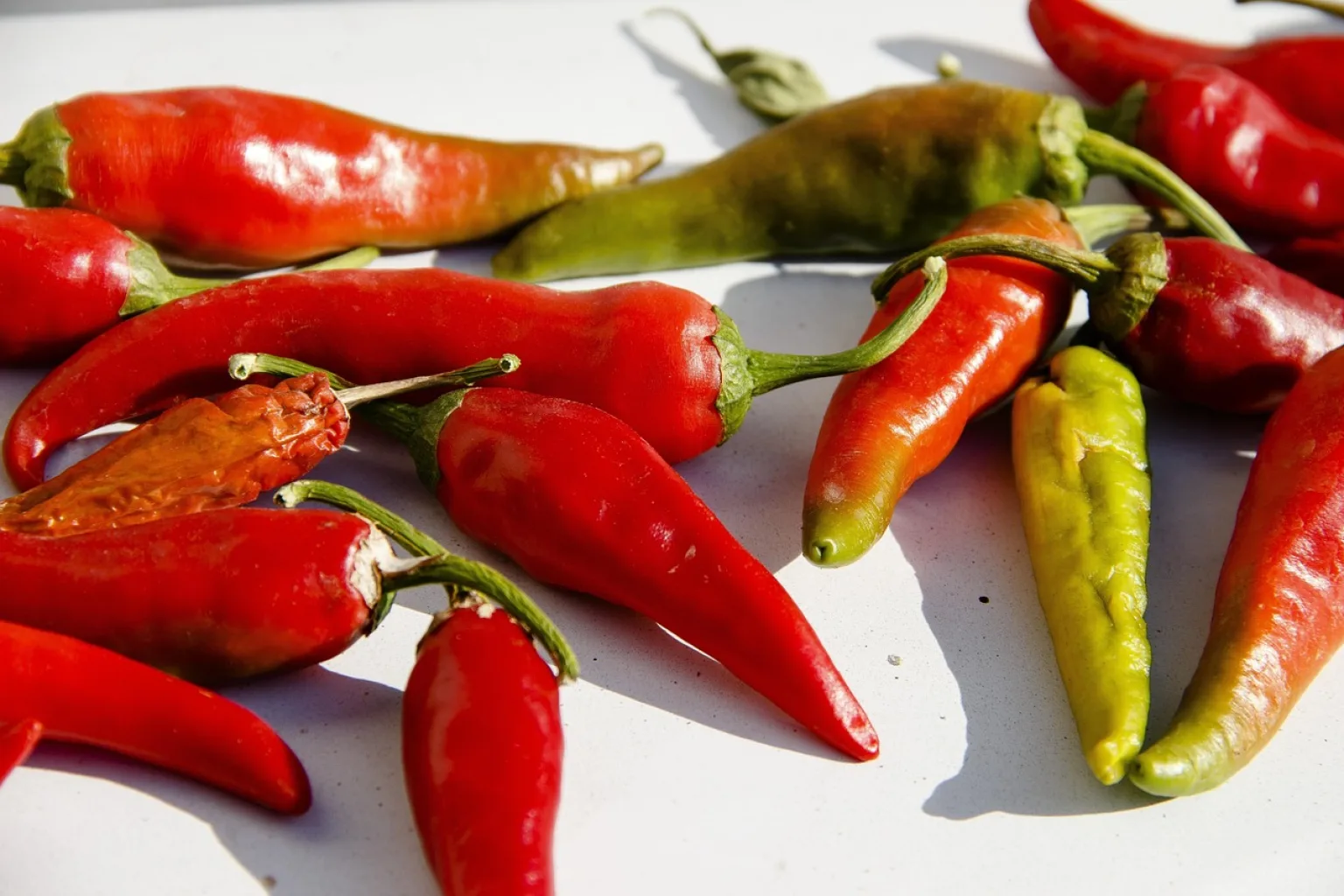
Seasoning peppers are fresh fruits of plants in the Capsicum genus, used to add flavor and texture to food. This name does not identify one specific variety: peppers can differ in shape, size, color, and heat. Some are mild and sweet; others can be hot. They may be eaten raw or cooked, for example roasted, fried, or stuffed. This profile is about fresh peppers, not paprika, which is a dried and ground pepper product. Because no particular variety is specified, check the pepper's type when buying and adapt your preparation to the one you have.
When to use it
Use them when you want to add vegetable flavor and texture to a dish, raw or cooked. Fresh peppers can be served as appetizers, used in main-course preparations, stuffed, or served as a side. Choose a sweet type for a mild result; if a pepper may be hot, consider that before adding it to a shared dish. The name covers different kinds, so do not assume all peppers have the same size, sweetness, or heat. Select one suited to the recipe and adjust the amount as you taste the dish.
How to use it
Gently wash peppers under cold running water; do not leave them to soak. Dry them, then remove the stem, core, and seeds if the recipe calls for it. Cut into strips, rings, or dice as needed. For a raw preparation, cut them shortly before adding them to a salad or other dish. They can also be roasted, fried, or cooked stuffed, depending on their shape and the recipe. When handling a hot pepper, wear gloves or wash your hands thoroughly with soap and water before touching your face or eyes. For freezing, prepare peppers in halves, strips, rings, or dice; the final texture depends on how they are prepared.
Flavour and texture
Flavor and heat depend on the variety: some peppers are sweet and mild, while others are more intense. The flesh can be eaten raw or softened by cooking. Color, shape, and flesh thickness also vary, so different peppers do not all have the same texture or behave identically in a recipe.
How to choose it
Choose peppers that are firm and show no visible signs of disease or insect damage. Color can vary and does not, by itself, identify a pepper's heat. If you need a mild or hot result, confirm the type rather than relying on appearance alone. Choose a shape and size suited to the intended use, such as slicing, cooking whole, or stuffing.
Storage
Keep fresh peppers refrigerated and use them while they remain firm and show no visible deterioration; the available evidence does not establish a specific refrigerator storage time. To freeze, wash them, remove stems and seeds, and cut them if desired. Freezing raw may preserve a crisper texture than blanching first. For canning or other shelf-stable preservation, follow a tested recipe and appropriate process; do not improvise a method.
Substitutions
In many recipes, one fresh pepper can be replaced with another if its size and texture suit the intended use. Sweetness and heat are not necessarily equivalent: choose a sweet type for a mild result and a hot one only when you want more intensity. If substituting a hot pepper, start with less and adjust to taste.
Common mistakes
Do not assume all peppers have the same heat or that color alone predicts it. Avoid soaking them; wash under cold running water instead. When preparing hot peppers, do not touch your face or eyes before washing your hands with soap and water.
Safety and allergens
Wash fresh peppers under cold running water before preparation. When handling hot peppers, wear gloves or wash your hands thoroughly with soap and water before touching your face or eyes. For canning in jars, use a reliable preservation process specific to the product and style of preserve.
Culinary uses
- Comerse crudos en preparaciones sencillas o ensaladas
- Cocinarse como ingrediente principal, relleno, aperitivo o guarnición
Recommended techniques
- Lavar bajo agua corriente fría y secar antes de preparar
- Cortar y retirar tallo, corazón y semillas según el uso; asar, freír o cocinar relleno
Pairs well with
- Rellenos y otros ingredientes para servir como aperitivo
- Platos principales como guarnición
Frequently asked questions
Does seasoning pepper mean paprika powder?
Not in this profile. It refers to fresh peppers; paprika is a dried, ground pepper seasoning.
Are all seasoning peppers hot?
No. Some varieties are sweet and mild, while others are hot. The general name alone does not tell you the heat level.
Can fresh peppers be frozen?
Yes. Wash them, remove stems and seeds, cut if desired, and freeze. Blanching first can extend storage, while freezing raw may help retain a crisper texture.
Ingredient allergens
Allergen listThere are no verified associations for these ingredients yet.
Sources and review
Automatically researched, cross-checked and validated content. Sources consulted:
- ¿Por qué la muerte es origen de miedos y tabúes? doi.org/10.64628/aao.fccyk3qj3
- Pimentón - Wikipedia, la enciclopedia libre es.wikipedia.org/wiki/Piment%C3%B3n
- The Essential Glossary of Cooking Terms for the Culinary Arts - Escoffier www.escoffier.edu/blog/culinary-arts/the-essential-glossary-of-cooking-terms-for-the-culinar…
- Condimento - Wikipedia, la enciclopedia libre es.wikipedia.org/wiki/Condimento
- Qué es (y qué no es) la estadística, usos y abusos de una disciplina clave en la vida de los países y las personas | Estudios económicos doi.org/10.52292/j.estudecon.2015.740
- Vamos a Conservar Alimentos: Chiles/Pimientos extension.psu.edu/vamos-a-conservar-alimentos-chiles-pimientos/
- Pimentón | CreatiVegan.net creativegan.net/archives/pimenton/
- El pimiento ecológico: un ingrediente principal en nuestras cocinas www.afuegolento.com/articulo/el-pimiento-ecologico-ingrediente-principal-nuestras-cocinas/51…
- Receta de pimientos confitados para maridar con vinos: análisis y comparativa de las mejores bebidas alcohólicas adegadatiacarmen.es/receta-pimientos-confitados/
- Padron Pimientos y su maridaje perfecto: comparativa de los mejores quesos y embutidos para realzar su sabor laovejaquebala.es/padron-pimientos/
- Pimentón - Wikipedia, la enciclopedia libre www.google.com/goto?url=CAESZgHrOzAVawt7X6c2WenBhWTp_fNZRtnA_TjNfZM2T9U6w7xzFj53UQ3iaG7Mg-dB…