- Category
- Fruit
- State
- Fresh
- Usual unit
- unit
What it is
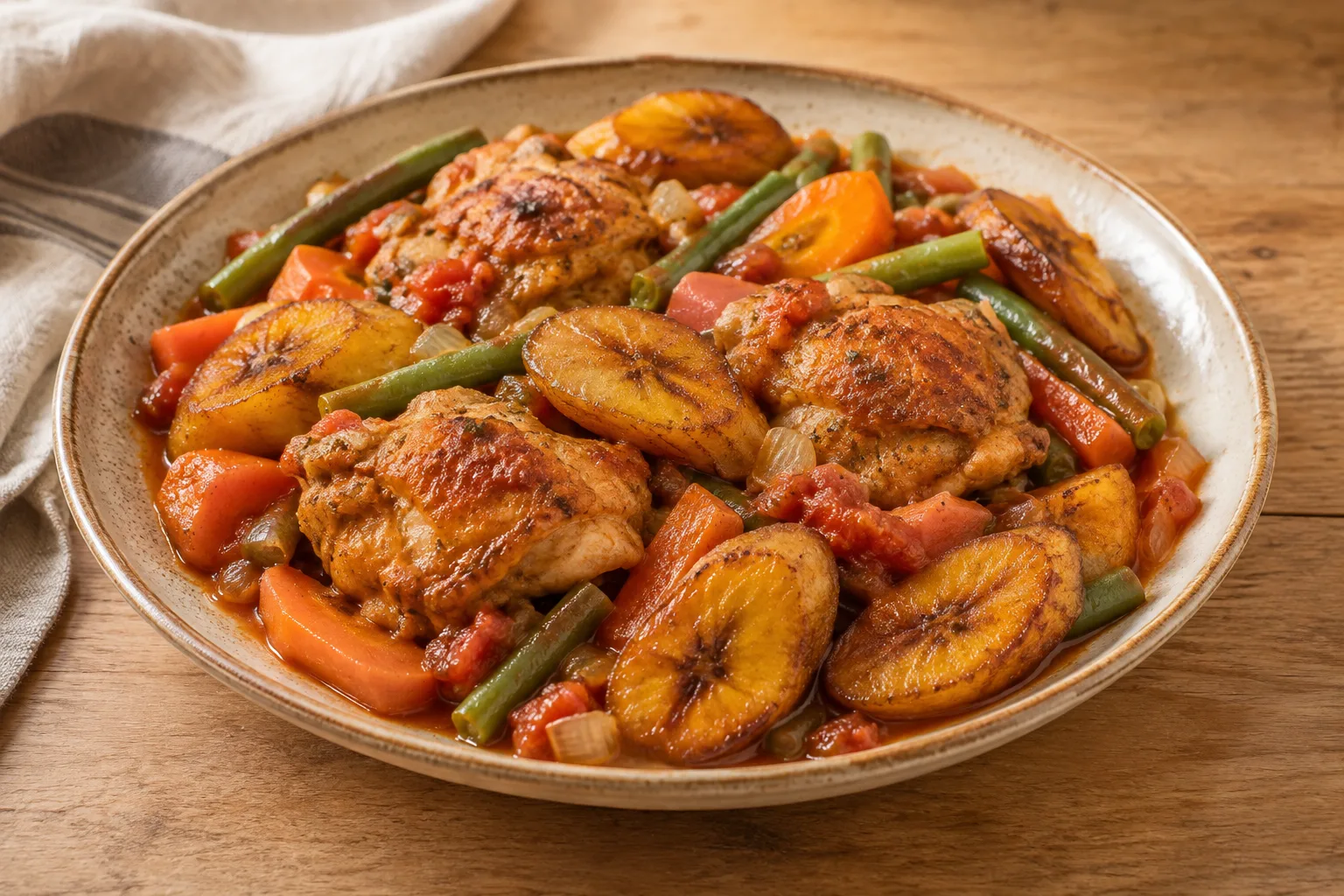
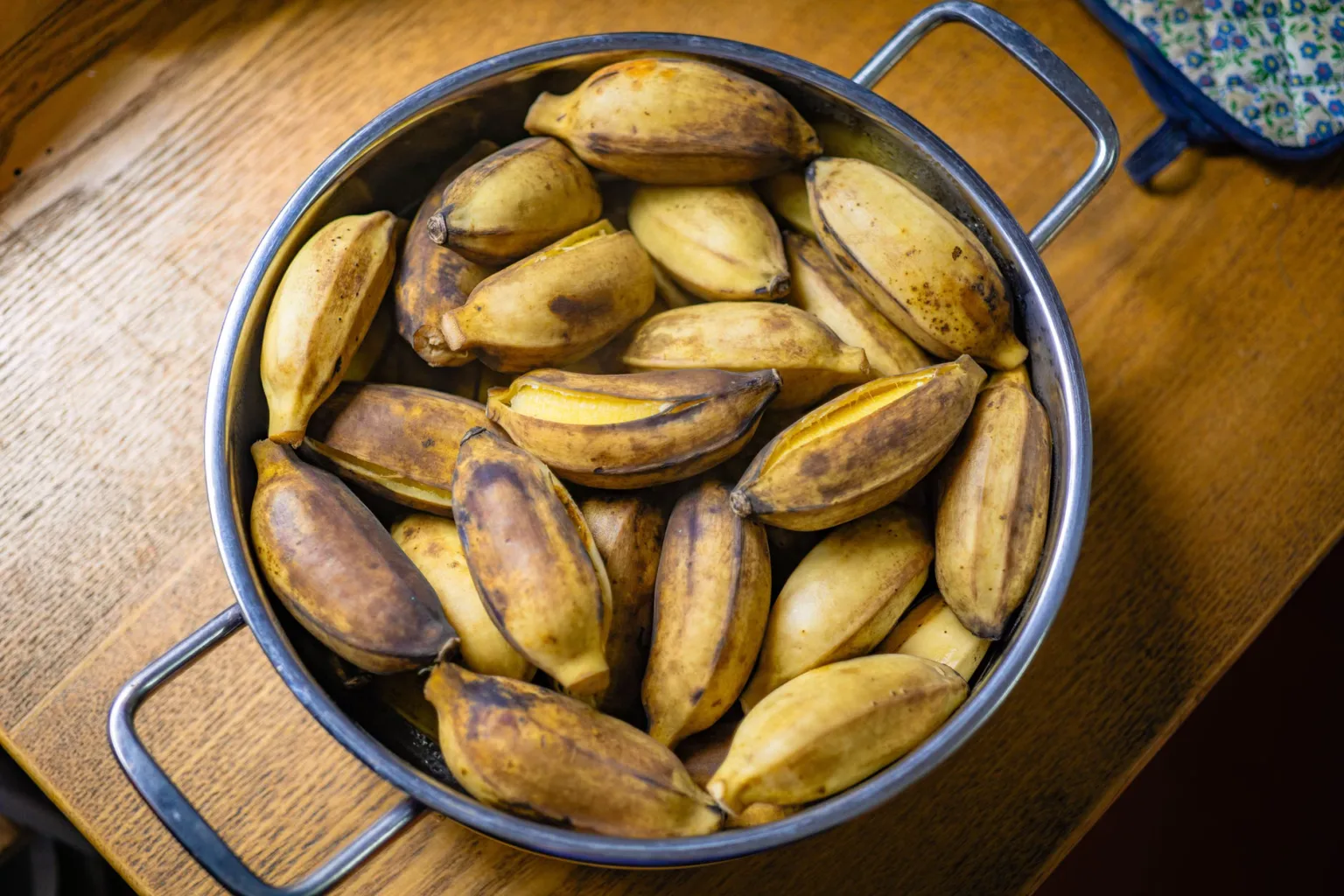
A semi-ripe plantain is a cooking banana harvested or used at an intermediate stage of ripeness. Its peel is beginning to change from green toward yellow and may develop a few dark spots, while the flesh remains fairly firm and starchy. Compared with a green plantain, it has started to taste sweeter; compared with a fully ripe one, it generally holds its shape better and is less sweet. It is not simply interchangeable with a dessert banana, which is commonly eaten raw. Plantains are usually cooked: they can be fried, roasted, boiled, or added to stews. Ripeness can vary from fruit to fruit, so use the peel color and firmness as practical cues rather than relying on the product name alone.
When to use it
Choose a semi-ripe plantain when you want a middle ground between the firmer, more neutral green stage and the sweeter, softer fully ripe stage. It can work well in fried or roasted slices, as a side dish, and in preparations where pieces should retain some shape. It also suits dishes that pair savory ingredients with a gentle sweetness. A mostly green peel points toward a firmer, less sweet fruit; yellowing and dark speckles indicate a sweeter stage. Match the fruit to the result you want, keeping in mind that individual fruits vary in size and ripeness.
How to use it
Peel the plantain and cut it to suit the dish: slice it for frying or roasting, cut it into chunks for boiling or stewing, or make thin rounds for crisp fried snacks. At the semi-ripe stage it offers some sweetness without losing all its firmness, although the result depends on the fruit's actual ripeness. Fry, bake, grill, or boil it, and season with salt and garlic for a savory direction. You can also add it to soups and stews, or mash it after cooking for a softer preparation. For more even cooking, cut pieces to a similar thickness and check that they are cooked through before serving. Treat it as a cooking ingredient rather than as a dessert banana.
Flavour and texture
The flesh is still firm, dense, and starchy at this stage, but it begins to develop a more noticeable sweetness than a green plantain. It is generally not as sweet as a fully ripe plantain, making it suitable for savory sides as well as sweet-salty dishes. The balance between firmness and sweetness depends on the precise ripeness of each fruit.
How to choose it
Look for fruit with an intact peel that is changing from green toward yellow and may have a few dark spots. The flesh should still feel firm even if the peel is no longer uniformly green. Since sweetness increases as ripening progresses, choose greener fruit for a firmer, less sweet result, or more yellow, speckled fruit for greater sweetness. Appearance varies between individual plantains.
Storage
The available evidence describes peel-color changes as plantains ripen but does not establish a storage duration or specific storage conditions. To judge the stage for cooking, watch for the peel to shift from green toward yellow and develop spots, signs that the fruit is becoming sweeter. Select the fruit according to the result you need, and do not assume every plantain will ripen at the same rate.
Substitutions
Potato can fill a similar role in a starchy side or fried accompaniment, although its flavor and texture will differ. Cassava can also replace plantain in some sides or fillings, but the cut and cooking method may need adjustment for the recipe. Neither alternative reproduces the characteristic sweetness of a semi-ripe plantain.
Common mistakes
Do not mistake a semi-ripe plantain for a dessert banana: its flesh is starchier and it is commonly cooked. Do not assume that every speckled fruit has the same sweetness, since ripeness varies. For even cooking, cut similar-sized pieces and adapt the preparation to how firm the fruit is.
Safety and allergens
Cook plantains before serving; they are commonly used fried, boiled, roasted, or stewed. No additional stage-specific warning is established here.
Culinary uses
- starchy side dish
- ingredient for savory snacks and fritters
- component of stews, soups, and mash
Recommended techniques
- frying
- baking or roasting
- boiling
- mashing
Pairs well with
- garlic and salt
- beans
- cheese
- savory sauces or dips
Frequently asked questions
How can I tell if a plantain is semi-ripe?
The peel is usually changing from green toward yellow and may have a few dark spots. The flesh remains firm, but the fruit is beginning to taste sweeter than a green plantain.
Can semi-ripe plantains be eaten raw?
Plantains are commonly used cooked because their flesh is firm and starchy. Choose a cooked preparation rather than treating one like a dessert banana.
What are good ways to cook a semi-ripe plantain?
Slice it for frying or roasting, boil it in chunks, add it to stews, or mash it after cooking. Its firmness and mild sweetness work well in savory dishes.
Ingredient allergens
Allergen listThere are no verified associations for these ingredients yet.
Sources and review
Automatically researched, cross-checked and validated content. Sources consulted:
- Curiosidades sobre el plátano macho - Formacion en Gastronomia www.formacionengastronomia.com/cocina-latina/curiosidades-sobre-el-platano-macho/
- Plátano macho: qué es, propiedades y cómo utilizarlo en la cocina www.directoalpaladar.com/ingredientes-y-alimentos/platano-macho-que-propiedades-como-utiliza…
- Plátano macho: 8 beneficios y cómo consumirlo - Tua Saúde www.tuasaude.com/es/platano-macho/
- Guía de tipos de plátano y sus aplicaciones | Recetas Nestlé www.recetasnestle.com.ec/escuela-de-sabor/coccion-tecnica/tipos-platano
- Client Challenge doi.org/10.2307/j.ctvs09qb4.7
- El genocidio es un delito fundamentalmente político: por qué es importante para Gaza doi.org/10.64628/aao.dkcgnayqh
- Plátano macho: qué es, cómo se cocina y usos | Recetas Mexas recetasmexas.com/guia/platano-macho
- Plátano macho. Almidón resistente que te sacia www.dietacoherente.com/platano-macho/
- Tipos de plátanos ¿Los conocías todos? | El arte de comer bien | mentta www.mentta.com/blog/tipos-de-platanos/?srsltid=AYCX9vKfVi_y-JjY1YklzjJAGMyTXlw8_qcnhTUgPmQik…
- ¿Has probado alguna vez los plátanos? Por eso no es sólo un plátano. www.petitchef.es/articulos/has-probado-alguna-vez-los-platanos-por-eso-no-es-solo-un-platano…
- Plantas comestibles del solar Maya Ch'ol Chiapas | OpenAlex openalex.org/W4406855085
- Cómo usar el plátano macho en la cocina www.hola.com/cocina/noticias/20220811215086/cocinar-con-platano-macho-recetas/