- Category
- Meat
- State
- Preserved
- Usual unit
- g
What it is
Smoked meat is meat that has undergone a smoking process. Smoke gives it a distinctive character, but the term does not identify one animal, cut, or method of production. It may describe beef cuts or products such as bacon; smoked game meat is another example. Depending on the product, smoking may be part of cooking or preservation, but it is not safe to assume that every smoked meat is fully cooked, preserved in the same way, or ready to eat. The product label and its directions are essential for understanding how a particular item is sold, how it should be used, and how it should be stored.
When to use it
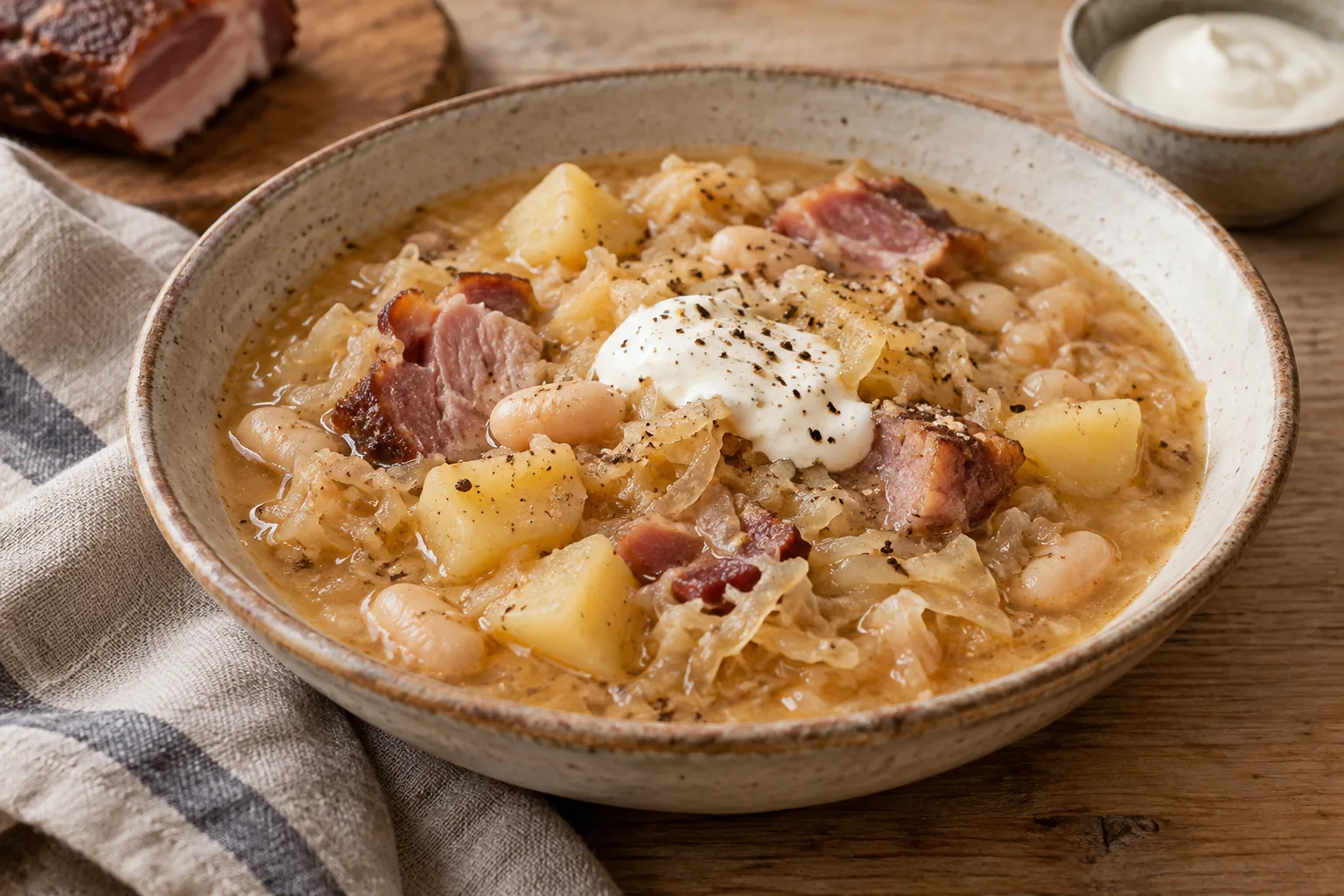
Use smoked meat when you want to bring a smoky character and a meat component to a dish, keeping in mind that flavor intensity and texture differ by cut and preparation. It can be sliced for serving or added to cooked dishes. It works well in bean dishes and alongside ingredients such as corn or peas. Before planning a recipe, check whether the product needs cooking or is ready to eat, and follow its package directions. Since the name covers varied products, do not assume one piece can be swapped directly for another.
How to use it
Read the label before preparing smoked meat: check whether it needs cooking, what serving or preparation instructions apply, and how the maker says to store it. Slice or cut it to suit the dish. Serve a ready-to-eat product as directed, or add it to a cooked preparation when that use is appropriate for the particular product. In stews and bean dishes, use an amount that lets the smoky flavor complement rather than overwhelm the other ingredients; corn, peas, and herbs appear in traditional preparations featuring smoked meat. Some cuts may be suitable for warming or crisping, but there is no universal method or cooking time for every product. Keep work surfaces and utensils clean, wash hands after handling raw meat, and follow the package directions.
Flavour and texture
Its defining characteristic is a smoky aroma and flavor. The strength of that flavor depends on the product and may accompany milder or more pronounced meat flavors. Texture also varies: a whole cut, a cut intended for cooking, and a product such as bacon will not behave alike when sliced or heated. Assess each product individually rather than assuming all smoked meat is tender, dry, salty, or crisp.
How to choose it
Choose a product for the way you plan to use it, and check its name, meat type, and preparation and storage instructions. Look for whether the label says it must be cooked or is ready to eat; a smoky appearance alone does not answer that question. Different cuts and preparations have different flavors and textures, so select a form suited to serving in slices, cooking, or adding to a stew.
Storage
Do not assume smoking makes every product safe to keep at room temperature. Follow the label's storage directions, including instructions for after opening, and observe any date given. If the storage requirements for a particular product are unclear, check the package or ask the seller before eating it. Keep surfaces and utensils clean, and prevent raw meat from contaminating other foods.
Substitutions
Another smoked meat may work in some dishes, but the animal, flavor, texture, and possibly smoke intensity will change. Cooked unsmoked meat may provide a similar meat component, but it will not bring the characteristic smoky aroma. Adjust the amount to taste and to the recipe, and make sure the substitute suits the intended preparation method.
Common mistakes
A common mistake is treating all smoked meat as one interchangeable product. Do not assume it is cooked, ready to eat, or shelf-stable: check the label. Also account for differences in cut, texture, and smoke intensity when substituting one product for another.
Safety and allergens
Follow the package's preparation and storage directions; smoking alone does not establish that every product is ready to eat or safe at room temperature. Keep hands, surfaces, and utensils clean, and wash them after handling raw meat.
Culinary uses
- Main ingredient in a dish
- Flavorful addition to beans, stews, and other cooked dishes
Recommended techniques
- Slice or cut into pieces before serving or adding to a recipe
- Warm or crisp suitable cuts when the product label and intended use allow
Pairs well with
- Beans
- Corn
- Peas
- Onion and fresh herbs
Frequently asked questions
Is all smoked meat ready to eat?
No. The term covers products made in different ways. Check the label to see whether cooking is required or the product is ready to eat.
Can smoked meat always be stored outside the refrigerator?
Do not assume so. Follow the product's storage directions, including what to do after opening.
What dishes pair well with smoked meat?
It can be added to bean dishes; corn and peas also appear in traditional preparations with smoked meat. The best use depends on the cut and product.
Ingredient allergens
Allergen listThere are no verified associations for these ingredients yet.
Estimated nutrition
- Fat
- 5 g
- Saturates
- 1.37 g
- Carbohydrate
- 0 g
- Sugars
- 0 g
- Fibre
- 0 g
- Protein
- 29.3 g
- Salt
- 2.49 g
Sources and review
Automatically researched, cross-checked and validated content. Sources consulted:
- Client Challenge doi.org/10.2307/jj.27939689.16
- Vamos a Conservar Alimentos: Carnes extension.psu.edu/vamos-a-conservar-alimentos-carnes/
- Carne - Wikipedia, la enciclopedia libre es.wikipedia.org/wiki/Carne
- Para la ciudadanía www.aesan.gob.es/para-la-ciudadania
- Carne ahumada patrimonioalimentario.culturaypatrimonio.gob.ec/wiki/index.php?direction=next&oldid=7705&tit…
- primates primate.socgen.ucla.edu/index.php/multivitaminic/issue/download/60/53
- Part II PROTOZOA, MYXOZOA, MESOZOA digitalcommons.unl.edu/cgi/viewcontent.cgi?article=1103&context=parasittext
- Bio Bio Trip www1.cmc.edu/pages/faculty/welliott/chiletrip.htm
- Propuesta de elaboración de fermentos naturales a base de frutas del cantón Paute para aplicar a cortes de carne de cerdo | OpenAlex openalex.org/W2892023203
- Carne ahumada: todos los secretos para disfrutar de su cocinado www.miguelvergara.com/actualidad/blog/carne-ahumada/
- - YouTube www.youtube.com/watch?v=yshroUyb-wc