- Category
- Fruit
- State
- Fresh
- Usual unit
- g
What it is
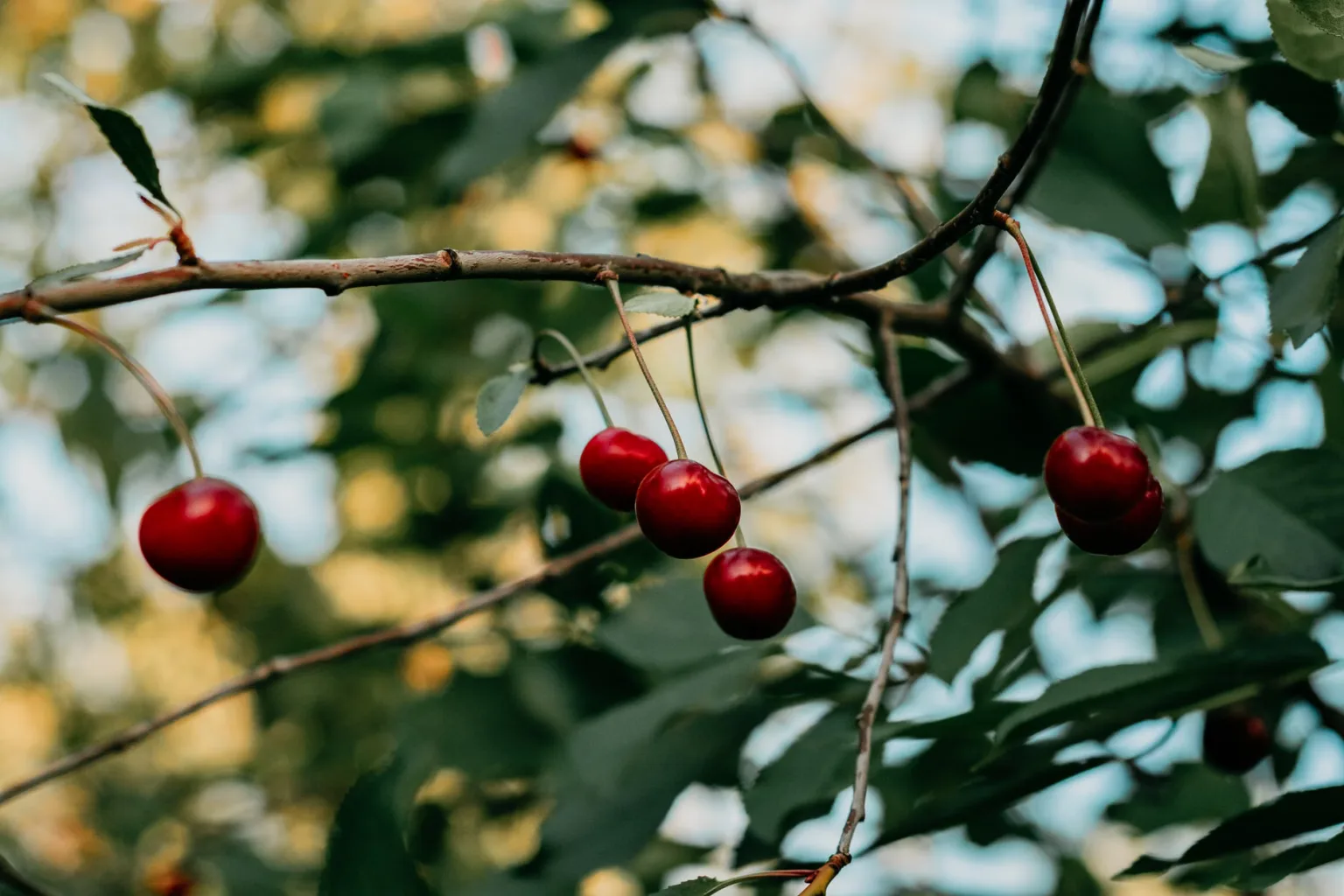
Sour cherries are tart cherries associated with the species Prunus cerasus, distinct from sweet cherries. Names can vary by place and product, so check whether you are buying fresh fruit or a preserved form. Their tart flavor suits sweet preparations that call for a more pronounced cherry taste than sweet cherries provide. They are used especially in baking and preserves, and are also found prepared in syrup or spirits. This profile concerns fresh sour cherries; it does not assume a particular cultivar, buying season or storage life.
When to use it
Use sour cherries when you want to add a tart cherry flavor to a sweet preparation, such as baking or a preserve. They are also an option when a recipe calls for fruit preserved in syrup or spirits. If a recipe specifies sweet cherries, sour cherries will change the flavor profile; consider whether their tartness fits the result you want. Serving fruit with cheese is a general pairing idea, not a rule specific to sour cherries. Check which form of fruit the recipe calls for before you begin.
How to use it
Check whether a recipe calls for fresh sour cherries or a preserved form: they are not necessarily interchangeable without changing the result. You can add the fruit to baked preparations or use it to make a preserve. Sour cherries are also found preserved in syrup or spirits; choose a reliable recipe suited to that form. If you substitute sweet cherries, remember that the result will be less tart, and change the recipe only where its instructions allow. No quantity, cooking time or preserving procedure is established here, so do not treat any single method as universal.
Flavour and texture
The flavor distinction described for sour cherries is their tartness in contrast with sweet cherries. Flavor can vary between products, so do not assume that every sour cherry has the same profile. They are used in baking and preserves, where they become part of a sweet preparation. The available information does not describe their texture precisely or establish a particular level of acidity. When choosing a substitute, consider that sweet cherries will give a less tart result.
How to choose it
Look for a product clearly identified as a sour cherry and check whether it is fresh or preserved, since the form affects how it can be used in a recipe. The available information does not provide specific criteria for judging the firmness, color, ripeness or quality of fresh fruit. If you need a particular cultivar or form, check the label or ask the seller. Do not assume all products called sour cherries are identical or that preserved fruit can be used like fresh fruit.
Storage
The available information does not establish a storage duration or specific storage conditions for fresh sour cherries. Follow the retailer's or package's handling instructions and use the fruit according to the form you purchased. For sour cherries in syrup or spirits, follow the product instructions; guidance for one form does not necessarily apply to another. This profile does not establish a storage period or a home-preserving procedure.
Substitutions
Sweet cherries can replace sour cherries in some recipes, but the result will be less tart and have a different flavor profile. Preserved sour cherries may work where a preparation allows fruit in syrup or spirits; their form can affect the result. Before substituting, check which kind and form of cherry the recipe calls for. The choice depends on the flavor you want and how the fruit will be used.
Common mistakes
Treating sweet and sour cherries as if they have the same flavor can change a recipe's balance. It is also easy to confuse fresh fruit with preserved sour cherries: do not assume they are used in the same way or that instructions for one form apply to another. Check what the recipe calls for and choose a use suited to that form of fruit.
Safety and allergens
Choose fruit intended for consumption and follow any handling directions on the package or provided by the retailer. This profile does not establish a storage duration or a safe procedure for making home preserves.
Culinary uses
- Fruta para repostería y pastelería
- Base para confituras y conservas
Recommended techniques
- Incorporar en preparaciones de repostería
- Preparar como confitura o utilizar en conservas en almíbar o aguardiente
Pairs well with
- Quesos, como combinación general de fruta y queso
- Preparaciones dulces de repostería
Frequently asked questions
What are sour cherries?
They are tart cherries associated with Prunus cerasus and differ from sweet cherries in flavor.
How are sour cherries used?
They are used especially in baking and preserves, and are also found preserved in syrup or spirits.
Can I substitute sweet cherries?
Sometimes, but the result will be less tart. Check that the change suits the flavor you want.
Ingredient allergens
Allergen listThere are no verified associations for these ingredients yet.
Estimated nutrition
- Fat
- 0 g
- Saturates
- 0 g
- Carbohydrate
- 110 g
- Sugars
- 82.8 g
- Fibre
- 0 g
- Protein
- 0 g
- Salt
- 0.22 g
Sources and review
Automatically researched, cross-checked and validated content. Sources consulted:
- Client Challenge doi.org/10.2307/jj.27939689.16
- ¿Qué es el maridaje de sabores? - Hostelería Benidorm www.hosteleriabenidorm.com/2024/11/15/maridaje-de-sabores-que-es/
- Foods and Flavors to Savor in South America - UCEAP News and Features blog.uceap.universityofcalifornia.edu/foods-study-abroad-south-america/
- Maqueta nº 10.2 aesan.gob.es/dam/jcr:1538b6eb-680f-44b8-bbc5-b08d810b00dc/comite_cientifico_10.pdf
- Capsicum annuum - Wikipedia, la enciclopedia libre es.wikipedia.org/wiki/Capsicum_annuum
- La cultura alimentaria hispanoamericana en la actualidad: Continuidad histórica y transformación del uso de las plantas comestibles en la provincia de Córdoba, Argentina | OpenAlex openalex.org/W7215000935
- Yolo – Environment, Land and Food Systems (ELFS) brinkley.faculty.ucdavis.edu/home/research/california-county-community-food-guides/yolo/
- Microwave processing: Effects and impacts on food ... public.archive.wsu.edu/sjwang/public_html/MW-food-quality.pdf
- Growing Minigreens on California's Central Coast ucanr.edu/?legacy-file=144174.pdf&legacy-file-path=sites%2Fsfp%2Ffiles%2F
- Yolo County - Center for Literary Publishing coloradoreview.colostate.edu/features/yolo-county/
- Cerezas ácidas. Poniendo la guinda cerezadeljerte.org/cerezas-acidas-poniendo-la-guinda/
- Cerezas y guindas www.directoalpaladar.com/cultura-gastronomica/cerezas-y-guindas