- Category
- Vegetables
- State
- Fresh
- Usual unit
- g
What it is
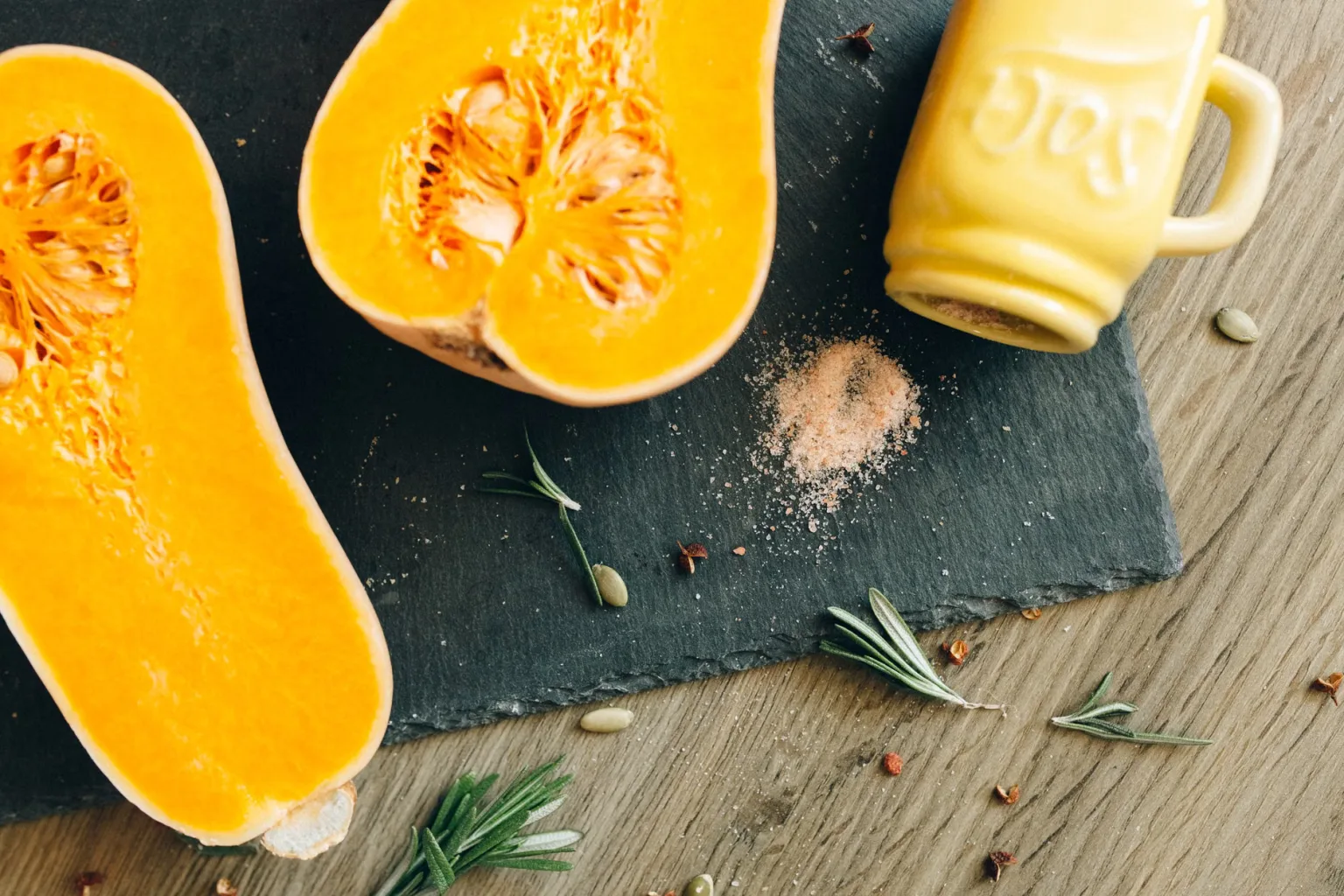
Squash is a common name for several edible fruits from plants in the Cucurbitaceae family. The word can refer to different varieties, which do not always share the same shape, size, skin colour or flesh texture. In cooking, the flesh is used in savoury and sweet preparations; some varieties can also be grated raw. Because squash varies so much, choose a cooking method to suit the firmness and type of the piece you have rather than assuming that every squash behaves alike.
When to use it
Use squash when you want to add body and gentle sweetness to soups, stews or purées, or when you need a vegetable that also works in tarts and sweet dishes. Firm pieces can be cut for roasting, baking, boiling or steaming. Raw grated squash can be added to some salads or used in other preparations. Since the name covers different varieties, consider the flesh’s texture and the result you want when deciding how to cook it.
How to use it
Before preparing squash, wash the skin thoroughly under running water and scrub it with a clean brush, especially when handling a whole piece. Cut it on a stable board; depending on the variety, the skin may be hard, so take care when cutting. Remove the seeds and any parts you do not want, then cut the flesh into similarly sized pieces for more even cooking. Boil, steam, roast or bake it, and serve it in pieces or mash it. You can also grate it raw for suitable preparations. Pair it with savoury ingredients in soups and stews, or with warm spices in sweet recipes.
Flavour and texture
The flavour is generally mild and gently sweet, though it varies with the variety and maturity. The flesh may be relatively dry, firm or floury in some pieces, and more tender or moist in others. Cooking softens it and can make it easy to mash, while careful cooking helps pieces hold their shape. Squash varieties do not all look or feel alike, so assess the flesh and adapt the cut and method to the result you want.
How to choose it
Choose a piece that feels firm and has hard skin, with no obvious soft spots. If you can see the flesh of a cut piece, look for a matte rather than shiny appearance, a traditional sign that it was not harvested too early. There are many squash varieties, so size, colour and shape alone do not determine quality. If buying a cut piece, look for fresh-looking flesh and use it promptly.
Storage
Keep whole, uncut squash in a cool, dark place. Storage depends on the variety and condition of the piece, so check the skin occasionally and use it if it begins to deteriorate. Once cut, refrigerate it and aim to use it soon; cut pieces do not keep like whole squash. Avoid storing it where it is exposed to heat or direct light.
Substitutions
You can substitute another edible squash or pumpkin variety with a similar texture. A firmer variety may hold its shape better in pieces, while more tender flesh may suit purées or soups. Flavour, moisture and the time needed to reach the desired texture can vary, so check it as it cooks and adjust the liquid in the recipe if needed.
Common mistakes
Do not assume that every squash variety has the same skin, texture or cooking behaviour. Avoid cutting an unstable piece or forcing the knife; use a steady board and work carefully. Do not leave pieces to cook without checking them, as tender flesh can break down. If the recipe calls for intact pieces, cut them to a similar size and check their texture during cooking.
Safety and allergens
Wash and scrub the skin thoroughly before cutting or preparing squash, and use a stable board and a suitable knife, taking care with hard skins. Discard a piece if it shows obvious deterioration. If you have a food allergy, check the ingredients of packaged products and ask about ingredients in unpackaged preparations.
Culinary uses
- Base for soups, stews and purées
- Ingredient for baked, roasted and sweet dishes
Recommended techniques
- Roast or bake in pieces or halves
- Boil or steam until tender
- Grate raw for salads or other dishes
Pairs well with
- Onion and potato
- Olive oil and leafy greens
- Lentils and other legumes
- Cinnamon and cloves in sweet preparations
Frequently asked questions
How can I tell if a whole squash looks fresh?
Look for hard skin and a firm piece without obvious soft spots. Varieties differ, so colour and shape can vary.
Which cooking methods can I use?
You can boil, steam, roast or bake squash. The best method depends on the variety and whether you want pieces or a purée.
Can squash be eaten raw?
Some preparations use squash grated raw. Wash and scrub it thoroughly before cutting or grating.
Ingredient allergens
Allergen listThere are no verified associations for these ingredients yet.
Sources and review
Automatically researched, cross-checked and validated content. Sources consulted:
- Client Challenge doi.org/10.2307/jj.27939689.16
- Etiquetado de sustancias que causan alergias e intolerancias alimentarias www.aesan.gob.es/seguridad-alimentaria/informacion-alimentaria/etiquetado-sustancias
- Food Allergies | FDA www.fda.gov/food/nutrition-food-labeling-and-critical-foods/food-allergies
- Allergen labelling for food businesses | Food Standards Australia New Zealand www.foodstandards.gov.au/business/labelling/allergen-labelling
- Zapallo: rico, económico y disponible todo el año : Prensa Gobierno de Mendoza www.mendoza.gov.ar/prensa/zapallo-rico-economico-y-todo-el-ano-en-gondola/
- Sabor y color en tu mesa todo el año: ZAPALLO | Mercado Central www.mercadocentral.gov.ar/news/sabor-y-color-en-tu-mesa-todo-el-a%C3%B1o-zapallo
- Food Allergy: Labelling and exposure risks - PMC pmc.ncbi.nlm.nih.gov/articles/PMC11250542/
- El zapallo es una especie muy sensible al frío, por ello sus cultivos se realizan en zonas tropicales y repositorio.uta.edu.ec/server/api/core/bitstreams/692ac145-71f0-4784-98b0-0e9a56883fb3/conte…
- Zapallo italiano, Zapallo spaghetti, Calabaza aceitera (Español); Field pumpkin, Mini-pumpkin, Hull-less pumpkin, Naked pumpkin,... repositorio.uchile.cl/xmlui/bitstream/handle/2250/178568/Cultivos-energeticos-2009.pdf?seque…
- Cómo aprovechar las recetas con zapallo | Recetas Nestlé www.recetasnestle.com.ar/escuela-sabor/ingredientes/aprovechar-zapallo
- La calabaza, zapallo, calabacera. Curcubita | Ingredientes y productos de temporada www.afuegolento.com/articulo/la-calabaza-zapallo-calabacera-curcubita--ingredientes-producto…
- Diferencia entre revisiones de «Calabaza» - Tabla de zapallos, incluido anco, "calabazas comestibles" en España y México, (zapallos, es decir frutos comestibles maduros de ... www.ecured.cu/index.php?diff=next&oldid=2332001&title=Calabaza
- Zapallo, calabacín, zucchini o zapallitos. www.directoalpaladar.com/otros/zapallo-calabacin-zucchini-o-zapallitos
- Diseño de una línea de producción para tostar semillas de zapallo | OpenAlex openalex.org/W7225070236