- Category
- Bread and dough
- State
- Dry
- Usual unit
- g
What it is
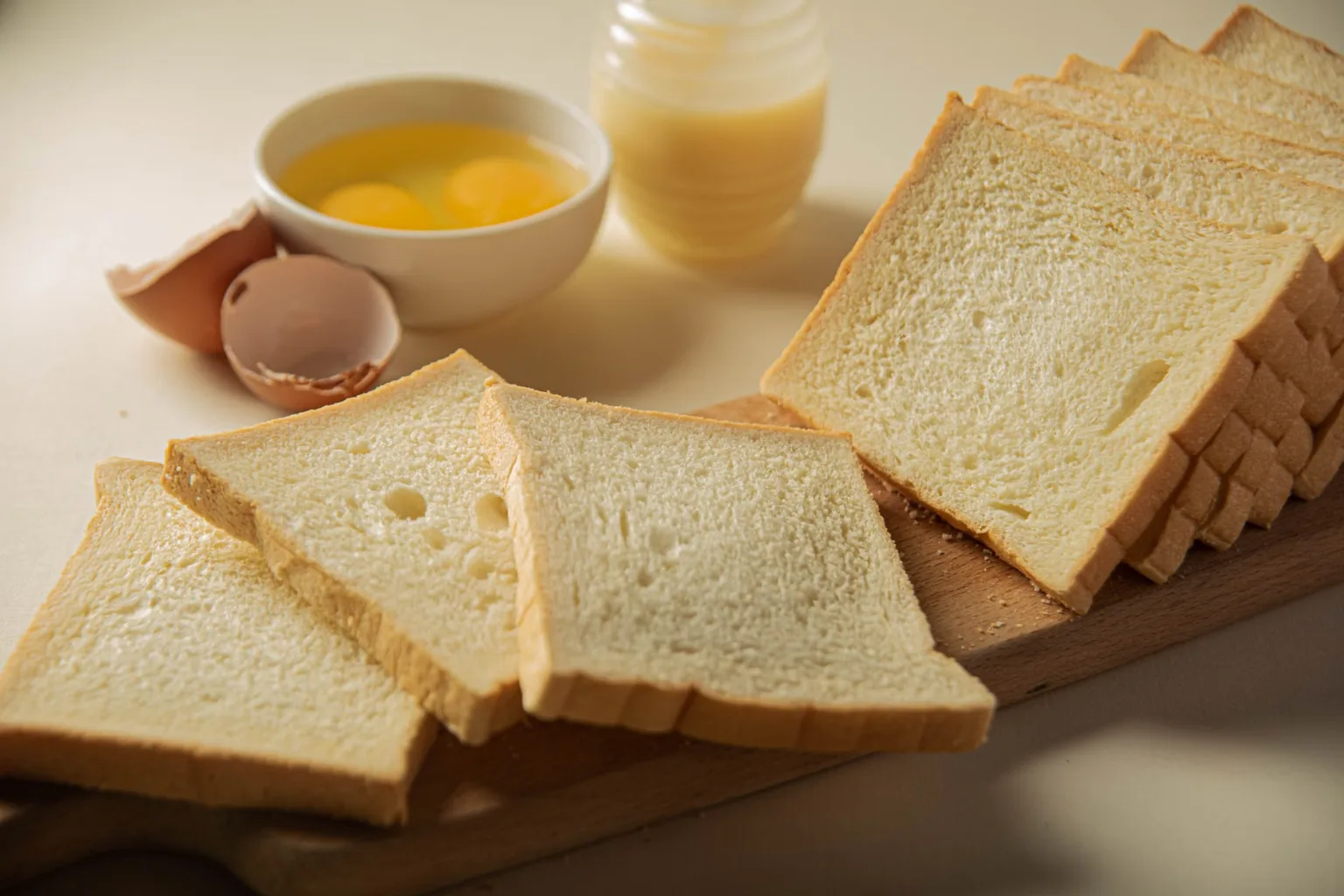
Stale bread is bread that has lost some moisture over time and become drier and firmer. It is not a particular bread variety: it can come from different breads with different crumbs, crusts and compositions. Those differences affect how much liquid it absorbs, how easily it can be cut, and the texture of the finished dish. In cooking, it can be cut or torn and rehydrated for dishes such as migas and some soups; it can also be toasted or fried for croutons, or ground into breadcrumbs. It does not behave exactly like flour: the bread has already been baked, and grinding it does not restore the properties of wheat flour for making dough or thickening in the same way.
When to use it
Use stale bread when you want to add body to soup, sauce or purée, or when a recipe calls for soaked bread that will be cooked. Rehydrated pieces can also be used in sautéed bread dishes such as migas. For a crisp contrast, toast or fry cubes to add to salads, soups or purées. Bread that is still easy to cut is more practical for toast; very hard bread can break when you try to slice it, and its crumb may not become pleasant again when toasted. Consider the bread type and the texture you want before choosing the size of the pieces.
How to use it
Choose the shape to suit the dish: cut or tear the bread for migas, cube it for croutons, or grind it into breadcrumbs. To soften it, add liquid gradually and let the bread absorb it before cooking; the amount needed depends on how dry it is and on the type of bread. You can then add it to soup or sauce, or sauté it with flavourings. For a crisp texture, toast or fry the pieces instead of soaking them. Breadcrumbs can be used for coating and to thicken some preparations, but they do not thicken like flour. Add them gradually and adjust the texture as you go.
Flavour and texture
The flavour depends on the original bread; toasted crust can bring more pronounced, slightly bitter notes. When dry, stale bread is firm and can be chewy. Soaking softens it and lets it absorb liquid; toasting or frying gives the pieces a dry, crisp surface. Bread type, the amount of crust and crumb size all affect the result.
How to choose it
If buying bread to let it go stale or to use in a recipe, choose bread with a flavour you enjoy and a crumb that suits the result you want. Different breads are not interchangeable in every preparation: crust, crumb and absorbency can vary. If you need pieces, choose bread that can still be cut; very hard bread may crumble when you try to slice it.
Storage
Stale bread can come from breads with different compositions and textures, so do not assume that all types will keep in the same way. Follow any storage directions on the package where provided. Staling describes a textural change and loss of moisture, but does not by itself establish a universal storage period for every kind of bread.
Substitutions
The best alternative depends on the task: croutons can replace soaked bread pieces when you want a crisp texture, but they will not give the same soft consistency. Breadcrumbs work for coating or thickening some preparations, but they do not work like flour. Add them gradually and bear in mind that crumb size changes the texture.
Common mistakes
Do not treat breadcrumbs as wheat flour: bread has already been baked and will not form dough or thicken in the same way. Avoid adding all the liquid at once; absorption varies with bread type and dryness. If bread is very hard, it may break when sliced and may not make pleasant toast.
Safety and allergens
If you need to avoid an allergen, check the label on packaged bread or ask about the ingredients of unpackaged bread. Composition depends on the particular bread, so the term “stale bread” alone does not establish which allergens it contains. Check allergen information for the prepared dish as well.
Culinary uses
- Soup, sauce and purée thickener
- Base for migas and other cooked bread dishes
- Crisp topping for salads and soups
- Breadcrumbs for coating
Recommended techniques
- Moisten gradually and rehydrate before cooking
- Toast or fry pieces for a crisp texture
- Cut or tear into pieces or cubes
- Grind into breadcrumbs
Pairs well with
- Garlic and cooking fat in savoury bread dishes
- Soup, broth and sauces
- Milk and egg in soaked-bread preparations
- Salads and purées
Frequently asked questions
What can I make with stale bread?
Rehydrate it for soups, sauces or migas; toast or fry it for croutons; or grind it into breadcrumbs.
Can stale bread be used as flour?
No. It can be ground into breadcrumbs and used for coating or as a thickener in some dishes, but it does not behave like wheat flour for making dough or thickening.
Does all stale bread need the same amount of liquid?
No. Absorption depends on the bread type, the amount of crust and how dry it has become. Add liquid gradually and check the texture.
Ingredient allergens
Allergen listThere are no verified associations for these ingredients yet.
Sources and review
Automatically researched, cross-checked and validated content. Sources consulted:
- Client Challenge doi.org/10.2307/jj.27939689.16
- Cultura del pan en España - Wikipedia, la enciclopedia libre es.wikipedia.org/wiki/Cultura_del_pan_en_Espa%C3%B1a
- Agencia Española de Seguridad Alimentaria y Nutrición www.aesan.gob.es/
- Allergies - Food Safety - European Commission food.ec.europa.eu/food-safety/campaign-2026/allergies_en
- Food Allergies | FDA www.fda.gov/food/nutrition-food-labeling-and-critical-foods/food-allergies
- Food Labelling for the Food Allergic Consumer | Food Allergy Research & Resource Program | Nebraska farrp.unl.edu/farrp-resources/consumers/food-labelling-food-allergic-consumer/
- Food allergens | Food Safety and Quality | FAO www.fao.org/food-safety/scientific-advice/food-allergens/en
- Allergen guidance for food businesses - GOV.UK www.gov.uk/government/publications/allergen-guidance-for-food-businesses/allergen-guidance-f…
- Aprovechando al máximo: la cocina del pan duro | Gastronosfera www.gastronosfera.com/tendencias/aprovechando-al-maximo-la-cocina-del-pan-duro
- Hoy ‘pan duro’ puede sonar a molestia, pero durante siglos fue patrimonio: Las migas en la cocina rural española | Gastronomía & Cía www.gastronomiaycia.com/hoy-pan-duro-puede-sonar-a-molestia-pero-durante-siglos-fue-patrimon…
- Recetas con pan duro: cocina de aprovechamiento andaluza www.cervezasalhambra.com/es/mirador/recetas/mil-una-vidas-pan-duro
- - YouTube www.youtube.com/watch?v=NiOthAbqt5k
- Salmorejo, torrijas y hasta cerveza: el pan duro todavía se puede aprovechar theconversation.com/salmorejo-torrijas-y-hasta-cerveza-el-pan-duro-todavia-se-puede-aprovech…
- Saberes, fazeres e sabores : Brote um resgate do conhecimento culinário tradicional Pomerano em diálogo com a prática educacional e construção de identidades | OpenAlex openalex.org/W7213513260