- Category
- Meat
- State
- Fresh
- Usual unit
- kg
What it is
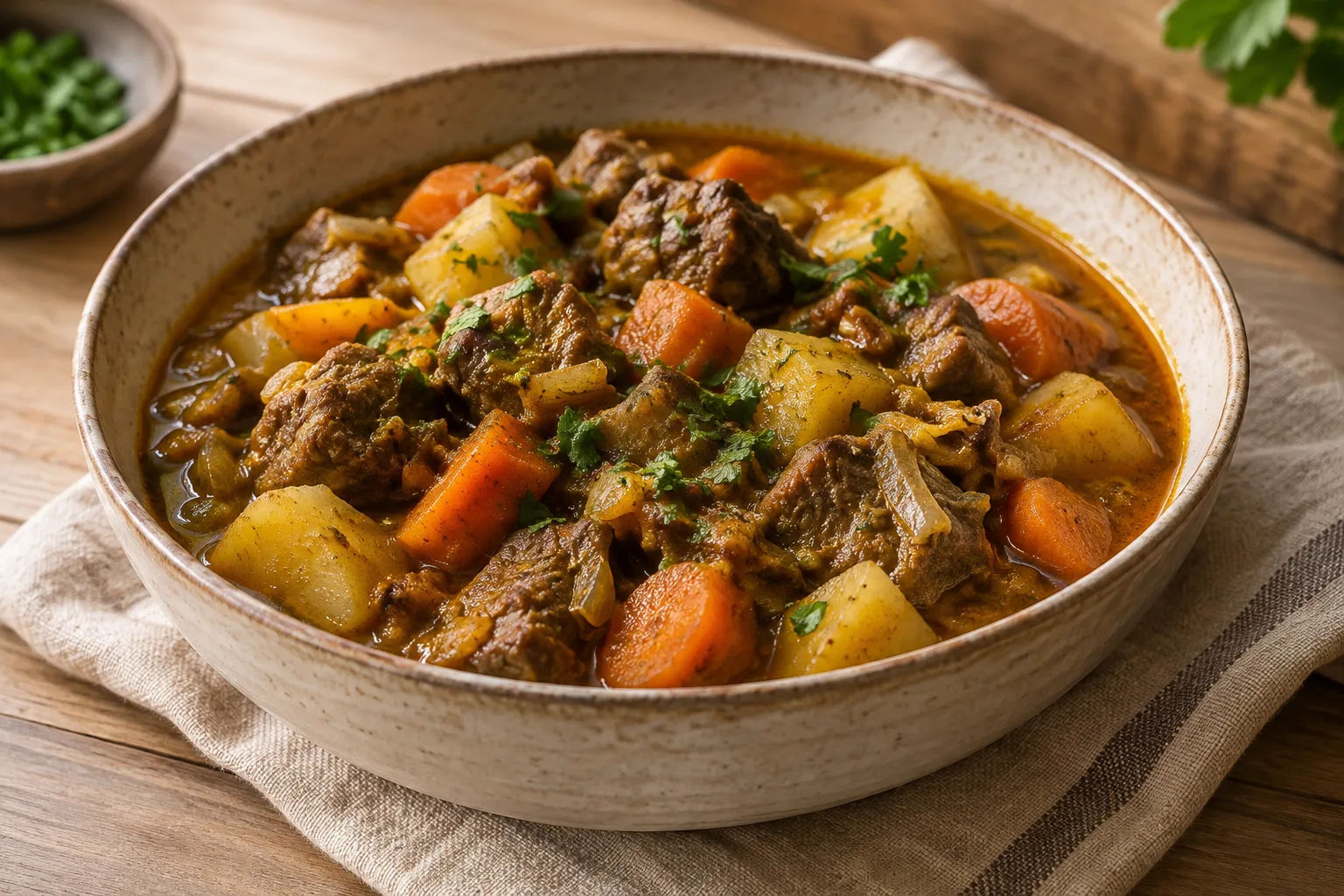
Stewing lamb is a culinary description for lamb cut into pieces intended for slow cooking in a pot. It does not necessarily identify one specific part of the animal: chopped shoulder, neck and breast are all commonly used for stews. The size and proportions of bone, fat and connective tissue can vary between cuts and products. Meat from younger animals is generally described as more delicate in flavour than meat from older animals, which can taste stronger. In a stew, the aim is to cook the pieces gently until tender while the liquid, vegetables and other ingredients come together into a cohesive dish. Ask which cut is being sold if you want to know what to expect from the pieces.
When to use it
Choose stewing lamb for a casserole or stew in which the meat cooks slowly with liquid and other ingredients. It suits dishes with onion, carrot, herbs and vegetables, and works well served with potatoes. Shoulder, neck and breast are customary cuts for stews; note that neck contains bone and tendons. If your recipe calls for evenly sized pieces, ask for the lamb to be diced or cut it yourself. There is no need to associate this product with a particular season: its use depends on the dish and availability. For a quick-cooking preparation, choose a cut other than one intended for slow cooking.
How to use it
If the lamb is not already cut up, make pieces of roughly similar size to help them cook evenly. Season as your recipe directs and brown the pieces in a pot or pan with a little oil; set them aside while you prepare the vegetable base. Soften onion and carrot, return the lamb to the pot, then add herbs and the stock or other liquid called for in the recipe. Cook gently until the meat is tender. You can include vegetables such as artichokes, potatoes, peas or carrots; choose when to add them according to their size and the recipe so they do not break down more than you want. Serve the stew hot with its sauce and a suitable accompaniment. Tenderness is the practical endpoint: check it during cooking, since the result depends on the cut and piece size.
Flavour and texture
Lamb can taste delicate or more pronounced depending on the animal’s age; meat from younger animals is often described as milder. In a stew, gentle cooking aims to make the pieces tender and bring their flavour together with the liquid, vegetables and herbs. Texture and the amount of bone, fat or connective tissue depend on the cut; neck, for example, contains bone and tendons. The result therefore varies between cuts. Check tenderness before serving and remember that different cuts can provide different proportions of meat and bone.
How to choose it
Ask for lamb suitable for stewing and, if helpful, have it cut into cubes by the butcher. Several cuts may be sold for this purpose, so ask which one you are getting and consider visible bone and connective tissue, especially with neck. Check that the product’s appearance and label match what you intend to buy and that the packaging is intact. Even-sized pieces help the meat cook more uniformly; if the pieces are very uneven, trim them to a similar size before starting. The cut affects the balance of meat and bone in the finished dish.
Storage
This guide does not establish a verified storage duration or temperature for this specific product. If packaged, follow the storage instructions and date on the label. If buying unpackaged meat or if the instructions are unclear, ask the seller how to store it and consult official food-safety guidance in your area. Do not infer a storage duration from cooking suggestions; these are separate matters.
Substitutions
To keep the character of a stew, one lamb stewing cut can be exchanged for another, such as shoulder, neck or breast. They are not identical: neck contains bone and tendons and can yield a different proportion of edible meat. Adapt the preparation to the pieces you have and check tenderness as they cook. These are substitutions between lamb cuts, not guaranteed equivalents for another meat or ingredient.
Common mistakes
Do not assume all cuts have the same proportion of meat, bone and connective tissue: neck, for example, contains bone and tendons. Avoid judging doneness by recipe time alone; check that the meat is tender before serving. Do not add every vegetable at the start when the recipe calls for adding some later, as prolonged cooking can make them lose their shape.
Safety and allergens
Follow the package instructions for storage and preparation. If buying unpackaged meat or unsure about its condition or storage, ask the seller or your local official food-safety authority.
Culinary uses
- Main ingredient for stews and braises
- Chopped meat for slow-cooked casseroles
Recommended techniques
- Brown the pieces before adding liquid
- Cook gently in a covered pot until tender
Pairs well with
- Onion, carrot, artichoke and aromatic herbs
- Potatoes, peas and other vegetables
Frequently asked questions
Which lamb cuts are suitable for stewing?
Shoulder, neck and breast are customary stew cuts. Ask which cut you are buying, because the amount of bone and connective tissue varies.
Should I brown lamb before stewing it?
A common preparation is to brown the pieces, set them aside while making the vegetable base, then return them to the pot with liquid and herbs.
How do I know when stewing lamb is ready?
Use tenderness as the practical guide. The result depends on the cut and piece size, so check the meat as it cooks.
Ingredient allergens
Allergen listThere are no verified associations for these ingredients yet.
Sources and review
Automatically researched, cross-checked and validated content. Sources consulted:
- Client Challenge doi.org/10.2307/j.ctvndv9t9.22
- Agencia Española de Seguridad Alimentaria y Nutrición www.aesan.gob.es/
- El cordero, base de nuestra cultura, gastronomía y economía | Cultura www.restaurantecain.es/cultura/cordero-gastronomia
- El cordero, un auténtico placer gastronómico - La Mesa Habla lamesahabla.com/cordero-placer-gastronomico/
- Recetas Tradicionales con Cordero: Delicias de la Cocina Española - Cordero Serranía de Cuenca corderoserraniacuenca.com/recetas-tradicionales-de-cordero/
- Food Allergies | FDA www.fda.gov/food/nutrition-food-labeling-and-critical-foods/food-allergies
- Food allergens | EFSA www.efsa.europa.eu/en/safe2eat/food-allergens
- Risk assessment of food allergens: part 1: review and validation of Codex alimentarius priority allergen list through risk assessment: meeting report www.who.int/publications/i/item/9789240042391
- Food allergens | Food Safety and Quality | FAO www.fao.org/food-safety/scientific-advice/food-allergens/en
- Food Allergy Labeling Laws: International Guidelines for Residents and Travelers - PMC pmc.ncbi.nlm.nih.gov/articles/PMC10169132/
- Allergen guidance for food businesses - GOV.UK www.gov.uk/government/publications/allergen-guidance-for-food-businesses/allergen-guidance-f…
- Cordero estofado: sabor y tradición - Sucarn www.sucarn.es/cordero-estofado-sabor-y-tradicion/
- - YouTube www.youtube.com/watch?v=e-B-xJi2iB0
- Estofado de cordero, un clásico de invierno - Diario de Gastronomía: Cocina, vino, gastronomía y recetas gourmet diariodegastronomia.com/estofado-de-cordero-un-clasico-del-invierno/
- Tipos de Cordero y sus características | Mercado de San Enrique mercadodesanenrique.es/tipos-de-cordero/