- Category
- Sugar and sweeteners
- State
- Dry
- Usual unit
- cup
What it is
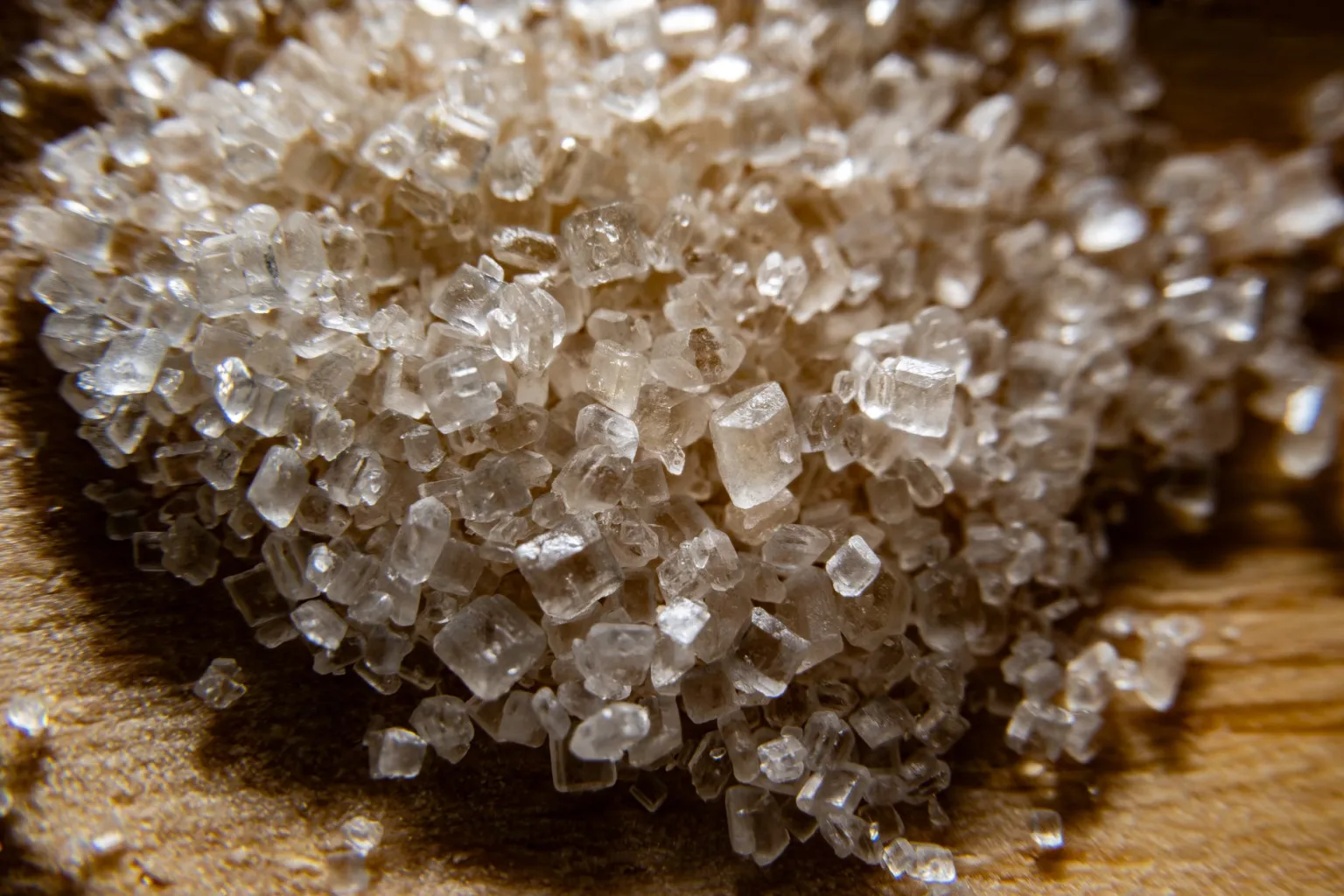
Sugar specified for a cake is often granulated table sugar, a dry sweetener made up of visible crystals. When a recipe does not name a variety, ordinary granulated sugar is a common choice. As well as sweetening, sugar can affect the texture of a batter: creaming it with butter or eggs helps incorporate air. It can also dissolve into liquid mixtures or melt and brown with heat. Sugar formats are not automatically interchangeable: powdered, brown and syrup forms differ in grain size, moisture or flavor, so a change can affect the cake.
When to use it
Use granulated sugar when the cake recipe calls for it or simply asks for sugar without specifying a different form. It suits batters in which sugar is creamed with butter or eggs, and mixtures where it can dissolve as the ingredients are combined. It can also be sprinkled over a preparation before baking when a sweet, crisp surface is wanted. Powdered sugar is useful when a recipe calls for a fine texture; do not automatically swap it for granulated sugar, as incorporation and texture may change.
How to use it
Measure the sugar as directed and check whether the recipe calls for granulated, fine or powdered sugar. For a creamed batter, add it to the butter or eggs and beat until combined; beating can help incorporate air. In liquid mixtures, stir to help the crystals dissolve. If using sugar as a topping, sprinkle it evenly over the preparation before baking for a sweet surface that may turn crisp. Do not replace granulated sugar with the same amount of honey or syrup without adapting the recipe: liquid sweeteners add moisture and can change consistency.
Flavour and texture
Table sugar tastes sweet and has a crystalline grain that is noticeable before it dissolves. Finer sugar incorporates more readily than coarse crystals; powdered sugar is a fine powder used when a smooth integration or finish is wanted. With heat, sugar can melt and caramelize, bringing color and toasted notes. Brown sugar can give a darker shade and a different flavor from white sugar, so the cake may turn out differently.
How to choose it
For an everyday cake, choose granulated table sugar if the recipe does not specify another form. Check the label to distinguish granulated, fine, powdered and brown sugar: their crystal size and behavior are not identical. If you need a finish without a grainy feel, look for a fine or powdered option when it suits the recipe. Commercial powdered sugar may include an anti-caking ingredient; check the ingredient list if you need to know its composition.
Storage
Keep sugar dry in a tightly closed container in a dry place at room temperature. Moisture can cause it to clump, so protect the package from damp conditions. If sugar hardens or forms lumps, check that it remains dry and shows no signs of deterioration before using it. Follow the storage directions on the package, especially for blended or flavored products.
Substitutions
Honey and maple syrup can sweeten some preparations, but they are liquids with their own flavors and may change a cake’s moisture and consistency. There is no universal swap that guarantees the same result. Powdered sugar is ground sugar and may work when a fine texture is needed, but it does not always behave like granulated sugar in batter. For a reliable result, use the form named in the recipe.
Common mistakes
A common mistake is swapping granulated sugar for powdered or brown sugar, honey or syrup without accounting for differences in texture, moisture and flavor. Adding the crystals at a different stage from the one specified, or not mixing them in sufficiently, can also affect the batter. Do not assume all commercial sugars behave alike: check the stated type and follow the recipe’s order of mixing.
Safety and allergens
If you have a food allergy, check the ingredient list and allergen information on the specific package; blends and flavored products may have different ingredients. If you are unsure about a product, do not rely on its name alone to determine its composition.
Culinary uses
- Sweetens cake batter
- Helps create a lighter texture when creamed with butter or eggs
- Adds a crisp, sweet surface when sprinkled before baking
Recommended techniques
- Cream with butter or eggs
- Stir into liquid mixtures until incorporated
- Sprinkle over a cake or other bake before baking for a crisp surface
Pairs well with
- Butter in creamed cake batters
- Eggs in cake mixtures
- Liquid ingredients in batters and drinks
Frequently asked questions
Which sugar should I use if a recipe only says sugar?
Granulated table sugar is a common choice when a cake recipe does not specify another form. Follow the recipe if it calls for fine, powdered or brown sugar.
Can I replace granulated sugar with powdered sugar?
Not in every recipe. Powdered sugar is much finer and can incorporate differently. Use it when the recipe allows that form or calls for a fine texture.
Can I replace sugar with honey?
Sometimes, but honey adds moisture and its own flavor. The cake’s texture may change, so there is no universal substitution.
Ingredient allergens
Allergen listThere are no verified associations for these ingredients yet.
Sources and review
Automatically researched, cross-checked and validated content. Sources consulted:
- Los japonesismos culinarios | OpenAlex openalex.org/W2906636610
- Del blanco a la panela: los 19 tipos de azúcar más comunes, en qué se diferencian y cómo usarlos en cocina www.directoalpaladar.com/ingredientes-y-alimentos/blanco-a-panela-19-tipos-azucar-comunes-qu…
- Azúcar - Wikipedia, la enciclopedia libre es.wikipedia.org/wiki/Az%C3%BAcar
- Tipos y variedades de Azúcar que encontrarás en el mercado, apuntes. - Cocina y Aficiones www.cocinayaficiones.com/tipos-variedades-azucar-mercado-apuntes/
- El azúcar: tipos y usos. Parte I - Blog de recetas de María Lunarillos www.marialunarillos.com/blog/el-azucar-tipos-y-usos-parte-i.html
- Etiquetado de sustancias que causan alergias e intolerancias alimentarias www.aesan.gob.es/seguridad-alimentaria/informacion-alimentaria/etiquetado-sustancias
- ¿Qué es el azúcar? Todo lo que tienes que saber sobre el azúcar y los edulcorantes – Zschimmer & Schwarz, Inc. www.zschimmer-schwarz.es/actualidad/que-es-azucar/
- Por qué el azúcar de la fruta es bueno para la salud y el de los procesados no doi.org/10.64628/aao.6yfuugrhx
- Beneficios y usos del azúcar en tu cocina republica.com/guatemala/2021-9-24-23-41-20-beneficios-y-usos-del-azucar-en-tu-cocina
- Tipos de azúcar aplicados en repostería y pastelería | CEAC www.ceac.es/blog/tipos-de-azucar-aplicados-en-reposteria-y-pasteleria
- Allergies - Food Safety - European Commission food.ec.europa.eu/food-safety/campaign-2026/allergies_en
- Food Allergies | FDA www.fda.gov/food/nutrition-food-labeling-and-critical-foods/food-allergies
- Food labelling and packaging: Ingredients list - GOV.UK www.gov.uk/food-labelling-and-packaging/ingredients-list
- El azúcar: Origen, transformación y papel en la repostería | ecoledepatisserie-boutique® ecoledepatisserie-boutique.com/es/blogs/patisserie-conseil-professionnel/sucre-origine-trans…
- - YouTube www.youtube.com/watch?v=g5OnSMxlllE
- Reduce Azúcar en Recetas Sin Perder Textura | Trucos de Experto llevats21.com/reducir-azucar-recetas-textura/